






TL;DR: Veres has built a horror cosmology out of austerity, employment law, and the exact mechanisms by which systems convert human bodies into value. It is not metaphor. It is precision. Five stories, two minor sags, one ending with nine words that will not leave you. Serious contender for the best weird fiction collection of the year.

The Ratun-Sampi people have a punishment for those who steal teeth. They don’t kill you. They turn you into a story. You are killed into a character in a narrative. An eternal, repeating hellish death, a nightmare with no exit. This is what the unnamed linguist explains to the narrator of “a pit full of teeth,” the opening story of Attila Veres‘ second English-language collection, and I read that paragraph at 11pm and sat very still for about thirty seconds before continuing.
That is what this book does. It doesn’t rush you toward the monster. It tells you exactly how the punishment works, in plain language, and waits for you to understand what that means for the person you’ve been reading about for the last forty pages.
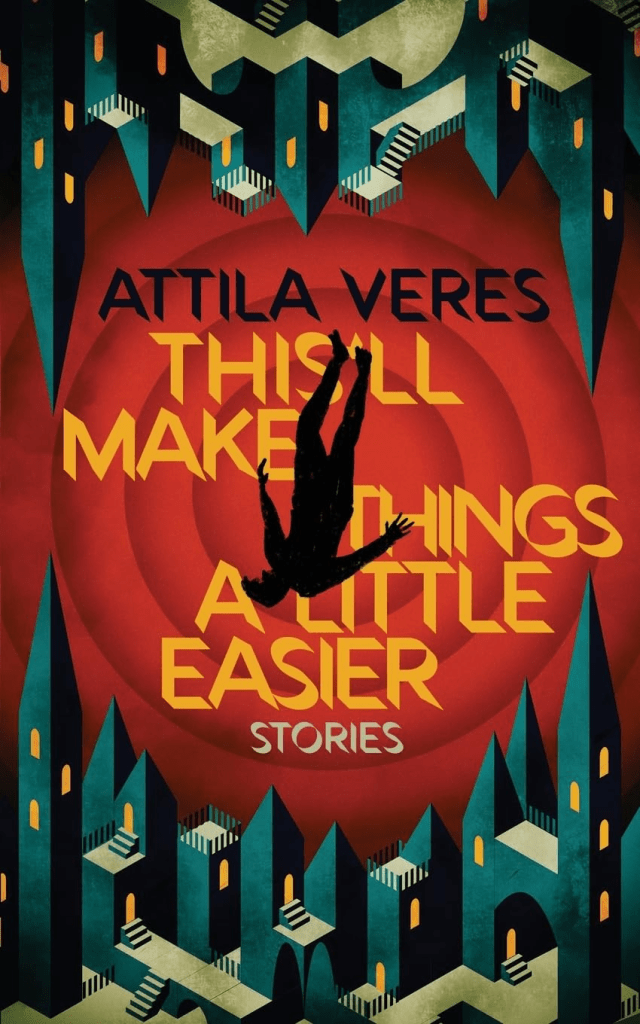
This’ll Make Things a Little Easier is a collection of five stories, long stories, some of them close to novella length, and it operates out of a place that is very specifically Hungary: austerity-battered, bureaucracy-haunted, post-Soviet in its bones, populated by people who have been squeezed into smaller and smaller spaces by forces with no faces and no names. The horror Veres makes from this is not the horror of monsters arriving. It is the horror of discovering that the machinery that was already running you — the institute, the company, the state, the market — has always been monstrous. You just didn’t have a word for it until now.
The prose is flat on the surface and boiling underneath. Veres writes in a register of dry official reportage that keeps sliding into nightmare without raising its voice. His narrators describe the unbearable with the same tone they use to describe rental terms and bank details. When Petra, the protagonist of the title story, realizes her child is crying money from her mouth, the sentence that delivers this does not flinch or widen its eyes. It states it. The horror in Veres is always the horror of exact statement. He is not trying to disturb you by implication. He is disturbing you by being precise.
Here is what I wanted from this book: I wanted the same sick feeling I got from The Black Maybe, his Bram Stoker-nominated debut collection, where I read “Return to Midnight School” on a train and had to put my phone away for a full stop because something that began as a pastoral folk-horror story had done something to me that I was still trying to locate. I wanted that feeling of a hand going through my chest and finding something I didn’t know was there. I got it. Not five times in five stories (I’ll come to the exceptions) but I got it, and I got it badly enough that I finished the book in two sittings and spent an hour afterward just doing dishes, needing to hear faucet sounds and be in a room with normal objects.
What he’s building is a specific cosmology of exploitation. The Institute in “Transistor” (the longest and most punishing story in the collection) extracts value from human bodies in ways that start as labor and end as something that doesn’t have a clinical name in any language I speak. Zsuzsi is eight years old when her family, poor enough to eat borrowed time, accepts a relocation offer. The Institute grows things inside them. This is never stated with the language of science fiction. It is stated with the language of employment law. She is Transistor 47. She produces. She is harvested. She breaks, literally, and it is devastatingly clear that this was always the destination. The horror of “Transistor” is the horror of consent: she agreed to this, in the way you agree to things when the alternative is starving in Borsod, in the way people agree to things when they have already been told that their life is only worth what they can produce. Veres doesn’t make this metaphor explicit. He makes it flesh.

The title story, which closes the collection, is shorter and more ferocious and completely devastating. Petra has been converting her pain into money. There is a tree in the neighborhood. You crawl inside it, you suffer, money comes out. This is the economy as it actually works, with the supernatural element removed for clarity. The ending is the most quietly catastrophic thing I’ve read this year.
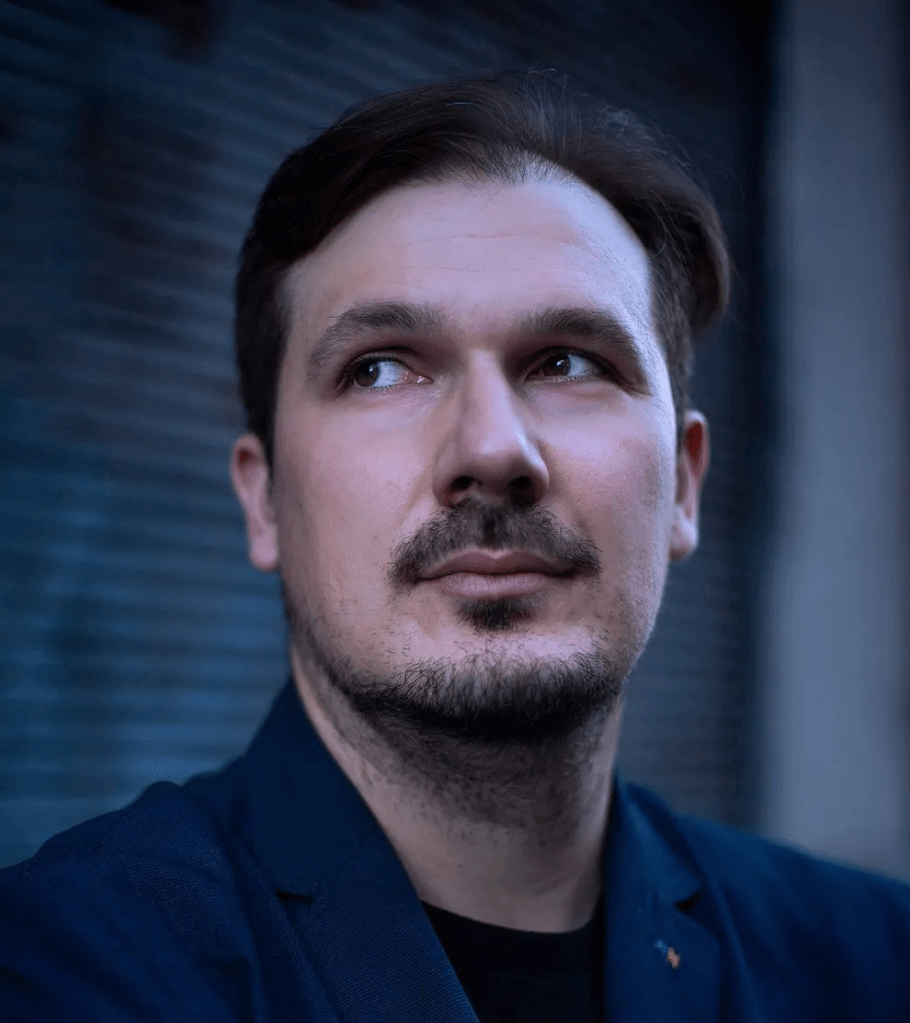
Attila Veres was born in Nyíregyháza in 1985 and has been writing horror and weird fiction in Hungary since his debut novel Odakint sötétebb (Darker Outside) landed in 2017. He is a screenwriter with a Hungarian Film Award for Best Television Screenplay on his shelf, for the 2020 feature Lives Recurring. His story “The Time Remaining” was chosen to represent Hungary in Valancourt’s Book of World Horror Stories, and The Black Maybe, his first English-language collection, translated by Luca Karafiáth, was named Rue Morgue’s best collection of 2022. With This’ll Make Things a Little Easier, Veres does his own translation for the first time. The fact that he did it himself matters more than it might appear to. These stories have a very particular flatness, a very particular way of puncturing their own sentences, a very specific relationship between comedy and catastrophe. A translator would have to understand all of that. He understands it because it came from him.
“The Designated Contact Individual” is the funniest story in the collection and also, in its final movement, one of the most alien things I have read in horror in years. A Broc Cola sales rep (Veres opens the story with several paragraphs of actual corporate product description, written with a perfectly straight face) is dispatched to an alternate territory. The way the wrongness accumulates is masterful. The way the horror arrives is through food. There is a scene involving scorpions that made me say something unkind out loud to nobody in particular.
Not everything lands with equal weight. “Damage d10+7,” a tabletop RPG story, starts from an interesting premise about the violence of narrative and what it means to force characters through suffering for other people’s entertainment . Then loses the thread in its middle third, spinning through character backstory that dissipates the dread instead of concentrating it. It recovers. But it’s the only story in the collection that required me to actively trust the book rather than be carried by it. And “The Summer I Chose to Die” which has the best first line in the collection and a premise that could be its best story (a man who has decided to die before summer ends, encountering cosmic monsters on a beach) runs about fifteen pages longer than it needs to. Veres is genuinely funny in that story, and the cosmic horror arrives well, but the rambling drug-addled energy of the narrator eventually becomes its own kind of fog.
These are real criticisms and they’re proportionate. Two stories out of five that have a bit of a soggy stretch in the middle is not a failed collection. It is a collection by a writer who is still discovering the exact length his ideas need, and who is otherwise doing things that very few people in horror are doing at all.
The opening story, “a pit full of teeth,” is about a writer who can’t get out of his own head, who can’t stop the machinery of his own fiction from running, who eventually realizes that the tribe’s punishment, death-by-narrative, a character’s eternal recurring nightmare, has found him. It begins as comic absurdism about the indignities of Hungarian literary life, about Zsoldos Péter Award medals nobody’s heard of and Zoom writing academies for people who just want to believe they’re authors, and it ends inside a cave where something is happening to a dead woman. It is the strangest opening for a collection I have read in a long time, and it is exactly right.
What Veres is doing, across all five stories, is identifying what we have agreed to let be done to us. The Institute. The market. The company. The tree. The narrative. Everything extracts. Everything converts your substance into someone else’s value. The horror is not that these systems are evil. The horror is that they are legible. You understand exactly what they are. You just couldn’t name them until now.
In the Ratun-Sampi tradition, the worst punishment is not death. It is becoming a story someone else tells about you, forever, without your consent.
Hungary has a word for this. It’s called Tuesday.

This’ll Make Things a Little Easier by Attila Veres, published March 24, 2026 by Valancourt Books.

 The Blog Without a Face
Leave a comment