
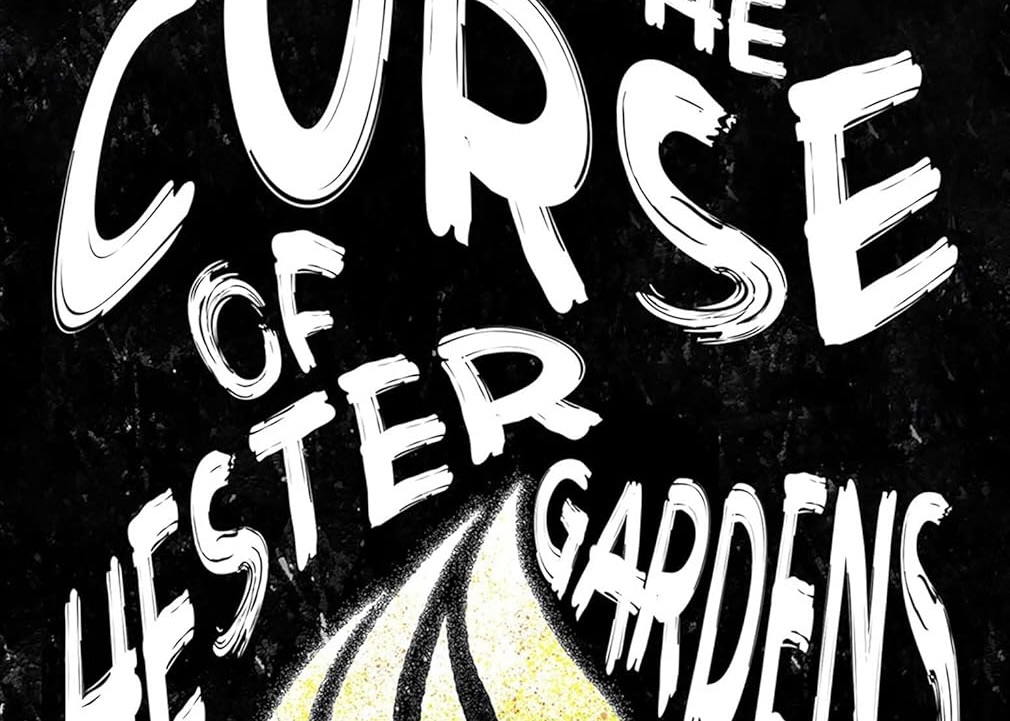







TL;DR: Thompson’s debut is the haunted house novel stripped of its gentility: no manor, no inheritance, just a public housing complex in Michigan where the murdered stay because America gave them nowhere else to go. Nona McKinley is one of the finest mother characters in recent horror fiction. Uneven in its final act, devastating in its bones. Read it.

The public housing complex at the center of Tamika Thompson‘s debut novel has a particular compass problem. Depending on which direction your unit faces, you live under a different quality of light. The eastern homes get the morning sun and bake through September. The western ones take in sunsets that run pink and purple against the walls, which Thompson describes as looking like late-afternoon funerals down south. The southern dwellings stay dim most of the day. But the haunted quarters are the north-facing ones, where the sun never manages to show up, and where, as the novel announces in its opening pages with the flatness of someone reading from a city ordinance, the murdered just didn’t know how to leave.
That sentence is both premise and argument. Hester Gardens, a public housing complex in a mid-sized Midwestern city called Medford, is a place where violence has accumulated across decades until it has weight and agency. People who die here stay. They roll balls down alleys. They appear in bathroom mirrors. A child who took a stray bullet in the 1980s, when the crack trade was deciding who got which patch of concrete, is known through the complex as Little Lonnie: has a name, has a reputation, gets talked about at the bus stop. The younger gang members treat him the way they’d treat any neighborhood fixture. He sometimes kicks his ball toward you. He occasionally shoves a child out of the path of a still-moving round. This is not offered as remarkable. In Hester Gardens, the dead having nowhere better to be is simply a condition of the address.

Nona McKinley, the woman Thompson builds this novel around, has a face that gives you everything if you look at it long enough. She is forty-two years old, a mother with the kind of practical faith that has been tested so many times it has reshaped itself into something harder and quieter, a survivor of a husband who turned out to be something she never let herself fully see, and a woman who puts on her best bra (best of the three she owns, because it produces the deepest cleavage) before visiting her married pastor in his church office. She is fully aware of what she is doing and she does it anyway. The distance between those two facts is where the whole novel lives. Thompson renders this without mercy and without contempt, which is the harder trick, and the one the book keeps pulling off.
Pastor Davis is a beautiful man, intelligent and genuinely caring, his hands always slightly too familiar, his lines of pastoral reassurance delivered with the confidence of someone who has practiced them on himself long enough to believe them. He gives Nona money for her son’s college enrollment fee and calls it a grant from the church. She accepts it. Their bodies press together in the ways that bodies do when both people have decided not to name what is happening. Thompson quotes his dialogue not for what he says but for what it quietly demonstrates: that a good man and a bad arrangement are not different categories. They are the same person at different moments, and both are present at once.
The rest of the cast earns its place. The Hester Boys are rendered with the kind of precision that comes from Thompson knowing what it sounds like when a fourteen-year-old tries to act unbothered after his first cup of liquor. Grace, Gretchen’s twin sister, appears in the novel’s most purely terrifying sequence, shooting through a hole in the drywall with a bullet wound still wet in her forehead and her shoulders shrugging in the repetitive, wordless gesture of a child trying to communicate something she cannot say. She is recognizably a specific child, someone’s specific child, and not a haunting prop.

Thompson came to this novel from two directions and they show, productively. She is a former journalist with degrees from Columbia in political science and from USC in journalism, and the reporting background is everywhere: in the school built in 1952 still running its original fixtures, the backed-up sewer lines the housing authority has promised to fix for six months, the garbage contracts that let refuse pile so high a body can disappear into it. But she also came through horror, specifically through the short story collection Unshod, Cackling, and Naked, which won the 2024 Next Generation Indie Book Award and which Publishers Weekly noted for pushing “mundane Black experiences into unsettling territory.” That collection announced a writer with a specific interest in how the line between ordinary suffering and supernatural terror is, for people a country has decided to neglect, not much of a line at all. The Curse of Hester Gardens is Thompson asking what that argument looks like at novel length: what the haunted house story becomes when the house has no Gothic towers, no eccentric old money, no ancestral guilt. It faces north. The sun never rises. And the murdered are still here because they have nowhere better to go.
The haunting mechanics work best as emotional weather. When the stove lights itself in Nona’s empty kitchen, or when a shadow slides across the floor and retreats into the hallway, these moments function because they are the materialization of something she is already carrying: grief that has mass, guilt that moves through rooms. Thompson is very good at this. She builds dread the way good social horror should, through accumulation of recognizable misery until the recognizable and the uncanny become difficult to tell apart.
Where the novel works against itself is in asking those same elements to also carry structural plot weight, to constitute a system with its own interior logic. The explanation that arrives in the final movement, concerning the curse’s origins and the land it was built on, is a powerful idea delivered too late and too discursively to hit with the same force as Grace’s face pushing through the drywall. The argument steps in front of the story. For four hundred pages the book has been doing something harder and more specific, and the frame suddenly widening feels like Thompson deciding she needs to explain what the novel has already demonstrated.
The pacing is a bit tedious in the middle third, particularly in the church and party sequences where Thompson is doing necessary character work that bears its load without quite hiding the effort. At 448 pages the novel deserves most of its length and not quite all of it.
None of this is why you read the book. You read the book for Marcus.
Marcus McKinley is the middle son, named after Marcus Garvey, the valedictorian giving a commencement speech about the violence of neglect while his principal turns crimson at the podium behind him, the one with the Ivy League acceptance and the financial aid that covers everything. Thompson builds him with care and specificity and the patience of someone who already knows where she is going and wants you there when she arrives. He is brilliant and political and seventeen, and he is also a bear in the making: the posture wide-legged, the voice his father’s voice, the trembling in his hands when anger moves through him in ways Nona keeps herself from naming.
What Thompson does with Marcus is the most devastating thing in a novel that does not lack for devastating things. She earns it completely. She does not explain it.
The curse of Hester Gardens is not a curse you lift by solving the supernatural plot. It is the curse of what a country builds when it decides certain deaths are the acceptable cost of other people’s comfort, and of what those deaths leave behind in the walls and alleys and north-facing units where the sun cannot be bothered to arrive. Thompson’s novel is serious, slightly uneven, and horrifying work. It knows what it is about. It earns its grief.
That stove is still lit somewhere.

The Curse of Hester Gardens by Tamika Thompson, published March 31, 2026 by Erewhon Books.





 The Blog Without a Face
Leave a comment