

Welcome back to the Dreadful Digest, where we read the horror so you can decide whether to bother. Volume 11 is a weird one. We’ve got a Greek revenant writing love letters across fin-de-siècle Europe, a depressed copywriter collecting paper offerings for the dead above a Chinatown funeral parlor, a spacecraft crew getting picked off by something that learned how to wear their engineer’s face, and a demon who really, really thinks you should have been nicer to somebody’s mother. There’s a Southern gothic vampire mystery set in 1853 Charleston and a Michigan folk horror debut that writes sentences so beautiful you almost don’t notice the plot wandering off into the woods without a flashlight. Six books, no masterpieces, a couple of genuine surprises, and one that made me want to grab it by the induction combs and shake. The scores this round cluster in the middle of our brutally honest curve, which means every one of these books is doing something interesting enough to talk about and fumbling something badly enough to be honest about. That’s the sweet spot, frankly. Perfect books are boring to review. Disasters are easy. It’s the ones that almost get there, the ones where you can feel the book the author meant to write flickering just beneath the surface of the book they actually wrote, that keep me up past 2 a.m. taking notes. So grab your urn of choice, settle in, and let’s get into it.
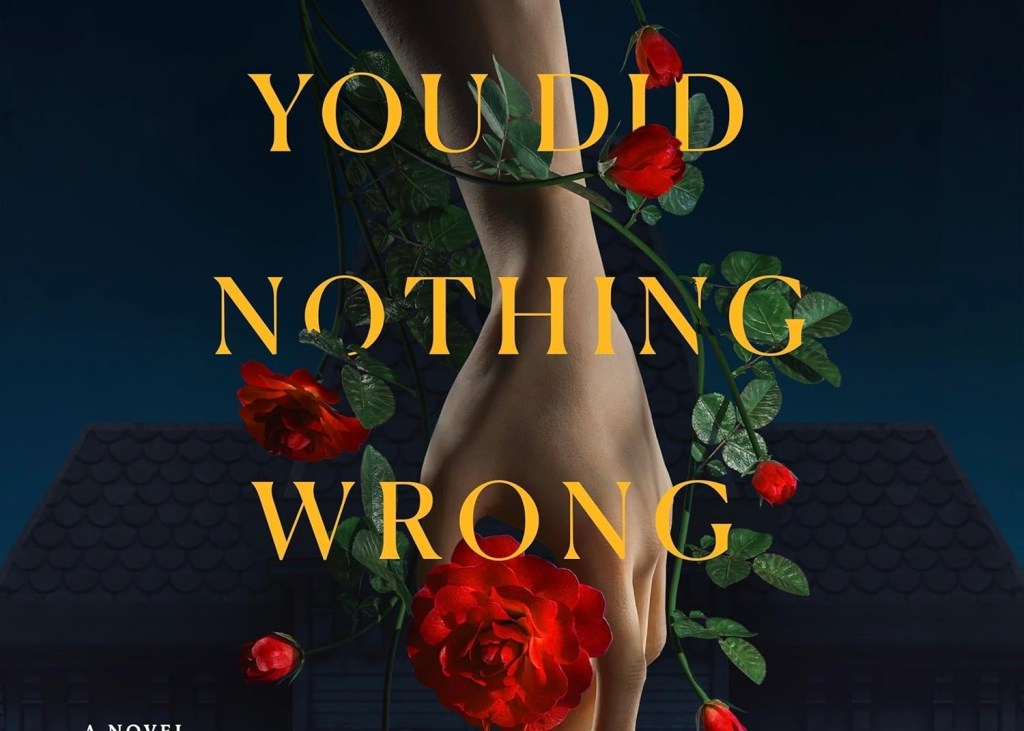
You Should Have Been Nicer to My Mom: Maternal instinct is a hell of a drug
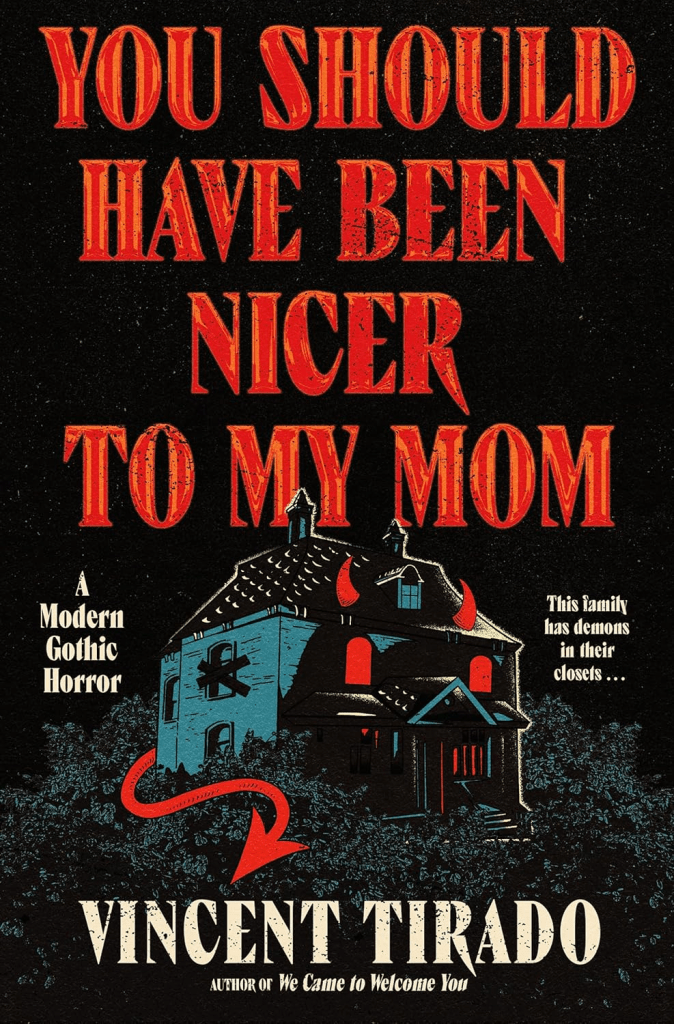




In Vincent Tirado‘s You Should Have Been Nicer to My Mom, Xiomara arrives at her dead grandfather’s crumbling house in Yonkers and just stands there in the drizzle, unable to knock. Every cell in her body is telling her not to go inside. She goes inside anyway, because this is a story about what family obligation does to your survival instincts, and because there’s a will to be read. The will turns out to be less “who gets the Bentley” and more “one of you is a demon, figure it out before 3 a.m. or you’re all damned.” Then a storm rolls in and locks the whole rotten clan inside together.
Tirado structures the novel in real time, each chapter stamped with a clock ticking from 2:04 p.m. through the dead hours, and the early stretch hums with the specific, sweaty tension of being trapped with people you are related to but do not like. Xiomara’s extended family is a vivid ecosystem of Dominican dysfunction: the MLM aunt, the megachurch uncle embezzling from his own congregation, the cousin with sex trafficking allegations, the influencer cousin doomscrolling through the wreckage. As their scandals detonate on live television one by one, the house gets smaller and the secrets get bigger. The throughline of anti-Haitian prejudice aimed at Naomi, the home aide who might be more family than anyone realizes, gives the social horror real teeth.
Tirado is a nonbinary Afro-Dominican Bronx native with a biology degree and a master’s in bioethics. Their YA debut Burn Down, Rise Up won the 2022 Pura Belpré Award and was a Stoker and Lammy finalist, pulling Bronx history into supernatural horror. We Don’t Swim Here followed in 2023, and their adult debut We Came to Welcome You landed in 2024 as suburban psychological horror that split readers on execution. You Should Have Been Nicer to My Mom shares the same DNA: big, culturally specific ideas and an ambitious premise straining against uneven craft. Tirado writes from deep personal knowledge of intercommunity Dominican dynamics, and that specificity is the book’s greatest asset.
Where it sags is the long middle, which cycles through scandal reveals and family arguments that feel structurally repetitive around hour seven. The prose is functional but rarely textured enough to carry the emotional weight it’s reaching for. Xiomara spends too many pages as a passive observer, and the demon attacks conveniently happen offscreen. Messy, overlong, sometimes frustrating, but when it works, it works like a goddamn exorcism conducted at a family reunion during a hurricane.
Published March 10, 2026 by
William Morrow.

Bitterbloom: A gothic that forgot to lock the door
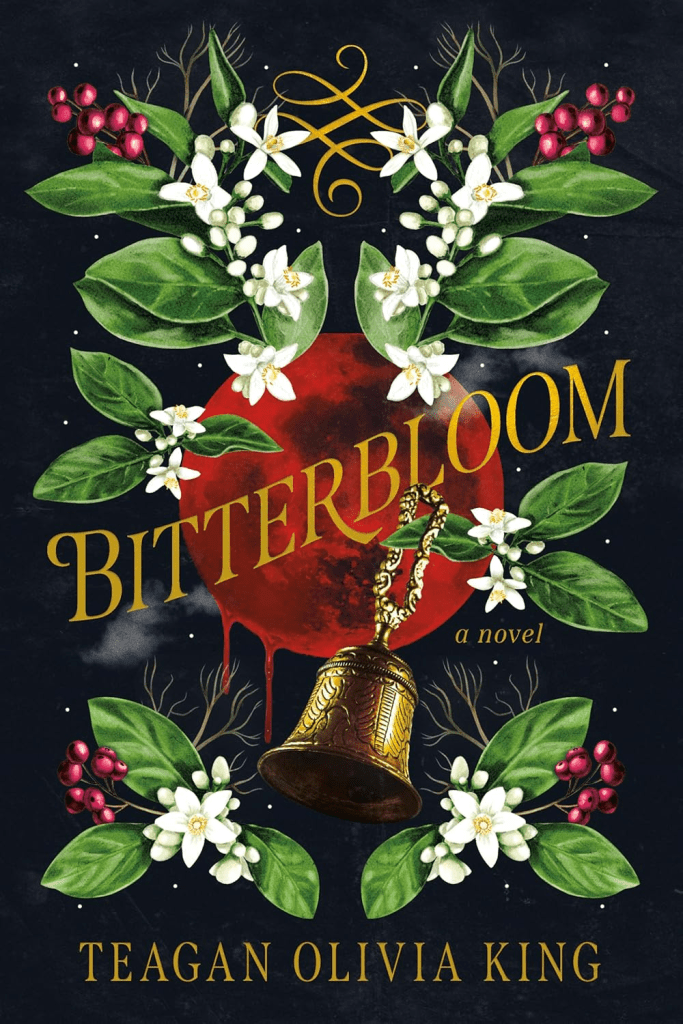



The prose in Bitterbloom wants so badly for you to feel something. It wants it with the desperation of someone who just discovered that sentences can have texture, and to be fair, Teagan Olivia King can write a hell of a line when she’s not drowning it. But the book never trusts any single image to do the work, so it piles on three more, and the cumulative effect is less “lush” and more “waterlogged.”
Adelaide Thorn is the sickly, black-blooded daughter of a village vicar in a gothic secondary world where two brother-gods split creation between light and shadow. Women keep dying along the riverbank. Adelaide finds a broken brass bell, discovers it can summon the ghost of a dead man named Bram, and learns she might be a Reaper. The local lord Ransom Black is hot and suspicious in roughly equal measure, her father is hiding something monstrous, and her dead mother has been hiding something worse.
King grew up in Michigan’s Upper Peninsula and holds a creative writing degree from Northern Michigan University. She’s an active HWA member with short fiction in anthologies from Phantom House Press and Shortwave Publishing. Her debut Spit Back the Bones, published last fall by Keylight Books, explored similar thematic ground through a contemporary Michigan bog setting rooted in the real grief of losing her brother. That book’s acknowledgments spoke openly about King’s PVC diagnosis, the cardiac condition that inspired Adelaide’s terrifying heartbeat, and that autobiographical thread gives Bitterbloom its most honest moments. The shift to gothic romantasy is ambitious, but the execution wanders.
After a hundred pages of hearts that “slip against ribs” and chests that “cave” and everything tasting of “wormwood and lemons,” the language starts to feel like wallpaper rather than architecture. Adelaide’s internal monologue cycles the same emotional beats so often I lost count of how many times she pressed a finger to her throat and thought “a-live, a-live, a-live.” Good motif. Fifteen repetitions is a tic. The love triangle never finds its footing: Ransom is written as both genuine romantic interest and skin-wearing serial killer, and that whiplash never resolves into intentional complexity. Bram is sweet and fatally underwritten. But the reveal that…
…Adelaide’s mother has been murdering village women and stitching their skin into a patchwork immortality suit is genuinely fucked up in a way I wish the rest of the book matched. There’s a moment where Adelaide smells her dead mother’s perfume on a figure made of stolen faces, and it’s the kind of image that could carry a whole novel if the surrounding prose would just get out of its way.
The ending reaches for catharsis and mostly finds it, though the epilogue wraps things with a neatness that feels unearned. If your mother turned out to be a serial killer who wore her victims like a quilt, you would not be eating marmalade cakes in a field six months later. Maybe that’s the book’s thesis: feeling over logic, beauty over rigor. I just wish it didn’t take so much wading.
Published March 10, 2026 by
Keylight Books.
The Fox and the Devil: Van Helsing’s daughter has a type
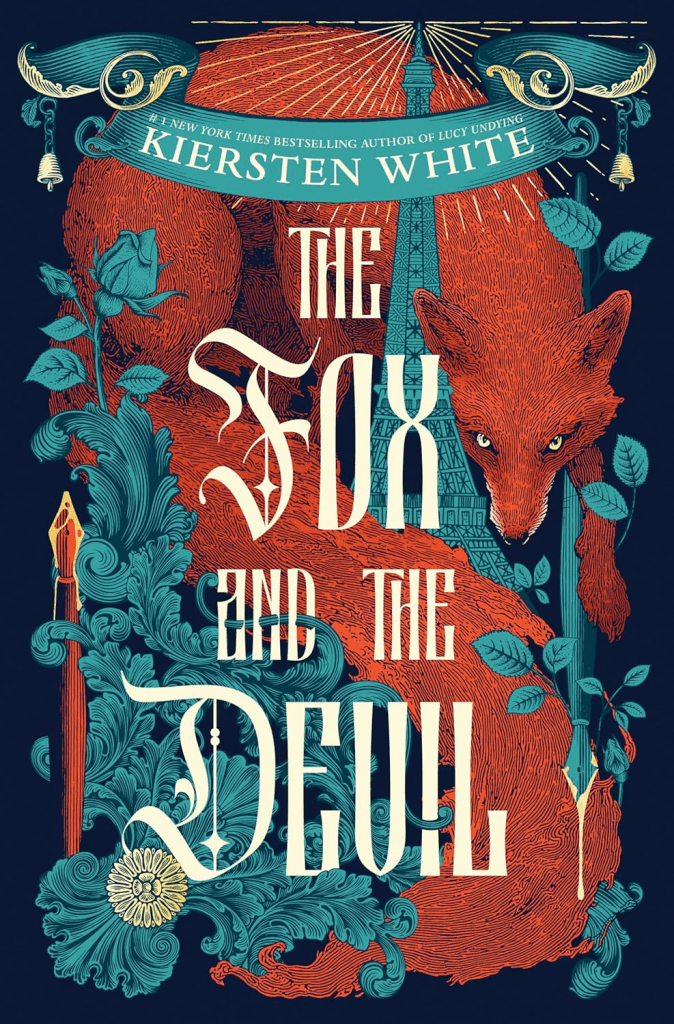



What if Van Helsing’s daughter was a queer forensic detective who fell in love with the woman who killed her father? That’s the pitch for The Fox and the Devil, and it’s a compelling one. The problem is that Kiersten White trusts it to carry about forty thousand more words than it actually can.
Anneke Van Helsing is a forensic investigator in 1890s Amsterdam, shut out by the men who need her expertise and haunted by the woman she saw standing over her father’s body. That woman, Diavola, is a Greek revenant who has spent centuries tracking a creature called the Watcher. They circle each other across European crime scenes and love letters before converging on the 1900 Paris Exposition, where the Watcher is building something terrible beneath the spectacle. The slow-burn romance unfolds against forensic science, early cinema, and stolen moments on Ferris wheels. Gorgeous in concept. About a hundred pages too long in execution.
Kiersten White is a number one New York Times bestselling, Bram Stoker Award-winning author whose adult horror career launched with Hide and peaked with the unsettling Mister Magic, which channeled her own religious trauma into something that crawled under your skin. Lucy Undying retold Dracula through Lucy Westenra’s sapphic gaze, and The Fox and the Devil continues that thread, pulling another woman from the Stoker universe and handing her agency, desire, and a forensic toolkit. White writes queer longing better than almost anyone in genre fiction right now, and she doesn’t apologize for centering the romance. It is the horror.
The letters are the book’s secret weapon. Diavola’s missives to her “Little Fox” oscillate between adoration and menace with a giddiness that’s unsettling. A passage about wanting to swallow an entire river to catch a particle of Anneke is unhinged in exactly the right register. And when the horror works, it works hard: a man nailing himself to the floor and cutting out his own heart while someone films it with early cinema equipment is an image I’ll be sitting with for a while. The interstitial fair chapters, following pickpockets and theater workers swept into the Watcher’s orbit, do more worldbuilding in five pages than the main plot manages in fifty.
But the pacing. The middle third is a swamp of yearning glances and near-misses that repeats the same emotional beat until I wanted to grab both women by the shoulders and shake them. The investigation stalls while the romance treads water, and the urgency that made the first act so electric just evaporates. The ending delivers on the emotional stakes but feels rushed after all that languishing, as though someone realized they’d been slow-dancing for three hundred pages and suddenly needed to sprint.
Still. There is real tenderness in this book, and real ambition. When White is firing on all cylinders, the combination of forensic procedural and supernatural romance and turn-of-the-century spectacle is unlike anything else I’ve read this year.
Published March 10, 2026 by Del Rey.
The Two Deaths of Lillian Carmichael: Antebellum goth girlfriend energy
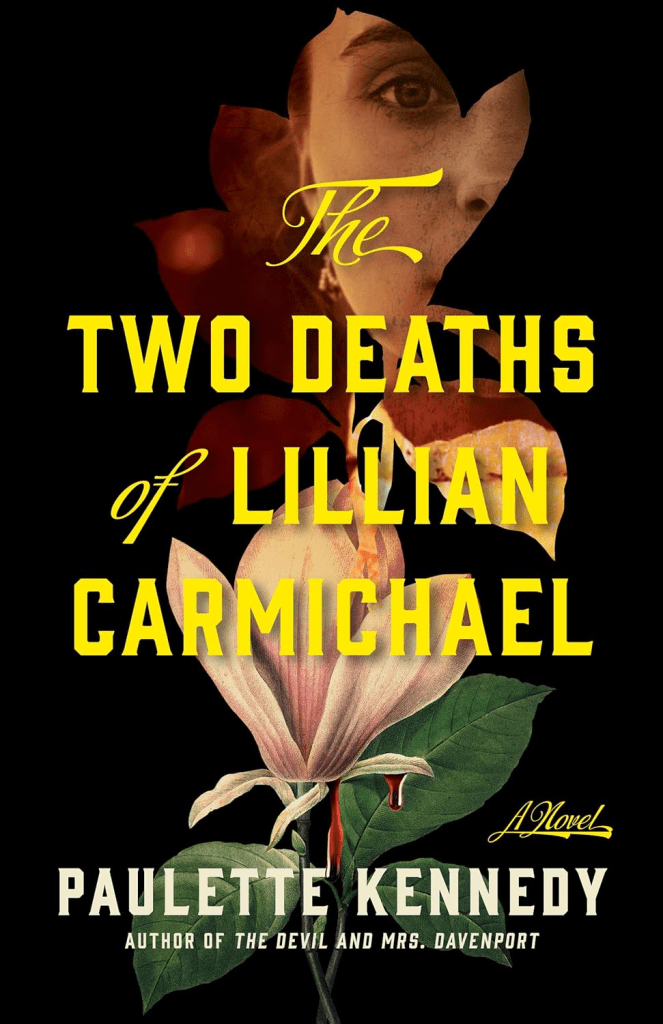

Charleston, 1853. A woman is about to hang for a murder she didn’t commit. She collapses on the way to the gallows, is pronounced dead, and wakes up sealed inside her family mausoleum. She kicks her way out, steals trousers off a clothesline, and starts picking pockets. If the rest of The Two Deaths of Lillian Carmichael maintained this desperate, feral momentum, you’d be looking at something close to great.
Lillian Carmichael, wrongly convicted of poisoning her sister Rebecca, escapes death by cataleptic seizure and accidental burial. Meanwhile, women are turning up drained of blood across the city, and the superstitious public decides the culprit is the murderess who crawled out of her grave. Lillian flees to the salt marshes, gets rescued by a young girl named Ruby and her father, and ends up at a decaying plantation run by “Alexander Mayhew,” who is actually Kate O’Malley, an Irish actress living as a man. A queer romance blooms. A vampire panic spirals. The real killer stalks Charleston’s redheaded daughters through interspersed diary chapters that are creepy as shit.
Paulette Kennedy has built a steady career in historical gothic fiction, each book darkening the palette a little further. Her debut Parting the Veil earned an HNS Editor’s Choice Award, followed by The Witch of Tin Mountain, The Devil and Mrs. Davenport, and The Artist of Blackberry Grange, all from Lake Union Publishing. Originally from the Missouri Ozarks, she traveled to Charleston for this one, took an ecotour of the salt marshes, and spent a morning with archival maps and a magnifying glass. That dedication shows. The city breathes. The pluff mud smells. The social hierarchies feel lived in rather than decorative.
The middle third was a bit of a slog, though. Once Lillian settles into Angel’s Rest, the novel pivots hard into romance, and the sex scenes multiply until the murder mystery loses its pulse. There’s a stretch where the plot is essentially: they fuck, they argue about leaving for London, they fuck more, Kate is controlling, Lillian worries. The erotic content is well written in isolation, but it crowds out the investigation, the dread, and the thematic weight of Lillian’s wrongful conviction. The killer’s diary chapters, by contrast, are unsettling: precise, clinical, coldly sure of themselves. A lonely widow falling apart in the arms of someone she trusts, not knowing what’s coming. Those interludes kept me turning pages through the novel’s softer stretches.
Published March 10, 2026 by
Lake Union Publishing.
I Love You Don’t Die: The urn industrial complex
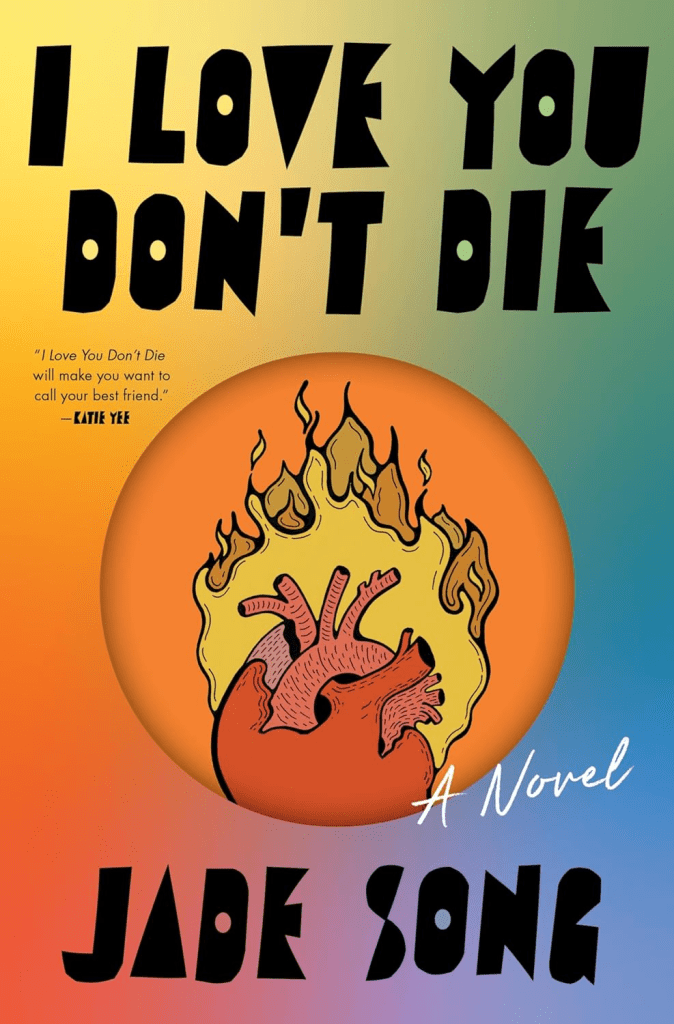
Vicky works at a death startup, lives above a Chinatown funeral parlor, and collects zhizha, the paper offerings you burn so the dead can own luxury goods in the afterlife. She has a paper Lexus, a paper hot pot, a paper air conditioner to sit next to her real broken one. She is, by her own admission, deranged. She is also one of the most precisely rendered depressives I’ve encountered in fiction, and the novel that contains her is less horror story than a long, slow, furious argument with the question of why anyone bothers staying alive.
I Love You Don’t Die follows Vicky, a copywriter at Onwards, a celebrity-founded urn company that has turned death preparation into an aspirational lifestyle brand. Her best friend Jen works in wellness. She starts dating a couple, Kevin and Angela, whose collective sadness rhymes with hers. The book is structured not by plot but by theme: chapters titled “Work,” “Friendship,” “Love?,” “Spiraling,” each one circling the same drain from a slightly different angle. It’s a novel about depression the way Jaws is about a shark, except the shark never surfaces, and the whole town is already underwater.
Jade Song is a Brooklyn-based writer, artist, and filmmaker whose debut Chlorine earned an ALA Alex Award, the Writer’s Center First Novel Prize, and a New York Times Editor’s Choice nod for its visceral body horror about a competitive swimmer’s mermaid transformation. That book was compact, feral, and impossible to look away from. I Love You Don’t Die is a sharp pivot: longer, quieter, more interested in the textures of millennial precarity than in genre thrills. Song uses she/they pronouns, pole dances, and has a short story collection forthcoming in 2027 from William Morrow. This sophomore novel makes it clear Song’s interests run wider than horror, even if the destination is just as dark.
The prose has a compulsive, scrolling quality that mirrors Vicky’s own inability to stop consuming content. Song can write a sentence about a broken window AC unit that contains an entire class autobiography. The zhizha motif is brilliant, paper fantasies of wealth positioned next to defective reality, and it threads the whole book with a tenderness the plot sometimes lacks. But the pacing is punishing by design. The middle chapters repeat their emotional beats so faithfully that I started to feel Vicky’s numbness in my own reading body, which is either an achievement or a problem depending on how generous you’re feeling. Angela’s story, when it finally detonates, earns its devastation. The ending is cathartic and a little unhinged, and I won’t spoil it except to say it involves friendship and the kind of reckless grace that makes you forgive a book its slower stretches.
This is not horror in any traditional sense. But it might be the most dreadful book I’ve read this year. The monster here is the ordinary ache of being alive and broke and sad in a city that doesn’t care, and Song never lets you look away from it.
Published March 17, 2026 by William Morrow.
Crawlspace: In space, no one can hear you troubleshoot
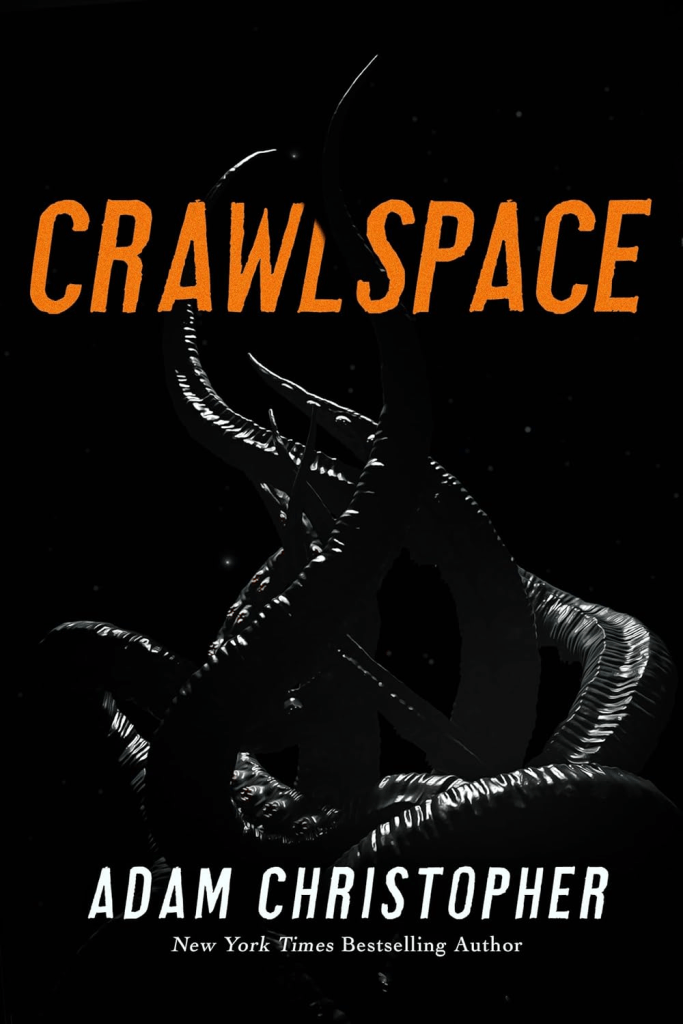



There is a version of Crawlspace that absolutely rips. You can feel it in there, trapped behind the wall panels like one of its own characters, knocking to get out. A crew of seven aboard an experimental spacecraft gets betrayed by their replacement pilot, stranded in a void between dimensions, and then picked off one by one as something from outside starts wearing their faces. That’s a fantastic setup. It’s Event Horizon meets The Thing meets the locked-room paranoia of a good submarine thriller. And for about the first third, it works. The initial Drop failure, the locked bulkhead, the dawning realization that Colonel Redway has his own mission: all of that moves with real propulsive energy.
Then the middle happens, and the book loses its nerve. Not its plot, which keeps churning with competent efficiency, but its willingness to be genuinely strange or frightening. Characters disappear and reappear. The knocking starts. The crawlspace beckons. But instead of leaning into the cosmic wrongness of the void, Christopher keeps pulling back to procedural problem-solving: fix the antenna, rig the power grid, prep the servodrone, recalibrate the ion drive. There is so much engineering in this book. Enough wiring diagrams and systems checks to make you feel like you’re reading an Artemis employee manual rather than a horror novel. The dread never builds because every time the atmosphere thickens, someone starts troubleshooting.
Adam Christopher is a New Zealand-born, UK-based New York Times bestselling author whose career has been built largely on franchise work: Star Wars: Shadow of the Sith, Stranger Things: Darkness on the Edge of Town, plus tie-ins for Elementary, Dishonored, Doctor Who, and World of Warcraft. His original fiction includes the debut Empire State, SciFiNow’s Book of the Year in 2012, and The Burning Dark, a space-station horror that drew comparisons to Shirley Jackson. Crawlspace, published by Nightfire/Tor, represents a return to that same sci-fi horror territory, though the execution here is more workmanlike than inspired.
The characters are fine. Deacon is the gruff veteran, Mirai the quiet analyst, Avery the nervous genius. They are exactly who you expect them to be, and they do exactly what you expect them to do, and then some of them get replaced by a tentacle monster. There is genuinely cool imagery. The final act has real desperation to it, and the ending lands.
But “cool imagery” and “lands” are not the words you want anchoring the climax of a horror novel. I wanted this book to be unhinged. I wanted it to crawl under my skin the way the title promises. Instead it’s competent, plotted with mechanical precision, and slightly too in love with its own hardware to ever really let the darkness in.
Published March 17, 2026 by Tor Nightfire.
 The Blog Without a Face
Leave a comment