
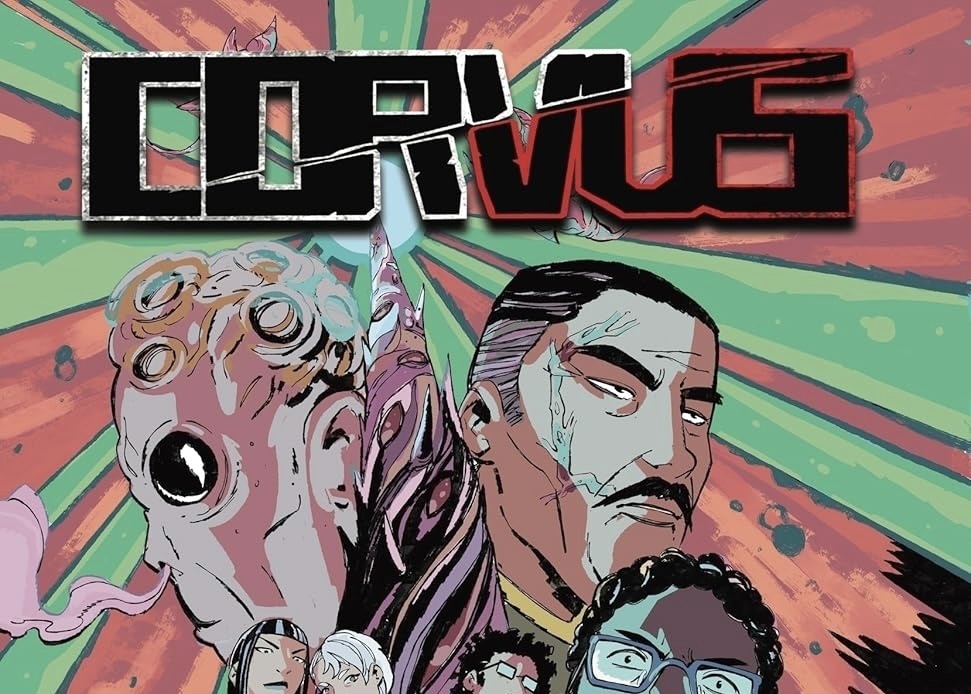
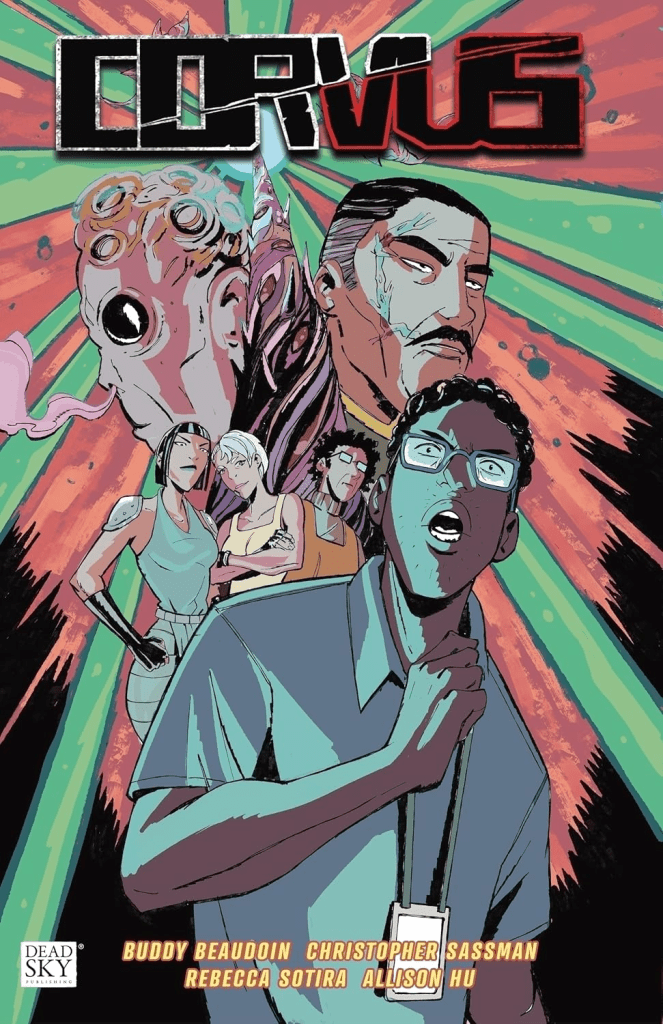





TL;DR: Corvus is sci-fi horror that treats grief like a targeting system: the better you are at surviving, the more efficiently the universe recruits you into hell. It is a propulsive, HUD-haunted nightmare, mixing crisp action readability with psychic dread, and it’s best for readers who want trauma-as-monster storytelling without sacrificing momentum, gore, and spectacle.

The best argument Corvus makes is not in its lore, or its gamer-to-space-soldier hook, or even the “Germanic folklore” preface about The Mare squatting on your chest and gifting you nightmare fuel. The best argument is visual: this book wants to feel like being yanked out of your bedroom by the collar and shoved into a glowing, cold interface where your trauma is now a tactical objective. It leans hard into screens, overlays, HUD framing, and that videogame-adjacent language of download bars and targeting reticles, then uses it as a pressure chamber. You are not just reading panels. You are being transmitted.
That framing does a lot of heavy lifting, because the premise is clean and pulp-forward in a way I mean as a compliment. Daryn Dall is a young man in his twenties, crushed by having outlived both parents, and he’s also extremely good at a war shooter called Quest 4 War. His skill gets him noticed by a grassroots intergalactic resistance operating a ship called CORVUS, and they recruit him unwillingly to help stop an alien race known as The Mare. The Mare are described as the truest evil in the galaxy, using psychic power to force people to relive their worst trauma on a loop until civilizations collapse.
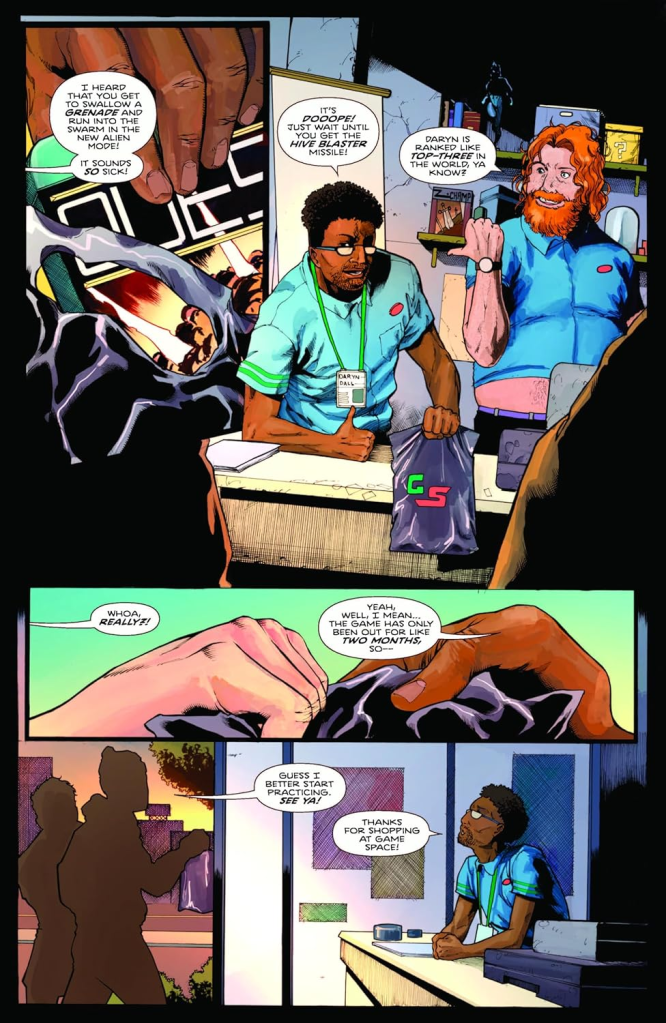
What makes this land as solid instead of skating into “cool pitch, average execution” is how often the comic remembers it is a comic. Paneling and pacing do the most work in the early movement: wide space shots and modular, angled insets create that kinetic, tactical rhythm, then the book snaps into tighter beats when it wants you trapped with Daryn. You get decompressed pauses where the scene breathes and dread seeps in, then sudden compression when something violent happens and the page wants to shove your face into it. A moment reads as banter or routine, then the next page or the next panel cadence pivots the temperature fast, the way a nightmare does when it stops pretending to be metaphor.
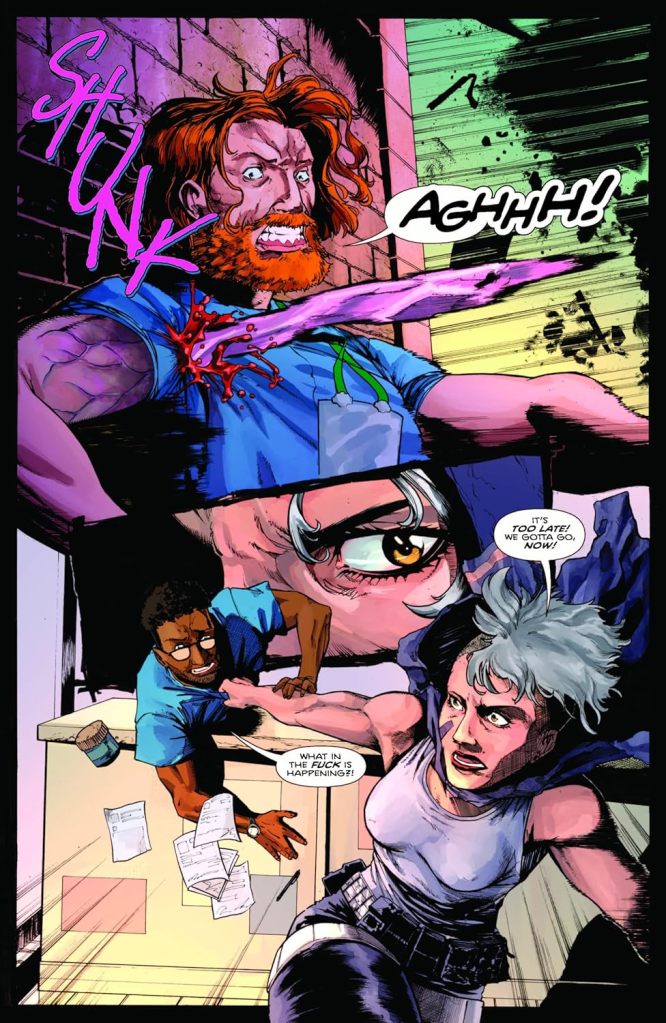
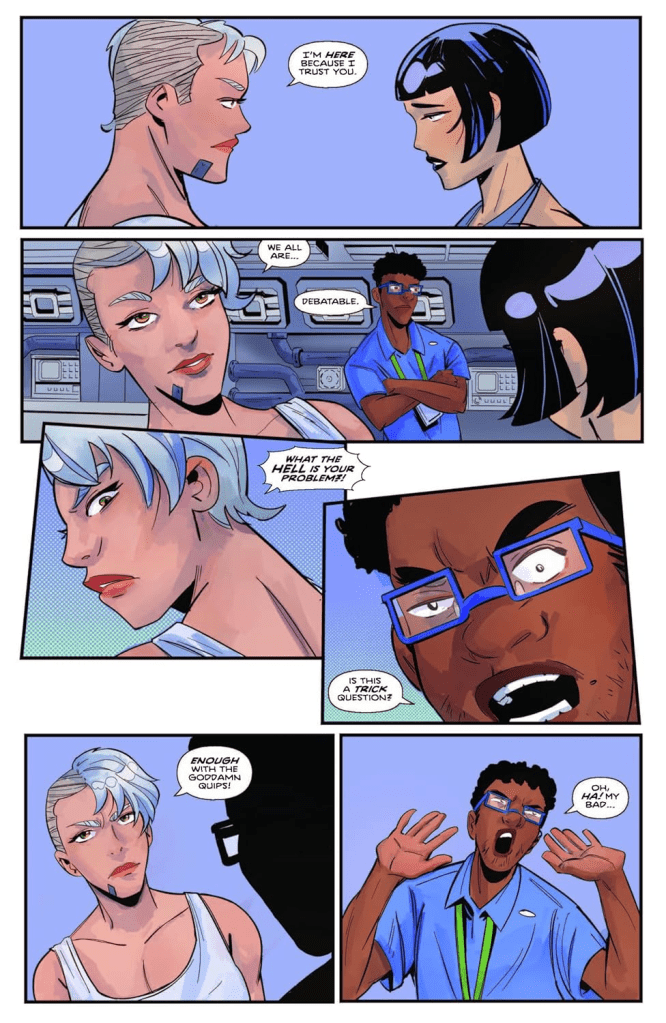
Readability and staging are mostly strong, especially when the book is doing movement across space: ships in chaos, bodies in motion, characters hustling through interiors. The action generally tracks, and the facial acting helps keep the emotional thread from getting lost in the sci-fi machinery. Daryn’s expressions do a lot of “I’m trying to be rational while my brain is screaming,” which is basically the house style of this story. Body language also gets used to show power dynamics without needing paragraphs of dialogue: who leans in, who blocks a doorway, who is framed as small against a huge environment. That matters, because Corvus is constantly telling you that consent is a funny little concept once you are in the hands of bigger forces.
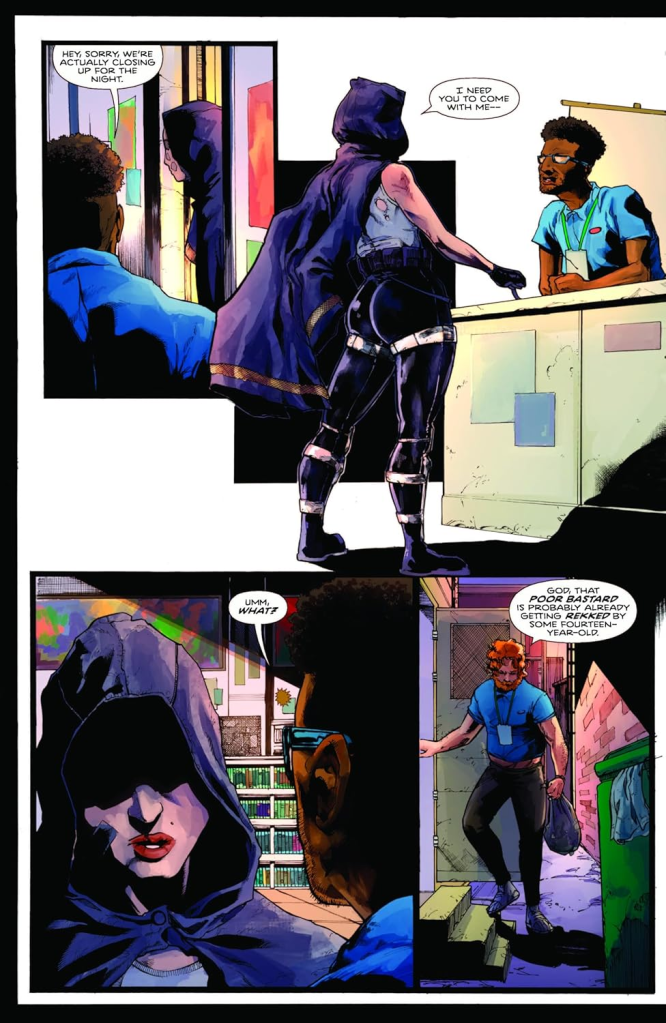
Color and ink choices do a ton of mood work. There’s a push-pull between crisp, high-contrast sci-fi surfaces and moments where the palette gets meaner, dirtier, more nightmare-smeared. Space and tech are rendered with clean gradients and controlled lighting, while Mare-adjacent moments drift toward harsher contrast and less comforting texture. Negative space gets used as a threat: big black fields, isolated figures, a sense that the frame itself could swallow you. Even when the linework stays relatively clean, the atmosphere says: you are not safe in the clean room either.
Horror is where the book is most uneven but still effective. When it stages violence, it often does it with a quick escalation and a clear focal point, so you feel the shock without losing the geography of the scene. When it withholds, it leans into implication, shadow, and the wrongness of bodies and shapes rather than lingering on gore. The strongest horror beats are the ones that treat trauma like a monster with habits: it returns, it repeats, it adapts, it learns your schedule. The Mare concept is brutal because it’s not just “boo, scary alien.” It’s “your worst memory is now an environment you can’t leave.” That’s pretty fucked, and the comic knows it.
Dread mechanics here are basically three engines firing at once. One, captivity: Daryn is recruited unwillingly, so even the “good guys” carry menace. Two, competence as vulnerability: his skill at a war game becomes a chain, and the book keeps twisting that screw. Three, the trauma loop idea, which turns internal suffering into an external antagonist. The tension comes from anticipation more than mystery. You understand early that the Mare don’t just kill you, they make you live through something again and again until you break, and that knowledge contaminates every quieter scene.
Corvus is largely about grief, agency, and the way survival can become a job you never applied for. Daryn’s backstory is presented as a weight he carries daily, and the cosmic stakes do not erase that. If anything, the story keeps insisting that the galaxy-ending threat and the personal spiral are the same kind of problem, just scaled differently. The Mare are an embodiment of that: an enemy that weaponizes what already lives inside you.
For me, the biggest wobble is that the comic sometimes wants to be breezy action-sci-fi and heavy psychological horror in the same breath, and the seam shows. Some transitions hit like a clean smash cut, others feel like the book changed gears without fully conceptualizing the clutch. A few emotional beats could have used one more silent panel, one more held expression, one more breath before the plot sprints again. When it slows down and trusts the page, it’s genuinely compelling. When it rushes, the big ideas are still there, but they feel more like a mission briefing than a gut punch.
If you like propulsive sci-fi with horror venom in its fangs, and you enjoy stories where the power fantasy of being good at a game gets inverted into a trap, you are going to have a good time. If you are already allergic to any whiff of gamer-adjacent setup, you might bounce early even though the book is doing more interesting emotional work than the premise suggests. But if you stick with it, the comic proves it is not just cosplay armor and laser fire. It wants to dig into the bad dreams and make them tactical, which is a pretty effective pitch.

Read if you like “video game skills become a curse” setups, where competence is just a nicer word for being useful to terrifying people.
Skip if you don’t like tonal blends where action-sci-fi and psychological horror share the same page and occasionally show the seam.
Written by Buddy Beaudoin;
Art by Christopher Sassman & Rebecca Sotira; Colors by Allison Hu;
Published March 24, 2026 by Dead Sky Publishing.



 The Blog Without a Face
Leave a comment