
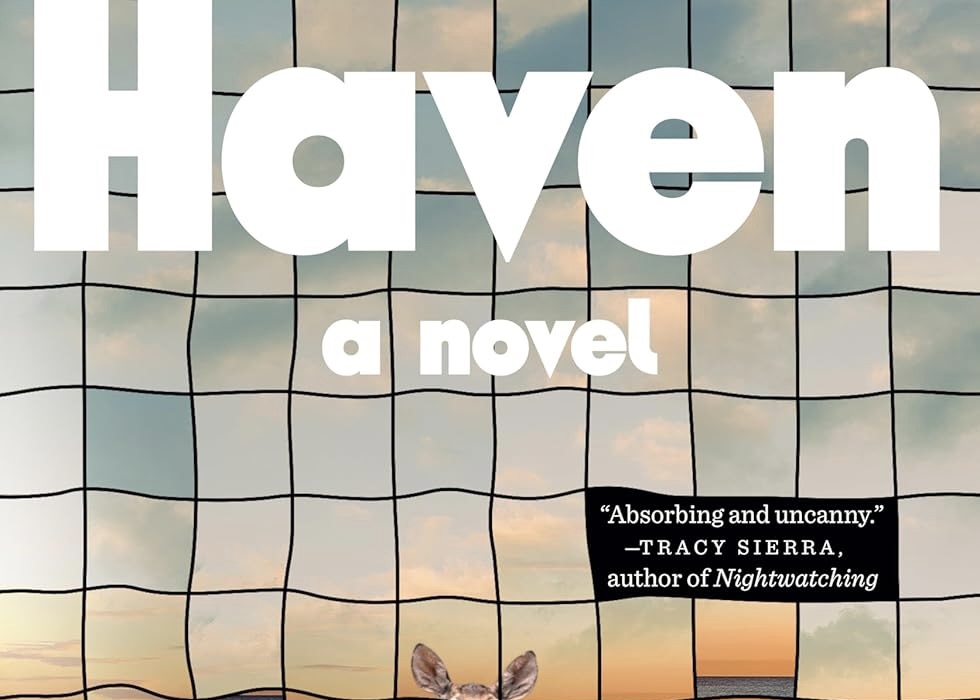
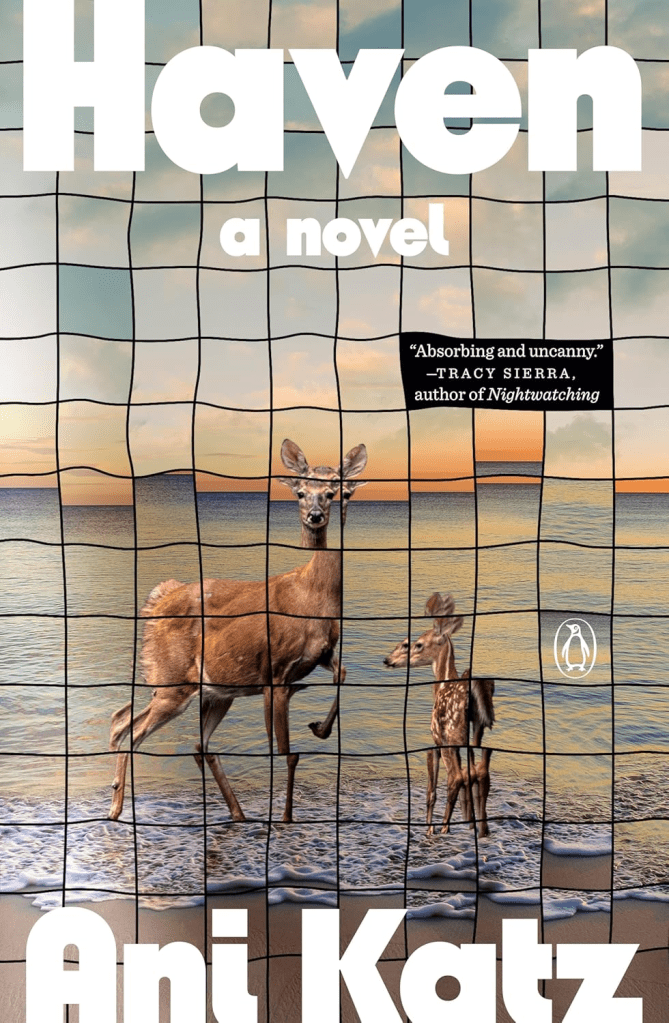






TL;DR: Haven is Rosemary’s Baby rebuilt for the age of NDAs and biohacking, a novel that starts as a missing-child thriller and mutates into something far stranger and more furious. Ani Katz writes early motherhood like a horror movie and corporate complicity like a religion. Ferociously paced, genuinely unnerving, and smart enough to earn its bleakest impulses.

Caroline, sleep-wrecked and anxious, hauls out a breast on a public bench to feed her screaming infant while a group of teenage boys watches and cheers. Her husband Adam is three feet away, face buried in his phone. It’s funny and awful and so precisely observed that it hurt my chest a little. That combination of funny, awful, and precise is the whole book’s operating frequency, and Ani Katz stays locked into it for an impressively long time before cranking the dial toward something much, much worse.
Caroline and Adam, a young Brooklyn couple still shaky from his unemployment and a near-marriage-ending affair, arrive at Haven, an exclusive island community frequented by employees of the tech megacorp where Adam now works. They’re sharing a glass-walled beach house with his colleagues for a month of sun and Sancerre. Caroline has their infant son Gabriel strapped to her body and that prickling feeling that something about this place is fundamentally wrong. Then Adam gets called back to the mainland, and Gabriel disappears.

What Katz does from there is genuinely impressive. She could have written a tight missing-baby thriller. Instead she wrote something that starts as domestic suspense and keeps mutating, pushing through genre membranes until it’s speculative body horror by way of Ira Levin and a decade of tech-bro dystopia discourse. It shouldn’t work. It works really well.
Katz writes in long, controlled sentences that accumulate detail the way anxiety accumulates in the body. Caroline is a photographer, and the book thinks like one. A severed hand burrowing into a heap of jade grapes in a grocery store, and it takes you a beat to realize the hand is Caroline’s own, that Katz is describing dissociation as casually as reaching for fruit. Three teenage girls bobbing up out of a turquoise pool like wraiths, grinning, calling the baby “Gabey,” claiming they’re “just the delivery girls.” A doe and her fawns at the water’s edge, speaking without moving their mouths, delivering the novel’s thesis in the voice of an animal parable. The texture is almost tactile. It has the warm, pressurized density of a fever dream you’re not sure you’ve woken up from.
Katz is a writer, photographer, and teacher from Long Island’s South Shore with a BA from Yale and an MFA in photography from Columbia College Chicago. Her 2020 debut, A Good Man, was a psychological thriller narrated by a family annihilator that earned starred reviews from Publishers Weekly and Booklist. That book was a slow-burn character study told from a monster’s perspective. Haven is structurally bolder, pivoting from realism to surrealism mid-stride, distributing its horror across an entire corporate system rather than one man’s broken psychology. In a Writer’s Digest interview, Katz described a five-year evolution from conventional locked-room thriller to speculative horror, shaped by her own difficult journey to have a child alongside what she called “the seemingly daily examples of venal elites dragging the rest of us into a techno-fascist hellscape.” Both pressures are legible on the page, and they give the novel a rawness that feels earned rather than performed.

The characters work because none are simple. Caroline is sympathetic but not saintly: judgmental, afraid of teenagers on street corners, aware she married up. Adam is infuriating the way charismatic, self-pitying men are infuriating. The supporting cast are drawn with a satirist’s precision. Blaise with his Olympic swimmer’s body and performative man-bun. Wynn delivering conspiracy lectures in a hat embroidered “Unprecedented Times.” Perry, so carefully kind to Caroline that you spend half the book wondering if he’s decent or something else entirely. Katz gives them all just enough humanity that they stay real even as the plot demands they become sinister, and that ambiguity is one of the scariest things in the novel.
The middle section is where Haven is most electrifying and occasionally most unwieldy. Each scene is individually stunning, but stacked together they occasionally slow momentum when you want it sprinting. Maybe fifteen pages where accumulation tips from dreamlike into cluttered. Minor complaint about a ferociously paced book, but it’s there.
The dread in Haven is built through social discomfort that metastasizes. The scariest thing here isn’t a cult or a corporation. It’s the feeling of being in a room full of people who all know something you don’t, who are smiling, who might love you, who are definitely lying. Katz understands that durable horror comes from complicity. It’s Rosemary’s Baby if the Castevets worked in venture capital, but that undersells how contemporary and politically furious this book is.

Haven is not perfect. It’s ambitious in ways that mostly pay off, which is rarer and more interesting. It has the courage to be genuinely weird, the craft to make that weirdness feel inevitable, and a thesis about power, motherhood, and what we’ll sacrifice for safety that will sit in your stomach like a stone. Read it, then lie face-down on the floor for twenty minutes.

Haven by Avi Katz,
published March 10, 2026 by Penguin.
 The Blog Without a Face
Leave a comment