
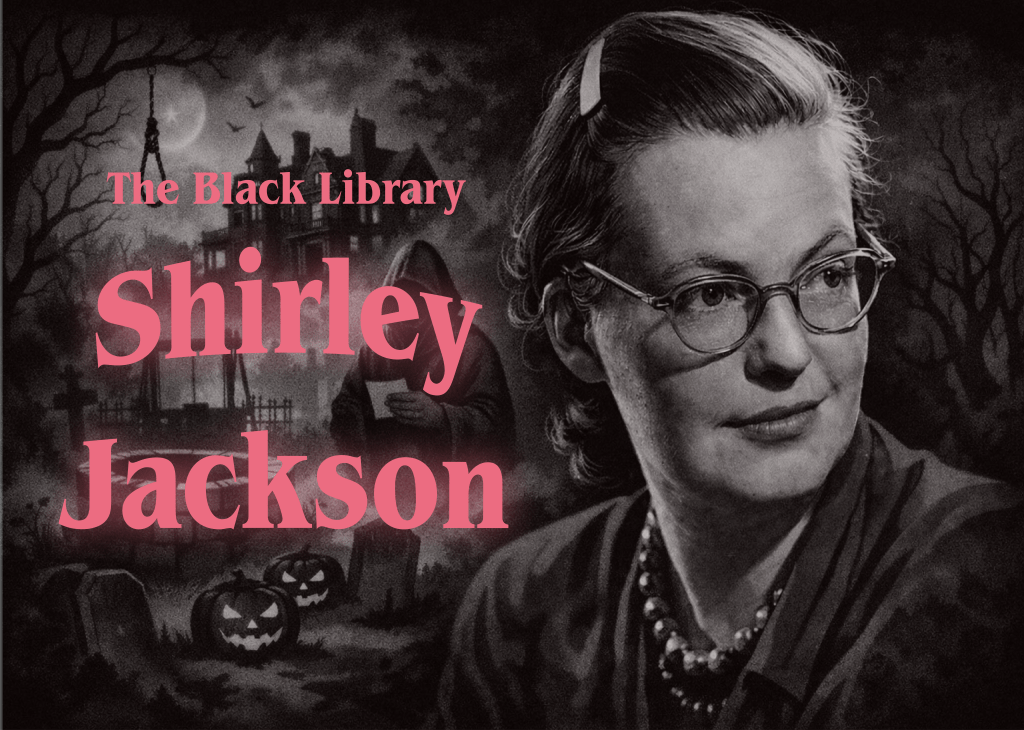
The Blog Without a Face presents the first installment of The Black Library, an ongoing series dedicated to the masters of horror. We begin, as we must, with the woman who built the house.
The Woman in the House
There is a version of the Shirley Jackson story that gets told at cocktail parties and in the introductions to paperback reprints, and it goes something like this: brilliant recluse writes terrifying fiction, dies young, gets rediscovered. It is a tidy little narrative, and it is also bullshit. Not because it’s inaccurate, exactly, but because it sands down every sharp edge on one of the most fascinating, infuriating, and genuinely haunted lives in American letters.
Shirley Hardie Jackson was born December 14, 1916, in San Francisco, into the kind of upper-middle-class California family that believed in keeping up appearances and not asking too many questions about what happened behind closed doors. Her mother, Geraldine, was a deeply conventional woman who seemed constitutionally incapable of hiding her disappointment in the daughter she’d gotten. Geraldine had wanted a socialite. She got a weird, overweight girl who preferred writing poetry and keeping journals about the supernatural to attending school dances. Jackson’s childhood diaries reveal someone already attuned to darkness: a 1933 New Year’s resolution reads, with eerie prescience, “seek out the good in others rather than explore for the evil.” She would spend the rest of her life doing precisely the opposite, and thank god for it.
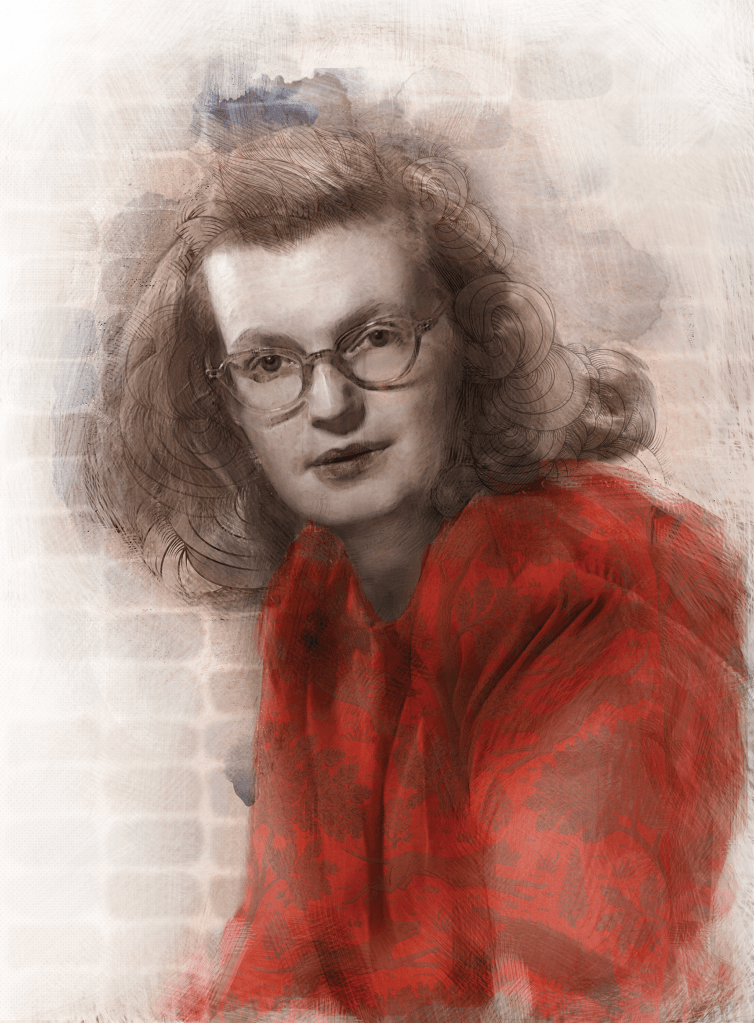
Jackson’s college years were a mess in the best possible way. She dropped out of the University of Rochester after a year, spent a stretch at home producing a thousand words a day, then enrolled at Syracuse, where she became fiction editor of the campus humor magazine and met the man who would become both her greatest champion and her most reliable source of misery: Stanley Edgar Hyman. The story goes that Hyman read one of her stories in a college magazine, slammed it shut, and announced to his fraternity brothers that he intended to marry its author. He did, in 1940, over the objections of both families. Her parents were appalled because he was Jewish. His father disowned him because she wasn’t.
And here’s where the fairy tale, such as it was, starts rotting from the inside. Hyman was brilliant. He was also a serial philanderer who believed in open marriage the way some people believe in gravity: as a force that applied to him and that everyone else simply had to deal with. He slept with college friends, mutual acquaintances, his own students at Bennington College, and, reportedly, a next-door neighbor. He was always candid about it. Jackson was not okay with it. She never really was, despite what she told herself in her diaries, where entries about his latest infidelity sit next to bursts of all-caps declarations of love that read more like incantations than confessions.
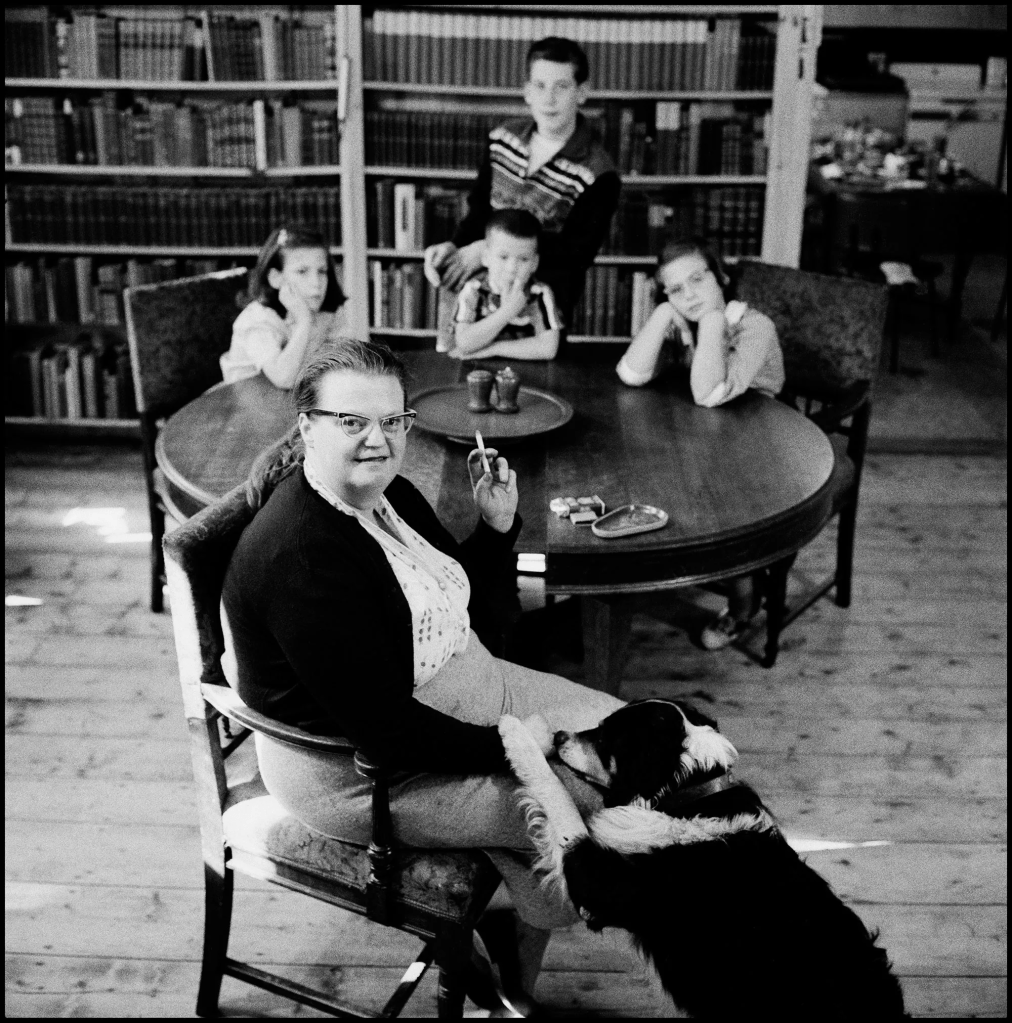
Meanwhile, Jackson did the cooking, the cleaning, the child-rearing for their four kids, and the grocery shopping. Hyman sat at his desk and, according to one account, occasionally yelled at his wife to come refill the ink in his pen. She also wrote, on top of everything else, because she was the family’s primary breadwinner, earning top rates from magazines like Good Housekeeping and The New Yorker while Hyman spent years gestating literary criticism. He controlled the finances despite earning far less, doling out portions of her own money as he saw fit. One of her cartoons, discovered after her death, shows her creeping up behind Stanley in his easy chair, holding an axe.
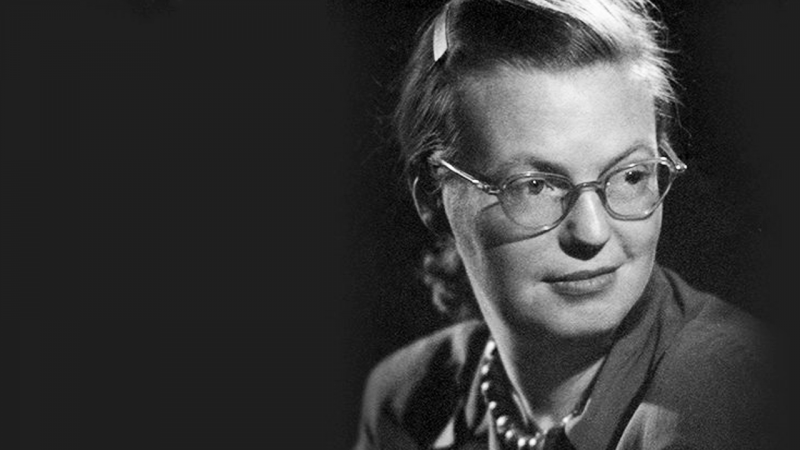
Let me be clear about something: Hyman genuinely believed Jackson was a genius. He said so publicly and privately, repeatedly, for the entire duration of their marriage. He championed her work, edited it, and pushed her to keep producing even when her health was failing. After her death, he wrote that her “powerful visions of suffering and inhumanity” were among the most significant literature of their time. He was not wrong about any of this. He was also a man who treated his wife’s domestic labor as his birthright and her emotional wellbeing as someone else’s problem, and if you think that contradiction sounds like something out of a Shirley Jackson novel, congratulations, you’ve been paying attention.
By the early 1960s, Jackson was in bad shape. She was heavily dependent on amphetamines and barbiturates, a chain smoker with chronic asthma, and increasingly unable to leave the house. The agoraphobia that had been building for years became crippling. When she fell and twisted her ankle in the winter of 1962, she treated it as a gift: now she had a reason not to go outside. She would not leave the house again until the following spring. Her final diary entries, written in 1965 after a cross-country lecture tour in a new MG sedan, describe the novel she was working on as “a funny book. a happy book.” She wrote about getting over writer’s block, about a suspected affair of Stanley’s. She ended with this, repeated: “laughter is possible laughter is possible laughter is possible.”
On August 8, 1965, Shirley Jackson died in her sleep during an afternoon nap. Heart failure. She was forty-eight years old. A year later, Hyman married one of his former students, a classmate of his own daughter. He died of a heart attack in 1970, at a restaurant in North Bennington, in the company of his pregnant second wife. Sometimes life writes endings that even Shirley Jackson would have found too on the nose.
The Shape of the Dark
What Jackson did, and what she did better than almost anyone before or since, was locate horror in the ordinary. Not in the Gothic castle, not in the monster’s lair, but in the kitchen, the village square, the faculty party, the family dinner table. She understood, with surgical precision, that the most terrifying thing about human beings is not what we become when civilization breaks down, but what we are while it’s still functioning perfectly. The lottery isn’t a rupture in the social order. It is the social order.
This is the writer who Stephen King called the author of one of the most important horror novels of the twentieth century. This is the writer Neil Gaiman said scared him as a teenager and haunts him still. This is the writer Carmen Maria Machado read in one sitting and described as someone who understood supernatural terror as if she’d witnessed it firsthand. Donna Tartt, Sarah Waters, Richard Matheson, Joanne Harris: the list of writers who cite Jackson as foundational reads like a who’s who of people who understand that the real shit happens in the spaces between what’s said.
And yet, for decades after her death, Jackson was treated as a minor figure. A genre writer, a housewife who dabbled in spooky stories. The academy largely ignored her. Second-wave feminists, who should have been building shrines, looked elsewhere for literary heroines. It wasn’t until Ruth Franklin’s 2016 biography, Shirley Jackson: A Rather Haunted Life, winner of the National Book Critics Circle Award, the Edgar, and the Bram Stoker, that the full scope of Jackson’s achievement and the full weight of her life came into focus for a mainstream audience. The Shirley Jackson Awards, established in 2007 for outstanding achievement in psychological suspense, horror, and the dark fantastic, helped cement her name as the standard by which the genre measures itself. Ellen Datlow’s 2021 anthology When Things Get Dark, featuring stories inspired by Jackson from writers like Laird Barron, Elizabeth Hand, Kelly Link, and Paul Tremblay, demonstrated that her influence isn’t just alive: it’s still metastasizing.
Jackson wrote six novels, two memoirs, and over two hundred short stories in a career that spanned barely two decades. She did this while raising four children, managing a household, enduring a marriage that oscillated between intellectual symbiosis and emotional abuse, and fighting her own body and mind every goddamn day. She was funny. She was mean. She believed in witchcraft, or at least liked telling reporters she did. She composed “The Lottery” in a single morning, pushing a stroller up a hill while pregnant, and it became the most talked-about piece of fiction in America by nightfall.
What follows is an attempt to walk through her horror work, novel by novel and story by story, and give each piece the attention and the score it deserves. Some of these books are masterpieces. Some of them are fascinating messes. All of them are the work of someone who saw the darkness under everything and decided, with something between courage and compulsion, to write it down.
The Road Through the Wall (1948)
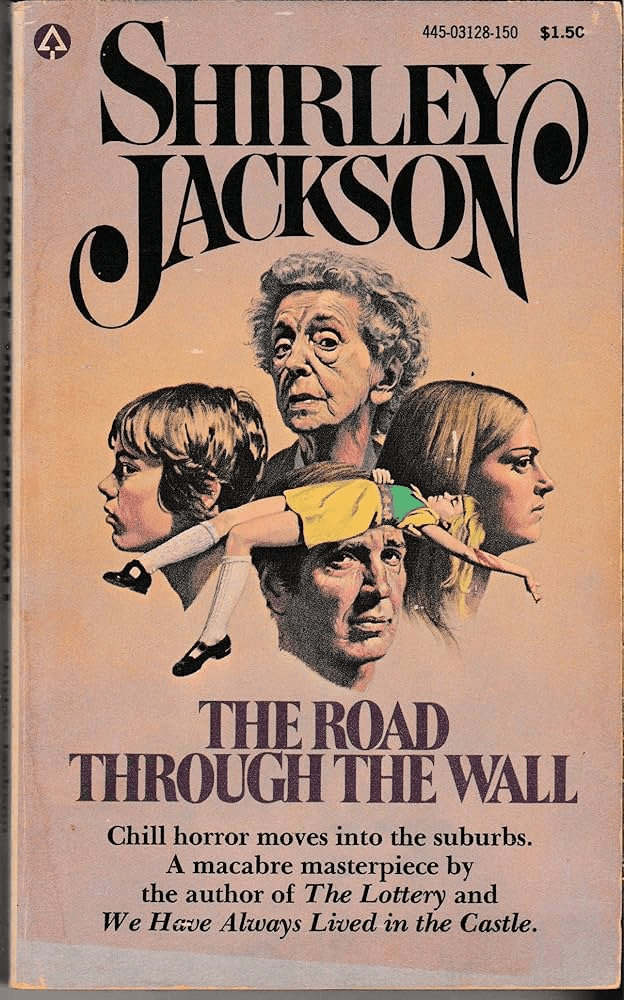
There’s an impulse, when you’re mapping a great writer’s career, to be generous about the early stuff. To squint at the debut and say, well, you can see the seeds. And sure, you can see the seeds in The Road Through the Wall. They’re just buried under about thirty characters, a plot that moves like traffic on a residential street, and a tonal register that hasn’t quite figured out what it wants to be when it grows up.
Jackson’s first novel is set in Pepper Street, a suburban California neighborhood that functions as a microcosm of mid-century American rot. The wall of the title is literal: a barrier at the end of the street that keeps the nice families from having to look at the less nice ones. When the wall comes down, so do the pretenses, and the petty cruelties and suppressed hatreds of the neighborhood’s residents escalate toward tragedy. There’s adultery, antisemitism, class anxiety, and a death that arrives with the flat, terrible logic of inevitability.
The problem is ambition. Jackson is trying to do a panoramic social novel, and at this point in her career, she doesn’t have the architecture for it. There are too many families, too many characters introduced through dialogue without enough physical or psychological anchoring, and you spend a lot of the book flipping back to figure out which Desmond is which and whether the Donalds are the ones with the mean kid or the sad kid. The prose is competent but not yet distinctive. You can feel Jackson working, and working hard, but the effortless menace that would define her later work isn’t here yet.
What is here, though, is the worldview. Jackson already knows that neighborhoods are prisons. She already knows that respectability is a performance maintained through exclusion. She already knows that children absorb cruelty from their parents like water from the soil, and that the most dangerous thing about a community is its consensus. There’s a line from the prologue that Ruth Franklin flagged as one of the darkest in the book: the idea that no man owns a house because he really wants a house, the same way no man marries because he favors monogamy. If you know anything about Jackson’s life, that line hits like a fucking brick.
There are moments, though, where the future Jackson flickers into view like a signal fire. A neighborhood girl ordering what she thinks is fine art and accidentally receiving pornography. A child’s casual cruelty delivered with the offhand precision of someone swatting a fly. A dinner party where every sentence is a small act of violence dressed up as conversation. These moments have the texture that would define her later work: that feeling of watching something terrible happen in broad daylight while everyone agrees it isn’t happening at all.
The Road Through the Wall is a minor novel by a major writer. It’s the sound of someone clearing their throat before saying something extraordinary. You don’t need to read it unless you’re committed to the full Jackson experience, but if you do, pay attention to the way she handles the neighborhood kids. The children in this book are already terrifying. They would only get worse.

“The Lottery” (1948)
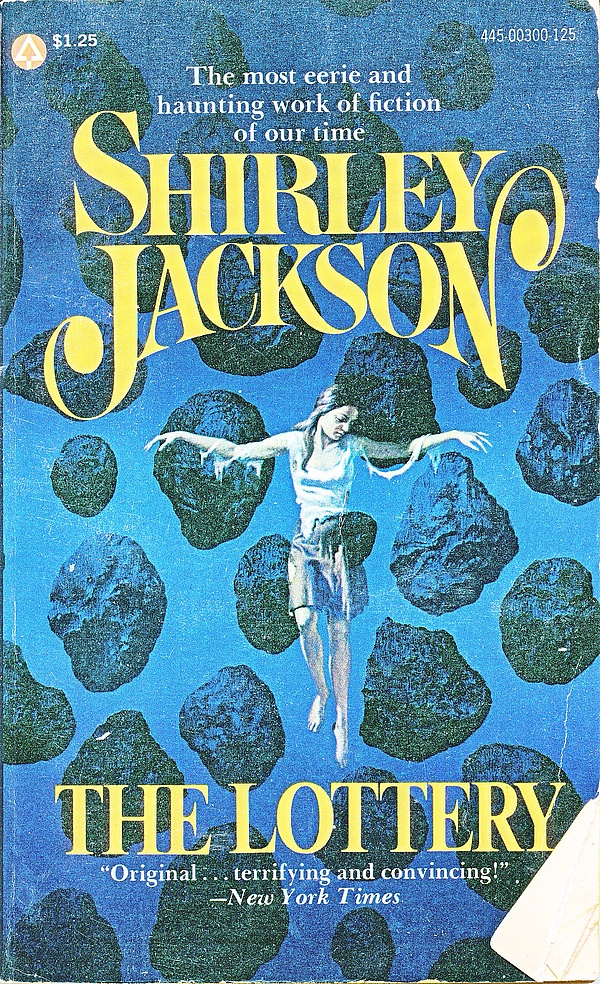
Let’s get this out of the way: “The Lottery” might be the most important American short story of the twentieth century, and it is absolutely, without question, horror. Not horror-adjacent. Not literary fiction with dark elements. Horror. The fact that it gets taught in high school English classes and assigned by teachers who would never shelve it next to Stephen King doesn’t change what it is. It is a story about a community that ritually murders one of its own, and it is written with the calm, detached precision of someone describing a church picnic.
You know the setup, because everyone knows the setup, even people who haven’t read it: a small village gathers on a sunny June morning for their annual lottery. Slips of paper are drawn. The mood is casual, neighborly, even cheerful. Children play. Adults gossip. And then Tessie Hutchinson draws the marked paper, and her neighbors stone her to death while she screams that it isn’t fair.
What Jackson does with those last few pages is one of the great gut punches in all of fiction, and it works because of everything that comes before. The genius of “The Lottery” is its tone: that flat, affable, procedural narration that treats the lottery with the same matter-of-fact attention you’d give to a county fair. The horror doesn’t arrive. It was there the whole time. You just didn’t notice because it was wearing the same face as everything else.
When The New Yorker published it on June 26, 1948, the reaction was volcanic. The magazine received more mail than any work of fiction had ever generated, and almost all of it was furious. Readers canceled subscriptions. Jackson received over three hundred letters that summer, and she later said only thirteen of them were kind. Her own mother wrote to say that she and Jackson’s father “did not care at all for your story” and suggested she try writing something to cheer people up. Some readers wanted to know where this ritual actually took place, as though Jackson had written an investigative report. One woman from Ohio suspected the editorial staff had become tools of Stalin.
Jackson’s own explanation, when she finally gave one, was characteristically understated: she had hoped to dramatize “the pointless violence and general inhumanity” in her readers’ own lives. She wrote the story in a single morning, walking home from the post office in North Bennington, pushing a stroller while carrying groceries and pregnant with her third child. It took less than a few hours. It changed American literature.
The thing about “The Lottery” that keeps it radioactive after all these decades is that it refuses to explain itself. There’s no reason given for the ritual. Old Man Warner mutters about corn and harvests, but the connection between the lottery and any actual agricultural benefit is vague at best, and Jackson is clearly not interested in making it concrete. The ritual persists because it persists. That’s the horror. That’s the whole horror. And if you read it and think, well, my community would never do this, Jackson is smiling at you from the grave, and the smile is not comforting.
What also holds up, and what tends to get buried under the discourse about the twist ending, is the craft. The character names alone are doing work that would take a lesser writer pages of exposition: Mr. Graves, who assists with the lottery. Mr. Summers, whose cheerful name masks the violence he administers. Tessie Hutchinson, whose surname recalls Anne Hutchinson, the Puritan dissident who was banished and killed for challenging authority. Jackson could load a name like a weapon and leave it sitting on the kitchen table.
And the prose. God, the prose. The flatness of it is the whole trick, and it isn’t flat at all if you’re paying attention. Every sentence in “The Lottery” is doing two things at once: maintaining the surface of normalcy and quietly feeding you the details that will make the ending not just shocking but inevitable. The children gathering stones in the first paragraph. The way the crowd makes room for Tessie when she arrives late. The way Bill Hutchinson forces the slip of paper out of his wife’s hand. When you reread it, and you will reread it, every line is a trapdoor you didn’t see the first time.

Hangsaman (1951)
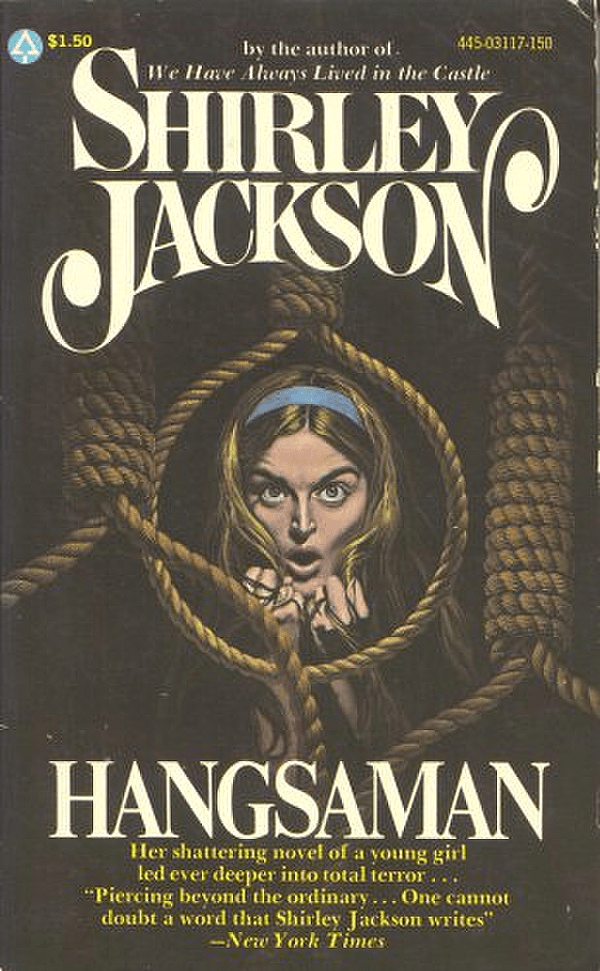
Hangsaman is the Jackson novel most likely to make you feel like you’ve lost your grip on something, and you’re not sure if it’s the book or your own mind. That’s not entirely a compliment, but it’s not entirely a criticism either. It’s a strange, slippery, deeply uncomfortable book, and it is doing something that almost no one was doing in 1951.
Natalie Waite is seventeen, the precocious daughter of a domineering writer father, and she’s heading off to college. The early chapters at home are suffocating: Natalie’s father holds court at pretentious cocktail parties while her mother fades into the wallpaper, and there’s a scene at one of these parties that is clearly, unmistakably the aftermath of a sexual assault, rendered with the kind of oblique, dissociative prose that makes you read it three times before the full weight hits. Jackson never names what happens. She doesn’t have to. The silence around it is the point.
At college, Natalie is lonely and disoriented, increasingly alienated from the other students and from reality itself. She begins a friendship with a girl named Tony who may or may not actually exist. The novel slides, with exquisite subtlety, from realism into something else entirely, and by the final act you’re reading what amounts to a psychological horror story about dissociation, told from the inside.
The book was partly inspired by the real-life 1946 disappearance of Paula Jean Welden, a Bennington College sophomore who went for a hike and was never found. Jackson knew the case well. She was living in North Bennington at the time, her husband taught at Bennington, and the missing girl’s ghost hangs over the novel like weather. But Hangsaman isn’t really about a missing girl. It’s about a girl who is disappearing, piece by piece, into herself, and who finds in that disappearance something that feels dangerously close to freedom.
The pacing is the problem. Jackson is working in a mode that’s deliberately disorienting, and she’s good at it, but the middle section at the college sags under the weight of its own ambiguity. There are passages that feel like being trapped in someone else’s fever dream, which is sometimes effective and sometimes just tedious. The father, who should be more present as a source of menace, drops out of the novel too early. And the prose, while frequently gorgeous, occasionally tips over into a kind of lyrical vagueness that makes you want to grab the book by the shoulders and shake it.
But then there’s Tony. The scenes with Tony are some of the most unsettling things Jackson ever wrote, because you can never quite locate the seam between real and imagined. Tony feels like a person. She has weight, specificity, a voice. And yet. The way Jackson handles the reveal, or more accurately the non-reveal, of Tony’s nature is masterful: she never tells you directly, but she shows you enough that the realization creeps in like cold water. It’s the kind of horror that doesn’t announce itself. It just rearranges the furniture when you’re not looking.
Hangsaman is a flawed, fascinating novel that reads better if you come to it knowing what Jackson was building toward. It’s a rehearsal for the psychological complexity of Hill House, a first attempt at the unreliable interior monologue that would become her signature instrument. You can feel her finding her range.
The Bird’s Nest (1954)
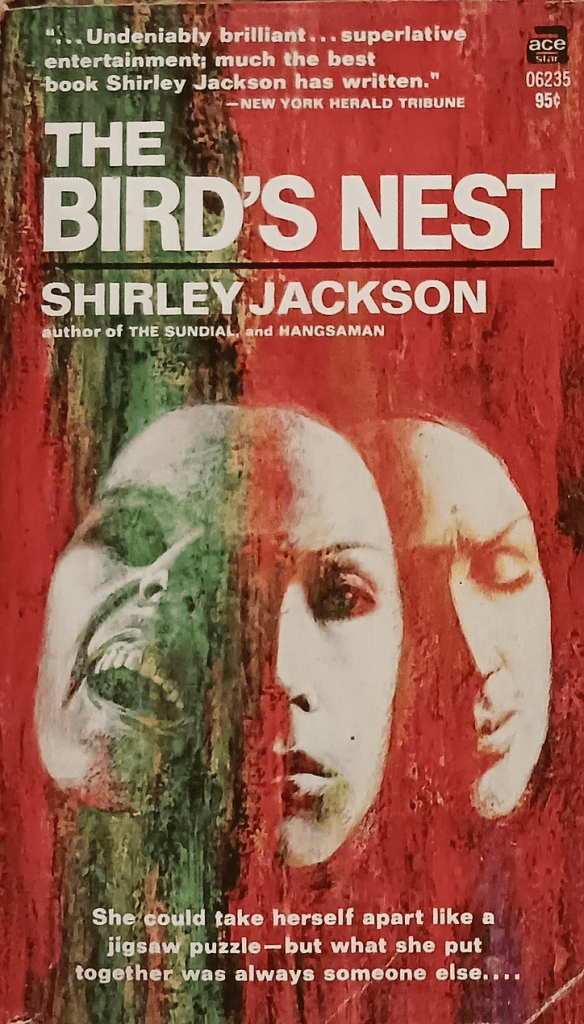
If Hangsaman was Jackson rehearsing the unreliable narrator, The Bird’s Nest is her strapping rocket fuel to the concept and seeing what happens. The result is messy, occasionally brilliant, structurally uneven, and genuinely unlike anything else she wrote. It’s her most clinical novel, and also, paradoxically, her most unhinged.
Elizabeth Richmond is a shy, migraine-prone young woman who works as a secretary at a museum and lives with her Aunt Morgen. She begins receiving threatening letters addressed to “dirty dirty lizzie.” She blacks out. She sneaks out of the house at night with no memory of doing so. And then, through a series of sessions with the spectacularly named Dr. Wright, we discover that Elizabeth isn’t one person. She’s four: the timid Elizabeth, the wild and furious Beth, the childlike Betsy, and the cold, imperious Bess. They are at war with each other, and the novel is the battlefield.
Jackson was writing about dissociative identity disorder before the terminology had fully settled, and she was doing it with a specificity and a dark humor that still feels ahead of its time. The scenes where the personalities switch mid-conversation are genuinely disorienting. There’s a sequence where Elizabeth cycles through identities by the sentence, and it reads less like clinical observation than like watching someone being torn apart from the inside. Dr. Wright, who thinks he can cure her through sheer force of intellectual will, is one of Jackson’s great satirical portraits: a man so convinced of his own competence that he can’t see the damage he’s doing.
The problem with the book is that it’s too long and too committed to its own gimmick. The multiple personality structure is fascinating for about a hundred and fifty pages, and then it starts to feel like variations on a theme rather than genuine escalation. Aunt Morgen, who should anchor the emotional center of the novel, is intermittently compelling but inconsistently drawn. And the resolution feels thin: after all that psychological pyrotechnics, the landing is weirdly gentle, almost anticlimactic, as though Jackson lost interest in the question of how you put a person back together and decided to just skip ahead to the part where they’re mostly fine.
What saves the book, and what makes it worth reading despite its structural problems, is the prose. Jackson writes madness from the inside with an empathy and a specificity that are genuinely moving. There’s a moment where one of the personalities looks out through Elizabeth’s eyes and doesn’t recognize the face in the mirror, and the way Jackson renders that instant of complete dislocation is fucking devastating. You feel the ground give way. You understand, for just a second, what it might be like to not know who you are.
Jackson was reportedly experiencing her own symptoms while writing the book: insomnia, backaches, paranoia. She took a break during the summer of 1953, and the symptoms receded. When she went back to the manuscript in the fall, they returned. If you want a clean boundary between Shirley Jackson’s life and Shirley Jackson’s work, this is not the book that will give it to you.
The Sundial (1958)
The Sundial is the Shirley Jackson novel that nobody talks about, and this is a goddamn crime. It is also, and I will die on this hill, possibly her funniest book, which is saying something for a woman who once described herself as an amateur witch in the same tone you’d use to mention a hobby in ceramics.
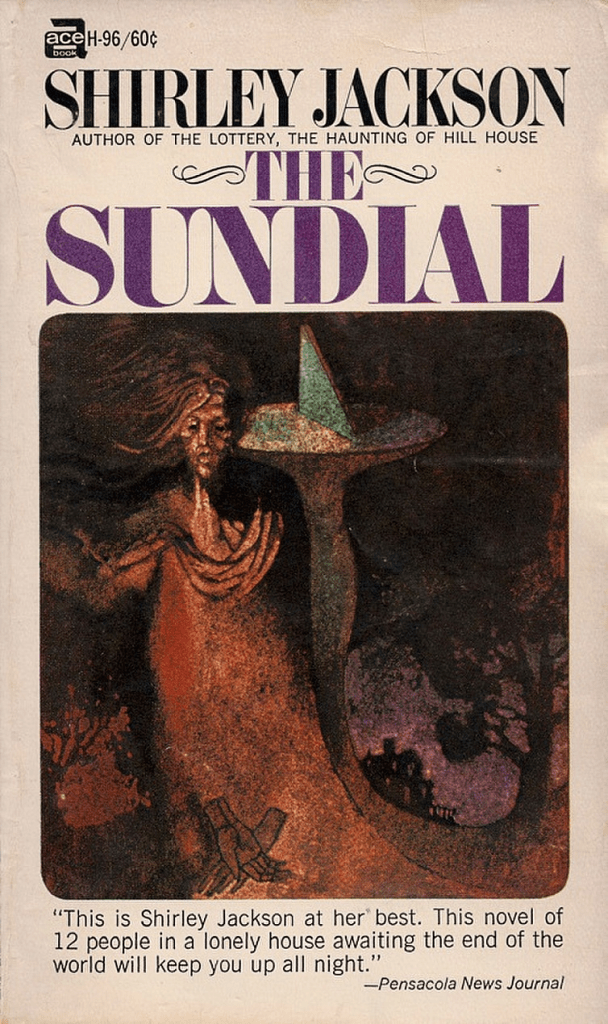
The setup is pure Jackson: the eccentric Halloran family gathers at the family estate for a funeral, and before the body is cold, Aunt Fanny announces that she’s received a message from her dead father. The world is ending. Everyone outside the house will perish. Only those who remain within the walls will be saved. A reasonable person would dismiss this as the ravings of a grief-stricken woman. The Hallorans are not reasonable people. They believe her immediately.
What follows is a sustained, darkly comic portrait of a household preparing for the apocalypse while being almost entirely unable to cooperate on anything. Mrs. Halloran, the family matriarch, is a tyrant who immediately begins laying down rules for the post-apocalyptic world, which mostly boil down to: no fun, and I’m in charge. Her stepdaughter-in-law Maryjane is openly hostile and encourages her young daughter Fancy to entertain murderous thoughts. Essex, a man ostensibly hired to catalog the library books, is clearly employed for other purposes. Everyone hates everyone, and the house, which should be a refuge, is also a prison.
Jackson knew something about prisons that look like houses. By 1958, she was already struggling with the agoraphobia that would eventually trap her in her own home, and you can feel that knowledge in every room the Hallorans can’t leave. The house in The Sundial is sanctuary and cage simultaneously, and the characters’ willingness to believe in the apocalypse starts to look less like credulity and more like wish fulfillment. If the world is ending, they never have to go outside. If the world is ending, their isolation becomes righteousness instead of dysfunction.
The pacing is tight, the dialogue crackles, and Jackson’s satirical eye has never been sharper. This is the book where she most fully channels her gift for observing the ways people perform power, kindness, authority, and victimhood while doing absolutely nothing to earn any of it. The Hallorans are awful, and they are hilarious, and they are completely recognizable as the kind of people you’ve sat next to at a dinner party. There’s a moment where Mrs. Halloran delivers a speech about the new world order she intends to impose, and it sounds exactly like every HOA president who has ever lived, and I mean that as a compliment to Jackson’s ability to extract the monstrous from the banal.
The book’s secret weapon is Fancy, the child, who absorbs her mother’s murderous encouragement with the same bored receptivity she’d bring to a math lesson. Jackson always wrote children brilliantly, but Fancy is special: a kid who has figured out, at an age when most children are learning cursive, that the adults around her are performing a pantomime of meaning and that the only real power is the willingness to act while everyone else is still talking. She is terrifying in the way only Jackson’s children can be, which is to say: entirely plausible.
Whether the world actually ends is a question Jackson answers with characteristic perversity, and I won’t spoil it here except to say that the ending is one of the most audacious things she ever wrote: abrupt, ambiguous, and absolutely, infuriatingly right. It refuses to give you what you want, which is the only honest way to end a book about people who think they know how the world works.
The Sundial went out of print for years. This is inexcusable. If you’ve read Hill House and Castle and you think you know what Jackson can do, read this and recalibrate.

The Haunting of Hill House (1959)
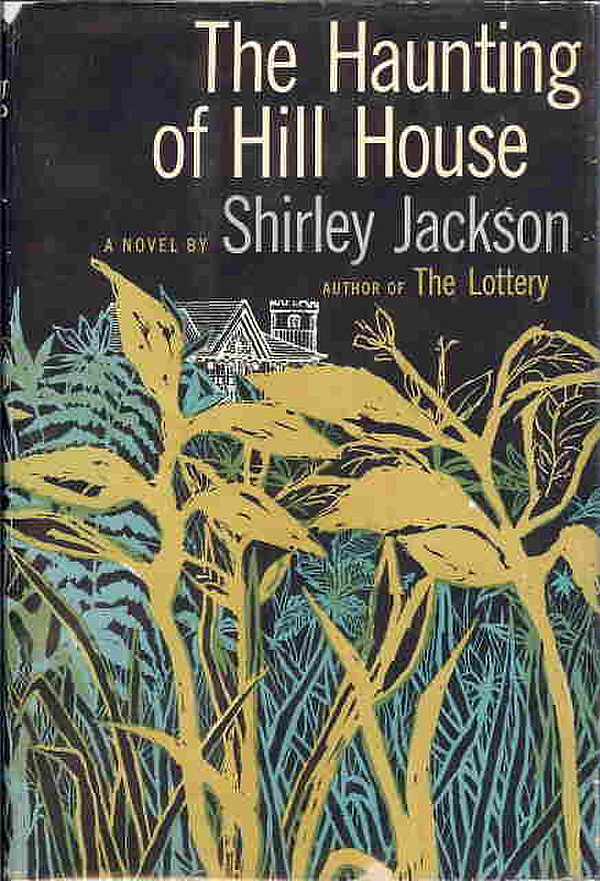
Here is the opening of The Haunting of Hill House:
No live organism can continue for long to exist sanely under conditions of absolute reality; even larks and katydids are supposed, by some, to dream. Hill House, not sane, stood by itself against its hills, holding darkness within; it had stood so for eighty years and might stand for eighty more. Within, walls continued upright, bricks met neatly, floors were firm, and doors were sensibly shut; silence lay steadily against the wood and stone of Hill House, and whatever walked there, walked alone.
If you have read those words before, you felt something when you read them again just now. If you haven’t, you just felt it for the first time. That paragraph is one of the most perfect openings in English-language fiction, and Jackson knew it. She repeated it, nearly verbatim, as the novel’s closing passage, turning the whole book into a sealed loop, a trap that closes on itself the way Hill House closes on Eleanor Vance.
The premise is deceptively simple. Dr. Montague, a researcher of the supernatural, rents Hill House for a summer to study its reported paranormal activity. He invites several people with histories of psychic experiences. Two accept: Eleanor, a painfully shy young woman who has spent eleven years caring for her demanding mother and who is now, three months after her mother’s death, desperate for something that feels like a life; and Theodora, a bohemian artist who is everything Eleanor is not: confident, wry, sensual, present in her own skin. Luke, the heir to the house, rounds out the group. They arrive. Things happen. The things that happen are, on a pure horror-mechanics level, remarkably few: pounding on doors, writing on walls, cold spots, a room that feels wrong. But Jackson’s genius is in understanding that the haunting that matters isn’t what the house does. It’s what it does to Eleanor.
Eleanor Vance is one of the great tragic figures in American fiction, and I don’t say that as hyperbole. She arrives at Hill House with nothing: no home, no friends, no self. She has been, her entire adult life, an extension of her mother’s needs, and now that her mother is dead, she doesn’t know how to exist independently. Hill House offers her what she’s always wanted: a place that wants her. The horror of the novel is that Eleanor doesn’t resist the house. She welcomes it. She mistakes its hunger for love, its possession for belonging. When she finally says “I can’t leave,” she means it, and you believe her, and it is one of the most chilling moments in all of horror because it is also, devastatingly, one of the most human.
Jackson builds dread the way a great composer builds tension: through restraint, through what she withholds, through the slow accumulation of details that feel slightly wrong. The doors in Hill House are all slightly off. The angles don’t quite work. There is a hallway that seems to go nowhere. The house is not sane, the opening tells us, and that insanity is architectural, structural, baked into the geometry of the place. You feel it in your bones before any ghost shows up.
And the question of whether there are ghosts is one Jackson never definitively answers, which is what makes the novel immortal. There is an interpretation in which everything that happens is Eleanor’s poltergeist activity, the psychic residue of a lifetime of suppressed rage and need. There is another in which the house is genuinely evil, a predator that has chosen Eleanor as its prey. Jackson held both possibilities in suspension and refused to collapse the wave function, and the result is a novel that generates a different kind of dread every time you read it.
The pacing is immaculate. The first hundred pages are slow-burn setup: character, atmosphere, the gradual tightening of tension. Then the first supernatural event hits, and from that point on the novel accelerates with the momentum of something falling. The secondary characters are drawn with Jackson’s trademark economy: Theodora, who flirts with Eleanor and then withdraws, whose cruelty is inseparable from her vitality; Luke, charming and useless; Dr. Montague, well-meaning and completely out of his depth. They are all, in their own ways, failing Eleanor. And Eleanor is failing herself, because the person she is inside Hill House is closer to who she really is than the person she was outside it, and that truth is unbearable.
Stephen King called it one of the finest horror novels of the late twentieth century. He was underselling it. The Haunting of Hill House is one of the finest American novels of the twentieth century, period, and the fact that it has the word “haunting” in the title is why it took fifty years for people to say so. It was a finalist for the National Book Award in 1960. It should have won. It should have won everything.
The ending is earned, devastating, and exactly right. I won’t describe it. Read the fucking book.
We Have Always Lived in the Castle (1962)
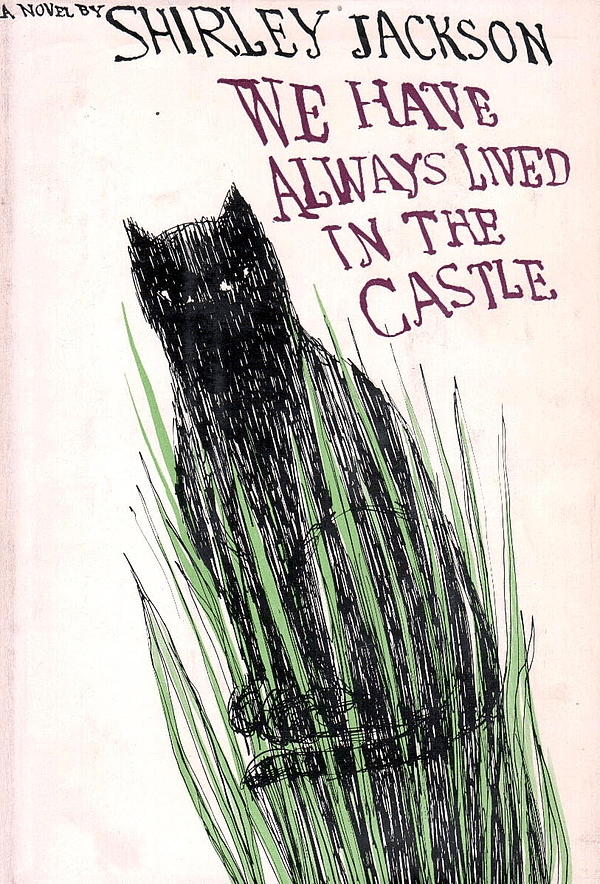
This book has what might be the best opening paragraph in American fiction. I’m not going to reproduce it here, but I’ll tell you what it does: in the space of a few sentences, it introduces you to an eighteen-year-old narrator who likes her sister, a historical king, and a deadly mushroom, and who mentions, with perfect calm, that everyone else in her family is dead. It has been called impossible to read without continuing. This is accurate. I have tested it on people who don’t read horror, and they all turned the page. Every single one.
Mary Katherine “Merricat” Blackwood is one of the most remarkable characters in all of fiction, and she is also, by any reasonable standard, a monster. Six years before the novel begins, the Blackwood family was poisoned at dinner with arsenic in the sugar bowl. Merricat was sent to bed without dinner. Her older sister Constance, who didn’t take sugar, was charged with murder and acquitted. Uncle Julian survived but was left frail and intermittently lucid. The rest of the family died. The villagers believe Constance did it. They are wrong.
Jackson narrates the entire novel through Merricat’s eyes, and it is a masterclass in the unreliable narrator as an instrument of sympathy. Merricat is childlike, ritualistic, fiercely protective of Constance, and given to a kind of sympathetic magic that involves burying objects and nailing things to trees. She walks into the village twice a week for groceries and library books, and each trip is a gauntlet of taunts and cruelty from the townspeople, who have turned the Blackwood poisoning into a children’s rhyme. Jackson describes these encounters with a specificity that makes your stomach hurt. You have been Merricat. You have walked that walk. And the fact that Merricat actually is what the villagers accuse her family of being only makes the dynamic more complex, not less.
Constance is the other half of the equation: agoraphobic, endlessly domestic, sweet in a way that feels less like personality than like armor. She cooks, she gardens, she preserves food in jars that line the cellar like a poem. She never leaves the property. She and Merricat have built a world inside the Blackwood house, a world of two, and it works precisely because it excludes everything else.
Then cousin Charles arrives, and the novel detonates.
Charles is an intruder, a man who smells like change and wants the family’s money, and Merricat recognizes him as a threat with the same instinct an animal recognizes a predator. The tension between Charles and Merricat is some of the most unbearable fiction Jackson ever wrote, precisely because you know, absolutely know, that Merricat will do whatever it takes to protect her world, and you know what “whatever it takes” means for a girl who has already poisoned her family.
Jackson’s biographer Judy Oppenheimer called the novel “a paean to agoraphobia,” and that’s exactly right. It’s a book about what happens when the only safe place in the world is a space you’ve made yourself, and what you’re willing to destroy to keep it. Jackson was housebound and in deteriorating health when she wrote it. She said that Merricat and Constance were fictionalized versions of her own daughters, but Oppenheimer noted what seems more true: that they were the yin and yang of Jackson’s own inner self. The one who stays inside. The one who goes out fighting.
The ending is one of the most quietly devastating things in American literature. It resolves nothing and everything. It is happy in the way that only Shirley Jackson could make happiness feel like a locked room. Time magazine named it one of the ten best novels of 1962. This is one of the few times Time got something exactly right.
We Have Always Lived in the Castle is Jackson’s masterpiece, the book where every skill she’d been developing converged into something that feels less like a novel and more like a spell. It is about isolation, persecution, the violence of community, the violence of family, and the terrible, beautiful possibility that the only people who will ever understand you are the ones trapped in the house with you. It is perfect. It scared the shit out of me. Read it.
The Verdict on the Whole Damn Thing
Shirley Jackson wrote for barely two decades and left behind a body of work that fundamentally altered what horror fiction could be, who it could be about, and what it was allowed to say about the world we actually live in. Before Jackson, horror was largely a genre of externalities: the monster, the ghost, the thing in the dark. After Jackson, horror could be domestic. It could be quiet. It could be funny. It could be a story about a village that stones a woman to death on a nice day in June, or a lonely girl who mistakes a predator for a home, or two sisters who love each other so much they’d rather burn the house down than let anyone else inside.
She was underestimated in her lifetime, neglected after her death, and rediscovered by a culture that finally caught up to what she was saying. Every haunted house story written in the last sixty years owes her a debt. Every novel about the horror of domesticity is working in her shadow. Every time a writer trusts the reader enough to withhold the explanation and let the dread do the work, Shirley Jackson is in the room.
She died at forty-eight, in her sleep, in a house she couldn’t leave. She deserved more time. She deserved more everything. What she left behind is enough to guarantee that her name will outlast all of ours, and that whatever walks in the houses she built will walk there forever.
Welcome to The Black Library. The lights are off. The door is locked. We’re starting exactly where we should.


 The Blog Without a Face
Leave a comment