
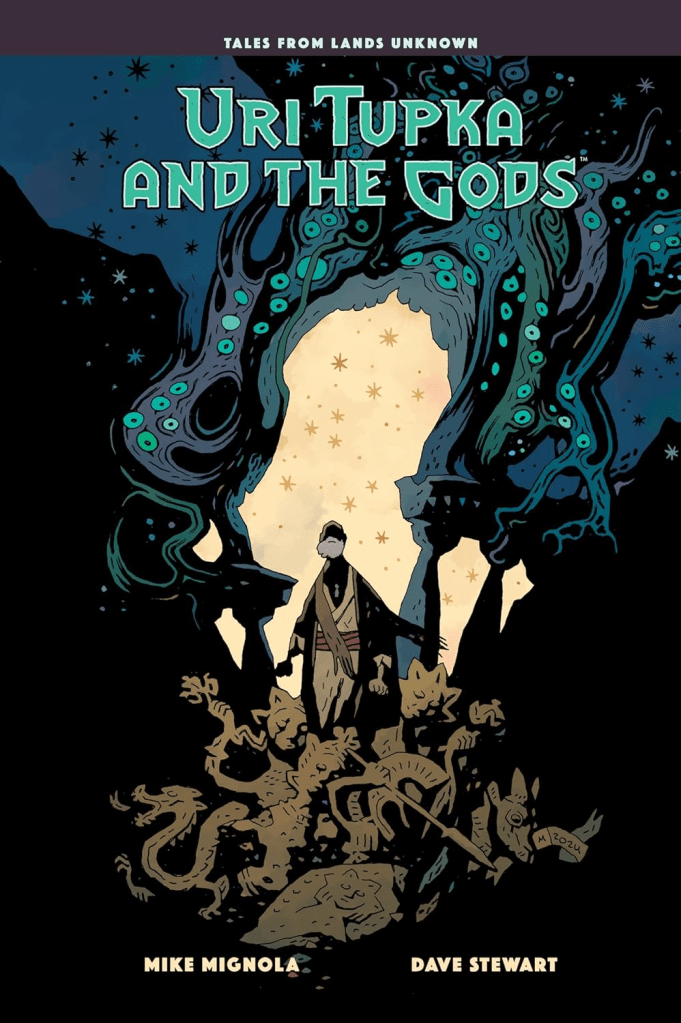





TL;DR: Uri Tupka and the Gods is a road-myth horror fable where a heretic goes looking for absent divinity and keeps finding doors that should’ve stayed shut. It lands because Mignola’s silhouette-driven staging, Stewart’s controlled palette, and the page-turn rhythms make the dread feel inevitable, perfect for readers who like folkloric unease and cosmic-tinged bargains over jump-scare theatrics.

This book runs on two engines at once, and the fun is how hard they grind against each other. Engine one is the old-world travel tale: a lone bastard on a road, asking the kind of question that gets you stabbed, cursed, or recruited by lunatics. Engine two is horror as an event: a thing in the dark, a wrong door, a sudden bite, the moment the air changes and you realize you are not the top predator in this panel. The trick is that Mike Mignola never fully lets either engine “win.” He keeps the quest-story moving, but he keeps the scares puncturing it. You get momentum, then you get dread. You get wonder, then you get blood on the ground like a dropped flag.
Uri Tupka is a heretic on the run and, for reasons that are both practical and spiritual, he’s looking for the gods. He follows a pilgrim road in a world that feels abandoned by those gods, and the route is not gentle. Along the way he meets the kind of folkloric hazards you want in a book like this, including devils and a “tomb of unspeakable horror,” plus a growing sense that the answer he wants will cost him something real.
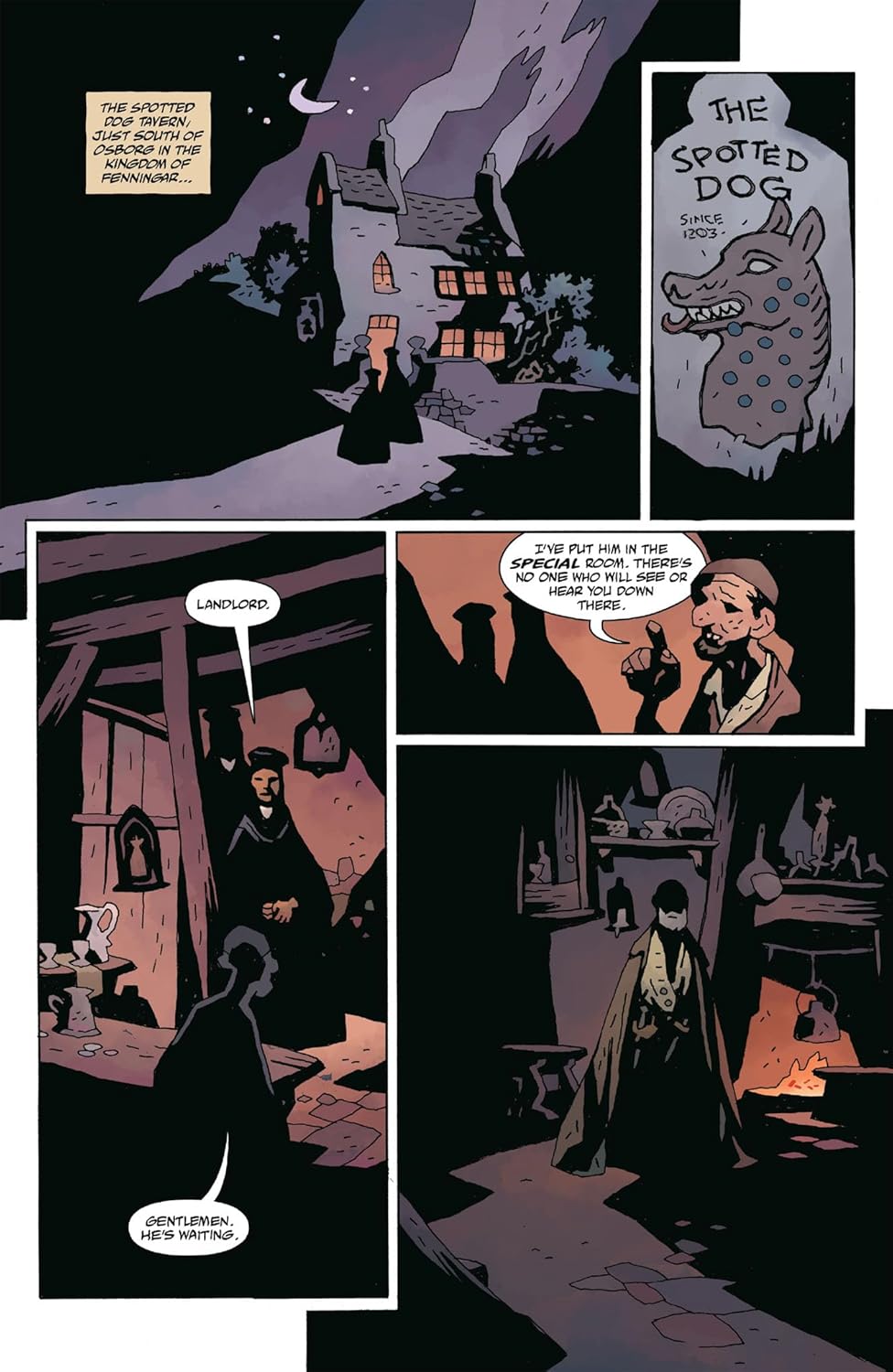
What’s fun about Uri Tupka and the Gods is how it feels unmistakably Mignola without needing to borrow Hellboy’s coat to get attention. This is the same storyteller who’s spent decades turning folklore into bruised, lived-in reality, where “the devil,” “the gods,” and “the curse” are not metaphors. You can feel the lineage in the page language: stark silhouettes, fairytale geometry, and that old Mignola trick of making a quest read like fate tightening a noose, which is why “Another Story from Lands Unknown” lands less like a spinoff label and more like him claiming a fresh sandbox for the same favorite sins.
On the page, the pacing is quietly nasty in the best way. Mignola uses a lot of clean, readable panel grids for dialogue and travel logistics, then he breaks rhythm with a big image that lands like a stone. A title card on a black field buys a breath. Then a page turn drops you into a room with firelight, or a shoreline, or a temple façade that looks like it remembers sins. The decompression is deliberate. There are whole panels that are basically “look at this shape and feel bad,” and he’s right to trust them. When the action hits, it compresses fast: a bite, a swing, a snap, and suddenly you are in a tight cluster of moments where each panel is an ugly beat you cannot unsee.
Bodies are posed clearly. Faces do the acting even when they are drawn with minimal lines, because the silhouettes carry emotional weight. Uri’s posture shifts between wary and exhausted and “fine, I guess we do this,” and you always know where he is in space. When creatures show up, they do not become abstract scribbles. They are built out of chunked shapes and negative space, which means you can track the violence without it feeling slick. It’s old-school clarity with a modern sense of timing. You can tell where the threat is, how close it is, and how fucked you are.
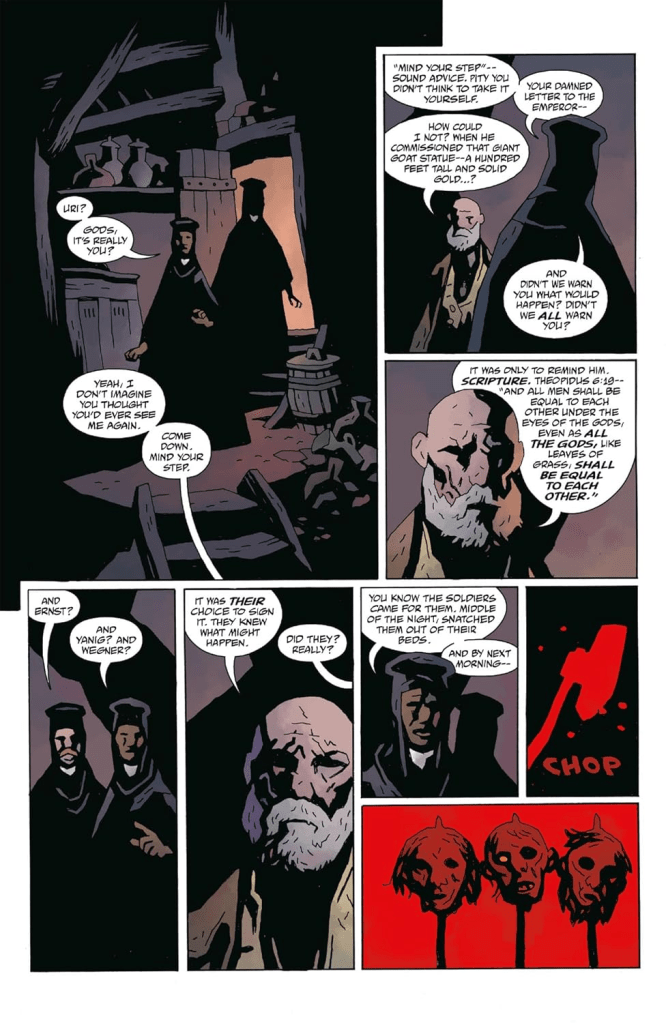
Clem Robins keeps the balloons clean and consistent, and the dialogue “sounds” blunt and human, not overwritten fantasy-pageantry. When the book needs density, it goes there, but you feel the choice. Some sequences lean into caption voice to deliver lore and travel context, then suddenly the balloons thin out and the page breathes. The sound effects are integrated like physical objects. A hard, red “CHOP” doesn’t just tell you something happened, it punctures the page. Later, animalistic snarls and crunchy impacts are lettered big enough to be part of the composition, which makes the violence feel present without turning into a gore slideshow. The book knows when to let you hear it, and when to let silence be the sound.
Dave Stewart’s palette is controlled and mood-forward, with those cool night blues, sickly greens, and warm pockets of torchlight that feel like temporary safety. Mignola’s inks are all about decisive blacks and carved-out shapes. Together, they make dread feel like a weather system. When you’re in a tavern, it’s cozy but suspicious, like the shadows are listening. When you’re on the road, the negative space gets wider and lonelier. When you hit something sacred, the color shifts into ceremonial tones that still look wrong, like reverence has curdled.
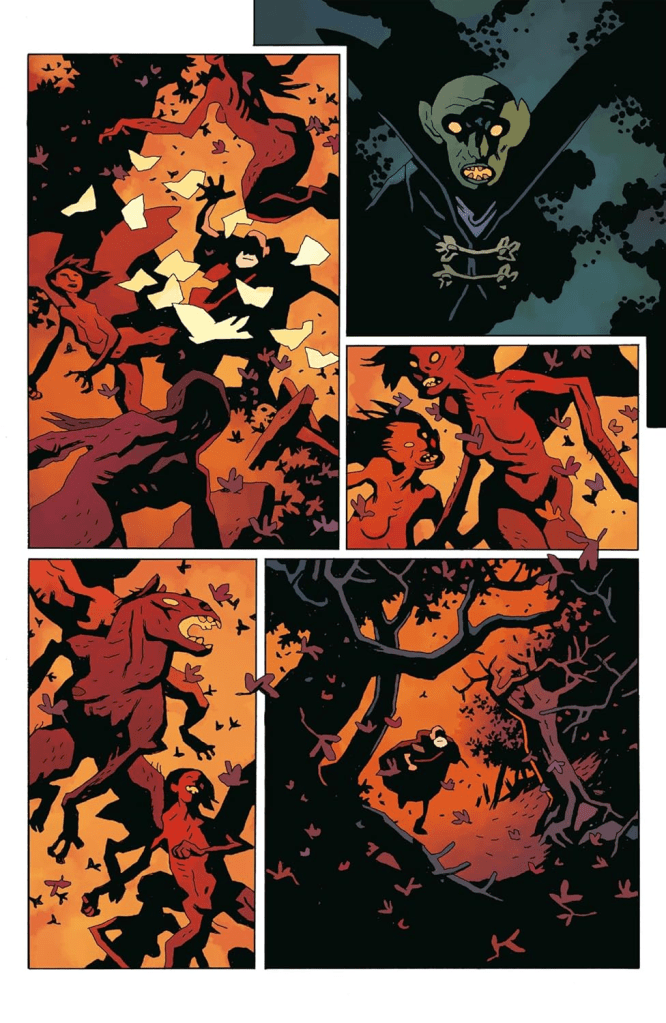
Horror choreography in Uri Tupka and the Gods is mostly about what gets withheld. The violence is not shy, but it’s staged for impact, not indulgence. A creature attack might be shown in a couple of sharp beats, then the aftermath is a single panel that lets the red do the talking. There’s also a great sense of “threat proximity.” You’ll get a calm conversational page, then a small corner panel shows eyes in the dark. That’s the whole move. It turns your peripheral vision into a trap.
The dread mechanics are classic Mignola, but tuned to a road narrative. The book generates tension by making the world feel structured but untrustworthy: chapels, monks, pilgrims, maps, rules, all the stuff you want to lean on, and none of it guarantees safety. In the creator’s notes, Mignola describes wanting a world with “a whole lot of gods,” but not one where characters are “tripping over them” constantly. That absence becomes a pressure. People fill the gap with stories, with fear, with bandit logic, with weird devotion. Uri keeps moving because stopping means letting the world’s superstitions catch up to him.
A tavern sign that feels like a warning label; a dreamlike animal presence that shows up with the kind of advice you ignore at your peril; a temple space where the “holy” looks decorative and hungry; a sudden bright panel of violence that interrupts a page’s calm like a knife through cloth. Those are the beats that stick. Not because they are twisty, but because the book understands how to make an image feel inevitable and still surprise you.
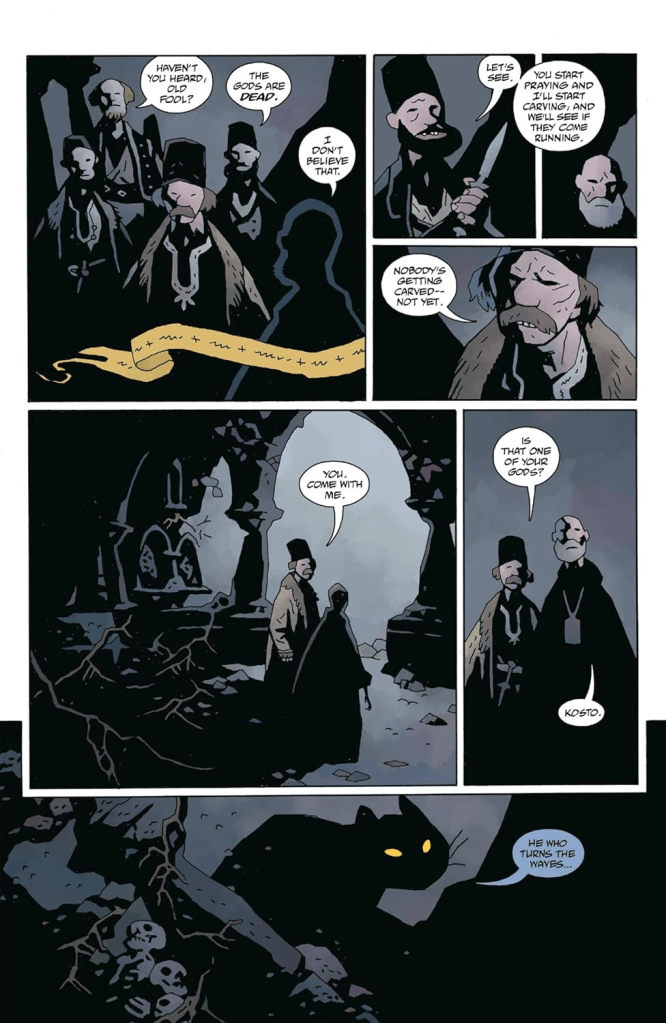
Underneath the monsters and ruined chapels, this is really about abandonment and the human need to assign meaning anyway. The publisher summary frames it as a search for gods in a world that feels deserted by them, and that’s the emotional engine. Uri’s heresy is not just a plot excuse, it’s a stance: if the universe is silent, do you kneel harder, or do you go looking for who left the room? The story keeps poking at the cost of answers, the way “truth” can be a kind of violence, and the way belief can be both shelter and weapon.
If I’m nitpicking, it’s mostly about taste. Some readers are going to bounce off the episodic travel structure, where you move from encounter to encounter like a dark bedtime story with mud on its boots. Some will find the lore captions occasionally heavy compared to the clean, cinematic action pages. If you like your horror hyper-psychological or your fantasy super intricately plotted, this might feel more like a fierce mood-walk than a puzzle box. But if you want folkloric dread with crisp staging, gorgeous negative space, and a protagonist who keeps running because the alternative is worse, this thing rules.

Read if you want a road trip where the rest stops are chapels, curses, and “absolutely do not open that” doors.
Skip if you want maximal gore and nonstop action instead of slow-burn dread and weird religious aftertaste.
Written and Illustrated by Mike Mignola.
Colors by Dave Stewart. Letters by Clem Robins.
Published March 10, 2026 by Dark Horse Books.

 The Blog Without a Face
Leave a comment