
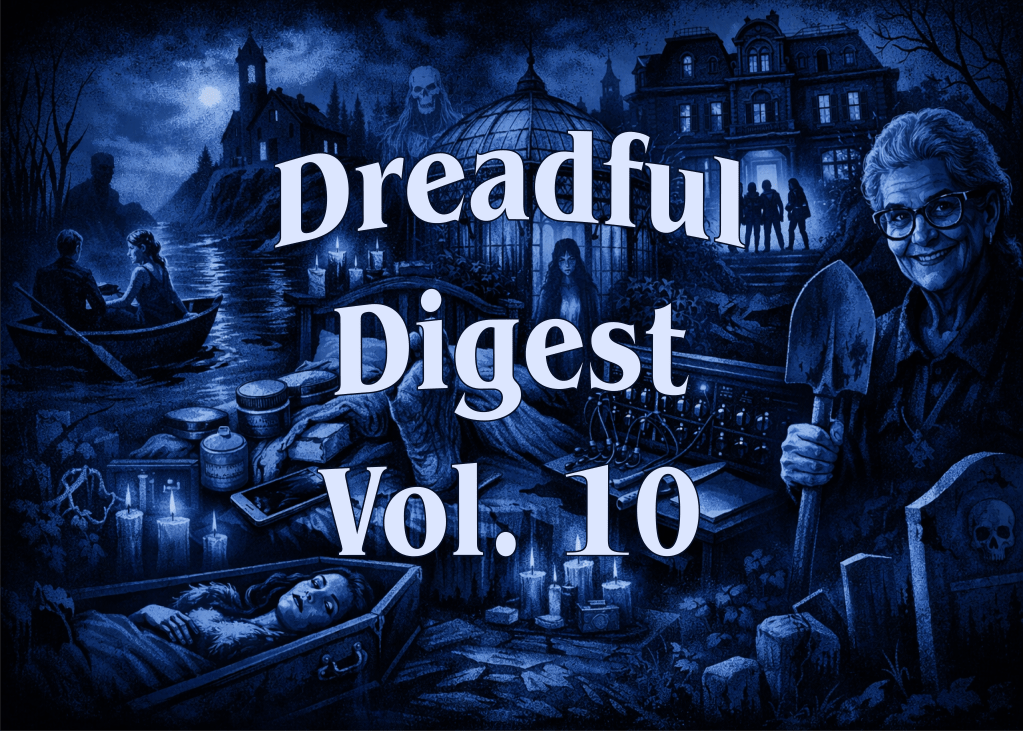
Welcome to Dreadful Digest Vol. 10! This time around we’ve got Norfolk’s worst meet-cute in First Date, where social anxiety upgrades into “survival horror dining experience” and the special is humiliation with a side of blood. We hop the ferry to Grace, where the island wants rent and apparently kids are acceptable currency, because nothing says community like weekly terror payments and a priest who absolutely knows more than he’s saying. Then we rot in place with Bed Rot Baby, a Juicy-couture meltdown that turns self-care into toe-loss math, and Sour Rot, where the funeral home is classy, the orangery is horny, and the figs are doing some cursed little side hustle. Evil Genius gives us workplace noir with knives in the desk, because the phone company is a meat grinder and your husband is a liability. Temple Fall is the haunted mansion that ate the weekend and then digested the group chat, and Grandma’s Little Secret… listen, if your grandma says she’s “gardening,” you should probably call the cops and bring a shovel. Seven books, seven flavors of dread, and exactly zero reasons to accept an invitation to anything ever again.
First Date: Norfolk’s worst meet-cute
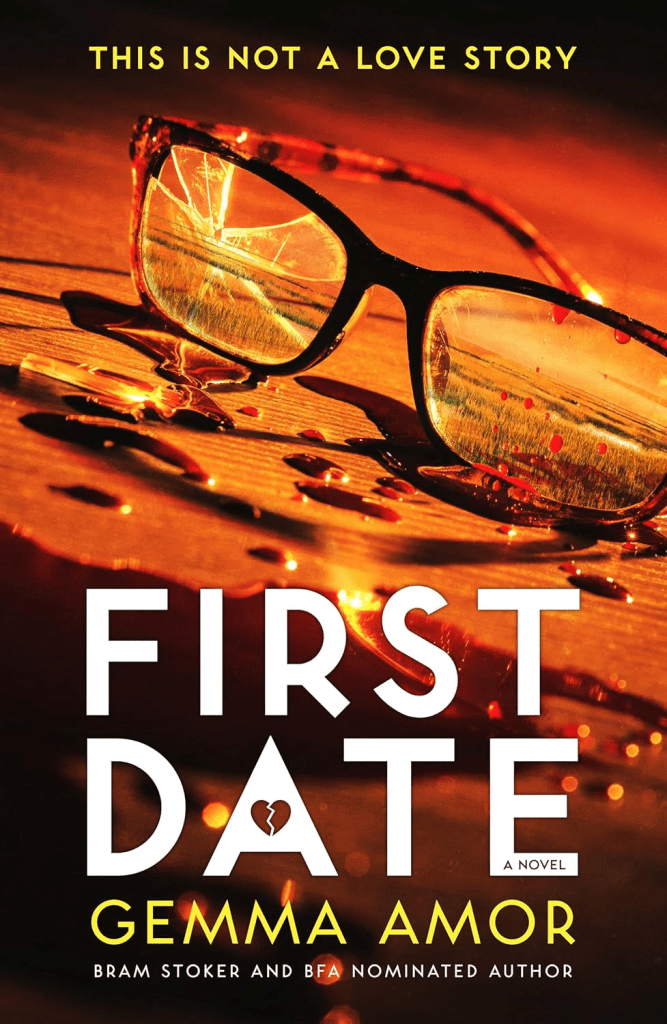





Gemma Amor writes with a greasy little snap, like the sentences have been marinating in bad wine, worse advice, and the kind of loneliness that makes you think a stranger’s attention is a life raft. First Date is a grimly funny, anxiety-soaked first-date-from-hell that absolutely commits to making you squirm, even if it occasionally defaults to familiar “here comes the next awful beat” timing once the situation turns fucked. Amandine agrees to a dinner date with Connor in the Norfolk Broads, and what starts as awkward small talk and social self-surveillance curdles into a night defined by a third presence, predatory attention, and violence that doesn’t stay metaphorical.
The book’s best move is that the dread begins as social humiliation before it becomes physical threat. Amor nails the early-stage internal monologue where every gesture feels like evidence, every silence feels like judgment, and “normal” is something you’re trying to perform convincingly enough not to get punished. There’s a strong craft control to the way perspective and tension get braided so you keep learning just enough, just late enough, to keep your stomach doing little anxious flips. The sensory palette is reliably gross in a satisfying way, not just gore-for-gore’s sake: food and bodies and cold damp spaces that make everything feel sticky, close, and mean. When it turns nasty, it turns nasty on purpose, and there’s a bleak little humor threaded through the panic that made me laugh and then immediately feel like I needed to rinse my mouth out. This is the rare “dating is scary” setup that actually earns its bite instead of just tossing in a creepy guy and calling it trauma.
My issue with the book is how cleanly it hits its checkpoints once the danger fully declares itself. The escalation is effective, but you can sometimes feel the story shoving the characters from one pressure-cooker moment to the next with the efficiency of a theme-park scare maze. Some of the psychological setup is sharper than the follow-through, meaning the early social dread is more layered than the later action-phase logic, where the choices can start to feel like “well, this is what a horror character does when the author needs the next awful thing to happen.” The villain energy is memorable and disgusting, but it’s also so overtly monstrous that the ambiguity of “is this person safe or not” gets traded for a more straightforward predator-versus-prey track. That’s still entertaining as hell, but it means the book’s most original tension, the everyday uncertainty of dating while vulnerable, gives way to a more familiar survival-nightmare shape.
Readers who want a sharp, nasty, socially keyed-in horror-thriller that’s willing to get bloody and humiliating and doesn’t treat violence like tasteful fog will dig it.
Read if you want a first date that ends with “so anyway, I’m never leaving my house again” and means it.
Skip if don’t want a grim, sweaty nightmare that knows exactly which screw it’s turning next.
Published February 10, 2025 by Datura Books.

Grace: The island wants rent and it takes kids
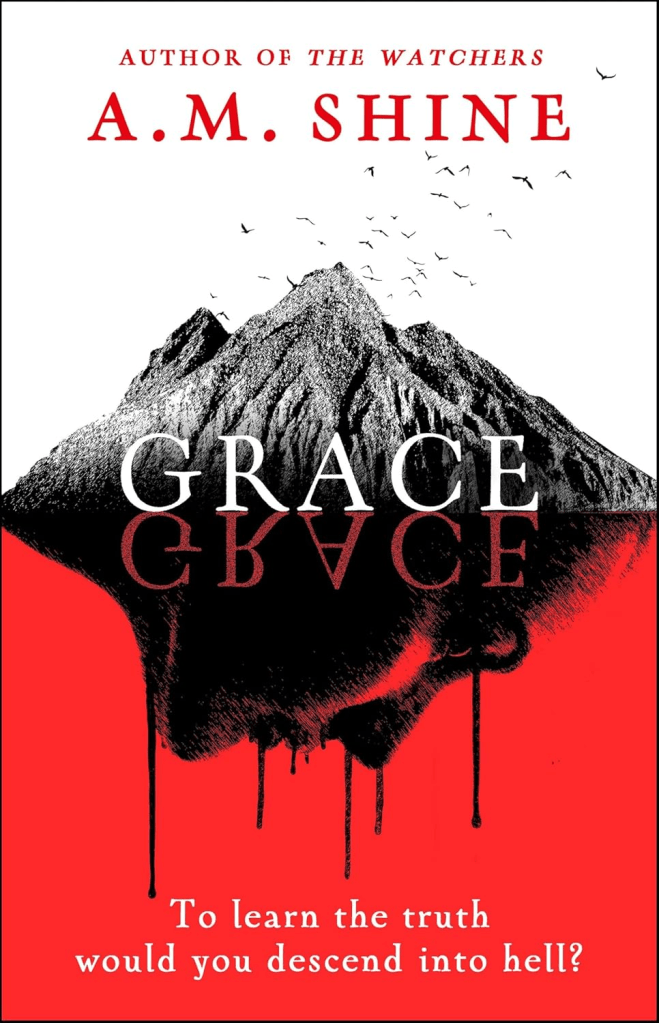


A.M. Shine’s Grace is a moody Irish-island folk dread with a strong opener and some genuinely creepy mechanics, but it also spins its wheels and over-explains its own nightmare a bit too often to stay scary all the way through. An adopted bookseller learns her birth mother has died and left her a house on the isolated island of Croaghnakeela, then discovers the locals are paying a weekly “debt” to something old that walks through locked doors on heavy feet and treats children like collateral. The early chapters rule at building that wet-sock, salt-air unease: a busted little ferry ride into fog, a village that feels like it’s been abandoned by joy, a priest who is too smooth for comfort, and a pattern of knocking, footsteps, and lights going dead that makes the whole island feel like a trapped lung. The best note here is Shine’s sensory control. He writes damp like a religion. The landscapes are bruised, the houses feel sick, and the horror shows up in physical rhythms: footfalls, doors, the cold bloom of “something is in here with me,” and later, the way the island’s history leaks out as blood, bargains, and folk rules nobody wants to say out loud.
Where it slips is the shape of the back half. Once the book starts laying out the lore (Lavelle, the orphanage, the Bodach, the Vs carved into walls, the whole communal bargain), it leans hard into pub-story exposition and “everyone confesses the backstory in a circle” momentum. That can be fun, but it also flattens the dread into explanation, and you start feeling the author’s hand moving you from reveal to reveal instead of the place itself staying unknowable. There are also stretches where the POV cycling works against tension. You get multiple angles on the same beats, but the emotional textures don’t always change enough to justify the swap, so it reads more like information management than escalating terror. And the dialogue sometimes goes full Irish-flavored stage monologue, which is charming for a minute and then starts to feel like characters performing “spooky island people” at you rather than talking like humans who are scared out of their fucking minds. Still, Shine absolutely lands individual scenes: the empty houses, the child-laughter wrongness, Harriet’s panicked warnings, the sense of being watched through fog, and the bodily violence when the thing finally shows itself. Readers who want folklore-forward island horror with a clear myth engine, strong atmosphere, and a brisk “get to the point” plot will enjoy this. However, if you want ambiguity, strangeness, or a book that stays uncanny instead of eventually giving you the user manual, you’re probably going to be disappointed.

Read if you like your Irish folk dread soaked in salt, guilt, and old debts that come due with boots on.
Skip if you hate lore-dumps and want your horror to stay weird and wordless instead of explaining itself at the bar.
Published February 10, 2026 by Head of Zeus.
Bed Rot Baby: Rot girl summer
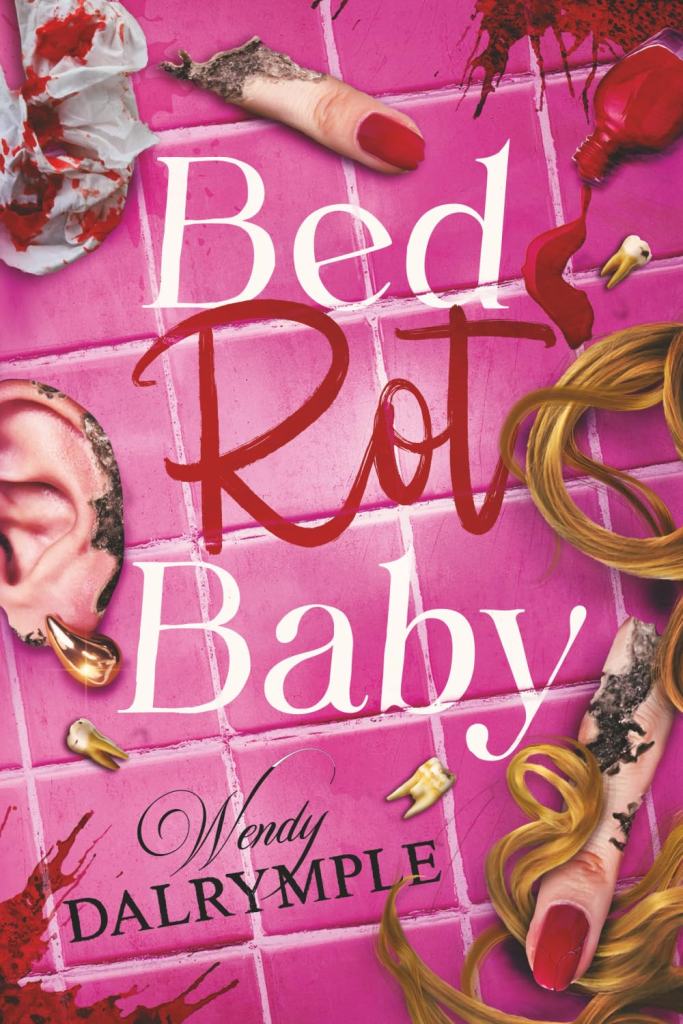


Wendy Dalrymple writes Bed Rot Baby like she’s live-tweeting a nervous breakdown from inside a Juicy Couture tracksuit. The voice is first-person, shamelessly gross, and weirdly tender toward its own ugliness. Brittany narrates with the jittery confidence of someone who can shoplift lingerie like it’s cardio, then sob into a voicemail because her mom’s answering machine picked up. It’s funny, it’s anxious, it’s filthy, and it’s detailed in the exact way that makes rot feel personal. Absolutely above-average and more on-mission than most “internet girl goes bad” horror. A broke Tampa sugar baby who’s been rotting in bed, hustling foot pics, and spiraling over an ex gets stalked by a woman who doesn’t just want to humiliate her, she wants to harvest her, and Brittany’s body starts literally falling apart as the rules of the curse come into focus.
I love how concrete the body horror is. This isn’t “I feel gross” metaphor fog. It’s missing nails, hair shedding, skin doing disgusting shit, and a genuinely nasty set piece involving gelatin and a missing toe that made me yelp and laugh in the same breath. The horror is also smartly modern and mean: image-control as literal predation. Brittany’s whole life is about selling fantasy, controlling angles, controlling what men get access to, and then the book flips it and says: cool, now your image is a cage and somebody else owns the key. Dalrymple keeps the pacing snappy with short chapters and escalating humiliations, and she’s good at making mundane places feel like trap rooms, malls, Chili’s patios, fluorescent law offices, grocery store aisles. The satire lands hardest when it stays close to Brittany’s contradictions. She’s shallow and self-aware, furious and needy, capable of being a total shithead and still readable as a person. The comedy works because it’s coping humor.
The middle stretch leans hard on “Brittany does something reckless, gets punished, then doubles down” loops, and some of the explanation beats arrive with a little too much “here are the rules of this curse, please take notes,” which drains a bit of the nightmare mystery. Also, a few character interactions tilt into on-the-nose therapeutic confrontation, especially when the stalker starts diagnosing Brittany’s life choices like she’s an evil life coach with a shotgun. It’s entertaining, but it makes certain scenes feel more like a wicked pitch meeting than a fully unhinged spiral. Still, the book commits. It gets mean. It gets bodily. It doesn’t chicken out into tasteful restraint.
This is for those who dig voice-first pink horror that’s funny as hell, sweaty with shame, and willing to get disgusting in specific, memorable ways.
Read if you want “self-care” to mean “delete your ex, steal some lingerie, and try not to lose another toe.”
Skip if you’re looking for elegant restraint instead of a book that says “gross” and then says “good.”
Published February 10, 2026 by Quill & Crow Publishing House.
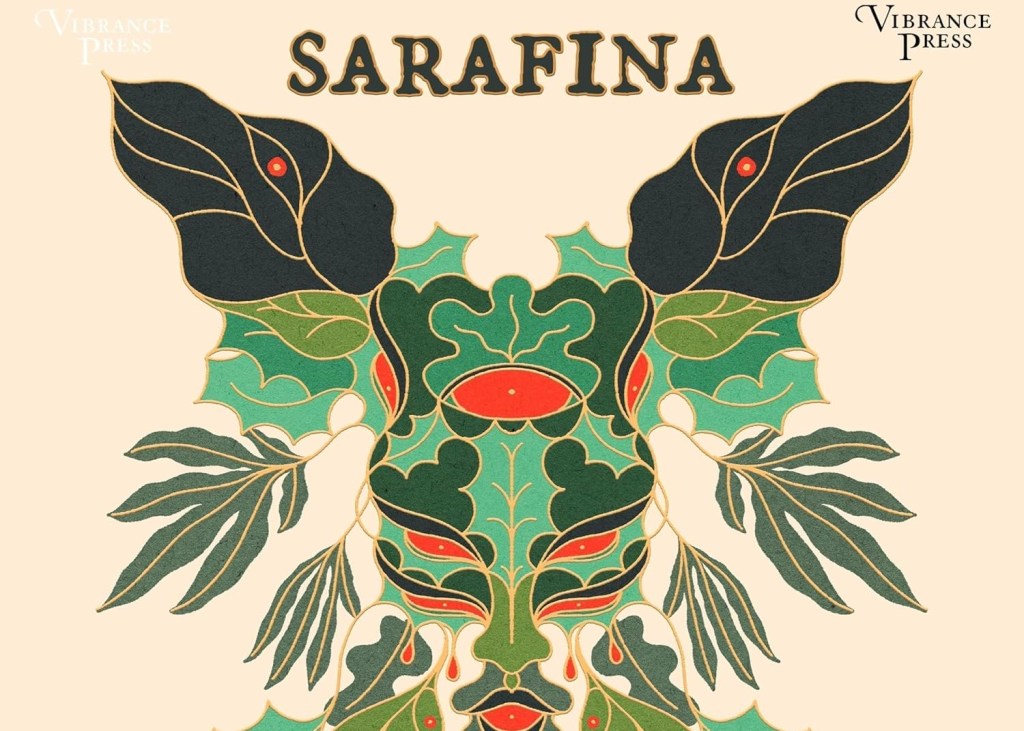
Sour Rot: The orangery is horny and haunted
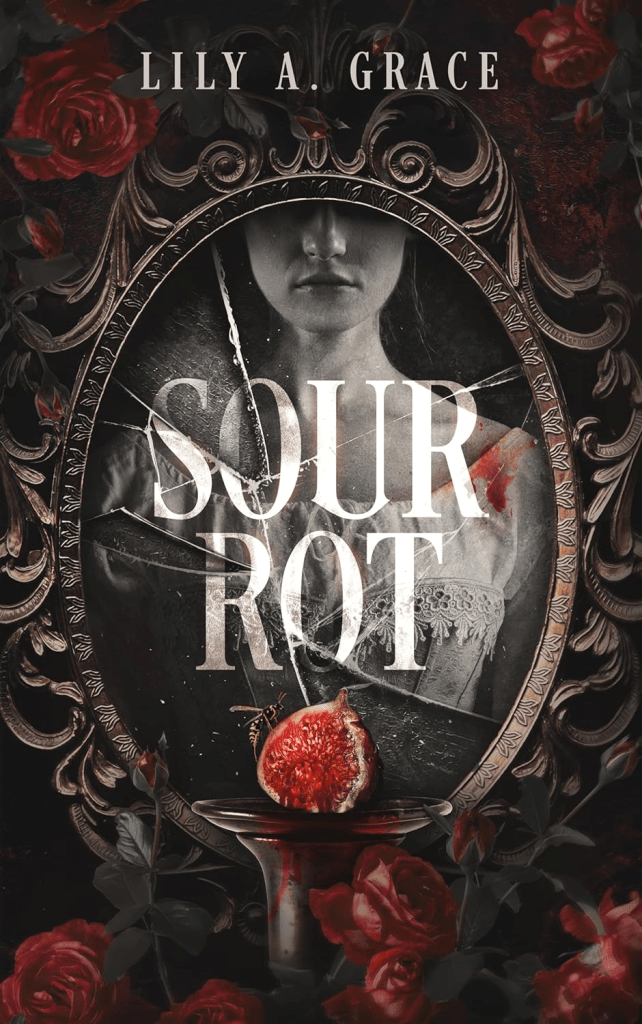


Lily A. Grace writes Sour Rot like she’s dunking you in a Victorian romance bath and then quietly replacing the bubbles with compost. Does that even make sense? The narration is lush, old-fashioned, and horny in a way that’s trying very hard to be elegant about its own mess, which is honestly kind of funny. It’s a glossy gothic melodrama with a funereal kink, a killer “rot” motif, and a creeping sense that everybody in this story is being steered by grief, guilt, and a bunch of unseen little parasites in the walls. After her mother dies, Grace bolts from her crumbling Yorkshire farm to London and takes a live-in apprenticeship at Nicholas Crowthorne’s funeral home, only for the house’s dead history, his dead fiancée, and a diseased fig tree to start syncing up with her own buried trauma like some fucked-up matchmaking algorithm.
The book’s biggest strength is its atmosphere control and the way the funeral-home setting stays central. You get the rituals, the quiet professionalism, the bodies-as-people emphasis, the hands-on prep work, and the strange intimacy of learning to care for the dead while your own life is getting rebuilt from rubble. Nicholas is broody-rich-goth in a tailored waistcoat with a wrecked back and a scorched past, and Grace is an “old soul” waif with a sun sensitivity condition and a lifetime of deprivation that makes luxury feel like a drug. Their dynamic is the whole engine: caretaking flips into obsession, mentorship slides into longing, and the house itself feels like it’s watching, tallying, approving. The “sour rot” imagery is not subtle but it’s effective: figs that keep appearing like an omen, the orangery with the statue of Louisa, the diseased tree mirroring Grace’s past, and later the idea that rot isn’t just in the fruit, it’s in people, in inheritance, in what’s been fed to them since childhood. When the book goes uncanny, it’s at its best in these small, nasty jolts: a pale face at the window during a storm, the sound-patterns that mimic a dying mother’s knock, the way the past keeps trying to crawl back into Grace’s new life with muddy boots on.
The pacing is easy to binge, but the plot moves in big, clean emotional beats: escape, rescue, makeover, escalation, confrontation, vow. The villainy (Tom’s entitlement and persistence) is grossly real and works, but it’s also straight-line obvious, and the relationship tension sometimes leans on repeated “we shouldn’t” cycles rather than genuinely surprising turns. The prose can over-romanticize the power imbalance in a way that will either feel deliciously gothic or like you’re watching the story light candles around a red flag and call it ambiance. And while the rot motif is strong, the book occasionally spells out its themes so plainly you can feel the author pointing at the corpse and shouting, “See? Society.” Still, it’s solid: moody, readable, often nasty-fun, and committed to its particular flavor of death-house romance-horror.
Read if you want gothic funeral-home romance where the house is horny, the figs are cursed, and everyone needs therapy yesterday.
Skip if age-gap power dynamics make you want to throw the book into the orangery and salt the soil.
Published February 14, 2026.
Evil Genius: Workplace noir with knives in the desk
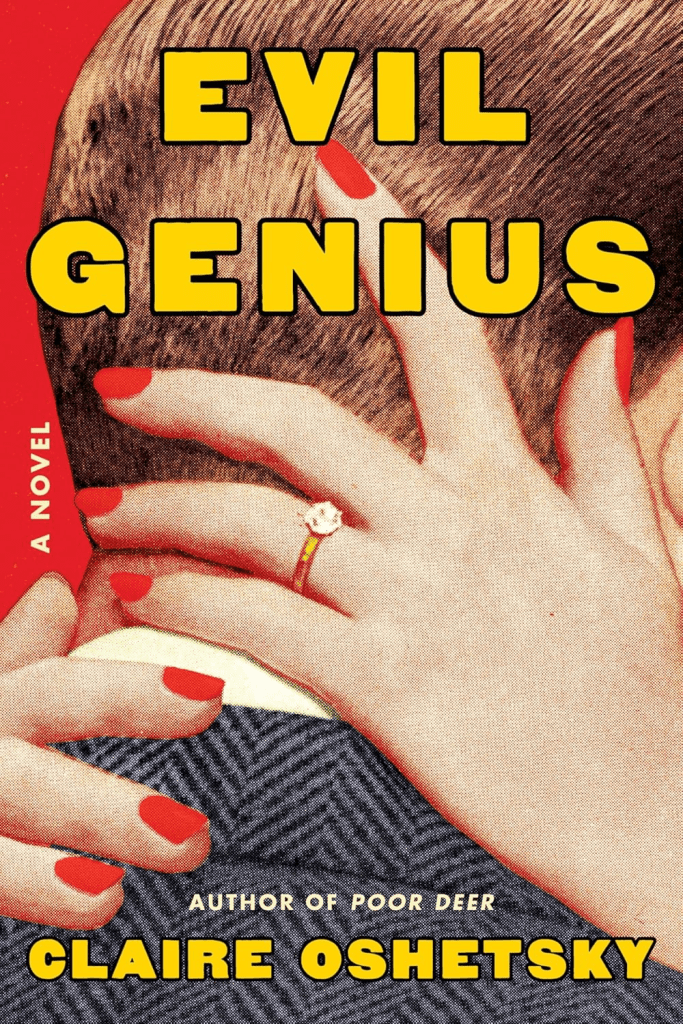

Evil Genius by Claire Oshetsky is a vicious little cocktail of workplace noir, domestic horror, and “I can’t believe I laughed at that”, told in a voice so chatty and bright it feels like someone narrating their own slow-motion disaster while waving a jelly donut. The hook is gleefully fucked: in 1974 San Francisco, Celia Dent works the phone company billing floor where “ripping lips” means cutting off service, the supervisors ignore your paddle while you bleed, and every three minutes a stranger pours their misery into your skull. Then her coworker Randall tells the story of an affair that ends in Vivienne Bianco getting shot by her husband, and Celia’s brain treats that tragedy like a starter pistol for her own “violent changes.” The book is funniest when it’s mean about systems and “nice guy” control, and scariest when it shows how a woman gets trained to apologize while a man calmly escalates from scolding to confinement to gunplay.
Oshetsky’s writing is the whole trick. It’s breathless, confessional, and weirdly musical, full of pet phrases and punchy asides that make you feel like Celia is grabbing your sleeve at a party to tell you the nastiest story she knows, only the party is her life and the punch bowl is full of knives. The structure also rules: each chapter is basically a tightening coil, moving from office gossip to street weirdness to predatory men on phones to the Sock Man fiasco to domestic violence that stops being “uh-oh” and becomes “holy shit.” Where it slips is that the voice can start to do the heavy lifting instead of the fear. Celia’s narration is so entertaining and spun-up that some scenes land like dark comedy routines even when the underlying situation is brutal, and the surreal elements (voices, omens, the Crab Queen mythos) sometimes read more like a personality filter than a truly destabilizing supernatural force. It’s not that it’s bad. It’s that it doesn’t always hurt the way it wants to. Readers who like noir-ish, feminist-angled domestic dread with gallows humor, institutional cruelty, and a heroine whose inner monologue is a mess in a compelling way will really dig this.
Read if you want “women’s rage” served with cigarettes, switchboards, and a knife in the boot.
Skip if controlling-husband horror makes you feel sick in a not-fun way.
Published February 17, 2026 by Ecco.
Temple Fall: The house ate the weekend
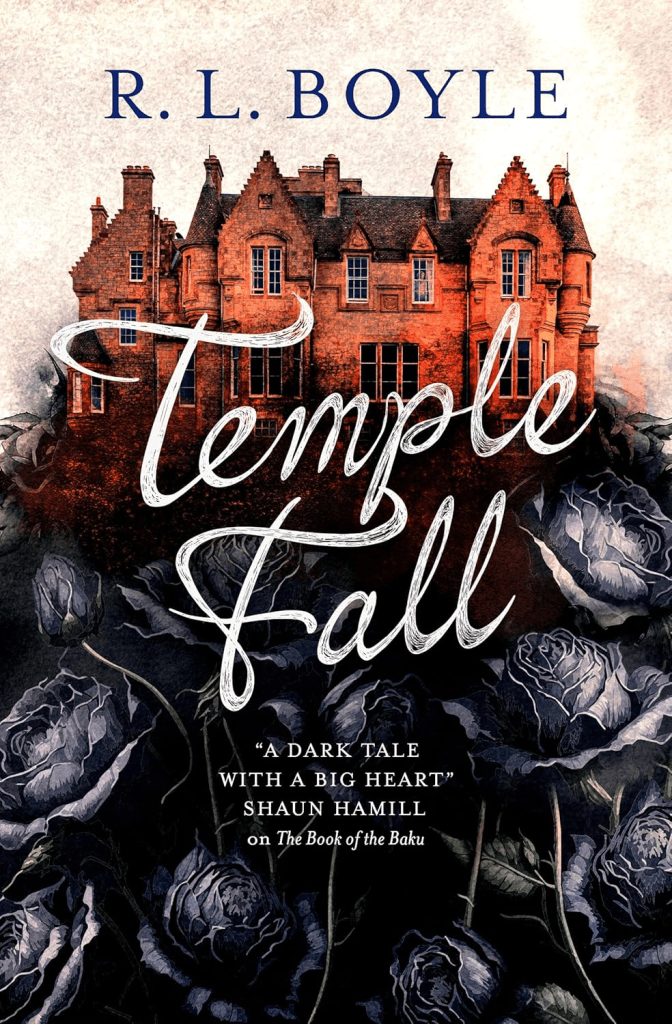
R. L. Boyle’s Temple Fall is a haunted-house time-slip nightmare that smells like wet peat, old candles, and bad decisions you cannot un-make. Spooky as hell, emotionally sticky, and very readable, but it plays its hand a little too cleanly to become a full-on cursed-object possession. A teenager (Flynn) drags her friends to camp by her mysterious ancestral mansion for her boyfriend’s birthday, they shelter inside during a storm, and the house starts bending time, memory, and identity until the night becomes a months-long scar with bodies missing and friendships rotting from the inside. The opening sprint is terrific: barefoot blood on floorboards, candlelight, collapsing stairs, the sense the building is licking its lips. Boyle’s best move is the way Temple Fall feels like a living mechanism, not just a spooky set. Rooms multiply, corridors stretch, the temperature shifts, the air tastes wrong, and the house starts pushing on old childhood trauma like it found a bruise and decided to press it repeatedly just to watch you flinch.
The structure alternates “Now” with past slices that reframe Flynn’s history, and the swap works because it turns the haunting into something more personal than “ghost did it.” Flynn’s past with her mother’s paranoia, rituals, and drugged sleep becomes a template the house exploits, so the supernatural dread is braided with the fear of inheriting illness and the shame of not being believed. There are also some great tactile motifs: black roses, a pristine ouroboros knocker, Scrabble tiles and counting footsteps turning into compulsion-horror, and the house using party behavior (booze, weed, horny chaos) as accelerant. It’s nasty fun when the friend-group chemistry curdles, especially once jealousy and betrayal get chemically boosted by the house’s influence. The best scenes are the ones where you’re not sure if the evil is external or if the house is just giving everyone permission to become their worst self.
Once the engine is running, the book can lean on repeatable beat patterns. Someone wanders, the house shifts, a weird object appears, someone argues, the threat spikes, then we reset into another corridor. It’s effective, but you can feel the rails. Also, the “friend group spiraling” sections sometimes sharpen into melodrama where you can predict who will lash out next and how, even if the writing keeps it tense. The dread stays comprehensible instead of turning truly baffling and lawless. Still, if you want a modern haunted house that does time weirdness, teen friendship rot, and trauma echoes with real atmosphere and a steady mean streak, you’re eating fine.
Read if you want a cursed mansion that turns your group chat into a crime scene.
Skip if you need the weird to go fully unhinged instead of “tight, spooky, and mean.”
Published February 17, 2026 by Titan.
Grandma’s Little Secret: Grandma’s house has very bad landscaping
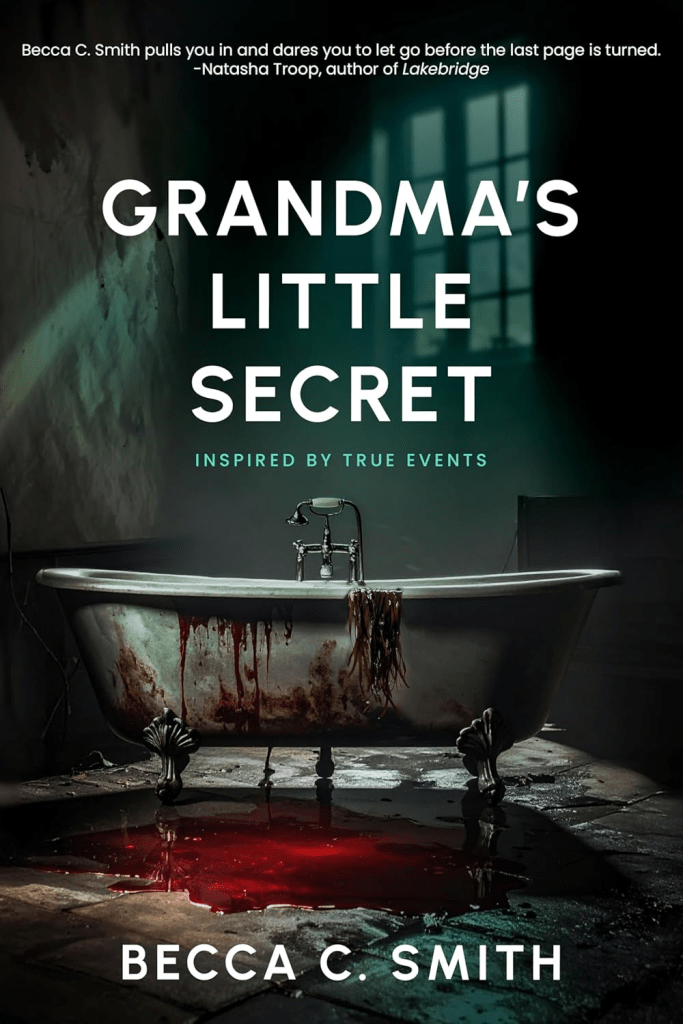
Grandma’s Little Secret by Becca C. Smith wants to be a mashup of cozy kid-adventure nostalgia and “my grandma is a serial killer and her backyard is a graveyard,” and that combo should slap. Instead it mostly lands as a jittery tonal tug-of-war where the book keeps yelling “isn’t this FUN?” and “isn’t this FUCKED?” in the same breath, then wondering why neither mood sticks the landing. Eleven-year-old Emma, who sees ghosts and has vivid waking-dream crossovers with her beloved fantasy series (Winterbrook), visits her grandparents on Bentmer Island and slowly realizes Grandma Virginia is actively murdering people and protecting a “garden” of bodies, while a seaweed-draped ghost named Freya tries to warn her and the kid’s imaginary Queen Madelis starts accusing her of trading lives for a Schwinn Fair Lady. The issue isn’t that it’s gory or melodramatic, it’s that the scene-to-scene voice yanks hard between Saturday-morning bike dares (Suicide Hill, double-dares, “use the Force on your parents”) and straight-up homicide logistics (Virginia dumping a still-living woman in the Sound, planning her husband Roy’s death, grinding poison into Almond Roca) without building a bridge that feels emotionally true. The result is a book that reads like two different stories taped together with glitter glue and blood. When it’s working, it’s gross and mean in a pulpy way. Virginia’s POV has a nasty little streak, especially when she’s talking about her “wretches,” her vodka, and her cyanide DIY science experiment. The opening body-dump is blunt and effective, and the poison-candy vomiting set piece is legitimately disgusting in a “holy shit, kid” way. But the kid-side humor is so on-the-nose and repetitive (dare rules, constant pop-culture bits, the bike obsession) that it starts to feel like the book is stalling with shtick whenever it needs to reset the tension. And the Winterbrook overlay, which could have been the sharpest weapon in the drawer, often plays like a convenient filter. Anytime reality gets too heavy, we get fantasy cosplay, then we snap back.
The more specific problem: the horror gets undercut by how often the narrative explains itself and how often characters perform their function instead of behaving like humans. Emma’s “no one believes me” dynamic is real, but it’s hammered so hard it becomes a catchphrase. Grandma Virginia’s internal “Father with the noose” and “younger self” manifestations could have been uncanny character work, but they frequently read like a conscience-devil-angel skit, and that saps the terror out of what should be intimate domestic horror. The book also leans on coincidence and spectacle instead of consequence. The Schwinn Fair Lady becomes a literal temptation device, complete with hallucinated moral condemnation, but the psychology around it stays cartoon-simple. “Was it worth it?” is a cool accusation. The book doesn’t make the guilt evolve in a way that feels earned, it just turns the volume up. Bottom line: there are solid pulp ingredients here (island isolation, intergenerational violence, ghosts, a kid trapped between adults and visions), but the execution is messy, loud, and frequently corny when it should be sharp. If you like your horror like a chaotic Lifetime movie possessed by an episode of Are You Afraid of the Dark?, you might still have a trashy-good time. I mostly just wanted it to pick a lane and actually commit, instead of oscillating between “gee whiz” and “holy fuck” like a busted metronome.
Read if you want “grandma’s house” to mean “murder garden” and you’re fine with messy, shouty tonal whiplash.
Skip if you need your horror to be coherent, creepy, and not stuffed with bike-daress-and-Force-jokes every five damn pages.
Published February 17, 2026 by Inimitable Books.
 The Blog Without a Face
Leave a comment