

TL;DR: The War is apocalypse horror with no monsters, just the sick click of systems failing and people failing faster, told with page-turn guillotines and colors that make daylight feel unsafe. If you like plausible end-of-the-world stories that hit like a headline and read like a thriller, this lands hard, bleak, human, with craft sharp enough to leave a mark.

The first nasty trick The War pulls is how ordinary it starts. People are drinking, gossiping, talking politics like it’s a sport, casually tossing around “it won’t happen” like a warding spell. Then the book tightens the noose in tiny, believable increments. News becomes background noise. Background noise becomes an alarm. An alarm becomes the whole fucking world.
We follow a small circle of people in Britain as an international conflict escalates into direct catastrophe, and the story tracks what happens to their relationships and bodies when “normal life” evaporates. The book bounces between domestic interiors and public collapse, showing how fast the safety net snaps and how ugly people get when the rules stop applying. It’s less about heroes than about what a person will do, or fail to do, when the countdown clock stops being abstract.
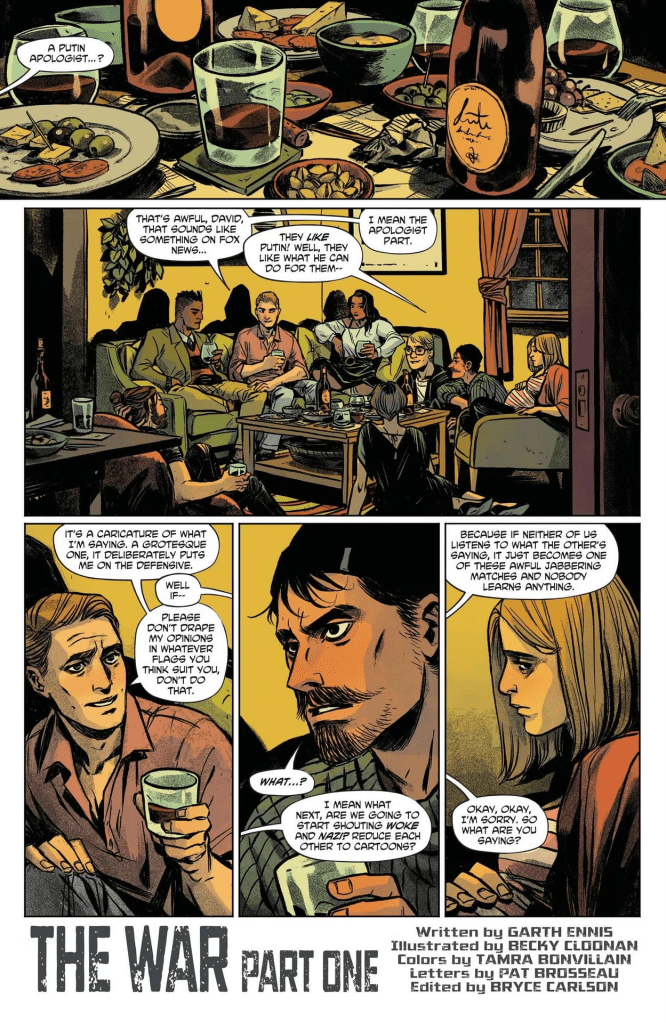
Garth Ennis writes this like he’s incapable of comforting lies. The dialogue early on has that sharp, social bite where everyone is a little funny and a little unbearable, which gives the later horror something to chew on. When the world starts to tilt, the arguments don’t stop. They just get drowned out by sirens, bad decisions, and the kind of silence that makes your stomach drop. The dread mechanic is escalation through interruption. A conversation gets cut off. A plan gets cut off. A city gets cut off. Even when the page is full, the feeling is that the story is yanking pieces away from you.
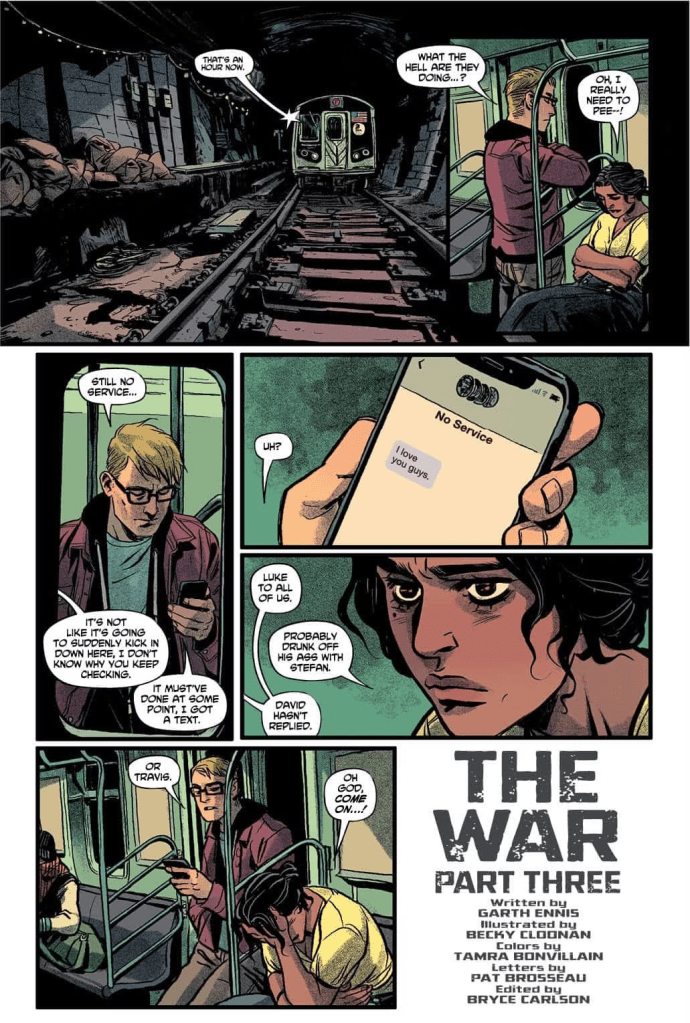
Cloonan’s paneling is doing a lot of the heavy lifting here, especially in the way the book accelerates. Early pages lean into readable grids and talky rhythms, with enough facial acting and body language to make the interpersonal friction feel real. As the situation fractures, the pacing starts to lurch on purpose. You get sudden scene transitions that feel like falling down stairs, then a breath of decompression when the book needs you to sit in the awful. Page turns become little guillotines. You flip and the next image is the consequence, not the warning. The silent beats are where the book hits hardest, because it knows war isn’t constant explosions. It’s waiting, listening, and realizing you cannot un-know what you know now.
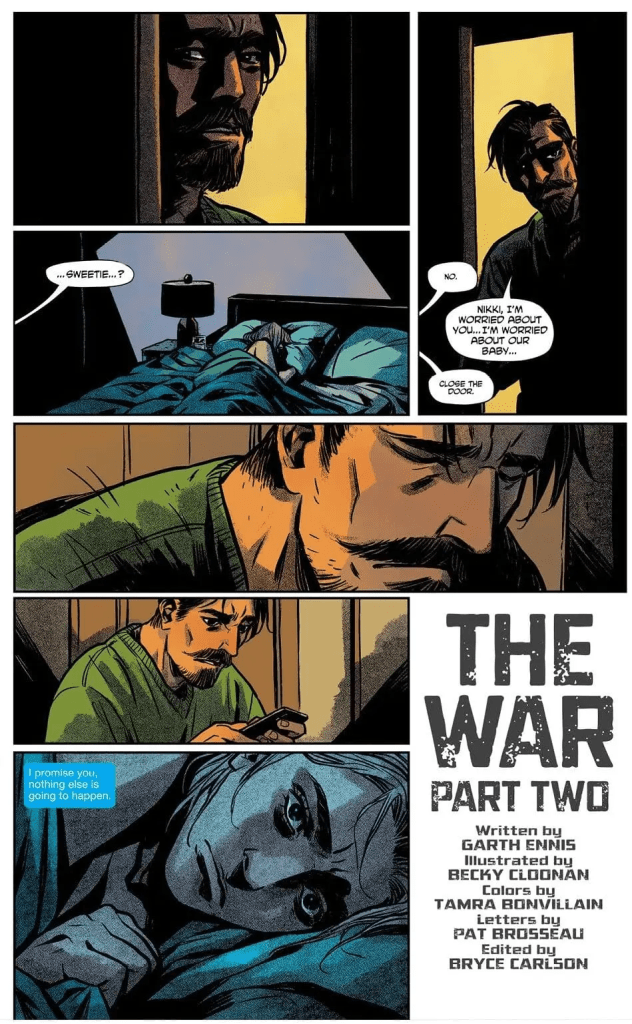
Cloonan keeps action spatially coherent with clear sightlines and consistent geography, so when bodies are moving, you can track who’s where and what’s happening. That’s important because the book is not interested in balletic violence. It’s interested in violence as an intrusion. People get hurt fast, in spaces that were supposed to be safe, and the choreography often emphasizes what’s withheld. You see the moment before. You see the aftermath. Sometimes you get the act itself, and it is not glamorous. It is ugly, quick, and devastating, like somebody slammed a door on your hand.
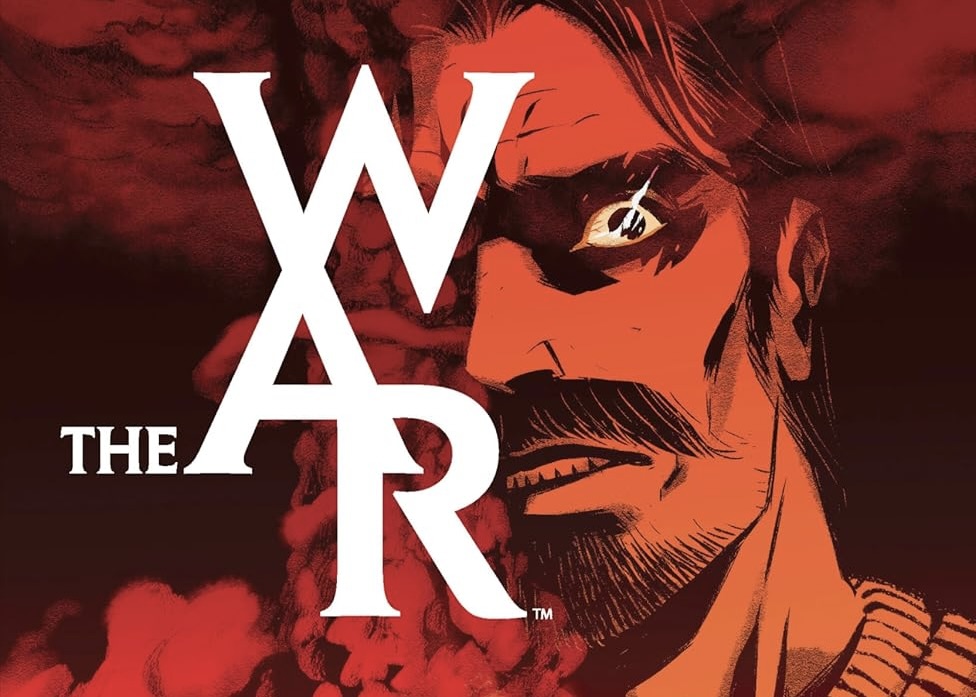
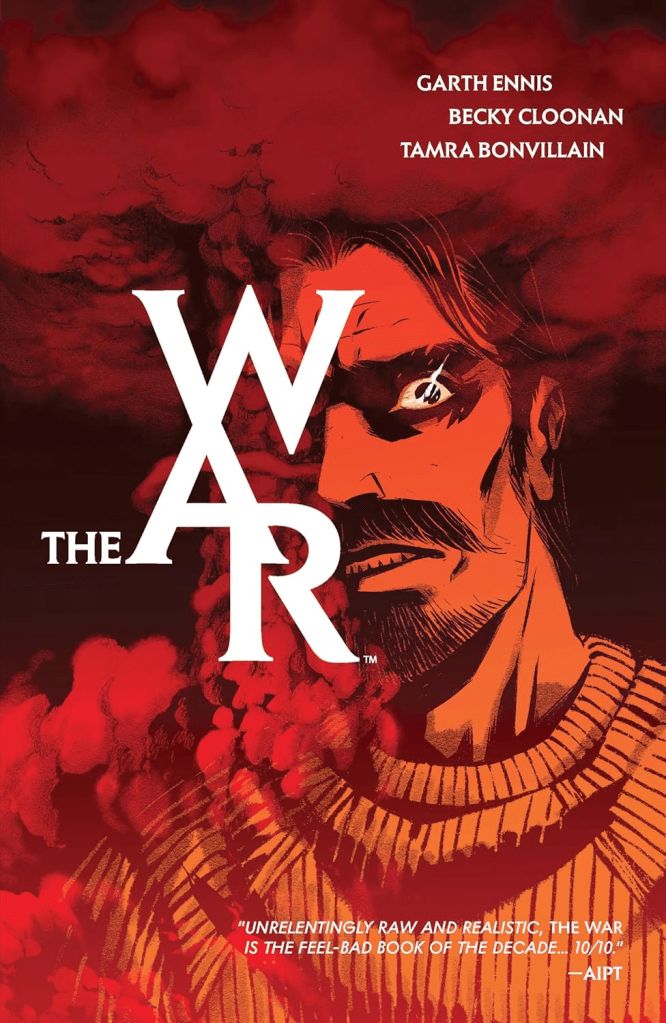
There’s a grounded palette for the “before,” then the book starts bleeding into harsher contrasts and sickly atmospherics as the world tips. You’ll get these stretches where the sky looks wrong, where the environment feels bruised, where black negative space eats the edges of the page. It’s not neon apocalypse. It’s a kind of grim clarity, punctuated by color choices that make you feel the air has changed. When the book leans into darkness, it uses it as pressure. Big shapes of shadow swallow rooms. Small shapes of light turn into targets.
When characters talk too much early on, it feels like denial dressed as cleverness. Later, the captions and sparse lines of dialogue land like thoughts you’re trying not to think. The dialogue “sounds” like people who are scared but trying to keep their dignity, right up until they can’t.
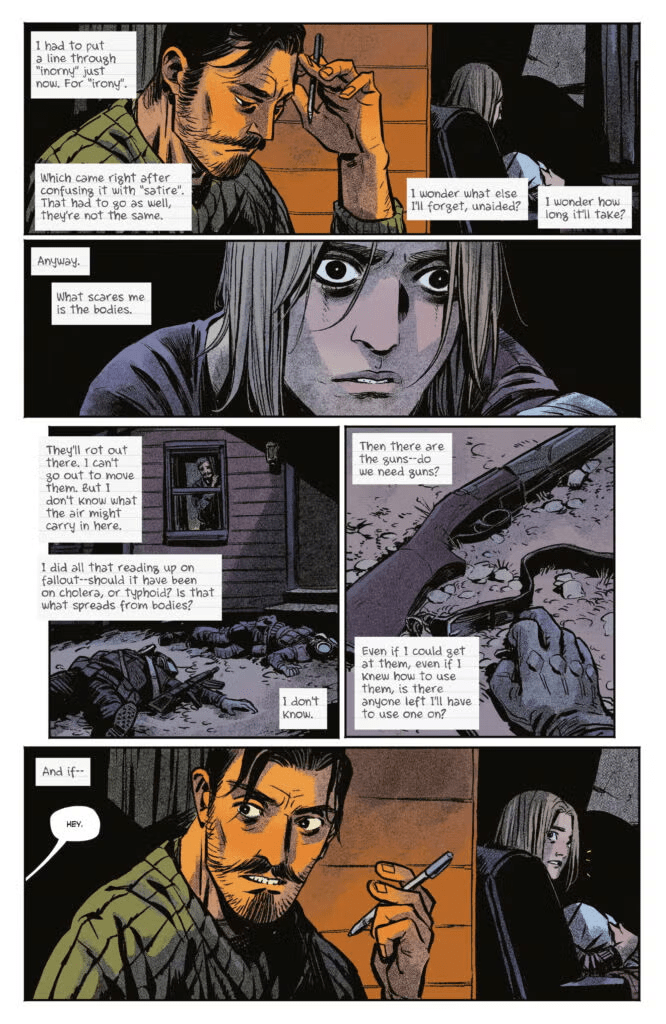
Preparedness is mostly a fantasy, and moral certainty is the first luxury you lose. The book keeps asking what we owe each other when the systems that enforce “owing” are gone. It’s about denial, responsibility, and the private bargains people make to survive the day, even if they can’t survive the consequences. It’s also, quietly, about how love and loyalty don’t disappear in catastrophe, they just get stress-tested until they either break or turn into something uglier.
The War is almost too effective at being a bleak machine. The craft is strong, the escalation is smart, and the emotional punches land, but the experience can feel intentionally punishing in a way that narrows the range. It’s less “wow, I can’t wait to reread that” and more “holy shit, I need to stare at a wall for a minute.” Also, if you want the horror to feel uncanny or wild, this is not that book. It’s horror by plausibility, by proximity, by the awful sense that you already know how this could happen.
If you love grounded apocalyptic storytelling where the horror is baked into the geopolitics, infrastructure failure, and human panic, you’re going to eat this up. If you like your horror with a little more weirdness, metaphor, or cathartic release, you might respect The War more than you enjoy it.
Still, as a comic, it’s a strong piece of work. It uses page turns like traps, color like weather, and silence like a weapon. It’s not trying to be fun. It’s trying to be honest in the ugliest possible way, and yeah, it mostly succeeds. You will finish it feeling rubbed raw, which is sort of the point.
Read if you enjoy apocalypses that start as “well, that’s concerning” and end as “oh cool, society just liquefied.”
Skip if you read horror to relax and not to stare at a wall afterward like you just saw God’s browser history.
Written by Garth Ennis. Art by Becky Cloonan.
Colors by Tamra Bonvillain. Letters by Pat Brosseau.
Published February 24, 2026 by BOOM! Studios.
 The Blog Without a Face
Leave a comment