
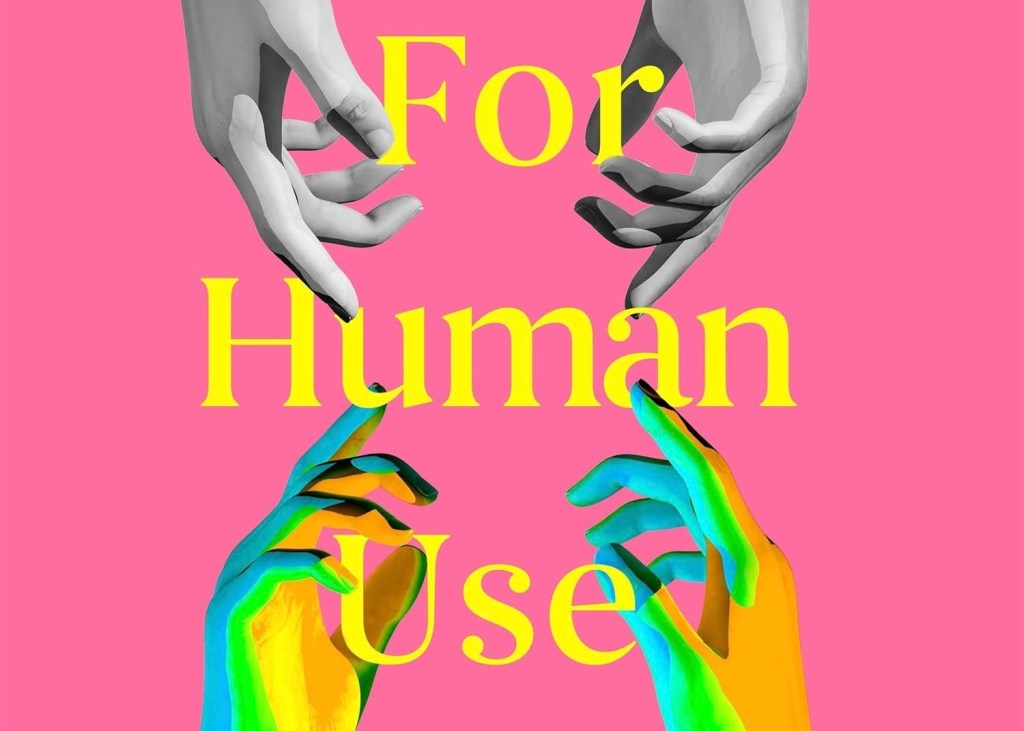
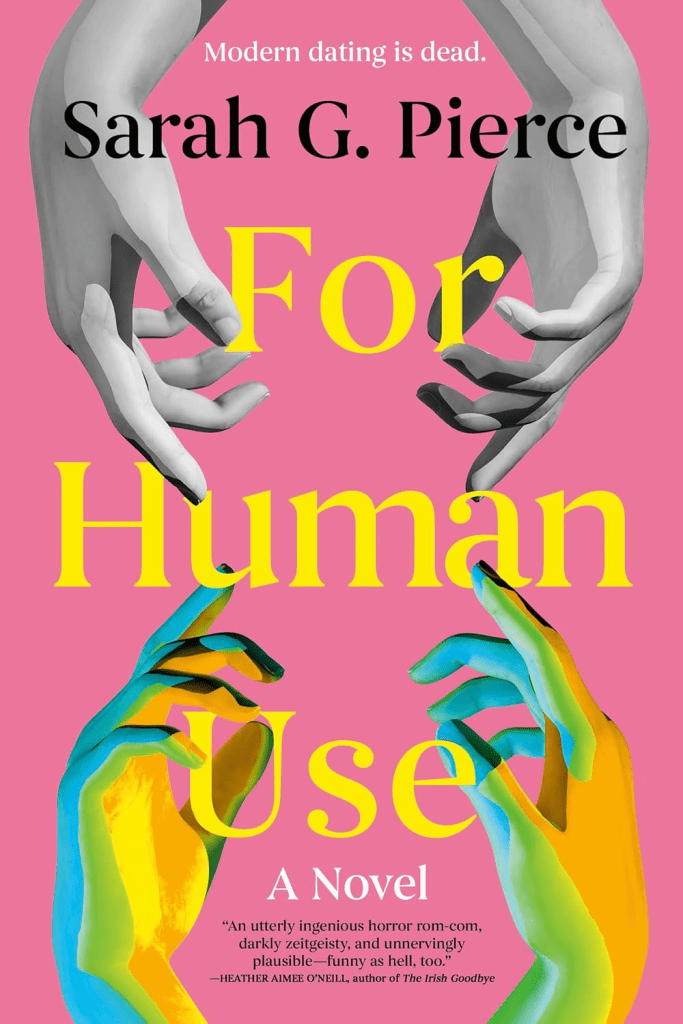






TL;DR: Sarah G. Pierce’s For Human Use is necro-capitalist horror at its sharpest: mean, funny, and horrifyingly plausible. It turns corpses into commerce, commerce into ideology, and ideology into violence, all with brutal pacing and deadpan control. A savage satire-machine that still lands real dread, with images that stick like cold fingerprints.

For Human Use by Sarah G. Pierce is a nasty-good corporate satire with a necro-capitalist premise so committed it starts to feel like a business plan written in blood, then run through a focus group, then shipped overnight in a box that says “please confirm this body is a person who is dead.”
In a near-future America where “Liv” has made living with human corpses into a consumer lifestyle (and culture-war lightning rod), a finance-world operator ends up neck-deep in the supply chain, the PR, and the moral rot, while the country’s obsession metastasizes from “weird” to “violent” with alarming speed. Pierce bounces POVs, which matters because the whole point is that no one owns the full horror. Everyone just owns their little department and their little rationalization.
The book runs on two engines at once. One is straight-up propulsive plot with crisp chapter momentum that keeps your eyes moving because every scene ends with a new “oh, for fuck’s sake” complication. The other engine is satirical documentation, the way modern life actually feels when it’s falling apart: trending posts, talking points, jargon, institutional ass-covering, and the dead-eyed insistence that a nightmare is actually “wellness” if you rebrand it hard enough. There’s a section literally titled “Trending Posts” that reads like an algorithm learned to speak in therapy-speak and decided the real problem is your boundaries, not the corpse in your living room.

Pierce understands that dread lands hardest when it’s procedural. Not “boo,” but “policy.” Not a monster, but a sticker on a box. The refrigerated warehouse sequence is a mission statement for the novel’s whole vibe: ten-acre cold storage, bodies stacked like inventory, language borrowed from meat-processing software, and workers slapping labels that basically say: congratulations, your delivery might stand up and rob you later. It’s hilarious in the worst way and genuinely creepy in the best way. The dread isn’t “a ghost did it.” It’s “corporate said we don’t care what happens once it hits the doorstep.” That is the monster.
The pacing stays tight because Pierce keeps moving the goalposts of “normal.” First, corpses as lifestyle. Then corpses as commodity. Then corpses as political identity. Then corpses as a scarcity crisis that breaks the country’s brain. When the text drops the line that this is “the first shortage of human corpses in history,” it’s funny for half a second, then it’s not, because the next beat is: people start killing to keep their access to The Dead. That escalation ladder works because it’s entitlement plus infrastructure, which is basically America’s favorite combo meal.
Character work is solid and strategically unromantic. Tom, in particular, reads like a guy who thinks he can spreadsheet his way through moral catastrophe. He’s calibrated, self-protective, unable to feel shame, and constantly trying to convert the unthinkable into “an oversimplification.” There’s a scene where he’s in a political-strategy meeting debating how to message corpse culture, and it lands because it’s both absurd and painfully plausible: talking points about “cadavers are objects,” robocalls, ballot measures, and the kind of euphemistic language that turns violence into “education.” Dialogue is clean and believable in that corporate way, where people rarely say what they mean because saying what you mean is for the poors.
Pierce does “cold” extremely well: refrigeration whir, stainless steel, white sheets, the dead reduced to contours and logistics. She also does “sterile pretending to be scientific” well, like the embalming lab that’s allegedly cutting-edge but is also, hilariously, a performance of expertise, right down to a “distiller” that turns out to be a glass coffee maker from the office. That moment is one of the novel’s sharpest stabs: science as theater, surveillance as power, and investors as marks who want to believe the con because belief is profitable.

And yes, the satire is savage. It takes swings at wellness language, media cycles, activism-as-brand, and the way public discourse can metabolize anything, including something as fundamentally grotesque as corpse intimacy, into “normalize this” content. It’s also not shy about the sexual politics, consent discourse, and the hypocrisy of institutions trying to legislate morality while also making money off the corpse market. There’s explicit discussion of necrophilia culture and the way people argue around it, which is both thematically central and… look, you’re going to need a shower after certain passages even when they’re not graphically descriptive.
The pleasures are craft, pace, and bit precision more than “singularly deranged artifact.” Even when the world goes full panic-spiral, the book tracks consequences in a clear chain: supply crunch, market reaction, political opportunism, violence, collapse of norms. It’s brutal, but it’s readable brutal. You can feel the story’s scaffolding, and sometimes that clarity keeps it from tipping into the unknowable. The ending (no spoilers) leans toward escalation and rupture rather than an artsy haunt. It feels earned because the book has been laying pipe the whole way, but it also feels, structurally, like a very strong “novel-shaped” machine.
If you want your horror to be coherent enough to argue about at brunch, this is a feast. If you like dystopian satire that actually draws blood, this one delivers. If you want a mind-virus book that dissolves your sense of reality and then laughs at you for trying to summarize it, this is not that. It’s too sharp, too controlled, too good at making its point. Which is also, frankly, why it works.

Read if you like savage corporate satire where everyone speaks in talking points while the world burns.
Skip if corpse logistics as a premise makes you want to crawl out of your skin.
For Human Use by Sarah G. Pierce,
published February 10, 2026 by Run For It.



 The Blog Without a Face
Leave a comment