
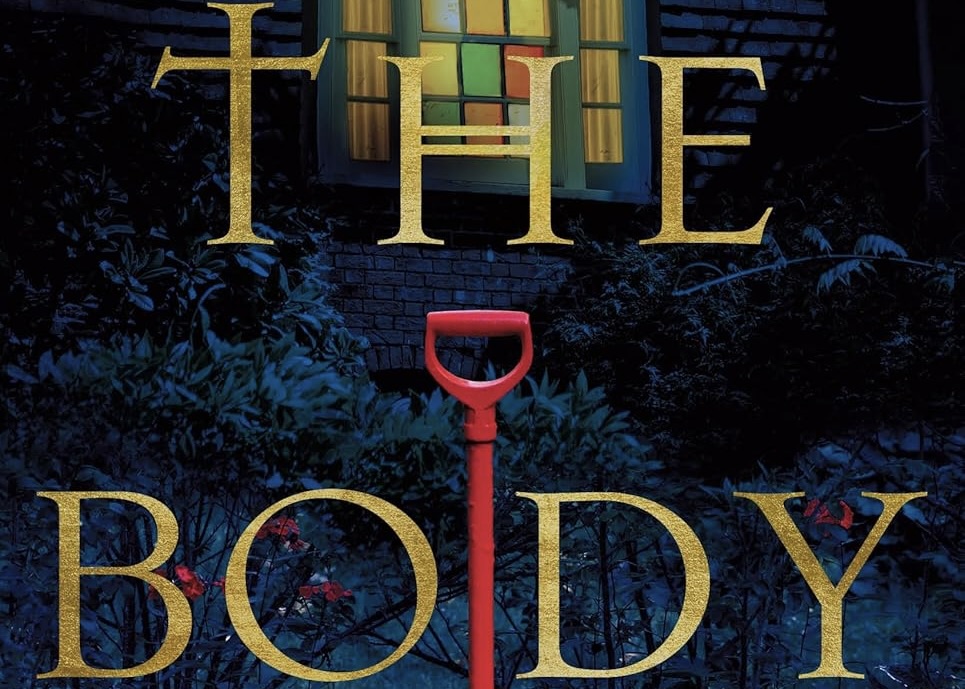
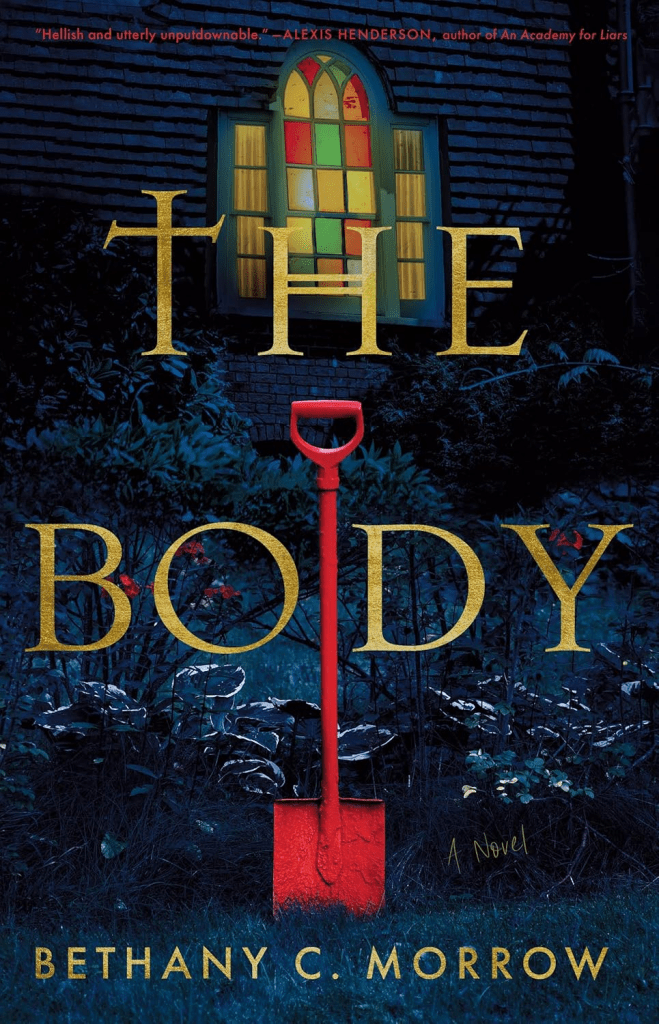





TL;DR: Bethany C. Morrow’s The Body is intimate, brutal church-community horror that commits hard. It’s marital dread turned ritual predator, with a razor-close perspective and body imagery that gets meaner as the pressure climbs. The escalation is tight, the emotional stakes are raw, and the ending is bleak with purpose. A true standout.

Mavis is the kind of woman who can make panic look like poise until her own thoughts start cutting her up from the inside. Early on, she’s sealed in the “pink pod” of deployed airbags after a crash at Ross and Fifteenth, trying to breathe through dust and blood and the sudden realization that her life has slipped one inch off its rails. And then the world keeps coming at her sideways. The Body is, on paper, a tight supernatural thriller about a marriage, a broken vow, and a community that treats a woman’s body like the official ledger of her worthiness. In practice, it’s more vicious and more intimate than that. It has the church-community dread that makes you feel watched even when the room is empty, and it understands that shame is a surveillance system you carry around in your own skull.
Mavis Dwyer has built a life outside her parents’ congregation, but the old rules never stopped living in her head. After a rupture in her marriage, bizarre and escalating attacks begin, and Mavis has to figure out whether she’s being punished by people, by God, by something supernatural, or by the kind of communal “protection” that curdles into sanctioned violence. Her husband Jerrod is both refuge and complication, because this book is not interested in the easy version of “good man saves wife.” It’s interested in what devotion costs, who gets to define “righteous,” and how quickly love becomes evidence in a trial you never agreed to.

Morrow writes in a close third that keeps its hands on Mavis’s throat the whole time. The voice is sharp, metaphor-forward, and psychologically sticky, with recurring language that makes Mavis’s intrusive thoughts feel physical, like talons digging in. That interiority is the fuel of the horror. Even when the book is doing overt set pieces, the dread is doing double duty: you’re scared of what’s happening, and you’re scared of the part of Mavis that’s already bracing to accept blame as the natural order of things. The tonal consistency is strong. It’s angry, but not sloppy. It’s funny in that grim “my nervous system is doing stand-up to survive” way.
This thing escalates like it has a timer taped to its chest. Scene selection is efficient, chapters move with purpose, and reveals arrive in a way that keeps the propulsive reading experience intact. When it goes violent, it does not flinch, but it also does not wander. The structure feels like an escalation ladder: incident, confirmation, pattern recognition, attempt at control, consequences, then the brutal question of what “repair” even means when the repair kit is built out of the same doctrine that broke you. That legibility is a strength for momentum, and a slight limiter for readers who want the book to go structurally fucked up.
Mavis is prickly, strategic, and full of contradictions that ring true for someone trained to perform righteousness. She can be competent and terrified in the same breath. Jerrod is drawn with enough specificity to matter: calm until he isn’t, devoted but not omniscient, and capable of being both protector and participant in a system he thinks he can manage. Dialogue reads believable in that church-community register where every sentence can be affection, warning, and policing all at once. Secondary characters land as pressure points, not cardboard: parents whose “concern” is weaponized certainty, congregants whose loyalty becomes choreography, and outsiders who do not feel safe just because they are outside.
The book is rich in bodily detail without turning into splatter for splatter’s sake. Hospitals, bedrooms, backyards, sanctuaries, all become stages for the same idea: you can be surrounded by community and still be completely alone inside your own body. There are recurring motifs of containment and exposure, pods and pits, curated faces and ruptured flesh. Even the “normal” textures feel sinister because Morrow keeps tying them back to surveillance and entitlement: who’s watching, who’s remembering, who thinks they have the right to correct you.

Bethany C. Morrow has worked across adult and YA, often using speculative frames to press on power, identity, and social control. Her bibliography includes the adult novel Mem and multiple YA works like A Song Below Water, along with other projects that blend genre with cultural critique. What’s interesting about The Body is how it takes that social-pressure intelligence and turns it inward, into domestic and church-community horror where the monster is not just supernatural, it’s institutional expectation with a smile. Reading it in the arc of her work, it feels like a sharpening rather than a departure: the same interest in systems and identity, but with more blood on the floor and less tolerance for anyone’s polite excuses.
Surveillance, shame, and entitlement is the thematic core. The book understands that “community” can be a camera you can never turn off, and that some institutions treat women as public property with private responsibilities. Revenge is present, but it’s braided with grief and self-preservation. It commits. It gets ritualistic. It gets predatory. And the ending, without spoiling, is bleak in a way that feels intentional. It resolves some things, but it also leaves a residue, which is exactly what this story is about.
If you want experimental weird, if you want the book to break its own form or go truly unknowable, The Body may feel a little too clean in its escalation and reveal timing. It is plot-forward in the way a confident thriller is plot-forward. But if you want intimate, marital, church-community horror with real bite, a razor-edged interior voice, and body imagery that keeps getting meaner the deeper you go, this is an easy recommend and a real standout above the usual mid-pack.

Read if you want church-community horror where the real monster is “concern” said with a smile.
Skip if you want your religion-adjacent horror vague and tasteful instead of bloody and specific.
The Body by Bethany C. Morrow,
published February 10, 2026 by Tor Nightfire.

 The Blog Without a Face
Leave a comment