




TL;DR: A doom-tender, weird-lyrical horror-fantasy road (and hotel) story where fae bargains, grief, and hunger-light imagery fuse into something mythic without getting lost in vibes. It lands because it actually moves, keeps its hauntings emotional, and makes “letting the dead go” feel like a knife you have to pick up yourself, on purpose.

A. C. Wise has built a long-running career in speculative fiction that blends dark fantasy, horror, and fairy-tale logic, often with a focus on longing and the costs of myth. She’s written novels like Wendy, Darling and Hooked, and she’s also known for short fiction, including the collection The Ghost Sequences. She contributes criticism as well, including a regular review column for Apex Magazine, which shows up in how sharply she understands genre machinery and emotional payoff. Her work has earned major-genre recognition, including a Sunburst Award win and finalist runs for awards like Nebula and Bram Stoker. In other words, this is a writer doing what she does best: making the fantastical intimate, and making intimacy dangerous.
Port Astor is all glitter and shadow, a city where human highways cross old fae roads and the seams never quite healed. The Peony Hotel sits right on those seams, gorgeous, notorious, and hungry, a monument to glamour that still remembers how to bite. Reading this feels like stepping into its lobby: velvet lighting, bad decisions, and the creeping certainty that the building is listening. Wise makes the city feel lived-in and cursed at the same time, like you could get a cocktail and a prophecy in the same booth, and both would cost you.
Wise tells the story in close third person, rotating primarily through Brix, Bellefeather (Belle), and the two kids who light the fuse, Virgil and Leonie. The prose is lyrical but controlled, more spell than fog machine, and it stays tonally steady even when reality starts to stutter. The intimacy matters, because the book’s core horror is not “there are monsters.” It’s “wanting something hard enough turns you into one,” and you feel that wanting in the thoughts, the small rationalizations, the moments where a character knows better and steps forward anyway.

Virgil and Leonie, young and broke and trying to feel invincible for one weekend, splurge on a room at the Peony and decide to summon Jimmy Valentine, a long-dead movie star whose legend is welded to the city. Months later, paranormal investigators Brix and Belle are pulled in when a room on the Peony’s fourteenth floor seems to vanish, taking evidence and memory with it. Their investigation tangles with Jimmy’s impossible return and a fae presence that treats human longing like an open invitation.
The Peony is a thin place where borders buckle: corridors reorient, rooms refuse to stay themselves, and the hotel can briefly become other spaces entirely. Wise choreographs horror as escalation plus aftermath. The set pieces hit, but what really sticks is what they leave behind, the way characters carry residue on their skin and in their choices, how fear becomes habit and then becomes ritual. Even the investigative beats feel infected, like answers are bait and curiosity is a door you should not open.
Pacing is one of the book’s quiet flexes. The “Eight Months Ago” chapters do real work and each return to Virgil and Leonie loads more consequence into the present. The middle stays propulsive because reveals are attached to emotion: a missing room is not only a puzzle, it’s a threat to a person’s ability to grieve honestly. Reveal timing respects suspense too. You learn enough to worry, then you learn the worst possible version later, when it can actually hurt, and when the characters are already too deep to back out cleanly.
Brix is a great anchor: competent, tired, and wrecked in a way that reads lived-in rather than performative. His grief for Abby is not treated like a stylish scar. It is an active craving that keeps trying to turn love into a system, and Wise is admirably unflinching about the selfishness that can hide inside devotion. Belle is the perfect counterweight. She’s sharp, guarded, and carrying a demon named Belizial inside her, a relationship that reads like uneasy cohabitation with a weaponized part of yourself. Their partnership works because the dialogue sounds like two people who trust each other with ugly truths, but still know where to press to get a reaction.
Underneath the hauntings, the book is about desire as a moral weather system. Virgil wants to give Leonie a miracle, and to prove he can. Leonie wants wonder without paying the full bill. Brix wants Abby back, or failing that, wants to keep her close enough that letting go never becomes real. Belle wants control over the monster in her and the monster that once tried to own her. Over all of it hangs the Hollow Queen, a figure of hunger so pure it reads like a law of nature. The emotional core lands because the book doesn’t treat “let the dead go” as a platitude. It treats it as a brutal, daily choice, and sometimes as a kind of violence you do to yourself for the sake of living.
If you’re a frequent BWAF reader, you’ve come to know my distaste for fantasy, but this is a surprising exception. My only real caveat is density. The book loves liminal logic, and if you want hard rules and clean explanations, you might feel unmoored. If you like haunted glamor, fairy-tale cruelty, and horror that keeps asking what you would sacrifice for love, this is absolutely your bone road.

Read if “haunted hotel” is your love language, especially when the building is actively pissed you’re alive.
Skip if you want big jump-scare pacing over slow, elegant dread with emotional aftertaste.
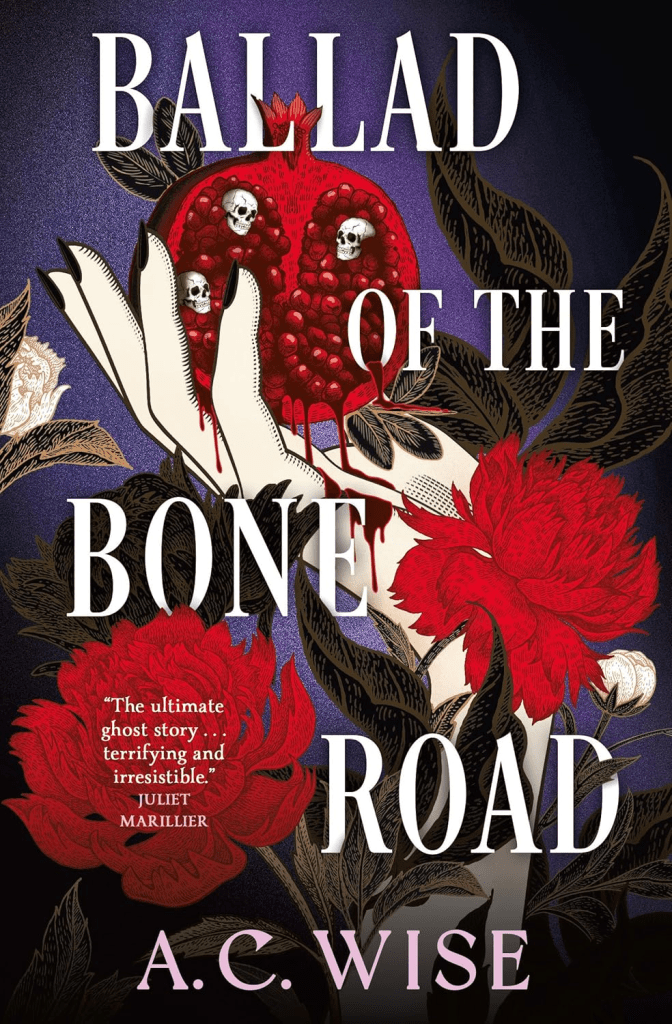
Ballad of the Bone Road by A.C. Wise,
published January 27, 2026 by Titan.
 The Blog Without a Face
Leave a comment