
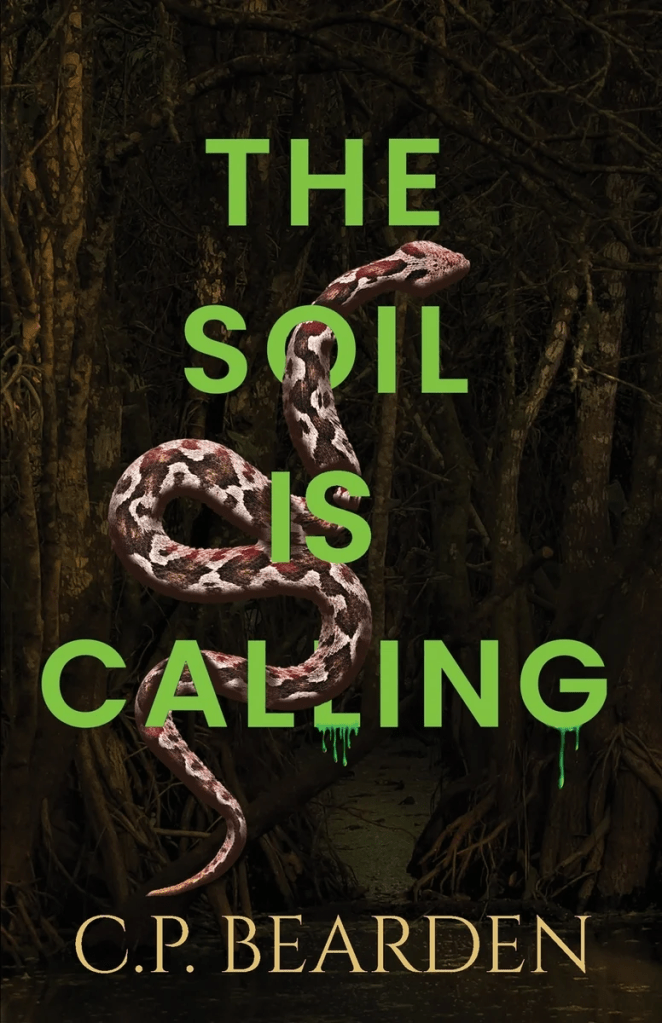





TL;DR: Rural Georgia grief horror where the land feels hungry, the snakes feel organized, and family trauma is the real apex predator. This is a solid, emotionally grounded folk horror novel with some nasty set pieces and a great voice that occasionally spins its wheels and leans on familiar beats.

C.P. Bearden is coming at this through Conquest Publishing, and the book reads like someone who knows small-town Southern life in their bones and also kind of hates it. You can feel the personal itch in the details of Harlsboro, the church gossip, the way everyone knows your business, the claustrophobic weight of being from a “respected” family that still lives in a double-wide next to the woods. It is not some outsider gawking at the South, it is someone dragging their own ghosts back through red clay and kudzu and seeing what crawls out.
Our POV is Rebecca, a lapsed Southern girl who escaped to Pennsylvania, now dragged back home when her estranged, hyper-religious mother Nancy gets bitten by a massive cottonmouth. Becca arrives in Harlsboro already shattered by the unsolved disappearance of her daughter Millie and planning a short, guilt-fueled caregiving stint. Instead she walks into a stew of weirdness that feels older than any of the humans involved. Snakes are showing up where they should not. The soil and the woods carry this low, humming threat. The Purvis family owns basically everything, the sheriff is twitchy as hell about “private property,” and Becca’s own past is wired directly into whatever is coiling under the town. What she wants is simple: peace, closure, and a clean exit. What she gets is a slow realization that the land, the old stories, and the Jesus-flavored small-town power structure have other plans.
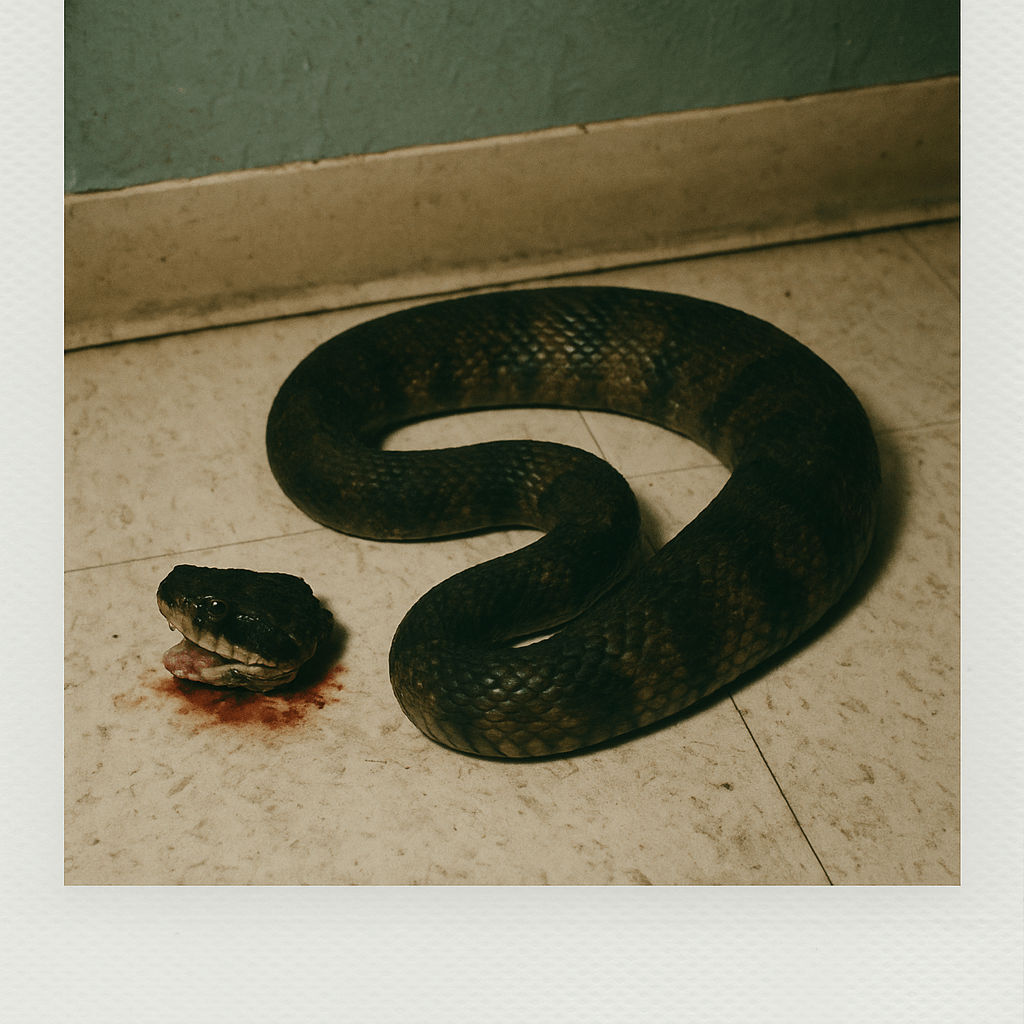
What really pops here is how Bearden weaponizes the mundane Southern shit you could easily scroll past in a Hallmark movie and twists it into horror. The early hospital scene with the Polaroids of the decapitated cottonmouth sets the tone beautifully. Later, the dead doe on the roadside that blurs into Millie in Becca’s grief-scrambled perception is just a vicious little emotional knife. The near miss in the grocery store parking lot with the not-Millie little girl hits in the same nerve cluster. When the book leans into those collision points where Becca’s trauma overlays the landscape like a bad AR filter, it fucking rips. The creeping ecological weirdness the booming snake population, the sense that the soil itself is in on something never fully tips over into corny monster-of-the-week territory, which I appreciated.
The voice carries a lot. Becca’s first person narration is conversational, bitterly funny, and full of little rage-spark asides that absolutely sell the vibe without turning her into a quipbot. Lines about Harlsboro being a soul-sucking shithole, the “everybody” her mom really worships, or the casual misogyny of the sheriff and Dr Blackwell all feel lived in. The scenes are usually grounded in sensory detail with sweat, humidity, the stink of roadkill, the clatter of old window units, and cheap soda in the hospital which helps the weirder beats land. This is very much a slow-burn first half with grief and family drama in the foreground and horror intrusions on the edges, then a faster, more ritual-heavy back end once the supernatural cards are on the table. That shift works, but some middle stretch scenes feel like they repeat the same emotional beat. Mom is manipulative and judgmental, Becca is triggered as shit by the house and the town without adding much new. The climax does the folk horror thing you are expecting, and while it is satisfying, it is also the place where you feel the “good but not exceptional” ceiling most clearly.
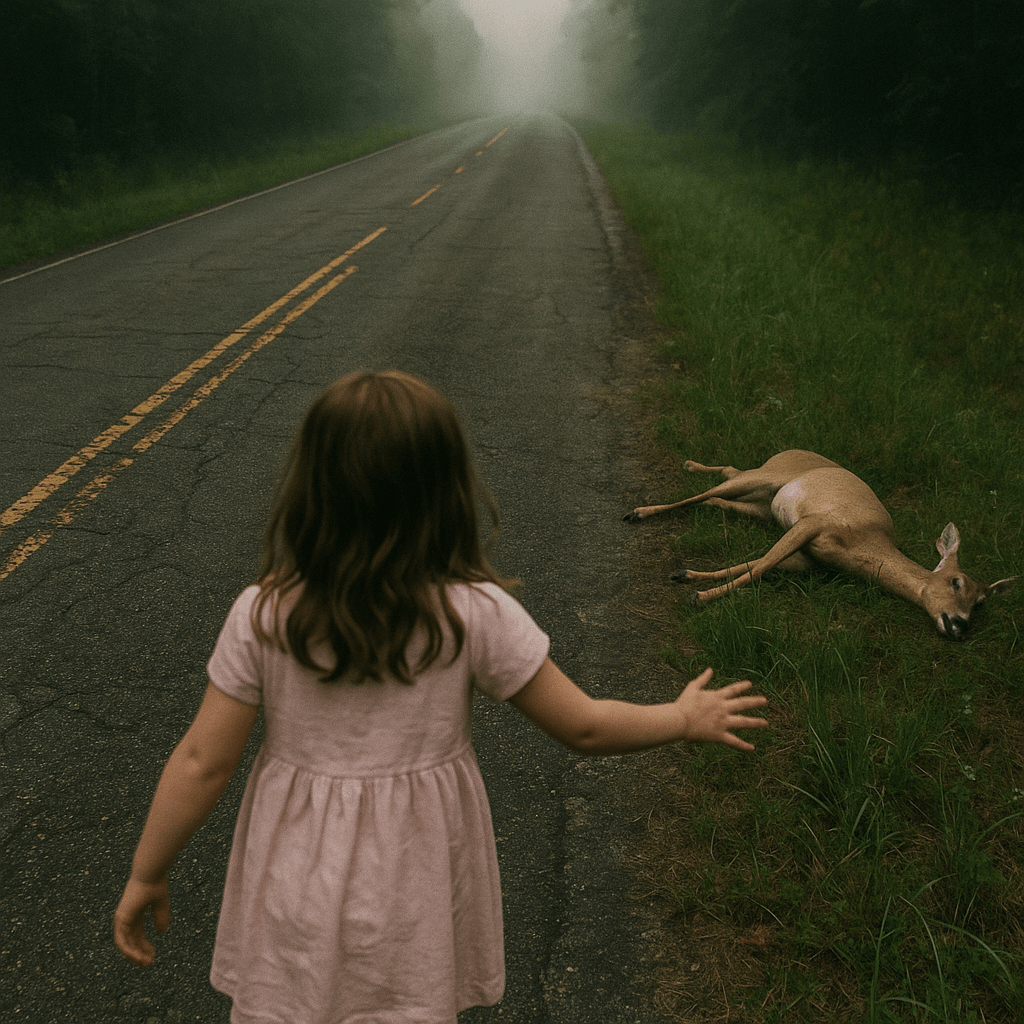
This is absolutely a book about grief and inherited rot. Millie’s absence is not just a tragic backstory, it is the gravity well the whole story orbits. Becca’s images of Millie bleeding into dead animals and strange children are a reminder that trauma does not stay politely in its lane, and Bearden ties that personal loss to a bigger question of what small towns bury to keep functioning. The mother-daughter stuff is appropriately messy. Nancy is not some cartoon Bible-thumper, she is petty and cruel and terrified in very human ways, and the horror takes a clear pleasure in linking her rigid religiosity to something literally poisonous growing in the ground. The soil, the snakes, the family line, the church gossip all function as one ecosystem. It leaves me thinking “the land remembers everything you let happen here, and it is tired of your shit.”
Amongst the folk horror scene, this is a contemporary rural grief novel that is less “prestige lit” than, say, a Laird Barron or a Priya Sharma collection, but a clear cut above the forgettable snake-on-the-cover pulp. I would put it in the “worth recommending to people who already like this flavor” tier next to the solid eco-sinister small press stuff, not in the year-end top ten but absolutely in the “oh you like swampy shit, you should check this out” conversation.
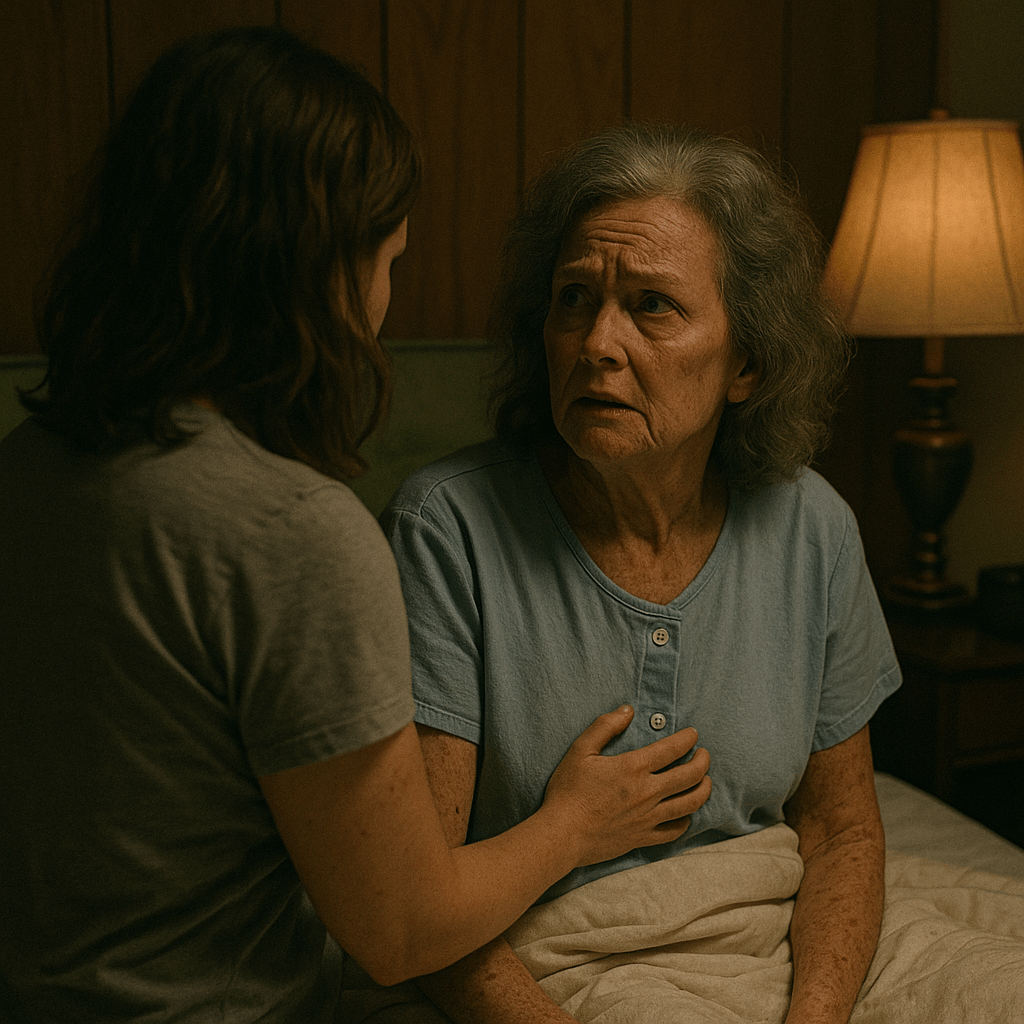
A strong, snake-haunted slice of Southern folk horror with a killer sense of place and some genuinely nasty emotional punches, held back by familiar moves and a few saggy stretches, but still very much worth your time if the soil is already calling your fucked up little heart.
Read if you love complicated, fucked up mother-daughter dynamics served with a side of church gossip and class resentment.
Skip if you hate internal monologue and do not want to live inside a traumatized narrator’s head for 250 pages.
The Soil Is Calling by C.P. Bearden,
published January 27, 2026 by Conquest.


 The Blog Without a Face
Leave a comment