





TL;DR: This is a vicious little character study about what happens when a terrified girl gets fed into the meat grinder of mid-century psychiatry and family burnout, and somehow keeps shambling forward. It is not a fun time, but it is a gripping, gut-sick time, and if you like your horror grounded in real world cruelty, this is absolutely worth space on your shelf.

Viggy Parr Hampton has quietly been carving out a very specific niche: smart, nasty horror about institutions that say they will save you and instead chew you up. A Cold Night for Alligators went after public health and abandoned spaces, Much Too Vulgar took a bone saw to academic ambition, and The Rotting Room dragged faith through the crypt. A Veritable Household Pet feels like the most intimate of the bunch, less set piece fireworks and more slow vivisection. You can feel the author settling all the way into character voice here, letting the spectacle of the lobotomy and the Thorazine drool sit underneath the real horror, which is how casually everyone decides this girl is a problem to be managed rather than a person to be helped.

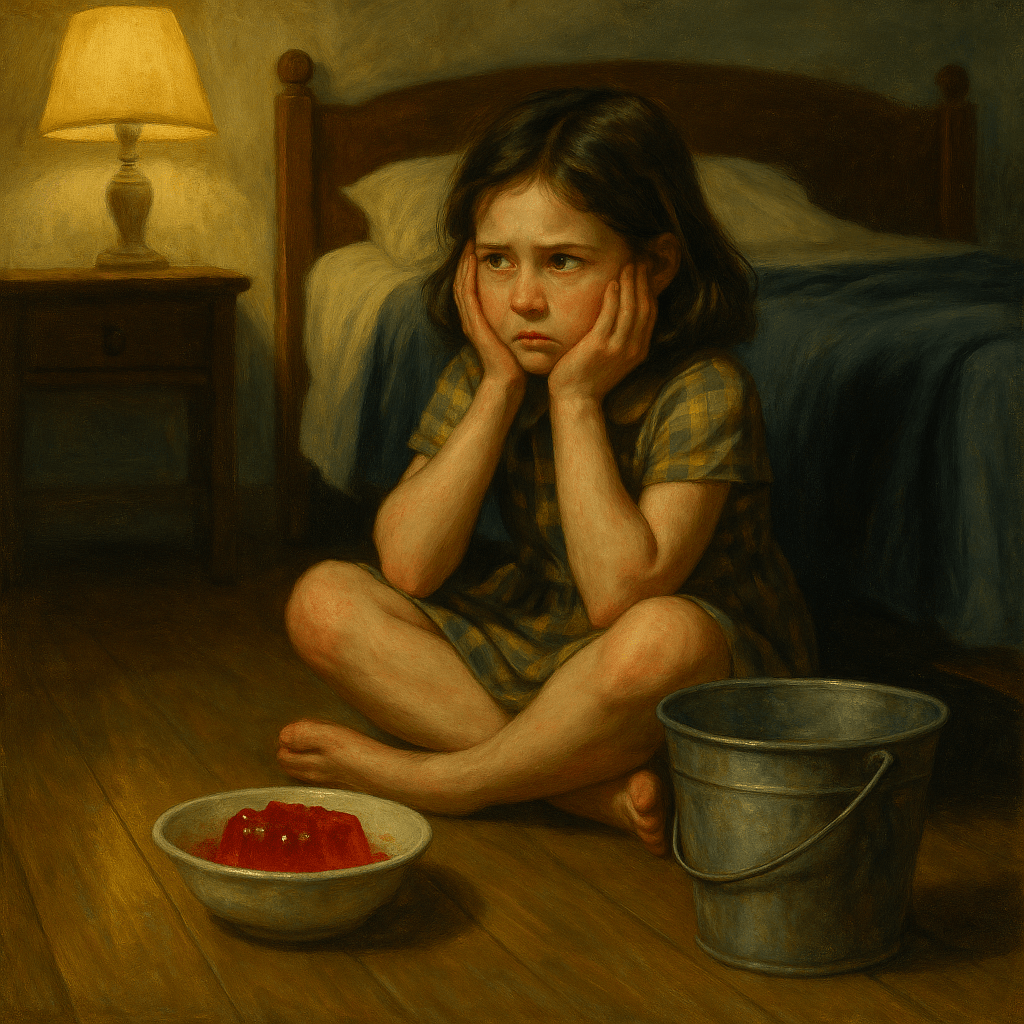
The book is framed as the life story of Darla Gregory, an eleven year old in the 1960s whose emetophobia is so severe she locks herself in her bedroom, lives with a shit bucket and red Jell-O, and eventually attempts suicide rather than risk vomiting again. Her parents, exhausted and broke, sign her up for a cheap transorbital lobotomy with a sleazy doctor. The procedure “fixes” her fear at the cost of almost everything else, leaving her a placid, childlike woman who gets shuffled from home to home as a kind of living responsibility. Around her, big sister Ellie grows into a surgeon, a wife, and a deeply angry narrator trying to make sense of the wreckage. The stakes are simple and horrible: Darla wants a life that is not ruled by terror; everyone around her wants a life that does not revolve around Darla. The collision of those wants feels like watching a slow train crash you cannot stop.
What makes this book special is the duet between Darla’s voice and Ellie’s “Scribe’s notes.” Darla tells her story in soft, looping, almost childlike prose, always slightly behind her own life, always minimizing how bad things were. Ellie drops in bracketed commentary like a scalpel, correcting details, confessing to petty cruelties, and admitting the kind of resentments most families pretend do not exist. When Darla remembers a “good” relationship with her sister, Ellie cuts in to admit that she saw Darla as a needy, squeaky wheel who sucked all the oxygen out of the house. When Darla describes her parents as loving but confused, Ellie spells out the arguments through the thin walls, the money problems, the suicide attempt with the broken glass, the fact that Thorazine and lobotomy were as much about parental relief as patient care. The effect is fucking brutal: you are constantly forced to hold the version of events Darla can live with against the uglier truth Ellie insists on.
Hampton leans into a hybrid structure. You get Darla’s first person recollections, Ellie’s notes in a sharp, almost clinical first person of her own, and interludes of medical notes from smug psychiatrists and hack surgeons describing Darla like a case study instead of a human. The prose is clean but textured: Darla’s sections are simple, repetitive, and obsessive, circling germs and sickness and safety; Ellie’s are spiky, sarcastic, and tired; the doctors are full of detached jargon that reads like a long, dry shit of paternalism. The pacing is deliberately slow, especially in the middle stretch where Darla is trapped in her room, then trapped in her sedated haze, then trapped as a “household pet” in later homes. The drag feels intentional. You are meant to sit with the boredom and indignity of a life that never expands beyond the next caregiver, the next small humiliation.
This is absolutely medical horror, but not in the glossy “evil scientist in a basement” way. The lobotomy sequence is awful, yes, and the aftermath is full of bodily details that make you wince: the drooling, the weight gain, the bib, the shit bucket, the way a transorbital ice pick is treated like a routine office procedure to be done cheap and fast. Mostly, though, the book runs on emotional body shots. The horror lives in every casual decision to talk about Darla like she is furniture, every time a professional prioritizes cost over safety, every shrug when someone suggests dumping her in “a place.” It is not flashy, but it is steady and mean, and by the time a caregiver dies and Darla is left alone again, you feel like someone has been poking you in the ribs for two hundred pages.
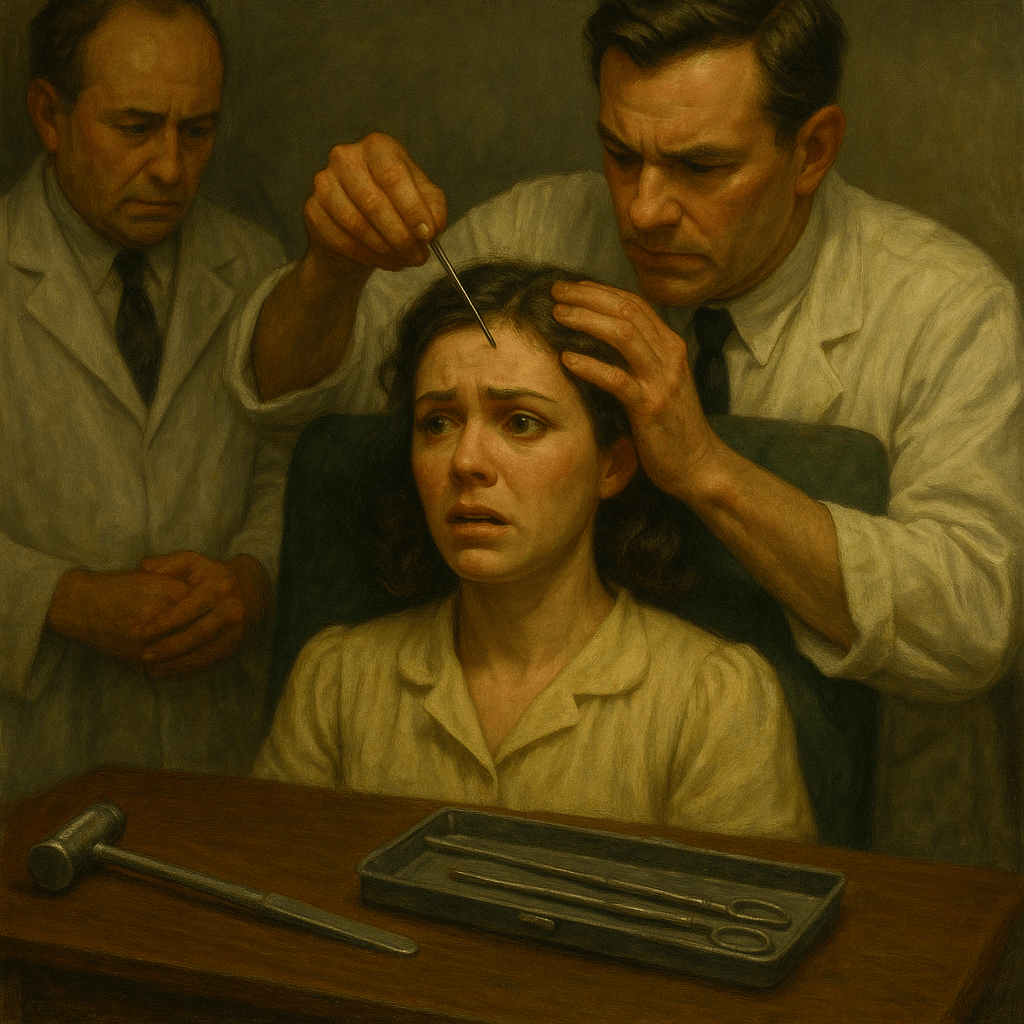
This is a book about personhood, sisterhood, and the way caregivers get eaten alive by systems that offer them shit for support. Darla’s terror of vomiting maps easily onto any chronic mental illness: it makes sense internally, ruins her life externally, and gives everyone around her a weapon to use when they are tired. The lobotomy becomes a physical manifestation of what the family has been trying to do from the start: smooth her over, quiet her down, make her convenient. Ellie’s whole arc is built on guilt and resentment, torn between the doctor she becomes, who knows exactly how wrong this all was, and the teenager who once wished her sister would just disappear. The title is doing a lot of work. Darla is treated like a pet, an accessory, a burden that can be handed off, but she never stops being aware enough to notice the difference between love and management. The book sits in your gut like something you should probably throw up and cannot.
A Veritable Household Pet sits in that lane with books like The Bell Jar and The Vegetarian on one side and small press medical horror on the other, but meaner and more explicitly genre. It is not the loudest or flashiest, yet it feels like one of the more distinct takes on “institutional horror”, and it deepens Hampton’s whole project of dragging real world systems into the horror spotlight.
A fucked up, slow burning, quietly vicious medical horror that hits hard where it counts, and one I would recommend to anyone who wants their horror to feel uncomfortably, nauseatingly real.

Read if you crave horror that feels like a fucked up memoir; if you can handle detailed depictions of mental illness, bad psychiatry, and medical procedures; if you love sister dynamics that are tender and vicious at the same time.
Skip if you need fast pacing and big supernatural fireworks; if medical abuse and suicide attempts are hard no subjects; or if you require at least a mildly hopeful, neat ending rather than messy, realistic fallout.
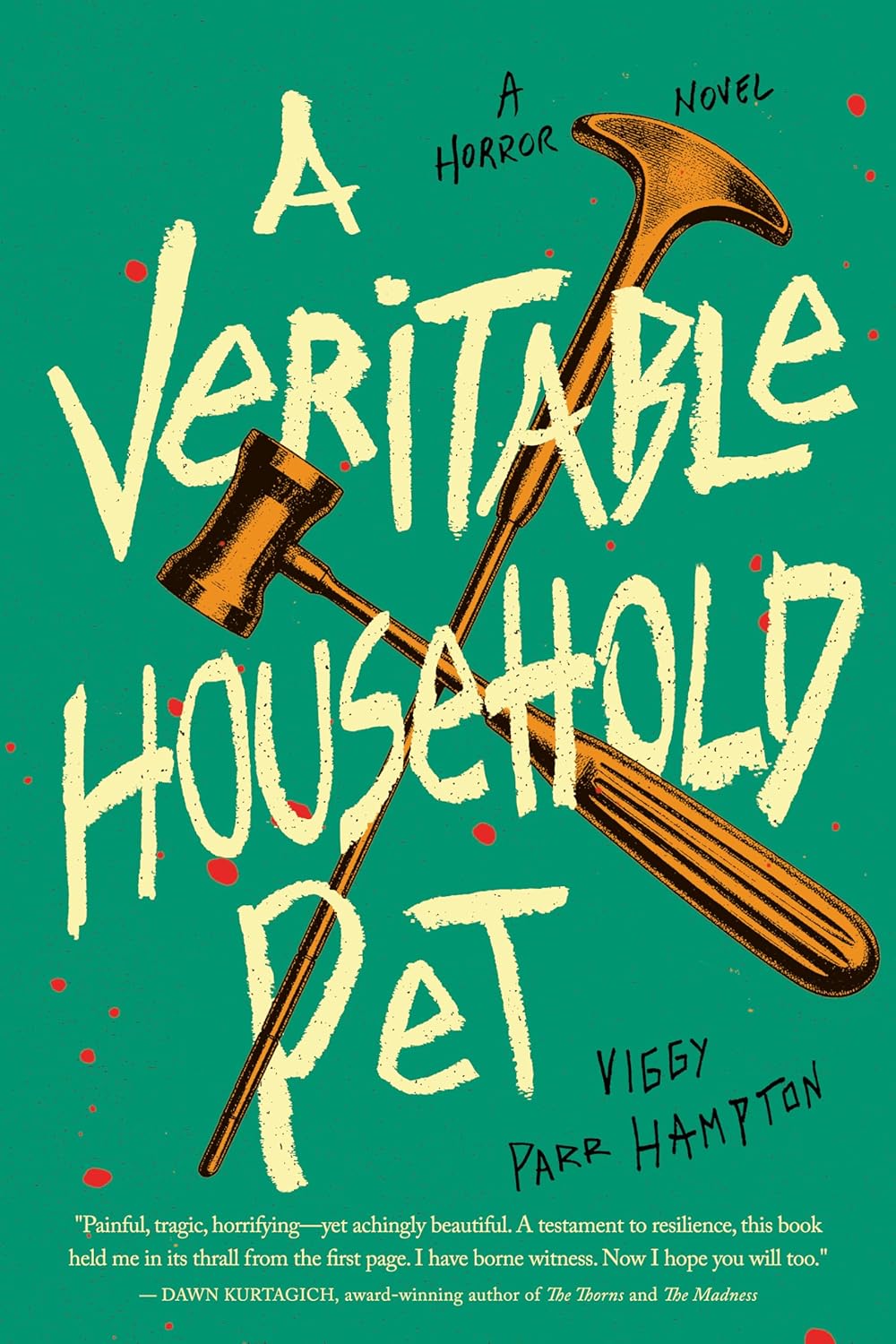
A Veritable Household Pet by Viggy Parr Hampton,
published January 28, 2026 by Horror Humor Hunger Press.
 The Blog Without a Face
Leave a comment