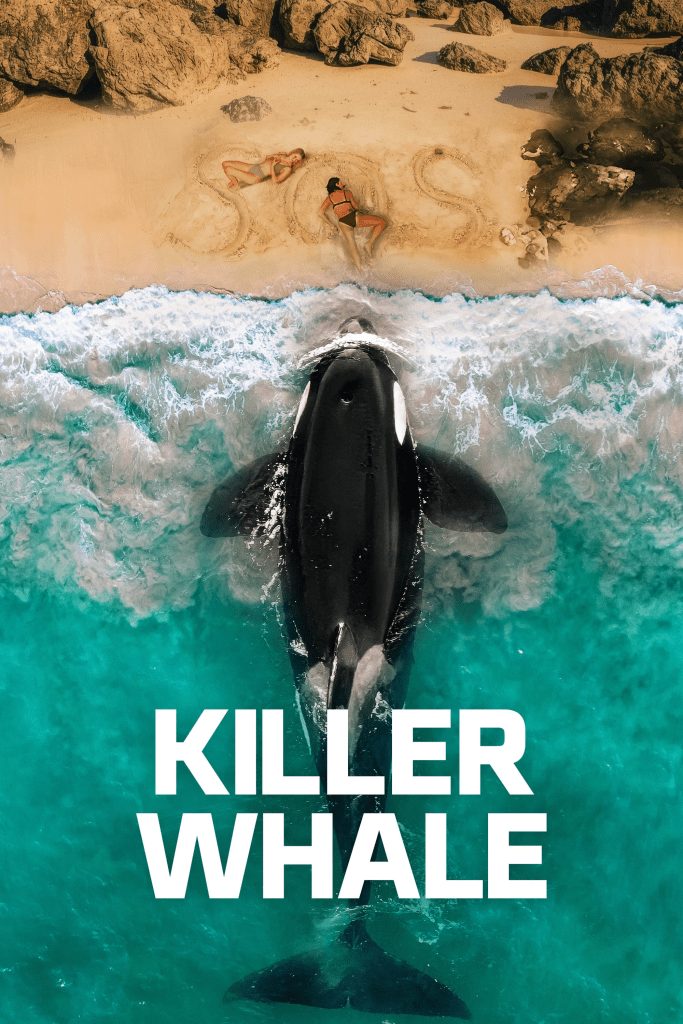





TL;DR: Killer Whale wants to be a sunburnt, bitey micro-thriller about grief, friendship, and an orca with 22 years of reasons to hate humans. When it locks into the stranded-on-a-rock survival problem, it’s tense and nasty in flashes, and the leads sell the panic. Too often, though, the movie fights its own engine with wobbly VFX and soap-opera twists.

Virginia Gardner plays Maddie, a young cellist with a raw, still-bleeding tragedy in her rearview mirror, plus hearing loss that the film keeps trying to turn into a character “thing” rather than a lived-in reality. The setup is blunt: Maddie’s boyfriend Chad (Isaac Crawley) dies during a robbery, and a year later her best friend Trish (Melanie Jarnson) drags her to Thailand for a healing vacation that is, of course, also a terrible idea. Maddie’s obsession is Ceto, an orca held at a SeaWorld-adjacent tourist trap called World of Orca, and Maddie’s compassion for this animal is sincere enough that you almost want the movie to drop the “killer” part and just go full angry-eco-revenge fantasy.
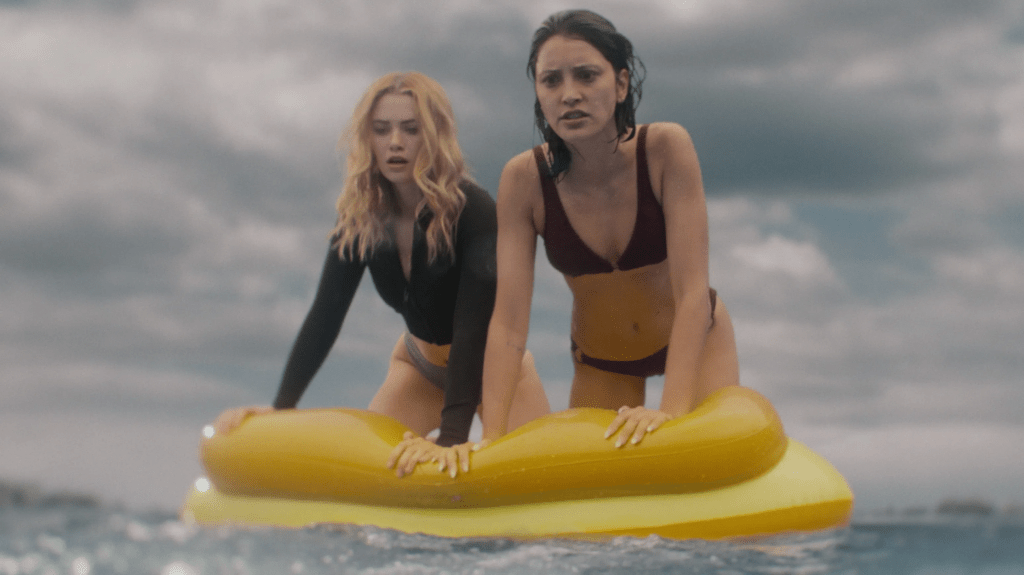
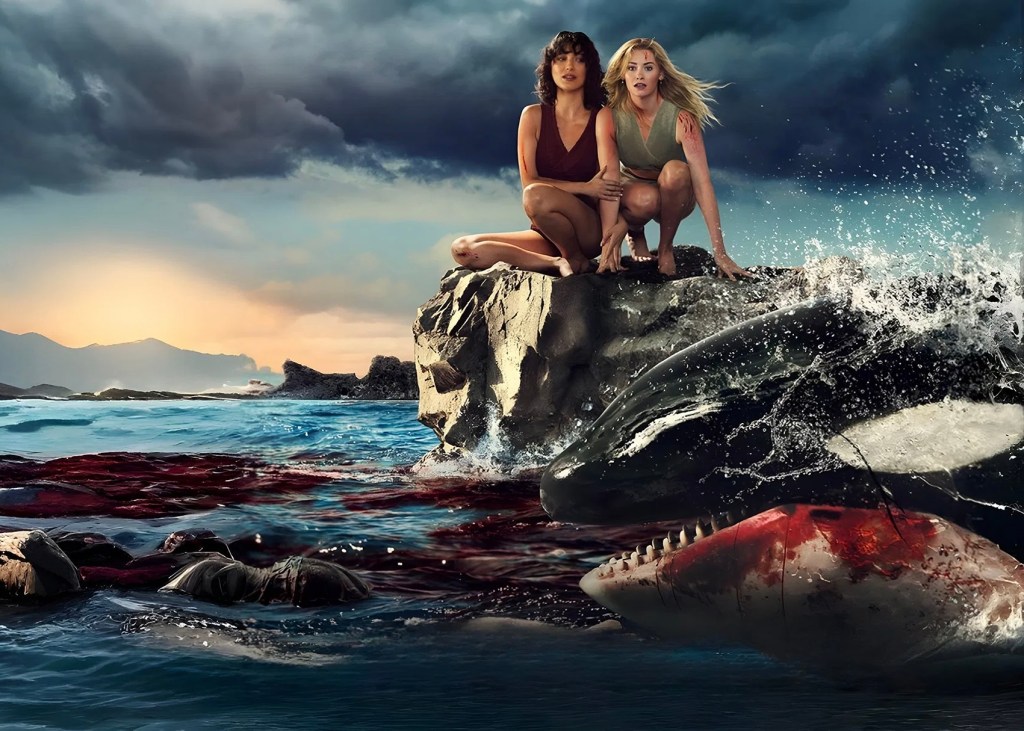
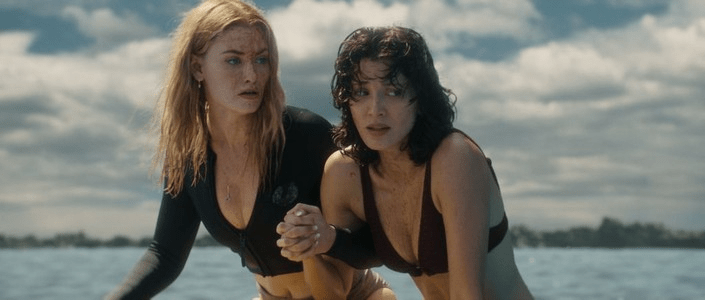
Then the film shoves its chips into the real premise: Maddie and Trish end up out on the water with local guy Josh (Mitchell Hope) and get stranded in a perfectly convenient atoll lagoon situation where Ceto is suddenly present and very much in the mood to turn people into sashimi. The stakes are simple and mean: open water, no help, dehydration, injuries, and a predator that doesn’t need to be “fast” when you’re the idiot marinating on a rock in the sun. It’s basically The Shallows meets Fall, with the same “female besties trapped in a lethal geometry problem” vibe, and the film knows it.
When it works, the tonal tug-of-war is great. The flick wants you to fear Ceto and also to feel like the humans earned every consequence. That’s a juicy ethical quandary for a creature feature, and it gives Gardner a specific kind of dread to play: not just “I’m going to die,” but “I am going to die at the mouth of something I empathize with.” The script flirts with that idea, then too often punts it in favor of interpersonal melodrama that feels parachuted in from a different draft. There is a “revelation” angle that lands like a screenwriting hail-Mary rather than an earned psychological crack.
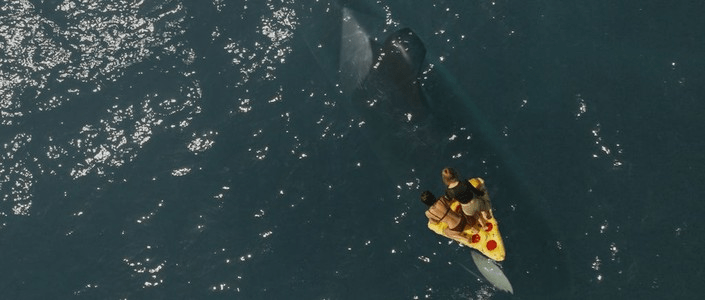
The construction of the movie makes it either becomes “fun trash” or “frustrating trash,” depending on your tolerance for obvious compositing. When the lighting and textures don’t match, your brain stops believing the ocean is an ocean, and then the whale is not a whale, it’s a digital coworker who showed up late and still expects to get paid. It’s pretty easy to clock the green-screen feel and swimming-pool staging, and once you see it, it’s hard to unsee. That said, Brechin does stage a few solid attack beats, and she understands the micro-thriller rhythm: small choices, escalating consequences, the tide and sun becoming villains too. The problem is the pacing. There’s a long runway of setup before we get to the rock, and then there are stretches where it feels like the movie is waiting for its own next idea to swim into frame.
Gardner and Jarnson are doing better work than the material deserves. The friendship reads as real, even when the dialogue gets corny or the “we’re still sexy in a crisis” vibe starts to feel like a producer note. Gardner, especially, sells panic and stubbornness in a way that keeps the film watchable even when the plot starts making choices that feel like the screenplay is actively trying to get these women killed for its own convenience.
Jo-Anne Brechin is an Australian writer-director (AFTRS graduate) whose credits are largely outside mean creature territory, including the features Zelos (debut feature) and Paper Champions, plus romantic titles like When Love Springs and One Perfect Match. The co-writer, Katharine McPhee (not the American Idol singer), has screenwriting credits including the Australian romantic comedy Love Is in the Air, which helps explain why the character-relationship spine is treated as the main course even when the creature feature wants to be the appetizer that bites your hand. The DNA is very “micro-thriller formula,” but softened with empathy, which is an interesting impulse even when the execution is uneven.
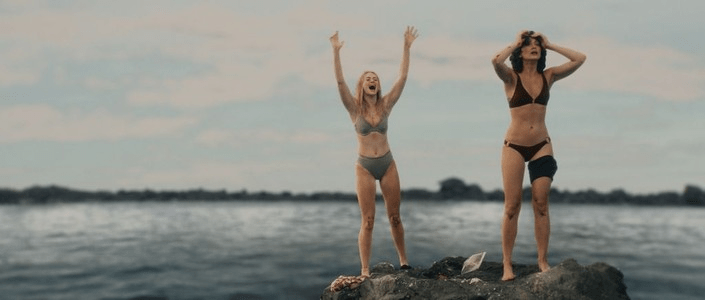
It’s a messy stew of eco-guilt and betrayal: captivity as cruelty, grief as gravity, and friendship as the last rope you cling to when nature is done negotiating. But the movie can’t fully commit to whether Ceto is a slasher villain or an abused animal turned into a plot device, and that indecision lingers. A decent survival hook and two committed leads get it over the line, but the fakey ocean, baggy first act, and “wait, what?” twist mechanics keep this orca from earning its crown.
Watch if you enjoy stranded-location micro-thrillers, especially Fall/Shallows-style setups.
Skip if you require realistic water work and seamless environments.
Directed by Jo-Anne Brechin, written by Katharine McPhee.
Released January 16, 2026 by Lionsgate.

 The Blog Without a Face
Leave a comment