

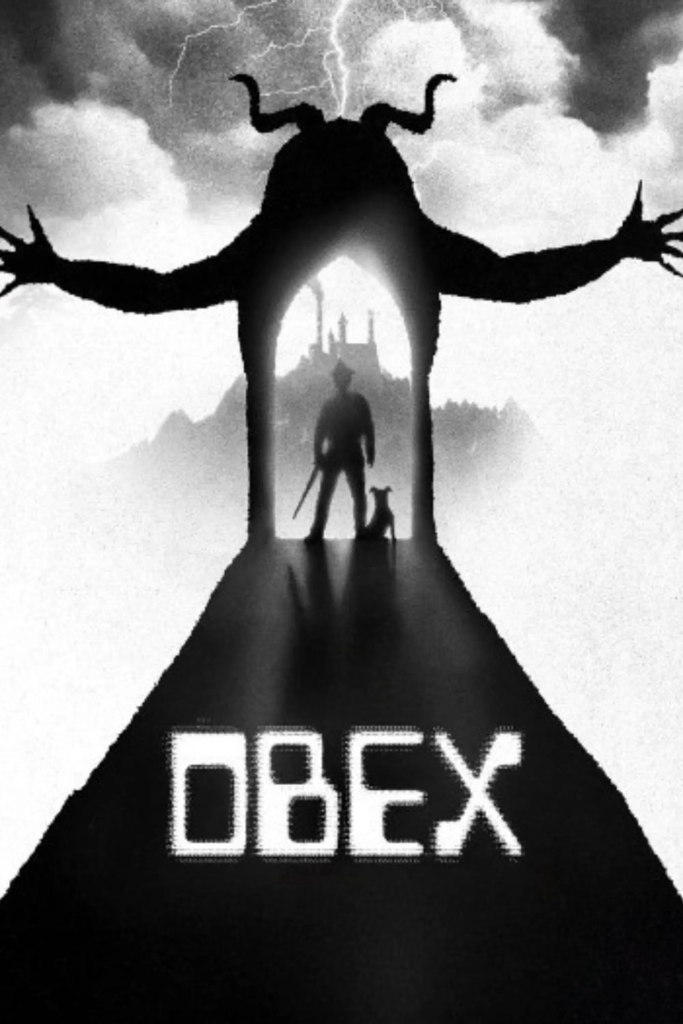





TL;DR: A lo-fi black-and-white quest movie where a shut-in ASCII artist gets baited by an “interactive” computer game, then has to go full dungeon-crawler to save his dog. It’s tender, funny, and quietly bleak, like Zelda made out of VHS hiss and grief. You’ll dig it if you like your weird handmade and emotionally honest as hell.

It’s 1987 Baltimore. Conor Marsh (Albert Birney) lives alone with his dog Sandy, makes money “redrawing” photos as crude computer art, and barely interacts with the outside world except through his neighbor Mary (Callie Hernandez), who drops off groceries and small-talk through the door. When Conor signs up for a new game called OBEX, Sandy vanishes and a demon presence bleeds into his house, forcing Conor to enter the game’s fantasy realm, team up with Victor (Frank Mosley), a TV-headed companion, and push toward an end-boss showdown to get his one real friend back.
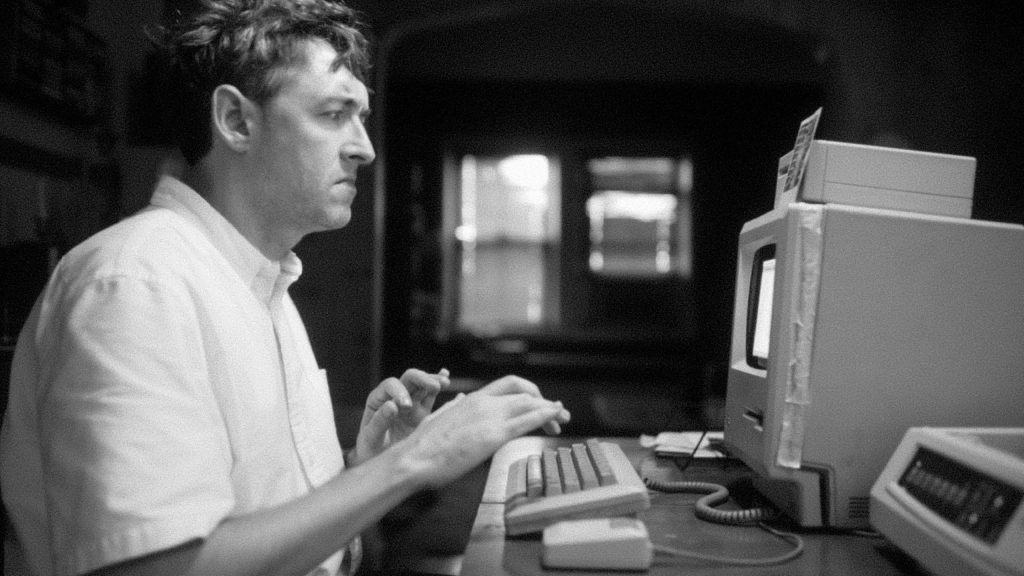
Birney is one of those rare “I will simply build my own universe out of cardboard, synths, and stubbornness” auteurs. Before OBEX, he co-directed Strawberry Mansion (2021) with Kentucker Audley, another surreal, handmade genre-piece that treats nostalgia like a drug you both love and distrust. On OBEX, he doubles down on the intimacy: he writes, directs, and stars, and the film feels like a personal transmission about screens as sanctuary and trap. Pete Ohs, who co-writes and also shoots the film, has his own indie DNA as a director-cinematographer-editor (credits include Everything Beautiful Is Far Away and Jethica), and his sensibility here is crucial: the movie’s texture is the point, not a garnish.
OBEX nails a very specific flavor of loneliness. Not “sad boy staring out a rainy window” loneliness, but “I have built a soft prison out of TV glow, dot-matrix clatter, and routines that keep me safe” loneliness. The movie treats Conor’s home setup like a shrine: VHS tapes, stacked TVs, the ritual of recorded late-night horror, and the weird comfort of living inside curated noise. Then it weaponizes that comfort. The promise of OBEX is basically: you can crawl inside the screen for real. And once Conor bites, the film starts firing off set pieces that feel like dream-logic side quests, each one a slightly different argument about why escapism rules, and also why it can absolutely fuck you up.

The black-and-white look is not just “cool indie choice,” it’s the film’s bloodstream. It makes Baltimore feel drained and hushed, while the game-world feels like a matte-painted storybook that someone printed on a haunted office copier. The lo-fi effects and production design are proudly tactile, like the movie is daring you to sneer at the seams and then realizing, ten minutes later, that the seams are the whole emotional trick. Sound is doing heavy lifting too: cicadas grind away outside Conor’s bubble, the keyboards clack, the static breathes, and Josh Dibb’s synth score wraps it all in a woozy, midnight-movie lullaby that’s equal parts cozy and ominous.
The big theme is screens as grief management. Conor’s media cave is a coping mechanism that works until it doesn’t, and OBEX understands that with empathy, not smug “touch grass” moralizing. The horror language is translation horror: human need translated into pixels, companionship translated into quests, and fear translated into a literal demon that can steal the one creature who keeps you anchored. There’s also a soft, aching thread about mortality and time, because the game-world runs on its own clock, and Conor can’t stay preserved in amber forever. The aftertaste is a warm dread: the question of what you’ve been using as your “safe room,” and what it’s quietly costing you.
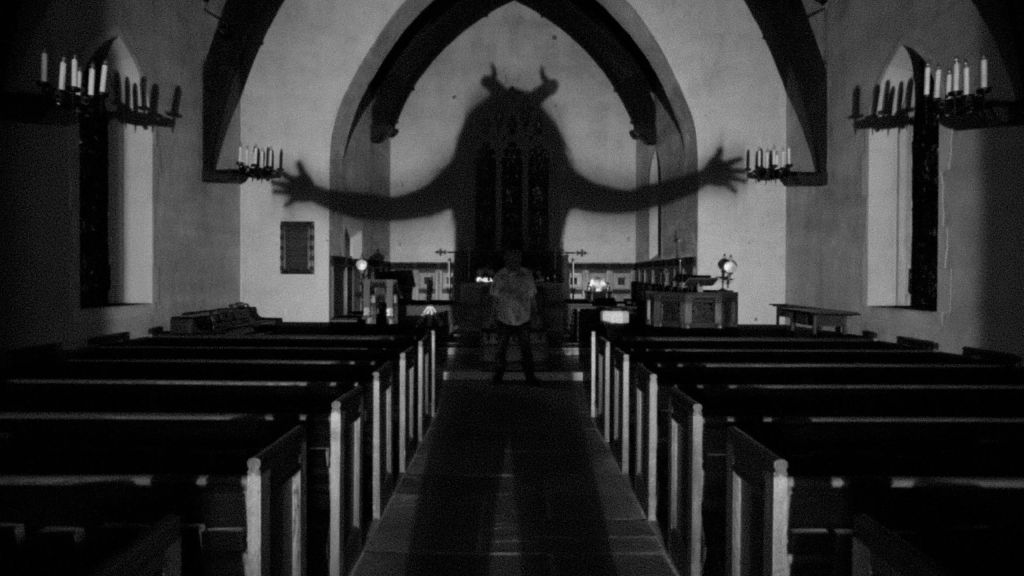
OBEX feels like Birney refining the same core obsession from Strawberry Mansion into something smaller, stranger, and more emotionally direct: not nostalgia as aesthetic, but nostalgia as self-medication, with the kind of DIY craft that screams “midnight movie” instead of “streaming content.”
A handmade, heart-on-sleeve analog fever dream that turns “getting lost in screens” into an oddly sweet hero’s journey, and it’s weird enough to earn its keep.

Watch if you want handmade, lo-fi surrealism that feels like a VHS dream you found in a box.
Skip if you want your surrealism explained, categorized, and escorted to the exit.
Directed by Albert Birney.
Written by Pete Ohs and Albert Birney.
Released January 9, 2026 by Oscilloscope Laboratories.


 The Blog Without a Face
Leave a comment