




TL;DR: Senaa Ahmad’s debut collection is a weird little doomsday bouquet: historical figures and ordinary people alike get shoved into speculative pressure cookers that are funny, brutal, and occasionally damn lovely. It lands more often than not, but a few pieces feel like brilliant premises that don’t fully cash the emotional check they’re writing.

Senaa Ahmad is a Toronto-based short fiction writer with a strong lit-mag pedigree, and you can feel that confidence here. Several stories carry that polished, “this was built to survive an editor’s scalpel” sheen: precise setups, punchy turns, and a willingness to let the weirdness breathe without apologizing for it. This collection reads like a writer stretching into a larger canvas, testing how far she can push voice, structure, and historical remix before the seams show. Sometimes the seams are part of the charm. Sometimes you wish she’d tugged one thread harder and finished the damn sweater.
This is a collection that treats History like a haunted prop closet you can rummage through at 2 a.m. “Let’s Play Dead” riffs on Henry VIII and Anne Boleyn as a grotesque marital loop where death keeps happening and yet never quite sticks, equal parts tragic and viciously funny. “The Wolves” frames a story-within-a-story about Genghis Khan’s wolves, catastrophe, survival, and what it costs to keep a kid listening when the truth is too sharp to swallow. “Choose Your Own Apocalypse” goes full manic choose-your-path at Los Alamos, turning the “oops we invented the end of the world” vibe into a gleeful, dread-soaked game. Elsewhere you get dollhouse violence with a curator’s smugness, royal nightmare fuel, and speculative riffs that keep sliding between myth, memo, and nightmare.

Ahmad’s best trick is tonal whiplash that somehow doesn’t break your neck. She’ll make you laugh at the sheer audacity of a premise, then quietly jam a grief-needle under your fingernail. The calamities here aren’t only wars and bombs and wolves, they’re intimate disasters too: the body betraying you, history pinning you down, the feeling that your choices are performance art in a universe that already wrote the ending. She’s also got a sharp meta streak. A few stories openly wink at storytelling itself, and that self-awareness becomes its own kind of horror. Like, sure, the movie ends and you go home. Unless you can’t. Unless the ending follows you into the kitchen while you’re making coffee and pretends it’s just a funny little thought.
When she’s at peak form, she nails that rare combo of “this is clever” and “this hurts.” She makes famous names feel human without doing the lazy thing where history becomes a costume party. These characters sweat, scheme, panic, love, rot. The genre toys are fun, but the emotional undercurrent is the real hook.
The prose has swagger: rhythmic repetition, list-like cascades, and a voice that can go from mythic to petty in a single breath, like a friend telling you the scariest shit they’ve ever seen and still pausing to roast you for flinching. POV is used as a weapon. Some pieces lean into direct address or constrained forms, and the form itself becomes a trap. The pacing is generally sharp.
The downside of that confidence is that a few endings land like smoke instead of a punch. Not “bad,” just unfinished-feeling, like the story stops because the author got bored of the room and wanted to show you the next one. Those are the moments where the collection’s ambition slightly outmuscles its emotional follow-through.
One big thread throughout the collection is inevitability versus agency: history as a machine that keeps grinding, and you’re just another squealing gear pretending you’re the driver. Another is grief as a physical space, the body as a cursed house you can’t move out of. The horror machinery translates those ideas into loops, time-slips, curated violence, and apocalypse-as-entertainment until the entertainment turns and shows its teeth. It instills is a nervous laugh that curdles into a quieter question the next day: if the world is always ending somewhere, what do we owe each other while it’s happening?
As a debut, it’s a strong statement of range: absurdist, ambitious, and sharp, with standout pieces that feel ready to be passed around like contraband. It sits comfortably in that contemporary slipstream lane where speculative fiction, horror, and literary craft all knife-fight in the same alley, and it wins more rounds than it loses.
Smart, funny, frequently gorgeous, and occasionally a bit too enamored with its own cleverness, but the hits are real as hell.
Read if you like historical remix horror that gets surreal and mean.
Skip if you hate voice-forward narration that sometimes shows off or want wall-to-wall scares instead of weird mood-horror.
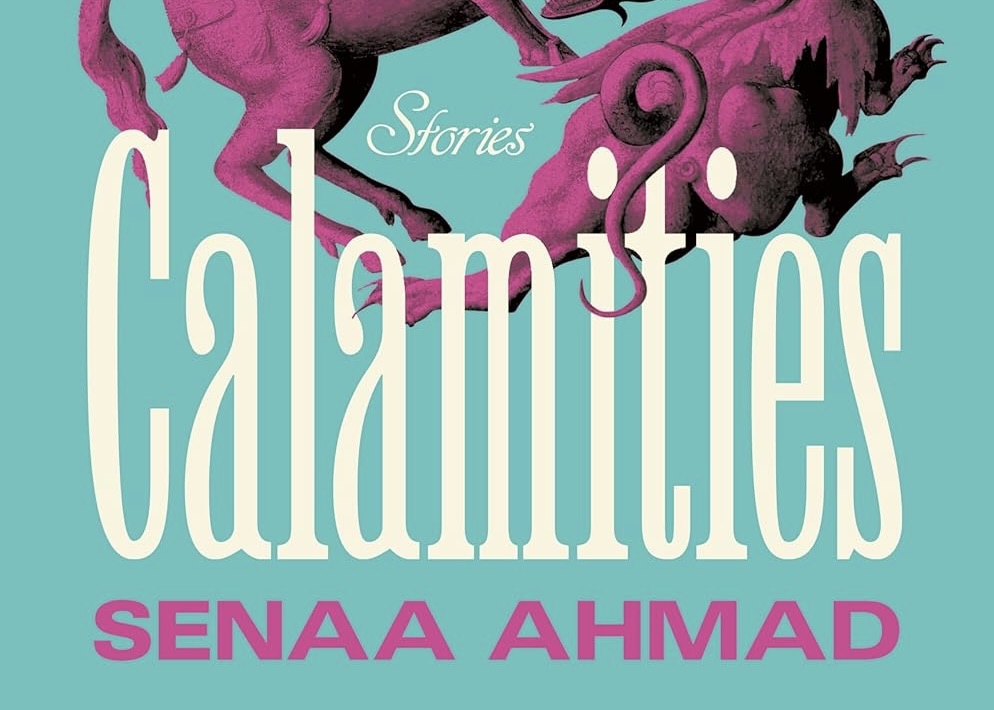
The Age of Calamaties by Senaa Ahmad,
published January 13, 2026 by Henry Holt.
 The Blog Without a Face
Leave a comment