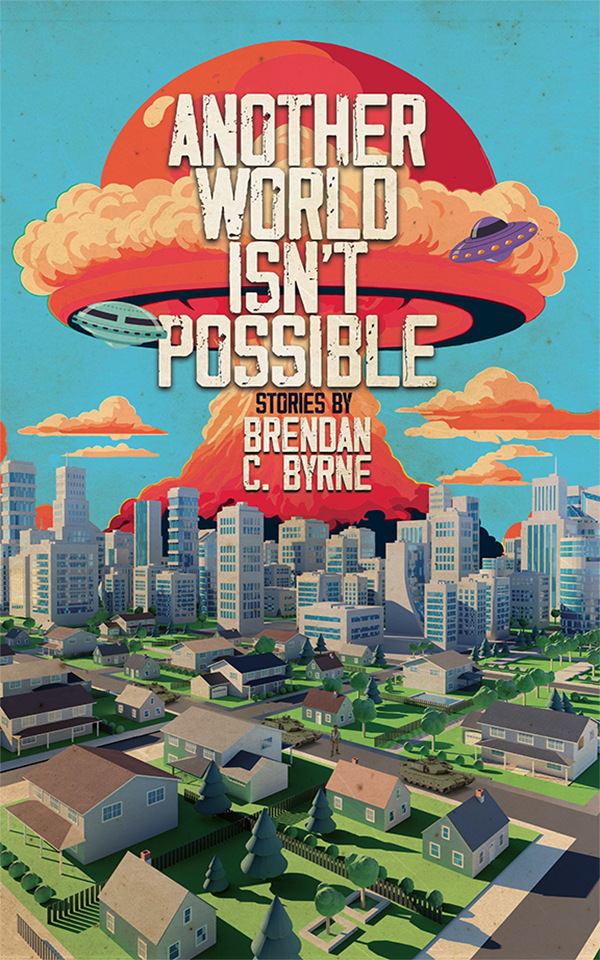






TL;DR: Another World Isn’t Possible is scalding, horror-bent sci-fi that treats the internet like a haunted organ and capitalism like a prank that got out of hand. Byrne jumps from faux reports to listicles to intimate grief stories, landing more often than not with sharp jokes and sharper dread, even when it gets willfully messy.

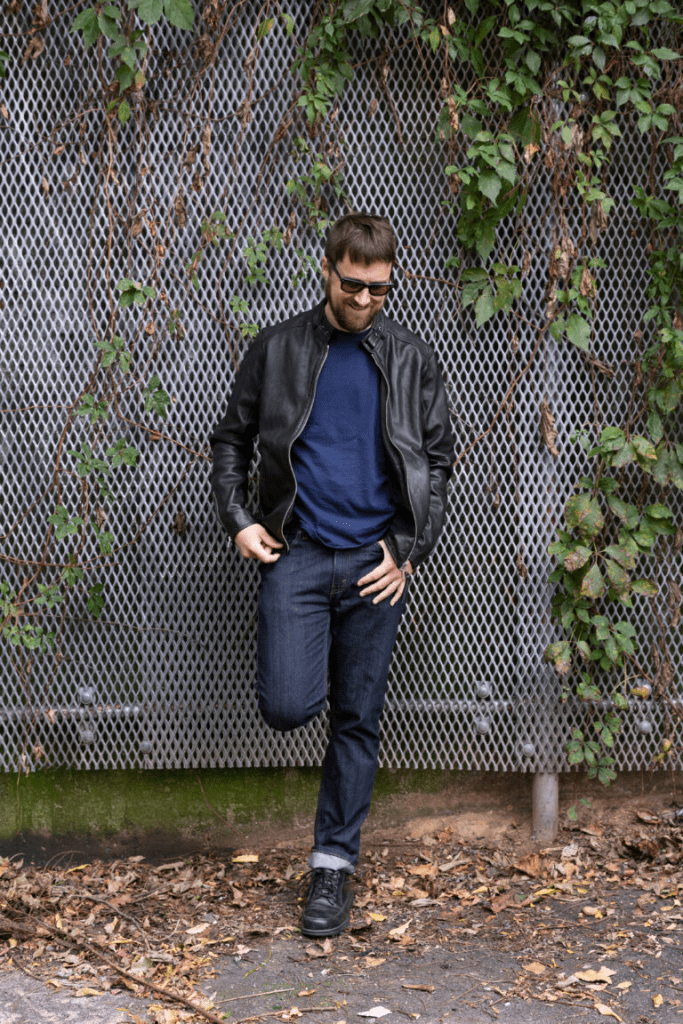
Brendan C. Byrne was born in Washington, DC, lives in New York City, and has previously published three novellas (The Showing of the Instruments, The Racial Imaginary, Justice). He’s also picked up a couple of notable nods (including being a Shirley Jackson Award nominee and a Locus Award finalist). Byrne’s stories read like they were written by someone who grew up straddling the pre-internet world and the digital abyss, then spent the next twenty years side-eyeing every new “innovation” like it was a cursed object with a monthly subscription. In interviews, he frames Another World Isn’t Possible as basically a “complete stories” sweep from 2006 to 2024, tone all over the damn map because it is just his shit, no brand-friendly guardrails.
That range matters because you can watch him worry the same nerve from different angles: immanence versus transcendence (a fixation he credits to M. John Harrison), where “transcendence” keeps showing up as either digital escape or death, and death keeps sounding like the healthier option. Add in his ex-Catholic allergy to soothing narratives, his self-appointed “imagist” challenge to load objects and moments with meaning, and his political disgust with granting empathy to scumfucks in the discourse machine. That is how you get the collection’s signature move: bodies trying to live in the concrete world while capital’s meaning-factories grind everything into listicles, archives, and ideology cosplay, with Byrne laughing, grimacing, and sharpening the knife the whole time. Here’s a brief description of each of the collection’s entries:
- “Her Threshold”: A young woman’s life is framed by screens and inherited religion, until a figure at the door turns “home security” into a personal apocalypse.
- “The Master of Go”: A cool, prophetic collage that uses Go and AI mythology to talk about mastery, obsolescence, and the weird spiritual stink of “progress.”
- “The Three Stigmata of Peter Thiel”: A vicious, funny techno-saint satire where Thiel returns as a mutilated, upgraded omen of plutocratic immortality.
- “Post-Truth and Irreconcilable Differences Commission”: Bureaucratic scripture about a preserved Twitter corpus and an “Official History” machine that keeps compelling speech even after the platform “dies.”
- “Flesh Moves” (w/ Adam Rothstein): A parent and child navigate a world where transit, bodies, and authority blur into one long, sweating system.
- “Outside”: Post-human infrastructure as roadside nightmare: “freedom” looks like a world emptied out, still running on rails and bad plastic.
- “Sophokles in His Cave”: A storm, a media worker, and a barge become a stage for surveillance violence and the numb terror of being recorded, not rescued.
- “4 Paranoid-Rationalist Horror Stories About AI…”: A listicle that reads like an annotated panic attack, roasting a very specific brand of tech-doom self-mythology.
- “a Stone and a Cloud”: A relationship story wrapped around a bizarre “cloud” experience so stripped down it becomes spiritual, erotic, and deeply unsettling.
- “5 SF Stories Every Neo-Reactionary Should Read”: Another fake critical list, this time skewering ideology-as-aesthetic with a straight face and a hidden knife.
- “The Glassblower”: A music-critic / true-crime spiral that retools Pied Piper dread into something modern, mean, and quietly fatalistic.
- “Lungs”: A grim, tender road story where friendship and rot meet in a literal, disgusting image you won’t forget.
- “Human Child”: A bartender with bone-deep ache meets a kid who feels like a glitch in the human category, and the night slides sideways.
- “The Ideal and the Actual”: Academic intimacy and alienation, written like a memory you don’t trust but can’t stop replaying.
- “Wasps/Spiders”: Post-9/11 city grief, desire, and newsfeed reality collapse into a love story that keeps catching on sharp edges.
- “There Is No Comte de St. Germain For I Am He”: Immortal-voice bragging turns into a threat, then into a confession about the obscene boredom of not dying.
- “The Loa and the Gaping Jaw”: Haitian Vodou ceremony and cultural awe filtered through mounting dread, where “zombie” becomes a social wound, not a costume.
- “Donald Asshole and Los Elementos de Rock”: A comics-world freakout that’s hilarious until it’s horrifying, about sameness, perception, and the terror of losing your human anchors.
Standouts for me: “Her Threshold” (pure creeping-dread craft), “The Master of Go” (big-brain elegy that still bites), “Post-Truth Commission” (the bleakest laugh), and “Lungs” (gross, intimate, and sad in the best way).
Byrne’s big superpower is form-hopping. He’ll hit you with a perfectly straight bureaucratic paragraph about a “cleansed” platform archive, then pivot into sweaty body-horror transit logistics, then drop a line that makes the whole future feel like a damp basement you can’t ventilate. He can sketch an entire worldview in one nasty little detail, like “old catching-out rules apply: miss and you get your legs crushed under the wheels.” And he’s not afraid to say the quiet part out loud, that all these “elsewheres” are basically trauma storage: “a place to hang meat traumatized by reality.” It’s funny, it’s ugly, it’s honest. It’s also, occasionally, the kind of writing that dares you to keep up, which I respect even when it pisses me off.

The prose runs hot and cold: clean, declarative thesis-sentences, then these sudden smear-frames of image and texture, like the world is buffering while it decays. Even when it’s “just” people talking, you feel the author choosing cadence like a weapon. In “The Ideal and the Actual,” the dialogue lands with that lived-in, slightly self-loathing realism, “We talked about shit television; we talked about great television.” In the more overtly speculative pieces, he stacks specific nouns and hard sensory grime until the future feels less like prediction and more like a bad smell you can’t wash out.
The one real drawback is that the collection’s deliberate shapeshifting sometimes works against its own momentum. A few entries are such perfect pastiches (the listicles especially) that they can feel like brilliant radioactive snacks rather than full meals. Still, the voice holds the whole thing together, and when he wants to build a sustained atmosphere, he absolutely can.
The core theme is escape that curdles. Every “outside” is just another system, every platform death becomes a new platform in a different outfit, and the body keeps showing up like an unpaid bill. The horror machinery does that classic move where abstraction becomes viscera: “They crawl over you, and they put themselves in you,” and suddenly “there” isn’t even a place anymore. I finished this feeling like I’d been laughing in a burning server room, which is, honestly, the vibe of our era, so… good job, I guess? Shit.
A strong, frequently brilliant collection that recommends itself often, because even when it’s messy, it’s alive, and it knows exactly which parts of modern life are already haunted.
This feels like a greatest-hits map of Byrne’s obsessions across nearly two decades of publishing, from early surreal lit-comedy to later “technosphere nightmare” work, and it lands as a sharp entry in that transreal, horror-bent SF lane where the joke and the abyss are basically roommates.

Read if you crave near-future dread with teeth, not vibes, formal experimentation (reports, lists, fractured memoir), or satire that still manages to be scary as hell.
Skip if you need tidy plots that behave nicely, consistent tone from story to story, or your tech horror to be “neutral” or polite.
Another World Isn’t Possible by Brendan C Byrne,
published May 28, 2025 by Wanton Sun.

 The Blog Without a Face
Leave a comment