

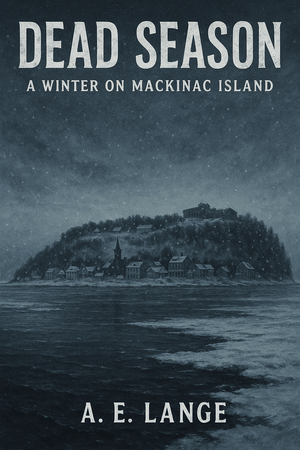





TL;DR: This is a solidly readable, fairly bloated winter haunting about loneliness, bad decisions, and a very horny jinn. It has atmosphere, a great dog, and a few gnarly moments, but the repetition and saggy middle keep it stuck in “that was fine, I guess” territory instead of something you will be yelling about to your horror friends.

A. E. Lange is coming in hot with a debut, pulling from his background as a former criminal defense attorney turned crisis management consultant, which makes sense once you see how much time the book spends on messy choices, gray morality, and the way people rationalize their own bullshit. Dead Season feels very much like “first big book I’ve been thinking about for years”: full of lived in detail about Mackinac Island’s off season, packed with research, and eager to give every character a little interior murk. You can see the long game here, even if this particular outing does not fully cash in on that potential.
I dug the setup. Clay Richards is a financially underwater crisis consultant who takes a six month house sitting gig on Mackinac Island in winter, in a big bluffside house owned by the Buckleys, with their elderly husky Dutch as his only steady companion. Weird noises, local ghost stories, and a prologue showing a previous sitter, Danny, in full terror mode with that same dog, set the table. Clay meets Olivia, a local bartender and grocery worker who gives him the lowdown on off season islander culture, and eventually stumbles across occult research in the Buckleys’ library. That leads him to a ritual tied to the explorer Ibn Bishara and to Eisha, a seductive, inhuman presence who manifests in his dreams and then in the house, feeding on him and tightening the noose around Clay, Dutch, and anyone who gets close. The stakes are pretty straightforward: survive the winter, figure out how to send Eisha back, and try not to get more people killed because you were horny and stupid with a spooky grimoire.

What works best is the combo of setting and emotional texture. Winter Mackinac feels weird and specific in a good way: shuttered fudge shops, skeleton tourist infrastructure, islander versus “fudgie” class tension, the sheer pain in the ass logistics of carrying luggage up snowy roads with no cars. The book is at its sharpest when Clay is just trying to exist there, walking Dutch through the walled garden overlooking Lake Huron or dealing with skeptical locals who think he is an idiot for staying in that house alone. Dutch himself is the stealth MVP. Every scene where the dog reacts to things Clay cannot see, or just curls up like a space heater in bed, lands emotionally. He is the one character you truly want to protect.
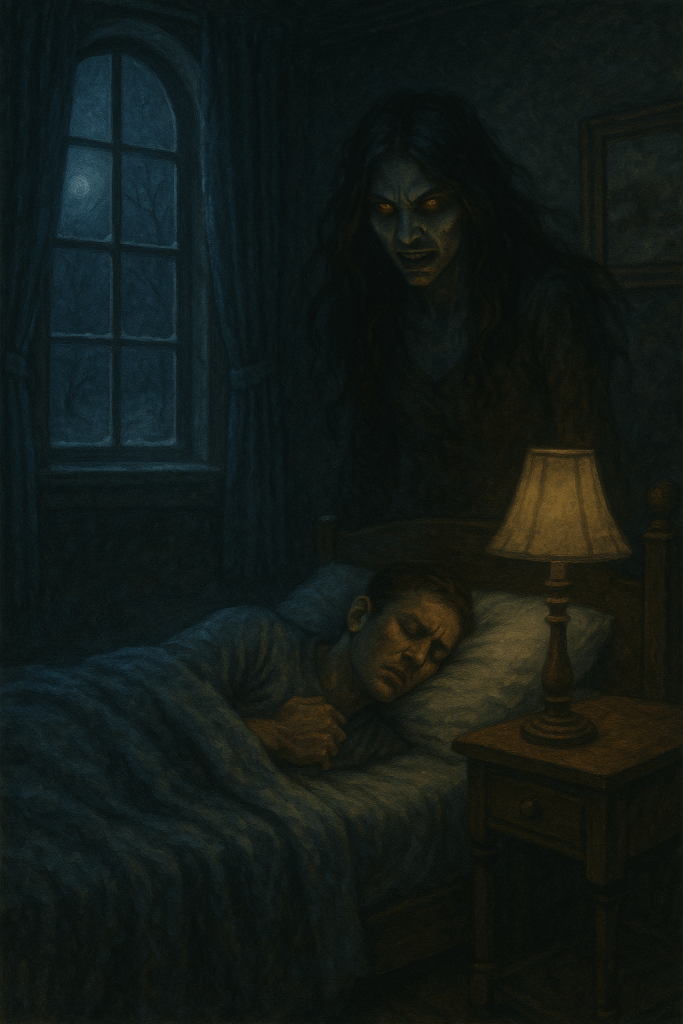
Eisha is also, on paper, a cool choice. She is not just a wispy Victorian ghost. She is an almost vampiric, jinn adjacent entity, seductive and terrifying, showing up in a red dress and then later in full monstrous form, all claws and tail. The ritual in the snowy garden, Clay chanting for her to use his blood to return while something heavy drags itself through the woods toward the wall, is one of the book’s best set pieces. The holy water bait and switch during the climax is satisfyingly pulp. Moments like that show the book Lange clearly thought he was writing: occult mystery, horny nightmare, and wintry siege horror all stacked together.

The prose is very voice driven first person, stuffed with quips, pop culture and literary references, and a kind of self deprecating dude narration that will work for some readers and irritate others. There are fun lines, like the chain smoking priest at St. Mary’s muttering that everybody hates the Catholics until some supernatural shit goes down, and you can feel Lange having fun writing that guy. Clay’s banter with Dutch, his awkward flirting and fighting with Olivia, and the “I have been alone too long” spirals all feel recognizable and grounded. The problem is that the book rarely knows when to shut the fuck up. Scenes that should be tight and building dread get padded with interior monologue, digressive jokes, and repeated explanations of what Clay is thinking. The pacing gets especially sludgey in the middle third, when we are stuck in the loop of research, weird encounter, self doubt, repeat. By the time we are deep into Ibn Bishara scholarship and John Buckley’s secret vampire notes, you can feel the story straining under the weight of its own lore dump.
There are interesting thematic threads here. The most obvious is temptation as addiction. Clay is literally being drained by Eisha while simultaneously chasing the high of her attention, ignoring his own physical collapse and the danger to others in order to get one more night with her. When he ends up in the hospital half dead, his labs wrecked for reasons nobody can explain, it plays like a supernatural burnout, the horror version of working yourself to death for a toxic relationship. There is also a quieter thread about economic precarity and the way that fear of poverty makes people swallow bright red flags. Clay keeps staying because of the fifteen grand, Danny ignores the haunting because he wants to keep the dog sitting job, and the island itself feels like a place warped by tourism money. Guilt and complicity get a real bite late in the book, especially around what happens to Olivia and how Clay tries to rationalize his role in it. Ultimately, the emotional hit is weirdly mild. For all the blood, snow, and demonic claws, I walked away thinking more about the logistics of off season life and that poor fucking dog than about any grand existential dread.
Where the book really stumbles is in structure and payoff. The prologue with Danny promises one kind of story, but by the time we circle all the way to Eisha, Ibn Bishara, and John Buckley’s occult scrapbook, the early ghost house simplicity has been replaced with a more convoluted supernatural conspiracy that does not totally earn the extra complexity. The rules around Eisha feel hand wavy when they need to be razor sharp. Her connection to the island’s broader history is sketched but never really integrated, and the final stretch, with holy water, threshold games, and a burning house, reads more like a decent SyFy movie climax than the bone deep, “I am going to be thinking about this for months” kind of ending the setup deserves.
Amongst other books about “person goes somewhere isolated and gets spiritually wrecked,” Dead Season gets lost in the midlist. It is more textured and specific than a lot of Kindle churn haunted house stuff, but it is nowhere near the icy precision of the heavy hitters it gestures toward. As a debut, it feels like a proof of concept: Lange can build character and place. Now he needs to learn how to cut half the scenes and sharpen the blade.
A decent, occasionally gripping winter haunting with a great dog and a solid sense of place, held back by repetition, overlong lore, and a finale that entertains in the moment but does not quite sink its claws in once you close the cover.

Read if you want winter isolation horror with a very specific sense of place.
Skip if you need tight pacing and ruthless editing, hate protagonists who keep making the same dumb horny decisions, or are looking for something genuinely weird or formally daring.
Dead Season: A Winter on Mackinac Island by A.E. Lange,
published December 15, 2025.

 The Blog Without a Face
Leave a comment