






TL;DR: Queer Moscow tattooist plus ancestral witchcraft plus feral ink that literally eats people equals a fucked up, heartfelt body horror novella about art, consent, and what we owe our monsters. It is stylish, surprisingly tender, and nasty in the right ways, and absolutely something you recommend to friends who like their horror weird and bloody.

E.K. Larson-Burnett does not come in with a “look at me” author’s note or a giant back catalogue to position this book. What you get instead is the sense of someone who has spent a long time thinking about bodies, craft, and generational superstition, then compressed all of that into one tight story about a girl, her needles, and the shit that lives in her blood. It reads like the work of a horror nerd who has sat with folklore and piercer forums, then asked, “OK, but what if the ink really was hungry.”
Our POV is Duscha, a Moscow tattoo artist living in a cramped apartment above her studio with her formidable Babulya and juggling work, rent, and her girlfriend Valentina. Duscha uses an inherited magical ink, the chudo-kraska, that sometimes wakes up and hijacks her hand. Once it does, clients do not walk away with the wolves or ornamental designs they asked for. They get something older, bony, and wrong that rewrites their bodies from the inside out. One boy from Kursk, then a girl named Max, and then more. As hospitals fill and the authorities start sniffing around, Duscha has to decide whether she is going to close the door, keep feeding the thing that wants through, or admit that some part of her likes watching people turn into monsters.
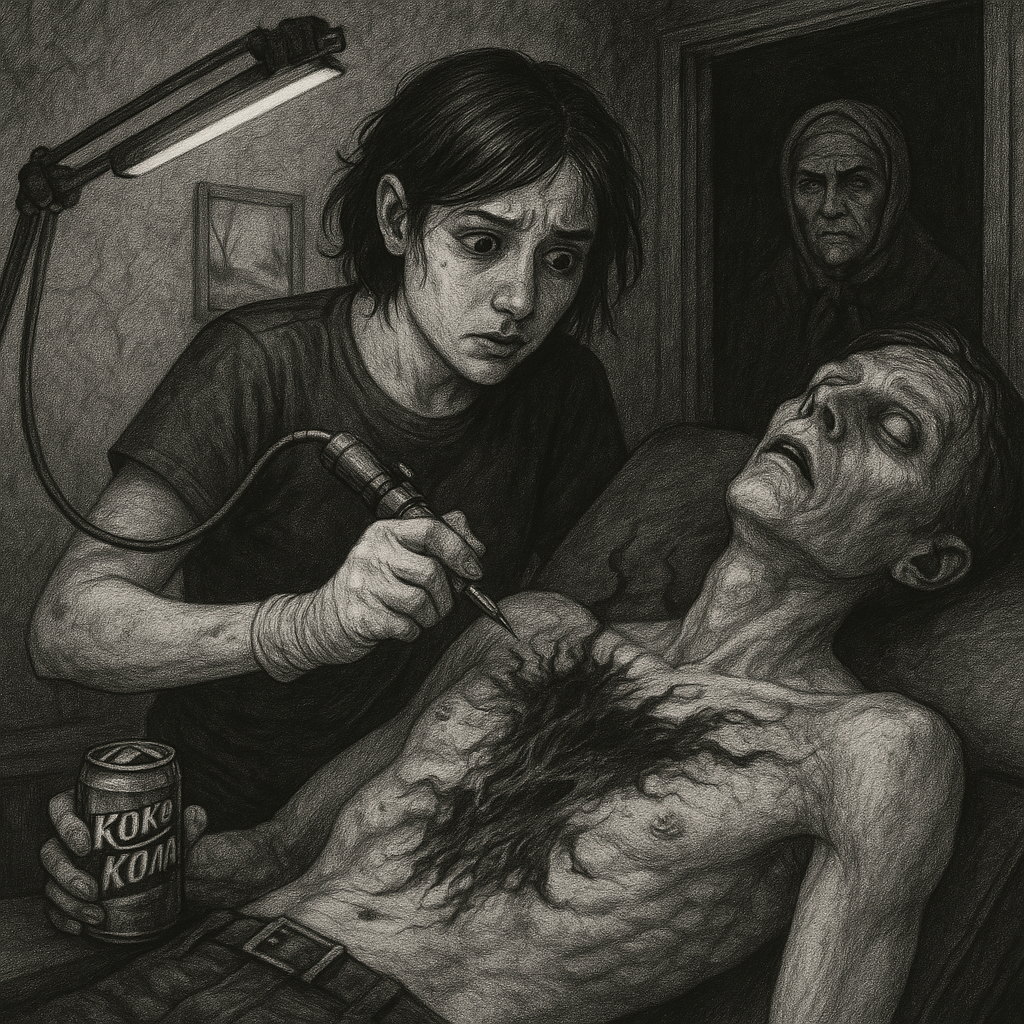
The horror is about wanting it. Max’s transformation is horrific, all cracked skin and parasite vibes, but her friend Alisa is still like, “Please, fuck my shit up next.” Duscha herself is terrified and aroused by what she is doing. The book keeps circling that itch: what if the monster you summoned is the truest version of someone, and what if you are the one who finally let it out. There is a great sequence where Duscha watches video of the aftermath and has to admit there is a kind of awful beauty there, even as she is puking in the sink. The scene with Sparrow, the client whose back tattoo becomes a living shadow that heaves itself off the chair and pins her to the floor, is especially strong. It sells both the physical threat and the religious awe of realizing you have just midwifed something that does not belong in this century.
Larson-Burnett rides a tight third person that basically glues you to Duscha’s nervous system. The prose is sensory as hell: rot, pine, bleach, metal, vodka, all rendered with that scratchy-needle-in-skin precision. Short chapters keep the momentum up, but there is room for domestic beats, like Valentina making vegan pelmeni while Duscha tries not to hallucinate guts in her salad. The dialogue feels lived in and occasionally very funny, which helps when the text is otherwise showing you liquefying armpits and ribcage topography you do not want. The magic is handled with a nice mix of concrete and opaque. We get talismans of bark and bone, bread and salt set out like offerings, but never a big lore dump that kills the mood. It feels like one little corner of a larger occult world, which is exactly what you want.

This is also a solid example of body horror that is not just “oops, my skin fell off.” The horror mechanics keep tying back to identity. Tattoos here are literally doors; they open into the clients’ buried selves and let something crawl out. Sometimes that is liberation, sometimes it is a slow-motion dismemberment of a life that could have gone on pretending. The way the story handles Duscha’s queerness and her relationship with Valentina is crucial. Valentina’s Etsy dreamcatcher spirituality bumps up against Babulya’s older, harsher magic, and Duscha sits in the middle, trying to draw lines around what is protective and what is predatory. It’s bittersweet. You close the book feeling like you watched a curse unfold that is also a kind of calling. It leaves you with the uncomfortable question of which parts of yourself you would let the chudo-kraska etch into reality if you had the chance.
Prickle sits comfortably with the current wave of queer, folklore flavored novellas that treat body horror as a tool to talk about labor, family, and selfhood instead of just shock value. It feels smaller in scope than some cosmic door-kickers, but in a good way. Everything is constrained to this little upstairs-downstairs world of studio and apartment, where every new client is another potential breach. Since I read its synopsis earlier this year, it has been absolutely burning in my “you should read this” list.
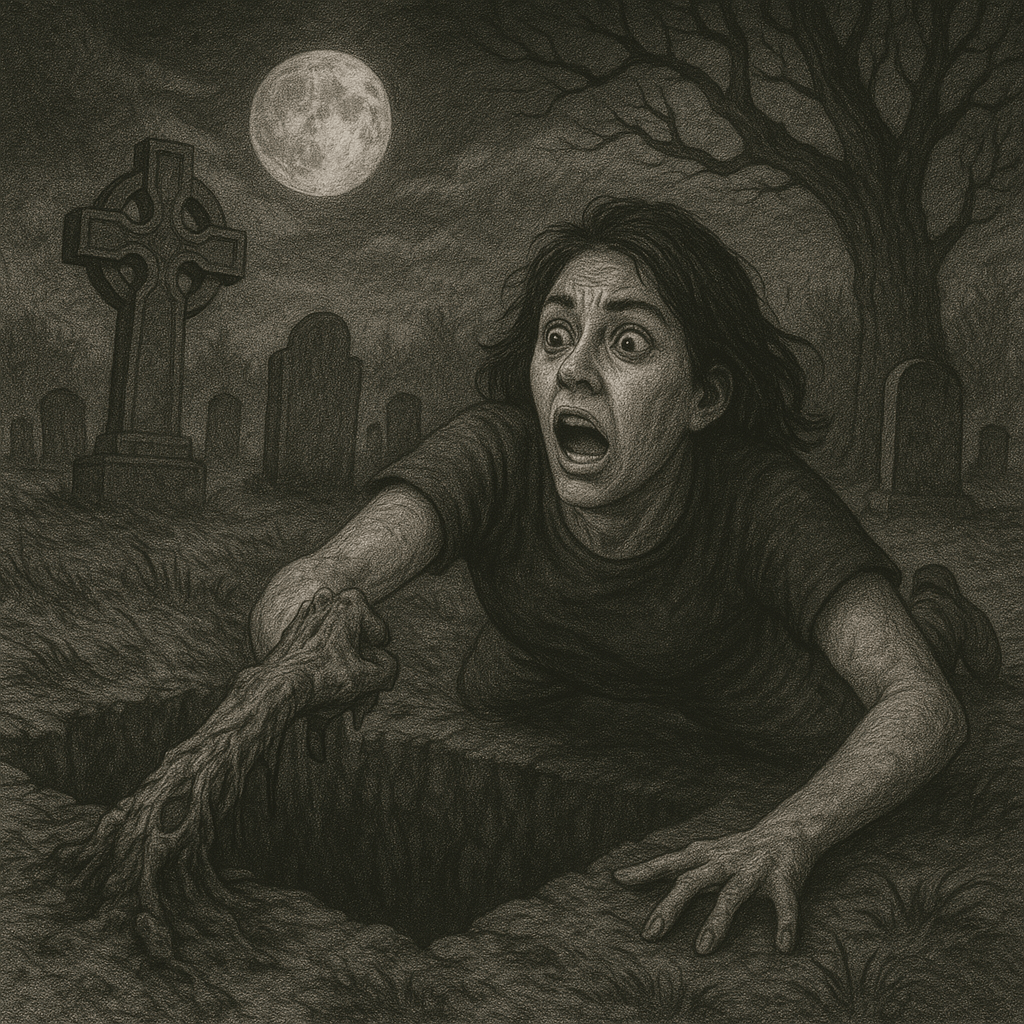
Strong, sharp, beautifully sick work that knows exactly what kind of monster it wants to be, and mostly sticks the needle.

Read if you are a sucker for stories about artists making fucked up bargains with their materials.
Skip if hospital imagery, infection vibes, and corporeal distortion are hard limits rather than fun-time nausea.
Prickle by E.K. Larson-Burnett,
published November 4, 2025 by E.K.B. Books.


 The Blog Without a Face
Leave a comment