
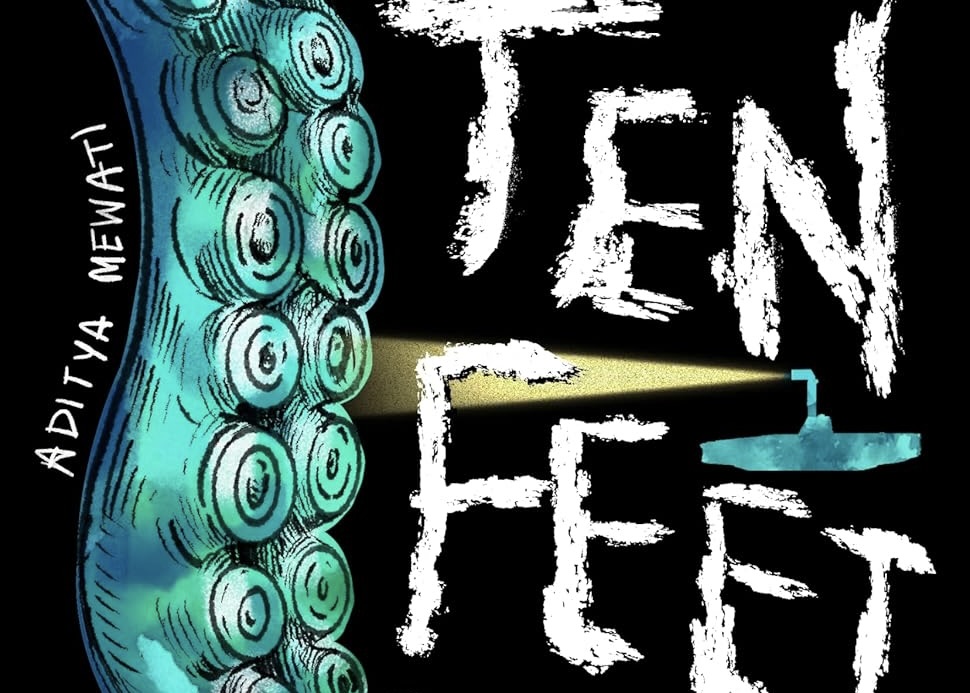




TL;DR: A slow, claustrophobic narco-submarine horror where a cursed jade idol and something hungry in the deep turn a drug run into a cosmic screwjob about guilt and second chances. It’s good, often tense, and occasionally nasty as hell, but the pacing and repetition keep it at “solid fucked-up weekend read” instead of “holy shit, must-read classic.”

Aditya Mewati is already working the indie horror trenches with books like Afterlight and Border of the Sun, leaning into genre-blending, accessible dark fiction steeped in big-crash set pieces and everyday screwups rather than hyper-literary fog. Ten Feet Beneath feels like him leveling up into full-on cosmic horror: more ambitious structure, weirder metaphysics, and a stronger emotional throughline in the form of Miguel, the narco-smuggler whose life is already in the toilet before any tentacles show up.
On the surface, the setup is simple. Miguel, a burned-out cartel mule trying to stay useful after prison and a wrecked marriage, signs on to crew a homemade sub with gruff engineer Sal and sarcastic navigator Raf, ferrying ten tons of cocaine across the Atlantic. They dock in an underground temple-like cavern in Brazil, pick up “extra cargo,” and accidentally invite a jade idol and its unseen owner onto the boat. The further they get from civilization, the more reality frays: impossible tunnels, a whisper that keeps saying “free me,” visions of a woman that may or may not be human, and a titanic squid that is very, very real. Miguel wants to finish the job and maybe scrape a life back together; the thing inside the idol wants out, and it is absolutely willing to shred their sanity, their bodies, and the whole goddamn world to make that happen.

What pops here is the mashup of narco thriller grime with old-school cosmic dread. The early scenes of the submarine threading an underground tunnel system into a hidden cartel dockyard that used to be a temple are fantastic: it feels like a Michael Crichton paperback wandered into a pulp Lovecraft story and decided to stay. The first time Miguel gets lost in the “normal” tunnels around the base and hears that disembodied “Free me” echo through the dark, the book flips from crime caper to occult horror so fast your brain does a little skid.
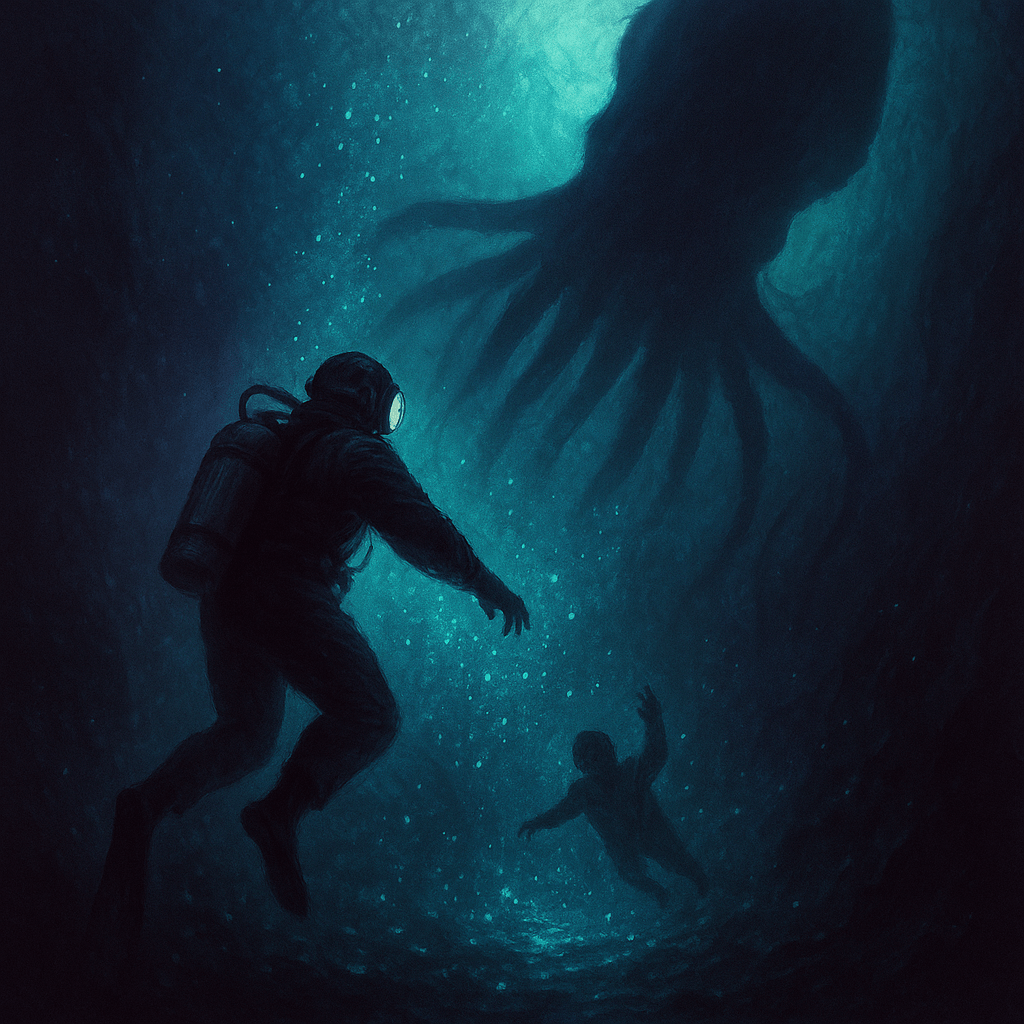
The set pieces mostly land hard. The freezing plunge into the sea to rescue Tomas while a bioluminescent something swells out of the abyss is pure panic fuel, and the later sequence where Miguel uses the submarine as a battering ram against the giant squid is the kind of big, stupid, awesome idea you want from creature horror. The long trek through the vast jade hallway toward those massive sealed doors, with Sal losing his grip and Raf bleeding, turns into a decent slow-burn nightmare. And the final reality-bending run through Miguel’s hometown, where he’s forced to watch his family’s worst moments refracted through the idol’s mindfuck, ties the cosmic horror back to his personal guilt in a way that actually stings.
Stylistically, Mewati leans on clean, straightforward prose with plenty of grease and sweat. You get a lot of tactile detail about cramped bunks, engine noise, busted ladders, and the way cold water punches the breath out of your lungs. The POV sticks close to Miguel, which helps the book stay grounded even when the plot veers into “ancient entity trapped under the polar ice cap” territory. Dialogue is brisk and often funny; Raf in particular is a shit-talking menace who gives the book some badly needed levity. At the same time, the narration can get repetitive. Miguel’s internal “I’m a bad person, I fucked everything up, I don’t deserve love” loop is thematically on point, but the book lets him circle that drain a few too many times. The middle stretch on the sub also sags, with arguments about rations and navigation that start to feel like you’re stuck in the world’s most cursed workplace meeting.
The writing is competent and sometimes strong, but not consistently sharp. The sentences do the job, a few lines hit nicely, and the monster imagery is vivid without turning into full splatter porn. But you can feel places where a tighter edit could have made scenes punch harder: some hallucination sequences go one beat too long, and a couple of emotional reveals are told flat-out instead of being trusted to the reader. It is readable as hell, just not jaw-dropping.

Thematically, this is a book about guilt and the fantasy of a redo dressed up in squid guts and cursed jade. Miguel is dogged by his failures as a husband, father, and criminal; the idol weaponizes that by offering visions where he can “fix” the past if he just cracks the door that should never be opened. The body horror and mind-bending cave geometry become a metaphor for how far people will go to pretend they didn’t fuck up their lives, even if doing so risks everyone else’s. The aftertaste is oddly melancholy: more “well, we’re all complicit in something and the sea does not give a shit” than “rah rah kill the monster.” You put it down thinking less about the squid and more about how people cling to terrible choices because they cannot imagine walking away.
Ten Feet Beneath is a solid, mid-tier cosmic horror thriller: more ambitious and emotionally resonant than a lot of quick pulp, but not quite polished or weird enough to elbow its way amongst top-tier standouts. It feels like a bridge book for Mewati, showing where his horror can go if he gets meaner and more precise next time.
A tense, squid-soaked, guilt-ridden voyage that delivers plenty of shit-your-pants moments and decent emotional weight, but does not quite transcend its own bloat and repetition to become the deep-sea classic it’s clearly reaching for.

Read if you want cosmic horror with working-class criminals instead of academics and cult librarians.
Skip if you hate internal monologue and characters obsessing over their past mistakes.
Ten Feet Beneath by Aditya Mewati,
published November 16, 2025.




 The Blog Without a Face
Leave a comment