





TL;DR: This is paranoid office horror about ideas that eat other ideas and the exhausted weirdos who try to fight them with drugs, paperwork, and sheer stubbornness. It is clever as shit, frequently heartbreaking, and occasionally confusing, but when it hits, it feels like getting jump-scared by your own memory.

qntm is the online handle of Sam Hughes, long-time internet SF writer and architect of several infamous web serials and thought experiments. Antimemetics started life as a run of SCP Foundation stories, then as a self-published collection, before getting the full traditional-publishing overhaul for this edition, which is explicitly “substantively revised and updated” from those earlier versions. The guy’s whole deal is pushing a single strange idea until it explodes, and this book is him doing that at novel scale.
The book follows Marie Quinn, battle-hardened chief of the Antimemetics Division inside the shadowy “Unknown Organisation,” and Simon Lee, a newly re-onboarded researcher whose memories of his own career keep getting eaten. Their job is to identify and contain antimemes: entities and phenomena that destroy information about themselves. Alongside them is Dr Andrew Hilton, the division’s founder, hauled out of retirement with a vicious mnestic serum so he can remember what terrible thing wiped out the first Antimemetics Division back in the 70s. As the team maps global holes in history, fights predators like Adrian Gage and other conceptual parasites, and burns their own brains with memory drugs, they realize the real enemy is not just one monster but an ecosystem and maybe a whole broken cosmology behind it.
The obvious hook is antimemetics as horror machinery. You get stuff like a humanoid void executive who isolates you from reality while he eats your memories, or a containment file you literally forget you’ve read. The set pieces lean hard into that. The early Gage sequence where Lee weaponizes a hard drive full of digits of pi is pure “holy shit” problem-solving, and the later material with Quinn tracking missing time on a wall of red notes gives the book a true crime investigation flavor, except the suspect is conceptual.
What makes this edition distinct is how it welds the original mosaic of SCP-style documents and vignettes into a more continuous character-driven novel. The Unknown Organisation replaces the SCP Foundation, canon names and file codes are reworked, and we get new connective tissue like the Hilton framing chapters on the lake, where he is temporarily de-aged to recover buried memories of the first division and the antimemetic bomb project. The Penguin edition also adds a more expansive, almost mythic endgame and epilogue, including the wild kaiju-scale perspective of creatures like Cela and the “Ones Who Walk Very Slowly,” which pushes the whole thing out from office horror into planetary and then cosmic scale.

Compared to the original web serial, this version is tighter, meaner, and more emotionally legible. Character arcs, especially Quinn’s and Lee’s, are clearer, and the plot is less “here’s a stack of cool anomalies” and more “here’s one escalating campaign against oblivion.” You can feel the overhaul work the acknowledgments talk about.
This is bureaucratic horror with a sci-fi brain. The prose is clean, clipped, and very British, but qntm keeps dropping these nasty little one-liners that feel like someone cracking a joke at a funeral because if they don’t laugh they’ll scream. The structure jumps around in time and POV, but usually locks into close third, so when someone forgets who they are, you feel that absence as the narrative stutters with them. Chapters tend to open in the middle of a crisis and let you reconstruct what people have already forgotten, which is a really fucked up but effective rhythm.
Action scenes are brisk and weird rather than splashy. Horror often comes from procedural detail: mnestic classes W through Z, the way you can “train” an invisible memory-eating pet, the red-painted war room covered in pinned gaps of lost time. It’s like if a risk-management manual dropped acid and realized the spreadsheets were looking back. Occasionally the exposition stacks up and you get a dense patch of lore about antimemetic bombs or organizational history where the momentum dips, but even then it is interesting, crunchy lore.
Under all the conceptual fireworks, the book is about burnout, institutional amnesia, and the cost of being the one poor bastard who remembers what everyone else is incentivized to forget. The Division keeps dosing itself with mnestics that ravage their bodies and sleep, because someone has to hold the line against literally self-erasing threats. Quinn’s refusal to take a “break” for her failing health while she pins yet another missing day to the map is way too relatable for anyone who works in a fucked system and can’t stop because if they stop they know things will get worse.
There is also a strong vein of historical guilt. Hilton’s backstory with the Unthinkables and the antimemetic bomb ties the present crisis to secret weapons programs and the way states try to edit their own sins. When the book widens out into the colossal entities at the end, the vibe shifts toward cosmic horror and ecological horror of ideas: humans are ants scrambling around in machinery built to erase them, and the universe might have very slow, very different apex predators. The aftertaste is a mix of melancholy and awe. You close it feeling like your own memories are slightly suspect.
Within qntm’s body of work and the wider subgenre, this sits as one of the clearest arguments that “SCP-style document horror” can graduate into full-bore, emotionally rich science-fiction horror. The traditional-pub edition sands off some of the fanfic edges, maintains the experimental structure, and adds heft and heart. For a year’s horror crop, this is the one you hand to the friend who thinks they’ve seen every trick the genre can pull and say, “Cool, now read the one that tries to delete itself while you’re reading it.”
Wildly inventive, conceptually sharp, and emotionally gnarly, with a couple of talky stretches, but overall it is a memorable book about things that refuse to stay remembered, and that contradiction is exactly what makes it hit so hard.
Read if you want SCP-adjacent weirdness turned into an actual goddamn novel.
Skip if you hate lore dumps, in-universe documents, or sci-fi jargon.
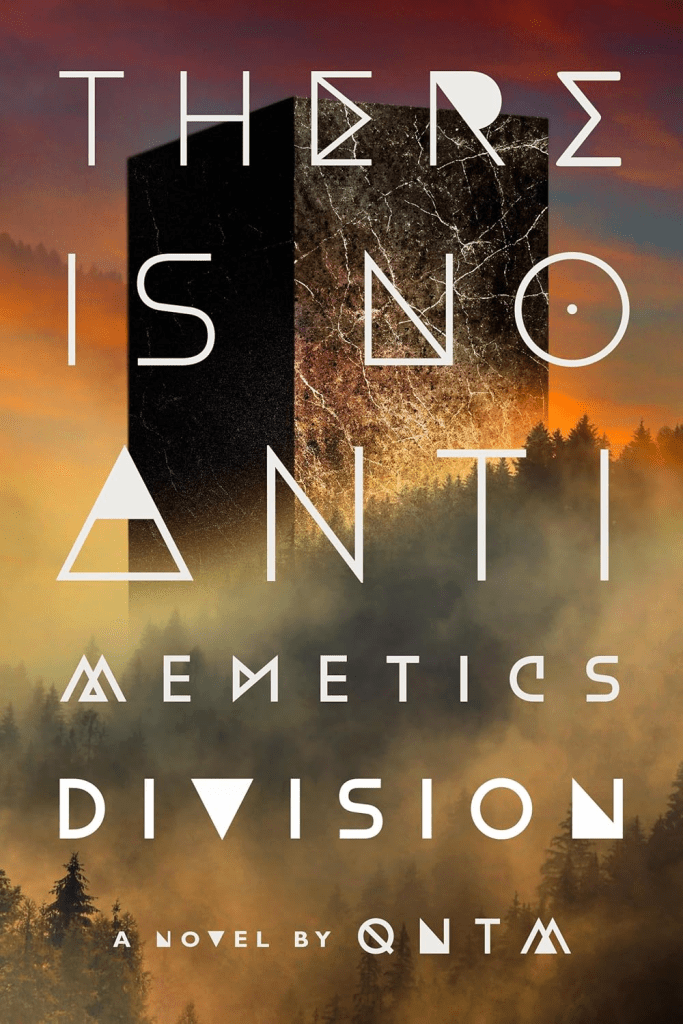
There Is No Antimemetics Division by qntm,
published November 11, 2025 by Ballantine Books.
 The Blog Without a Face
Leave a comment