

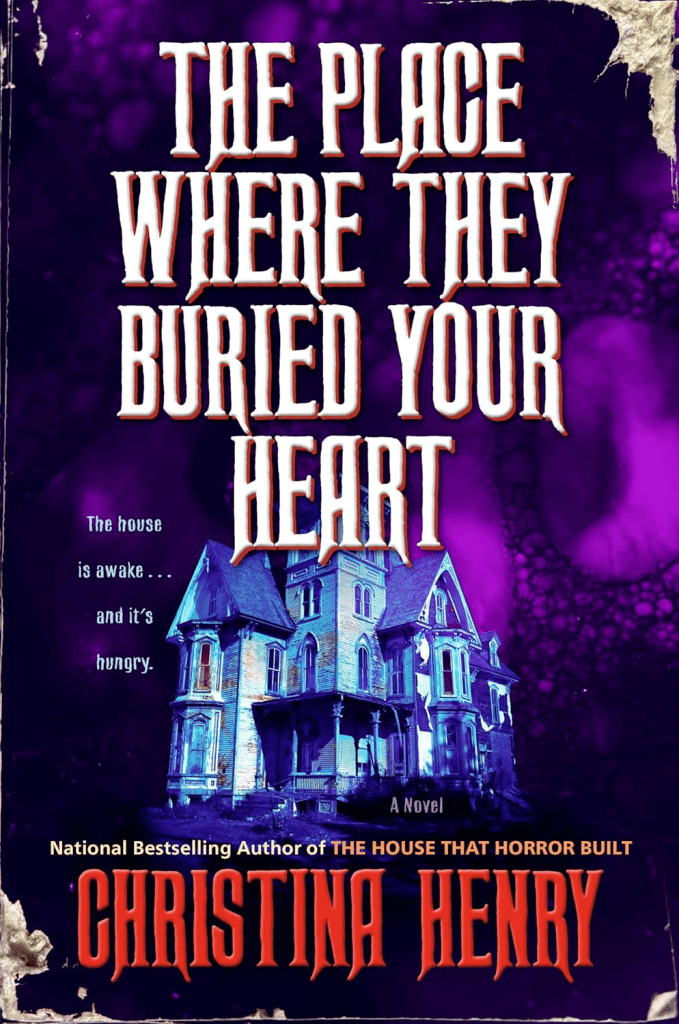






TL;DR: A Chicago neighborhood ghost story told like a decades-long case file, where a hungry house gulps a child and refuses to burn. The slow reveal, working-class texture, and grief engine work, but the mystery circles the drain and the scares repeat. Average overall, with glints that suggest a sharper book buried inside.

Christina Henry returns to Midwest horror with a premise that would make any block party go silent. In 1993, teen narrator Jessie Campanelli dares her kid brother Paul to enter the abandoned McIntyre house. The house eats him. Their father, wrecked, tries to torch the place and burns to death while the wood refuses to light. That opening stretch is lean, mean, and nasty in the right way. Henry anchors the horror in the people on the stoops, the Cubs on the radio, the shame and gossip that curdle into folklore. Formally, the novel splits into two timelines: Part I tracks the disappearance and its fallout in the 90s; Part II follows Jessie in the late 90s and 2000s as she circles back with wounded survivors and neighborhood fixtures to figure out what the McIntyre place actually is, and how to kill it if killing is even possible. The voice is conversational and bruised, like you’re being told the worst family story by the one person who still remembers the details.
Jessie’s POV, Chicago side street, haunted murder house with a body count going back to a 1973 family annihilation. The normal breaks when Paul vanishes inside, then Dad immolates himself and the house stays untouched. Jessie wants answers and a way to end it; the obstacles are time, denial, corrupt official narratives, and a malign presence that seems to live in the walls and beyond them. The texture is municipal tape and mausoleums, rumors about sinkholes, and the sound of a house with a heartbeat.
The chapter where neighbors describe hearing the boys scream, the door flying open, and a noise like a crack in the world is pure oral-history dread. The image of Dad, fully aflame, collapsing on a staircase that refuses to catch, hits like a bad dream you can’t wake from. Henry also salts the book with fun horror-fandom riffs and a puckish cameo by an old man named “Howard Phillips” who lectures about destroying a monster’s heart. The gag is cute, and the “hell-heart” idea gives the plot an objective, but the scene also marks a tonal wobble where the mythos feels told to us rather than earned on the page.

On craft and style, Henry’s strengths show up early: crisp scene construction, clean dialogue, and a no-nonsense rhythm that lets big shocks land without smoke. The book reads fast. It also repeats itself. Several mid-book beats re-frame the same information with new gossip wrappers, and the house’s rules stay conveniently fuzzy until the story needs them otherwise. The dual-era structure could have tightened the mystery, but the time jumps sometimes flatten momentum. A few side characters scan as function first, person second, which matters when their fear is the gas pedal. The prose rarely misses a step sentence to sentence, yet whole chapters feel like they’re jogging in place.
The themes are strong, if familiar: grief as geography, complicity through silence, and the way neighborhoods turn tragedy into folklore and then into real estate. The McIntyre house is a perfect vessel for those ideas, a sink of secrecy that feeds on children and gets written off as a hazard once it’s inconvenient to property values. The horror machinery expresses this cleanly: bodies unmade, stairs that will not burn, an “official explanation” that papers over a wound. The aftermath is wary and unresolved. Jessie watches the condo frame go up and glimpses glittering color in the shadows, then tells herself to stay alert for vines. It’s a solid final chord, even if it leans on suggestion instead of a knockout image.
In the current surge of haunted-house novels (enough already…) that swap Victorian creaks for modern municipal rot, Henry sits comfortably mid-pack. The book honors her brand of accessible, character-first horror and will satisfy series fans, but for 2025 standouts, others take bigger swings or land their endings with more authority.
Strong setup, memorable set pieces, and sturdy prose, but the mystery stalls and the haunting’s rules stay too mushy to make the payoff sting. A decent neighborhood chill that never quite digs up its own heart.

Read if you like neighborhood hauntings that feel municipal and petty as much as cosmic.
Skip if you require escalation to build, not loop, and a finale that hits harder than a shrug.
The Place Where They Buried Your Heart by Christina Henry,
published November 4, 2025 by Berkley.


 The Blog Without a Face
Leave a comment