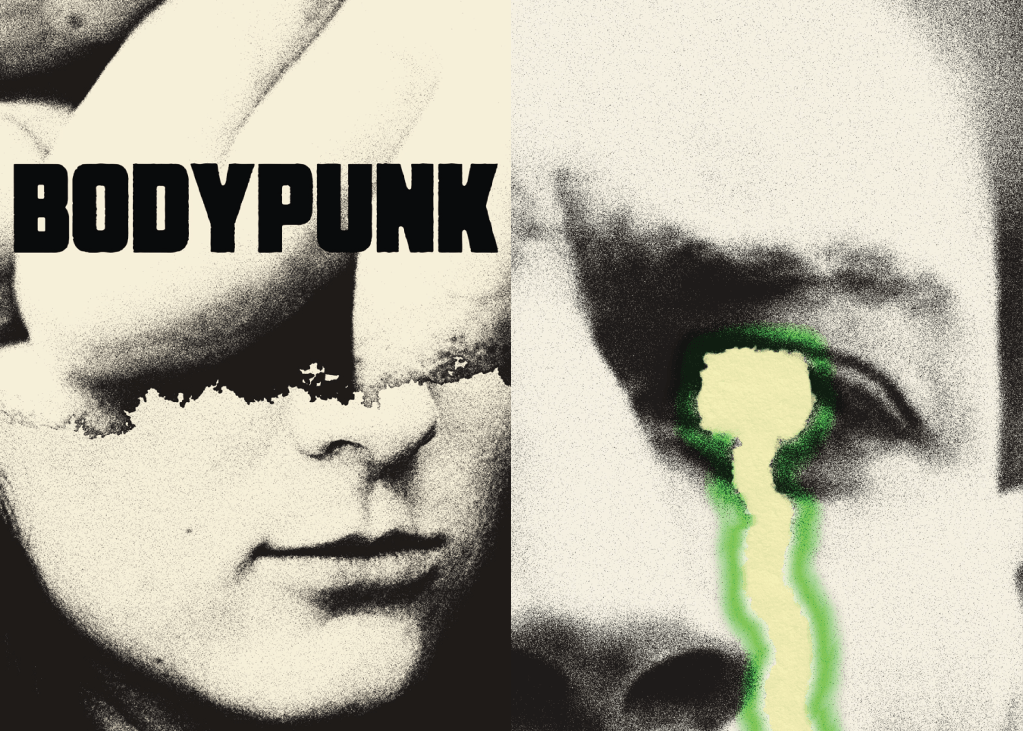
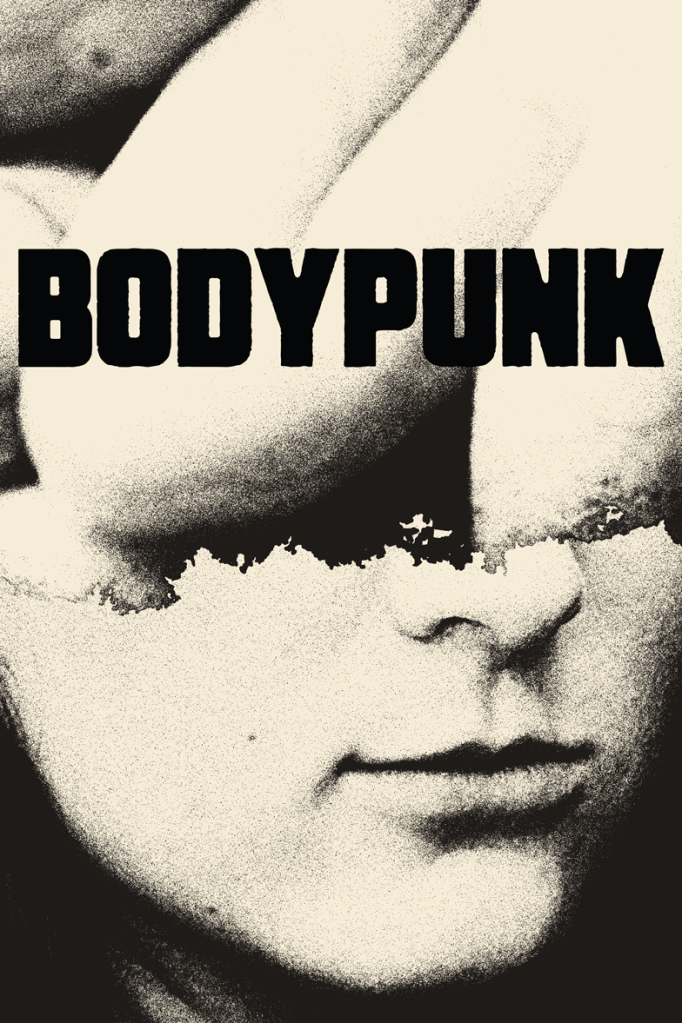





TL;DR: A tight, grimy mixtape about flesh as philosophy and appetite as politics. If you want body horror that actually has ideas and still gets under your skin, this lands. If you’re chasing edge for edge’s sake, keep walking; this one wants your brain and your bile in the same bowl.

Filthy Loot’s BodyPunk comes preloaded with intent: an opening note draws a bright line between splatterpunk and “extreme,” arguing politics belongs to the former and philosophy to body horror. That frame sets expectations the book largely meets, with the lineup (Joe Koch, Max Restaino, Xavier Garcia, Charlene Elsby, Sam Richard) treating the body as thesis, experiment, and crime scene. It’s a volume that reads like a manifesto you can bleed on, and in the context of the press’s gnarlier catalog, it’s easily their most deliberate angle on embodied dread.
We’ve got five stories, five metastases. A young woman’s self-annihilating hunger meets a predatory intimacy in a restaurant bathroom (“And At Night, The Sirens”); a shut-in spirals through pain and perception (“Nothing Here”); desire and dissolution meet in crystalline vignettes; a post-op porn provocation dares you to confront gaze and gender; and a final cut stitches rage to ritual (“Endless Wound”). The common POV is a body on trial, and the stakes are identity versus appetite, control versus surrender, skin versus what leaks out.
What’s special here is how often the horror argues. Koch opens on a refrain – “It’s already happened. It’s happening again.” – that turns bulimia into ritual and seduction into metamorphosis, then detonates it with a bathroom encounter that is depraved, ecstatic, and strangely emancipatory. The scene’s sensory logic with bile as sacrament and spider-memory as origin myth makes the grotesque feel inevitable, not cheap. Later, Sam Richard’s closer weds pornography, geopolitics, and street-level nihilism, translating the splatterpunk claim that violence is political into cold, sticky imagery. Even when a piece aims to shock, it’s arguing about power.
Prose here swings from baroque to clipped. Koch’s sentences lilt and fever, stacking tactile verbs until the page feels wet; you can taste the porcelain and perfume. Restaino’s voice is intimate and migraine-bright, cutting boxes into a notebook while classic rock rots on the store speakers, then letting perception and space slide until you’re unsure which ache is real. Elsby’s contribution weaponizes bluntness and syntax, interrogating performance and post-op sexuality by refusing euphemism. Richard’s cadence is montage – loops of missiles, no-face men, ejaculate on film stock – like Godard found a snuff archive and started scoring it with helicopters. The variety never feels random; the shared palette is slick surfaces, soft interiors, and the slow crush between them.
The colleciton is all about hunger as theology, femininity as armor that cuts, desire as self-surgery, and politics as the body’s background radiation. Body dissolution equals loss of self, sure, but it also equals jailbreak. The anthology keeps asking who owns your flesh (church, state, lover, algorithm, addiction, you) and suggests the only honest answer is messy. The aftertaste is metal and perfume: a queasy high where shame flips to power without ever getting clean.
On the 2025 indie-horror shelf, this sits with the smarter, nastier anthologies that refuse “content warning as content.” As a statement of Filthy Loot’s house aesthetic, it’s a line in the sand: philosophy, not just provocation.
The collection turns body horror into a thinking person’s blood rite and nails the landing.

Read if you crave eros with your ichor, can handle graphic intimacy, love sentences that sweat.
Skip if you need moral handrails, hate second-person proximity to disordered eating, require neat cosmology.
Published June 1, 2025 by Filthy Loot.


TL;DR: A hauntological, post-punk cousin to BodyPunk that swaps viscera-as-argument for city-as-virus. Think Joy Division posters peeling off a damp wall while the TV dinner dings and the moon refuses to answer. It’s moodier, more vaporous, but its best pieces are hypnotic and poisonous.
The editor’s intro reads like a mood board (Ballard, Bacon, No Wave, Joy Division, Cindy Sherman, Gummo, Burroughs) telegraphing a collage aesthetic: hauntology, post-punk, body horror, splatterpunk. That’s exactly what you get, filtered through writers like Edwin Callihan, Sam Richard, Charlene Elsby, Joe Koch, Justin Lutz, Brendan Vidito. Where BodyPunk argued the body, New Meat argues the room that contains it, the media that records it, and the city that eats it. It’s the same family, different pathology.
“Angelhood & Abscission” tracks a newcomer drifting through a brutalist city and a club called Sefer, befriending a maybe-telepath named Bill and a copy-shop Sculptor while reality glitches like a late-night broadcast. Koch’s “I Am A Horse” mutates identity into a bestiary. Richard’s “Red Tears Are Shed on Grey” cross-cuts faceless state violence with a woman’s cigarette-lit anxiety spiral, turning a projector into an accomplice. The POVs share a static charge: lonely narrators trying to stay human while architecture, media, and ritual recode them. Stakes are soft annihilation. Less stabbing, more erasing.
The hauntological machinery is captivating. Callihan’s opener builds a city from television snow and alley neon, then lets the narrator be edited by solicitors, bands, and moons that may be machines. The detail work, such as Sefer’s chrome box band, the copy-shop basement of obsolete machines and hammers, makes the weird feel civic, like zoning laws for dreams. Richard’s story is a tour de force of montage: missiles, erased faces, riots with scraped-clean insignia, and a projector that ejaculates history back onto us; it’s obscene because the news already was. The book’s best trick is taking splatterpunk’s rage and diffusing it into atmosphere without losing teeth.
The collection has cool, narcotic voices; letter-fragments and transcripts; images that repeat until they rot. Callihan’s diction toggles confession and report, puncturing the fog with perfect trash-poetry (“my residency is in a tower of a ruinous castle on the outskirts of eternity”), then undercutting it with deadpan filth. Richard’s camera-eye prose uses repetition like a cudgel, intercutting faceless authority with intimate degradation until causality feels complicit. Elsby again sharpens affect to a blade. Koch’s contribution here leans fable, but the sentences still sweat. Across the board you get tight scene construction and a patient, synth-cold pacing that trusts you to connect the tape splices.
Here we’re interrogating identity as media artifact, surveillance as romance, urban modernity as body plan. Where BodyPunk asked who owns the flesh, New Meat asks who edits the footage. Tech becomes theology, and hauntology becomes grief for futures that never arrived. The horror engine is substitution: faces scraped from film, names replaced by roles, sex replaced by image. The aftertaste is that post-show tinnitus where you can’t tell if the projector is still running somewhere behind you.
Amid 2025’s indie anthologies, this sits in the art-house corner, vibing with Ballardians and noise-kids. As a sister to BodyPunk, it widens the project from flesh to frame, proving Filthy Loot can go philosophical without losing grime.
Less immediate than BodyPunk but stickier the longer it hums in your walls; a beautiful infection in the signal.

Read if you crave club-basement weirdness, can handle narrative static, love city horror that smells like wet concrete.
Skip if you need straight plots, hate collage structure, require cathartic violence over slow erasure.
Published October 31, 2025 by Filthy Loot.
 The Blog Without a Face
Leave a comment