
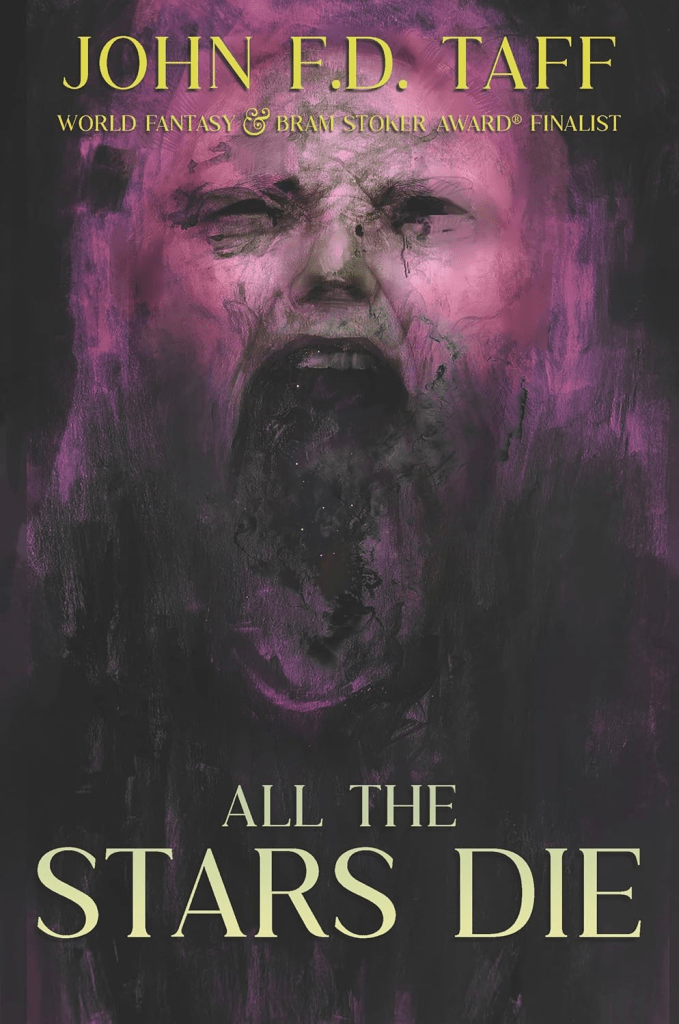





TL;DR: A six-pack of long, moody horrors that aims for the sublime and lands on solidly spooky. Taff blends cosmic dread with human messiness, and while a couple entries overstay the party, the collection’s best pieces hum with craft, warmth, and a mean little afterbite for readers who like their nightmares conversational and sad-funny.

John F.D. Taff is a steady hand in contemporary dark fiction, known for character-first dread and anthology-grade polish. If you’ve read his acclaimed collection The End in All Beginnings or his editorial work on Dark Stars, you’ll recognize the mix here: intimate voices staring down the big bleak sky, trying to joke with it and sometimes getting a joke back. This book, from Bad Hand Books, continues that lane with longer, slower-burn tales that prioritize mood over monster calories.
Six long stories, each a different doorway to the same black motel. A Vietnam vet nicknamed Asia brings home a mysterious, blue-eyed teen and unspools a banjo-haunted confession. A gray sea and the Carpathia whisper old-country rot toward Normandy. A carnival barker dares a kid to walk into trouble. A man mutters “She’s coming” and means it the worst way. A cop hears a sound in this world and another called Midnight Land. The capstone peers at endings with a pitiless, elegiac squint. The connective tissue is ordinary people nudged toward cosmic weather.
Taff’s secret weapon is voice. He writes talkers who feel like your uncle at a too-long wake, funny until they’re not. The opener’s Memphis motel sequence, with the battered Gibson Granada and the hungry kid soldier, is pure Americana grief that drifts, almost politely, into occult debt. The “Carpathia” piece marinates you in sickly foam and old-world dread without rushing the payoff, and “Midnight Land” turns a familiar lawman archetype into a metronome for crossing between realities. These stories are humane even as they twist the knife. The monsters are there, sure, but it’s the human bargains and reverse-psychology seductions that make you queasy.

The writing is plainspoken with pockets of lyric heat, lots of dialogue that feels lived-in, and openings that grab cleanly. The scene construction favors long, steady accretion over jump scares, so when turns come, they feel earned. Taff does image systems like a working musician: recurring notes of boats, bruised skies, and bad bargains. The downside is length and sameness of cadence; two stories push past their ideal runtime, and a couple of codas say out loud what the scene already told us. The noir shading helps, but the middle stretch could’ve used a surgical cut to keep the blood pressure up.
Grief, guilt, and the petty economies of power abound. Cosmic horror here isn’t just tentacles in the attic; it’s the knowledge that the universe will let you make a bad choice and then remember it with you forever. Body boundaries blur when identity falters; music becomes a ledger of debts; ships cleave gray water like fate cutting through a family. The aftertaste is sad salt and cigarette paper, the feeling of a promise you shouldn’t have made finally knocking on your door.
In a year stuffed with maximalist weird, this sits in the sober, grown-up wing where John Langan and Brian Evenson hang out, but with more talky warmth and barstool humor. It isn’t a career-redefiner, yet its best entries show why Taff gets blurbs from heavy hitters and keeps landing in “serious horror” conversations.
Competent, often affecting, occasionally luminous, with a couple shaggy middles keeping it from the year’s upper shelf. Final word: come for the voices and the human ache; stay if you’re patient with the dark.

Read if you want cosmic horror with beating hearts and busted knuckles; you like long stories that simmer instead of sprint; you live for character voices that sound like real people, not lore dumps.
Skip if you need constant escalation and creature-forward set pieces; you’re allergic to melancholy, memory, and moral hangovers; you prefer sharp 20-page bangers over novella-length mood pieces.
All the Stars Die by John F.D. Taff,
published October 28, 2025 by Bad Hand.



 The Blog Without a Face
Leave a comment