
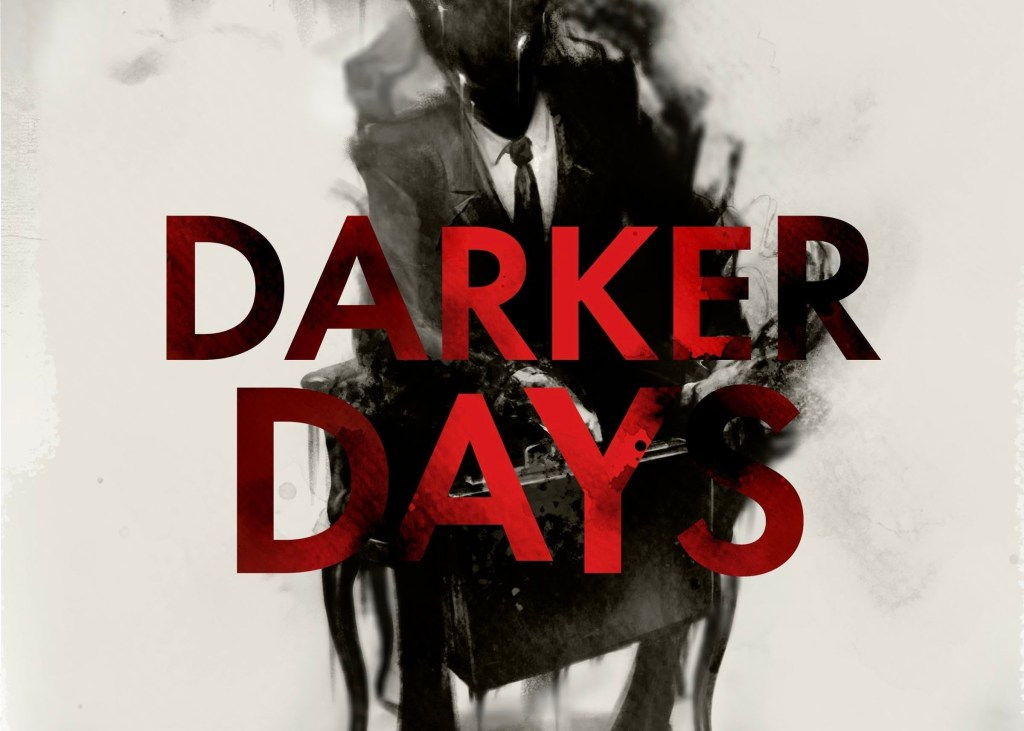





TL;DR: A cul-de-sac in the Pacific Northwest throws a block party for dread while a nice family tries to stay sane. Suburban ritual meets seasonal curse. High-concept weirdness, moody woods, and some killer set pieces, but the book trips on its own gravitas and pacing. Fans of glossy folk horror will nibble. Others may shrug.

Thomas Olde Heuvelt is a crowd-savvy Dutch horror writer who broke wide with Hex, the viral-witch novel that played like The Blair Witch Project met Nextdoor. Darker Days is in that vein: community horror with a modern sheen, a premise that reads like a campfire story told by a PTA president. It fits his oeuvre of polished dread, urban-legend logic, and moral traps, just bigger and more sentimental.
The Lewis da Silva family lives on Bird Street beside Snoqualmie National Forest outside Seattle. Dad Ralph is a judge trying to keep order at home. Mom Luana is a professor holding the center. Teen diver Kaila wrestles bipolar storms. Ten-year-old Django is a piano prodigy who wants to boogie his way past the darkness. Every November their neighborhood shutters windows, hides mirrors, and obeys rituals for the “Darker Days,” a period when something in the woods tilts people toward cruelty and self-betrayal. The neighbors are not just quirky. They escort a terminal woman into a fairy-lit clearing with a canopy bed and Ella Fitzgerald on loop, a mercy that curdles into ethical theater. The family tries to ride out the season, but the fence behind their yards, the alpacas next door, and the rich McKinley estate feel like stage props for a much older play.
What we have here is the suburbia-as-cult texture. Heuvelt stages an unforgettable scene in the “Quiet Place,” all jar lights and paper-moon romance while two needles wait on a red satin pillow. The neighbors coo and perform reverence. Then mercy meets hesitation and the whole vibe shifts from benevolent to predatory with a single “I don’t think I want to do this.” Later, Django’s Steinway episode hits hard. He plays until his nails shred and the glossy lid becomes a scrying mirror for emaciated figures that are not supposed to be there. The small stuff lands: pies eaten with bamboo forks because steel shines too much, shutters bolted as if the night could look back, the fence with barbed wire that begs kids to dare it. The domestic inventory becomes a spellbook.

The prose is crisp, cinematic, and built for adaptation. Heuvelt favors short paragraphs, declarative beats, and high-contrast images. Dialogue is tidy with just enough regional salt. POV shifts among the family and a few neighbors, which gives scope but also dilutes urgency. The pacing runs hot in set pieces and lukewarm between them. You can feel the author aiming for Stephen King town-epic vibes with the moral engine of The Wicker Man. Sometimes that clicks. Other times the chapters flex like TV episodes that need to stall before the ad break. The image system is neat if a bit on-the-nose: lights in trees, music from another era, polished surfaces covered, and fences that politely say nothing while implying everything.
This is a book about collective complicity and the stories communities tell so they can live with themselves. The “Darker Days” feel like seasonal depression weaponized by folklore. Mental illness is handled with sympathetic detail. Kaila’s self-harm is framed as a desperate bid to feel something rather than a death wish, and the family response is tender if harried. The euthanasia subplot needles at autonomy vs. communal pressure, asking who gets to curate a “beautiful” death. By the time the woods answer back, you are primed to ask whether a curse is just a mask for what people will do when they think the month gives permission. The aftertaste is a cool anxiety about neighbors smiling too wide.
Within the current folk-horror scene, Darker Days sits between prestige domestic chillers and neighborhood-curse novels. It aims for the shelf with Little Eve, The Devil Takes You Home, and the upscale suburban occult trend, but its heart is closer to a mainstream book club chiller with darker teeth. In Heuvelt’s arc, it is the glossy, Americanized cousin to Hex: broader, more sentimental, less nasty.
Average in the exact sense: not bad, occasionally sharp, but not memorable once the lights go out. The woods hum, the family tries, the neighbors perform, and the novel hovers between concept and conviction. If you want a tidy, moody creep this delivers. If you want a bruise, look elsewhere.
Read if you crave Pacific Northwest folk horror with HOA energy and ritual vibes; you can handle on-page self-harm and moral queasiness framed as kindness; you love horror that toggles between cozy family scenes and eerie woodland liturgy.
Skip if you need relentless momentum without detours into neighborhood politics; you hate allegory that winks at you while explaining itself; you require endings to wallop rather than sigh.
Darker Days by Thomas Olde Heuvelt,
published October 28, 2025 by HarperCollins.


 The Blog Without a Face
Leave a comment