



TL;DR: A frontier story filtered through small-town Utah gossip, grief, and horse sweat, told with a campfire voice that keeps tossing fresh cedar on the flames. It lands as an eerie “western” about friendship curdling into fate, more atmosphere and oral tradition than set-piece horror, and it’ll work best for readers who like their dread slow and dusty.

Danielewski is the literary prankster-architect behind House of Leaves, Only Revolutions, The Fifty Year Sword, and more. Here he plants his flag in a new register, labeling this one “a western,” which already frames expectations around mythmaking and American dirt before page one even nicks your finger.
Orvop, Utah, 1982. Tom Gatestone, born to horses and laughter, spots new kid Kalin March, who can quiet a mean mustang like he is whispering to a storm. They bond, they ride Navidad and Mouse up into the canyon where the town’s sins echo. A family feud with the Porches simmers, the mountain waits, and a “crossing” hangs over them like a dare the sky itself wrote.
The book’s best trick is its storyteller’s spell. The narrator talks like a beloved uncle who can’t help detouring into a family scandal, then a rodeo joke, then a warning about the canyon that makes you check your back porch light. Early sequences with Kalin gentling the black mare and riding the blood bay feel like myth arriving on four legs, and the recurring hoofbeat refrain “Clop-Clop-clip-Clop” works as a heartbeat for the whole thing. Tom’s laugh becomes a character, a doomed chorus that makes you grin while the ground softens under your boots. The way Orvop’s history is fed through church socials, football locker rooms, and dirt-lot bets turns the town into a rumor engine, which is exactly where folklore is born.

Prose comes in long, rolling sentences with a porch-swing sway. The voice is colloquial, sly, and occasionally downright ornery, and it keeps dropping bright images like coins in a jukebox. You get simple words arranged with musical timing, a rhythm you hear as much as you read. The narration loops, qualifies, self-corrects, and name-checks a half dozen townspeople like you should know them already, which builds a community of witnesses while nudging you into complicity. Scene construction favors campfire momentum over thriller mechanics, so tension accrues through repetition of motifs, not rapid cuts. Dialogue snaps with local humor, and the descriptive passages ride close to the horses’ breathing, making every kick and rear feel like the page itself bucking. It is less puzzle-box pyrotechnic than some of the author’s earlier work, more a hypnotist’s patter that lulls you, then presses a cold coin of fate on your tongue.
The themes here include masculinity as performance and as trap, friendship as covenant and as curse, and the way stories choose us long before we choose them. The horses operate as channels for power, danger, and tenderness, while the mountain and the canyon feel like an older court of appeals where town grudges get retried by weather. Violence isn’t just event, it is inheritance, and the community’s gossip becomes both shield and shiv. The aftertaste is that chilly pause you get walking past a dark paddock at night, a question about how many of our “crossings” are really choices and how many were paved by other people’s dead plans.
Within the author’s body of work this reads like a deliberate pivot into frontier myth, stamped as “a western,” yet it still fusses over how stories get told and who gets hurt by them. In a year of louder horror, it slots as a distinctive hybrid that swaps labyrinths of typography for labyrinths of memory and town history.
A haunted western of voices and hoofbeats that builds a strong spell, sometimes meanders its way around the campfire one too many times, yet leaves you staring at the mountain like it just stared back.
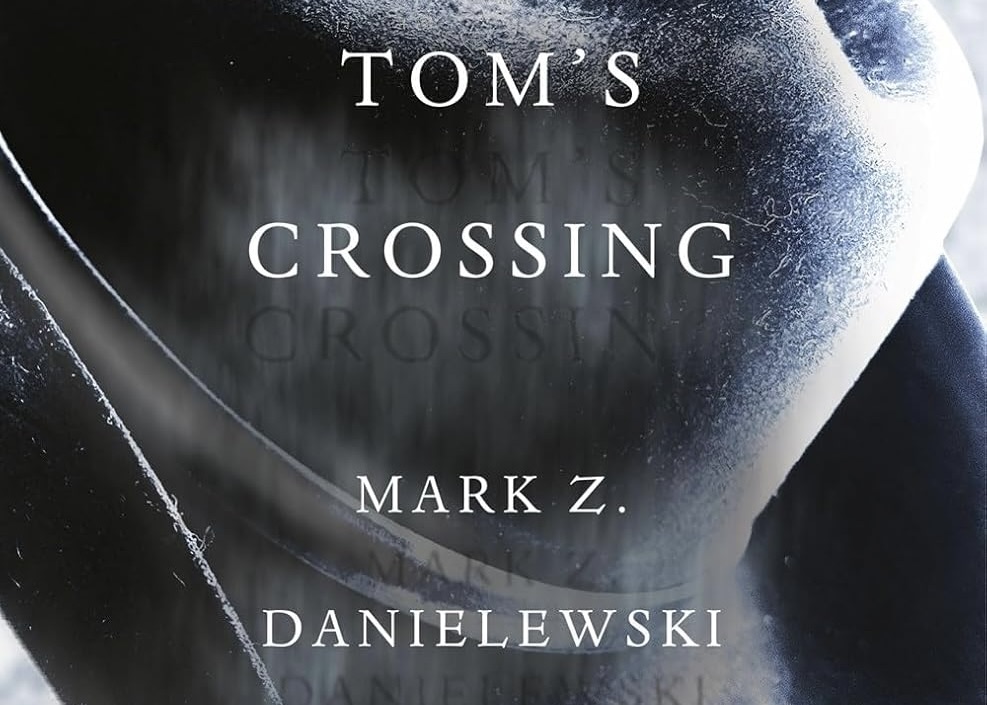
Tom’s Crossing by Mark Z. Danielewski, published October 28, 2025 by Pantheon.
Read if you crave campfire-cadence storytelling with a sinister edge; you can handle slow burn dread, small-town cruelty, and blood in the snow; you love horse sequences that feel sacred and terrifying at the same time.
Skip if you need constant jump scares or cleanly tied plot bows; you hate dialect, digressions, or a narrator who enjoys wandering; you require hard genre boundaries instead of folklore bleeding into crime.

 The Blog Without a Face
Leave a comment