


Ana Paula Maia writes the kind of Brazilian noir that smells like diesel, dried blood, and scorched soil. First published in Portuguese in 2017 and now released in Padma Viswanathan’s taut 2025 English translation via Charco Press, this slim novel keeps company with Maia’s ongoing project of working-class epics: lives lived at the violent seams where institutions chew people down to bone. Viswanathan’s line-by-line rendering is clean and muscular, the kind of translation you barely notice until a phrase knocks you sideways.
A remote penal colony has gone quiet, phones dead, rescue overdue, heat rising like a punishment. Inside the walls, a petty tyrant named Melquíades plays warden and god, his prison a failing ark full of men who work, wait, and rot. Among them: Valdênio, an elderly cook limping through his days, Pablo, an escape-artist with more bad plans than cigarettes, and Bronco Gil, a hulking hired killer with a glass eye and a hunter’s patience. The animals are starving, the water is foul, the fence may or may not be live, and the moon flips the warden’s brain into a sport hunter’s delight. What begins as survival noir accelerates into a parable of institutional sadism, colonial residue, and the dark joke of justice that never arrives.
Maia builds allegory out of hardware. Guns, fences, tags, freezers, a boar’s taxidermied head placed beneath the president’s smiling portrait, these objects become sentences in a moral code the men can read but cannot rewrite. The penal colony is a machine that runs on heat and hierarchy, a miniature state where obedience is the only legal currency. The men bury bodies, then dig up a trunk that says the land had history long before their paperwork did, and none of it was clean. The colony’s ramparts and electrified crown are not just security infrastructure, they are ideology in concrete, the lie that order equals safety.
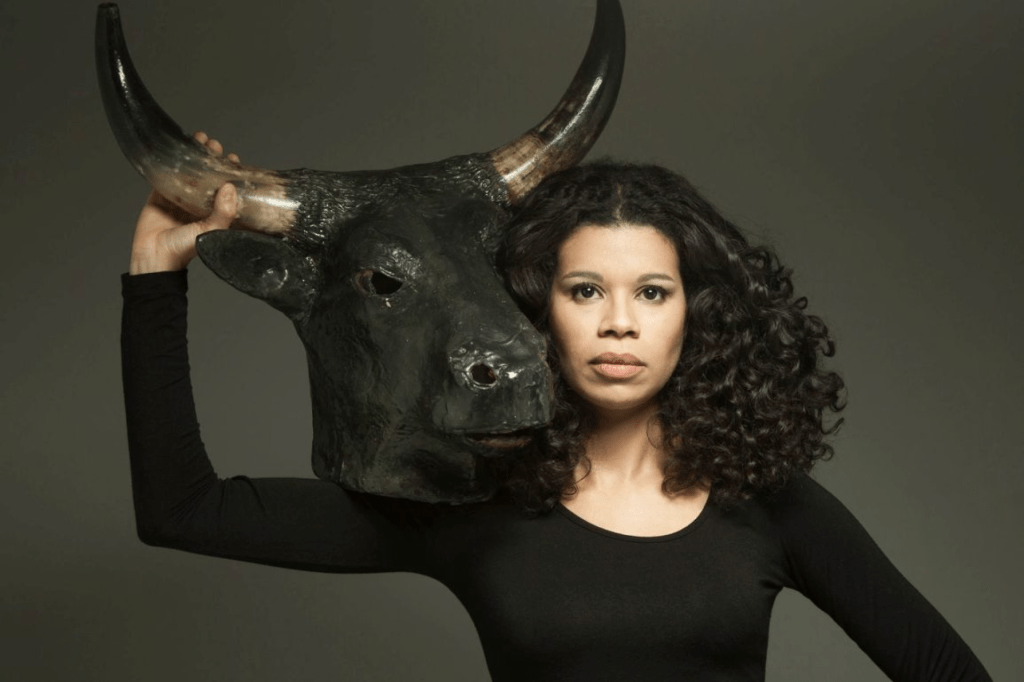
Symbolism is simple and brutal. The full moon flips from romance to ritual, the moment when Melquíades hunts “his” men like feral hogs. The boar’s head, grinning on the wall with empty sockets, mirrors the presidency’s framed grin in the bathroom, that choice says everything, the state’s smile and the beast’s smile occupy the same house. Water that should cleanse comes reeking. Meat is currency, meat is feast, meat is corpse. When the vultures test the fence and it does not spark, hope arrives not with a trumpet but with a broken circuit.
Stylistically, Maia is ruthless and terse. Chapters click forward like a rifle’s bolt. Sentences are short, declarative, ungenerous. There is hardly any lyrical cushioning, which fits a world where cushioning is a lie. The book reads like reportage from the edge of a drought, with sudden flashes of black humor. If Cormac McCarthy wandered into a prison yard run by a small-town sheriff who prays to heatstroke, you would get something like this, stripped of myth and soaked in sweat.
The novel is less about individual guilt than about systems that professionalize cruelty. Melquíades is not an aberration, he is a symptom, a middle manager of death who has learned that process is the best camouflage for pleasure. Maia lets you feel the way punishment culture substitutes spectacle for justice. The “hunt” night is rehabilitation as theater, the stopwatch replacing a trial, the woods replacing a courtroom. Nobody walks out redeemed, they just get buried in a shallower or deeper hole.
At the same time, the book refuses romance about the prisoners. Bronco Gil has killed. Pablo would sell you for a pack of smokes, then light one for you as apology. Valdênio’s soul is a bruise that learned to stop complaining. Maia’s point is not that they are innocent, it is that innocence has nothing to do with how power decides who is disposable. The discovery of an older atrocity beneath the colony literalizes that thesis. The land is a palimpsest of exploitation, the present violence fits neatly in the grooves carved by the past. You can salt the hide, scrub the skull with ants, stitch it back, polish the tusks, the head still grins.
Strengths:
- Atmosphere so thick you can chew it. The heat, the stink, the metallic taste of fear, it all arrives without melodrama.
- Moral clarity without moralizing. Maia refuses easy catharsis, which makes the final movements hit harder.
- Character work through action, not monologue. We learn who people are from what they do with a shovel or a stopwatch.
- The translation’s rhythm is excellent, nothing fussy, the diction keeps pace with the violence.
Critiques:
- The warden’s pathology can read a touch schematic. He is convincingly monstrous, but sometimes he feels like an archetype you have studied before, the sadist who calls abuse “education.”
- The novel’s austerity will be a feature for many, but some readers may want one more scene where a character breaks pattern or where tenderness risks looking foolish. There are tiny glints of that, not quite a flare.
Originality: High where it counts. Prison horror exists, but the book’s ecological desolation, its taxidermy of state power, and that relentless, unfussy prose give it a fresh, feral charge.
Pacing: Tight and mean. Chapters move with the cruel efficiency of institutional routine. You never feel stranded in interiority, you are always being marched somewhere, sometimes to the fence, sometimes to the pit.
Characters: Well-drawn by silhouette and gesture. Bronco Gil, with his glass eye and hunter’s body, is unforgettable, Valdênio’s weary obedience feels lived in, Pablo’s scrappy self-interest keeps injecting human noise into the hopelessness. Melquíades is credible as a man who thinks hierarchy is holiness.
Is it scary: Yes, but not the jump-scare kind. It is existentially frightening, the way a human system can become a weather pattern that kills you without blinking. The hunt sequences, with their stopwatch cruelty and night-sight pragmatism, are sickening in the way true power is sickening, precise and impersonal.
On Earth as it is Beneath is a flinty little monster, a parable with dirt under its nails. It stares down the reader and says, this is what punishment looks like when nobody is watching, and this is the smile it wears. You close the book tasting metal, then you look around and the world looks unfortunately familiar. That is success, and it is damning.
TL;DR: A sun-blasted penal colony goes feral while a sadistic warden plays god and the inmates decide whether hope is a broken fence or a deeper grave. Maia’s prose is lean and pitiless, the symbolism hits like a hammer, and the dread is systemic rather than supernatural. Brutal, smart, unforgettable.







Recommended for: Readers who like their horror sweaty, dusty, and mean, fans who think “character development” can be a man choosing where to dig a grave, anyone who has ever looked at a smiling official portrait and thought, that thing should probably hang in a bathroom.
Not recommended for: People who need a moral comfort blanket, vegans who faint at extended boar logistics, prison-break romantics who believe friendship can outrun a Czech rifle and a stopwatch, and anyone hoping the vultures are metaphors rather than punctual co-workers.
Published August 12, 2025 by Charco Press.

 The Blog Without a Face
Leave a comment