

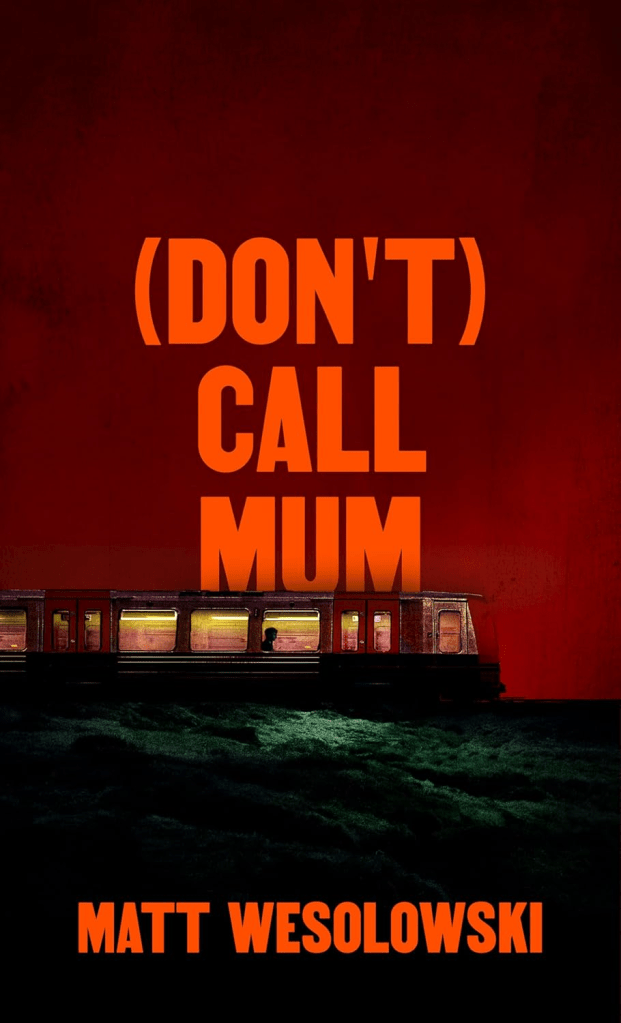
Matt Wesolowski’s latest is a tight, nasty little ride that smells like diesel, wet wool, and old curses. It is folk horror shoved into a commuter carriage, a northern ghost story with teeth, and a class-skewering comedy of manners where the manners get eaten first. I read the last third practically holding my breath and, yes, I checked the window behind me twice because something kept tapping. Probably the rain. Hopefully the rain.
Wesolowski is a Newcastle-upon-Tyne writer known for modern folk dread and formally inventive thrillers, and he’s operating in home terrain here: the North, the weird, and the ways old stories cling to cold land. The book’s “About the Author” roots him in the North East, which tracks with the novel’s dialect ear and folkloric obsessions.
Leo, a folklore MA student with a chip on his shoulder and a heart he keeps pretending he doesn’t have, is heading home to Northumberland for Christmas. The weather is foul, everything southbound is delayed, and the only thing running on time is a rickety Northern Sprinter that feels held together by stubbornness and draft. In Leo’s carriage: Jodie, a sharp sociolinguist with a yellow beanie and a quicker wit, and Angus, a posh human foghorn who thinks the North is a “dump” and cannot stop yelling into his phone. The train pushes into the dark, the signal dies, the wind starts poking the windows like a bully, and the old name Underwood comes up. People from around there know you don’t say the other name. Not out loud. Not if you want to get home.

At its core, the novel is about stories as survival tech. Leo has grown up with whispered warnings. He tries to academic-voice them away, but the land does not care that you have citations. When he finally tells the Underwood tale on the train, it works like a summoning. You feel the old pattern slide into place: bad harvest, a witchfinder, a magistrate eager to burn a village clean, and a beacon of flames no one forgot. That bit is delivered with such slow, confident menace it feels like sitting too close to a pub fire and realizing it’s not warming you, it’s tasting you.
Wesolowski threads in class anxiety and regional contempt without ever preaching. Angus is first a caricature, then a person, then something else entirely once the train’s rules stop applying. Jodie’s linguistics riff about “Gangral” being a noun from gan is both a clever character beat and a thesis: language charts power, place, and danger. The North remembers. The words remember. So does whatever is out there on the hills.
There is also an ongoing, unnerving motif of mothers: the desperate text that says “Call me Asap Mum x” again and again; the title’s bracketed warning; the book’s fixation on the ache of parent and child trying to reach each other across dark miles and worse things. The way Wesolowski deploys that repeated message is cruel in the best horror sense, each “Mum x” a tiny ice-pick.
The voice is tight third person with occasional lyrical flexes. Dialogue hits like a pint glass: sharp, funny, and increasingly glass-thin. The pacing escalates beautifully. First act: observational comedy about student types, platform chaos, and the trench-coat historian who “cares” about witches as a brand. Second act: the train runs into weather, then into the uncanny, and the folklore leaks like cold air through bad seals. Final act: you get the bleak, folkloric payoff. The “train as coffin” claustrophobia is pristine, and the landscapes outside the windows feel like they’re pressing their faces to the glass.
Wesolowski’s prose hums in that northern register he does so well: dry humor, chips of anger, tenderness he refuses to admit to. He can make a tannoy announcement sound like a malediction. He can make the word “Underwood” sound like a locked cellar door. And the Gangral… let’s just say I do not want a small hand curling into mine on a night train ever again.
Themes, symbolism, meaning
- North vs South: Not just geography. It’s entitlement vs endurance, money vs memory. Angus’s swagger decays into scared boy noises, and it’s devastating because the book isn’t asking you to pity him so much as to recognize that fear is the oldest, most democratic folklore.
- Folklore as operating system: The story frames oral tradition as code. Speak it, and it runs. Deny it, and it runs anyway. The characters keep trying to modern their way out with apps and train schedules. The land laughs.
- Mothers: The title is a dare and a trap. The “Mum x” chorus is both life-line and lure. Horror often asks what we’d do to get back to a parent or a child. This one asks what would happen if the dark learned to text.
- Naming: Jodie’s mini-lecture on “Gangral” is the book telling you that names matter. Once a thing has a name, it can answer. And it will.
Craft report card
- Originality: High. Folk horror on a grim little two-carriage train is a fantastic constraint, and the specific Northumbrian lore gives it teeth instead of pastiche.
- Pacing: Excellent. Short chapters, rising weather, stingy reveals. The middle never sags.
- Characters: Strong. Leo’s self-loathing, Jodie’s warmth and brains, Angus’s slow deconstruction from caricature into human into problem are all handled with skill.
- Is it scary? Yes, but not jump-scary. It’s the moor-wind, the dead phone, the thing tapping. Also the way “Mum” repeats until you start to see the x as a kiss or a cross. That’s nasty.
Strengths
- The claustrophobia of the train is immaculate.
- The dialogue is wickedly funny until it isn’t.
- The folkloric set pieces sing, especially the Underwood history lesson and the old-woman-in-beige scene that plants “Gangral” in your head like a burr.
Critiques
- The posh-boy grotesque is maybe a hair on the nose when he first arrives. The book fixes this later, but your eyes might roll before your skin crawls.
- If you’re allergic to folkloric ambiguity, the finale does not spoon-feed answers. Personally I loved that. Your mileage may vary, preferably not on a night train past Underwood.
This is exactly my kind of modern folk horror: weird, ambitious, and memorable, with a unique voice and that slow, pressure-cooker dread that makes you read faster while wanting to look away.
TL;DR: A folkloric nightmare on a rattling Northern train. Class snark, mother-lure texts, and an old word that should stay unsaid combine into a tight, bleak, funny gut-punch. Wesolowski keeps it claustrophobic, nasty, and eerily tender. I’m not calling anyone’s mum from a train ever again.












Recommended for: Readers who like their folk horror with cold rain, bad reception, and legends that come when called; northerners who enjoy being seen and southerners who can take a joke; commuters who understand that every train tannoy secretly wants you dead.
Not recommended for: People who say “it’s just weather” as the wind tries to eat the carriage; folks who think the North is a dump; anyone who cannot resist answering unknown “Mum x” texts; and especially loud men named Angus who believe the dark has nothing to teach them.
Published May 8, 2025 by Wild Hunt.

 The Blog Without a Face
Leave a comment