
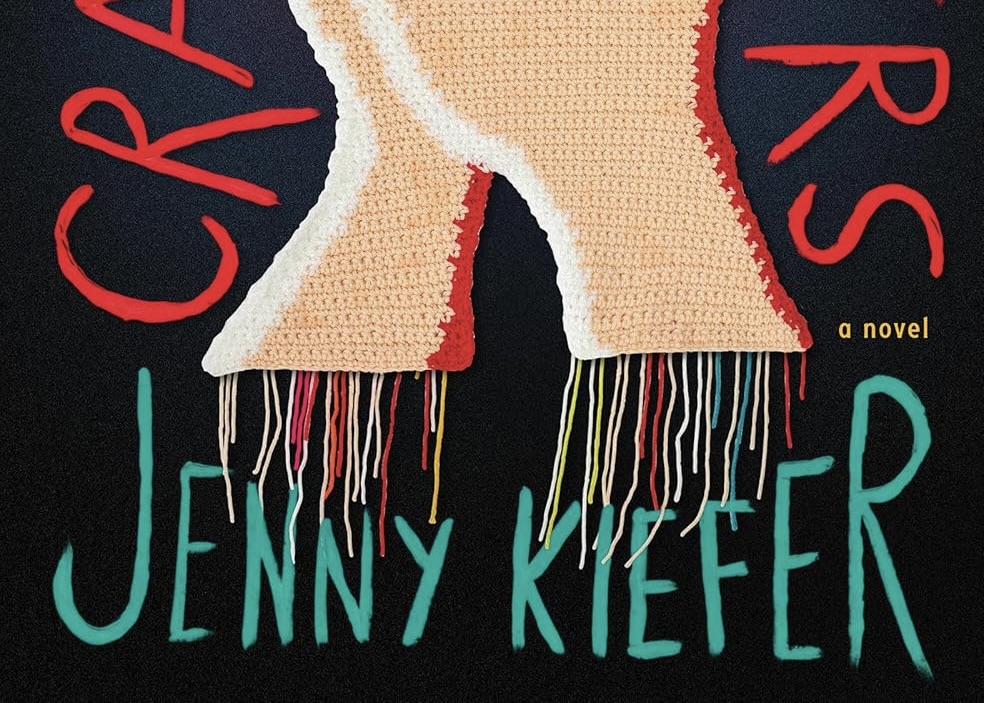

Jenny Kiefer, a Kentucky-born badass, isn’t just spinning yarns with her knitting needles. She’s weaving nightmares that’ll make you rethink your next trip to the craft store. A lifelong crafter with a penchant for sharp objects and sharper wit, she’s the co-owner (with her mom, because family that slays together stays together) of Butcher Cabin Books, Louisville’s only all-horror bookstore. It’s the kind of place where you’d expect to find cursed cross-stitch patterns next to the coffee. Her debut, This Wretched Valley (Quirk, 2024), was a gore-soaked love letter to survival horror that had critics clutching their pearls and calling her a twisted talent to watch. With Crafting for Sinners, her follow-up with Quirk Books, Kiefer doubles down, proving she’s got the guts (and the glue guns) to keep horror fans cackling and cringing.
Ruth, a queer knitter scraping by in a podunk Kentucky town under the thumb of a megachurch that’s more cult than congregation, runs out of yarn mid-commission. Desperate, she hits up New Creations, the church’s craft store, which is like Hobby Lobby with extra Jesus and a side of menace. She tries to five-finger-discount some skeins. Big mistake. The employees don’t call the cops, they lock the doors and go full Purge with a holy twist. What follows is a batshit, blood-drenched night of cat-and-mouse where Ruth turns knitting needles into shivs, glue guns into war crimes, and her sheer DIY moxie into battle with her pursuers. The store’s staff, meanwhile, are either unhinged zealots or hiding something way creepier in the backroom. Sprinkled throughout are media snippets (podcasts, forum rants, news clippings) that peel back the town’s hypocritical hide like a bad sunburn. The catalog copy nails it: Ruth’s caught shoplifting, trapped, and hunted by employees with a secret so sinister it’d make Satan blush.

Kiefer writes like she’s been personally wronged by both craft stores and church potlucks. She knows the fluorescent-lit aisles of glitter and yarn are just a veneer over petty tyranny and repressed rage. Fresh off the wilderness carnage of This Wretched Valley, she drags her survival-horror expertise into a claustrophobic retail hellscape with a cackle. The set pieces are so tactile you’ll feel the stick of blood on your fingers. Knitting needles turn into goddamn scalpels. Yarn skeins are basically entrails. Those cheery endcap displays? Booby traps from hell. It’s like Die Hard in a knockoff Michael’s, with a voice that swings from biting-the-heads-off-nails satire to I’m-gonna-cry-but-stab-you-first sincerity.
The mixed-media shtick keeps the single-location vibe from getting stale while letting Kiefer dunk on true-crime vultures, holier-than-thou keyboard warriors, and the kind of piety that’s just cruelty in a Sunday hat. It’s fast, it’s furious, it’s like scrolling X during a moral panic but with better prose. The reading group guide (because of course there’s one) nudges you to chew on how these formats shape the story, and they do. Especially in showing how Ruth and her pal Abigail get screwed over by gossip and dogma.
Tonally, it’s like if Grady Hendrix’s retail-horror snark got drunk with a grindhouse flick and started a knife fight. Blurbs call it a “crafty cat-and-mouse thriller” and “bloodthirsty as a motherfucker,” and for once, the jacket doesn’t lie. This book rips.
The big idea here is how a smiley-faced institution can smuggle hate under “community” branding. Kill Devil’s megachurch is a machine that churns out control freaks who think they’re saving souls. The craft store? It’s a sanctified slaughterhouse that chews up anyone who doesn’t fit the mold. Kiefer’s got a bone to pick with cult tactics and small-town hypocrisy that hands its conscience to a clipboard-wielding bureaucrat. Read it straight, and you’ve got a possession-fueled siege thriller. Read it deep, and it’s uglier: a town so obsessed with purity it births its own monster and calls it divine.
Craft tools as weapons? Fucking genius. Needles, cutters, and hot glue are Ruth’s rebellion alphabet. Her diabetic supplies and scraped-together cash jar scream working-class desperation. Every choice feels like it could bankrupt her. Scarcity’s the real villain here, scarier than any chanting nutjob. The most terrifying line isn’t scripture; it’s the price tag on survival.
Kiefer’s prose is lean, mean, and sharp enough to cut glass. She stages violence like a climber mapping a route. Every move is about leverage and survival. The vibe is fluorescent, suffocating, and grimy as hell. No gothic fog, just polished concrete, toxic candle fumes, and shelves of sanctified tchotchkes. That banality makes the gore hit like a sledgehammer. It’s “you’re trapped in a locked store with fanatics, and the town won’t save you” panic. The blood’s sticky, the stakes are personal, and the dread’s as much about social betrayal as it is about whatever’s lurking in the shadows.

Originality: A queer survival thriller in a megachurch craft store? That’s the kind of batshit brilliance I want from indie horror. It’s fresh but winks at retail-horror ancestors without ripping them off. The Die Hard-in-a-craft-store pitch is dead-on, but the social satire keeps it from being a gimmick.
Pacing: This thing hauls ass. It kicks off with a true-crime podcast teaser, slams the store gate shut, and doesn’t let up. The media interludes are quick breathers that keep the dread simmering without slowing shit down. Even the quiet moments feel like you’re holding your breath.
Character: Ruth is a goddamn queen. Stubborn, terrified, resourceful, and just flawed enough to feel real, not like some plot puppet. Her messy, tender bond with Abigail in this small-town pressure cooker hits hard. The media snippets paint them as scapegoats, which makes you root for them and want to burn the town down.
How Scary Is It: Scary as hell in a “your hands are sweating, and you’re clutching a weaponized knitting needle” way. The violence is up-close and dirty, the dread is half-supernatural, half “this town hates you.” By the time the theology and gore get tangled, you realize the scariest thing might be a church board meeting.
Kiefer doesn’t give a fuck about playing nice. She’s here to show how piety becomes a bureaucratic excuse for cruelty. The store and church are a masterclass in plausible deniability. Nobody’s the villain, but everybody’s complicit. The mixed-media bits are like America’s unhinged comment section, amplifying the town’s rot. The book asks: do you need a demon when people are this eager to fuck each other over?
It’s also a craft book in the best way. Ruth’s DIY hustle is the moral flip-side to the church’s “creation” bullshit. She builds to survive; they build a cage and call it salvation. It’s not subtle, and it doesn’t need to be. When the lights buzz and the gate clangs shut, subtlety can go to hell.
If the score seems high and you’re itching for gripes, fine. A couple of late twists hit like a runaway yarn ball, and some folks might want more wiggle room on the demon question. Me? I loved the steamroller vibe. The mixed-media stuff might annoy anyone who hates X-style hot takes, but I’m here for it. It’s a feature, not a flaw.
This is ballsy, timely survival horror with a razor-sharp satirical edge and a heroine who’d knit a shiv out of your nightmares. It’s indie in its blackened heart, mainstream in its polish, and gleefully nasty when it wants to be. You’ll devour this and crochet a shrine from the carnage.
TL;DR: A feral, fluorescent nightmare where a queer knitter fights through a megachurch craft store’s holy hellscape. It’s got biting social commentary, gloriously messy gore, and a pace that’ll leave you gasping. Die Hard with yarn and a conscience. I had a wickedly fun time.









Recommended for: Horror fiends who like their scares loud, mean, and sticky as hell. Anyone who’s eyed a knitting needle and thought, “Yeah, that could fuck someone up.” Book clubs ready to brawl over whether the demon’s real or just America on a bad day.
Not recommended for: Cozy-horror fans, church PR teams looking for inspo, or anyone who thinks a craft aisle can’t draw blood.
Published October 7, 2025 by Quirk Books.

 The Blog Without a Face
Leave a comment