
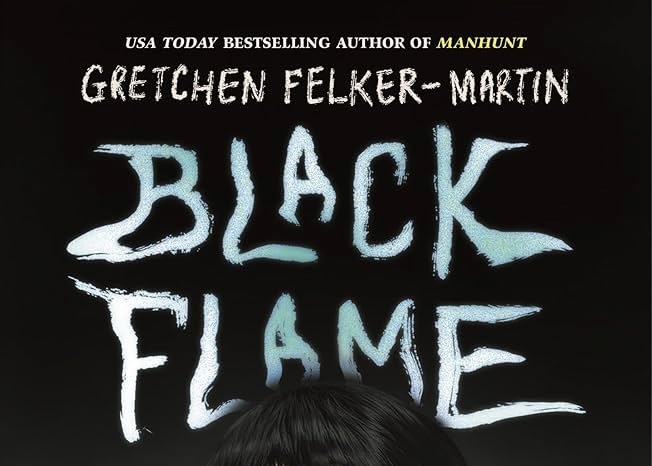

Gretchen Felker-Martin isn’t shy about her obsessions: flesh, film, politics, and the obscene little bargain art makes with desire. Her new novel Black Flame is a gleefully corrupted reel of all three. It opens with epigraphs that announce the vibe with a flourish of knives and sex, Clive Barker promising “such sights” and Buñuel coolly comparing cinema to assault, and then splices us into 1985 Staten Island, where Ellen Kramer, a meticulous film restorer, is hired to resurrect a supposedly lost 1930s shocker called The Baroness by the gender-bending auteur Karla Bartok.
Felker-Martin is a Massachusetts-based horror writer and critic whose debut Manhunt topped Vulture’s 2022 list and picked up “best of the year” nods from Esquire, Library Journal, and Paste. Her follow-up Cuckoo hit the USA Today bestseller list. She also writes criticism for outlets like TIME and Nylon.

Ellen’s nonprofit archive, bleeding cash and reputation, takes a covert German contract to restore The Baroness, a film long rumored destroyed and recently discovered among the private stash of a Nazi functionary. The print’s in tatters, the negative’s “wrong” in ways that don’t make sense, and the movie’s decadent imagery (drag aristocrats, demonic ritual, and a “beautiful boy” led through trials) begins to bleed into Ellen’s days and, um, very steamy nights. As she threads celluloid through ultrasonic cleaners and catalogs scratches, the boundary between art and appetite tears like brittle emulsion.
At its black, beating core, Black Flame is about how images own us. Ellen treats film like a body: something that can be cleaned, sutured, made presentable for the public. Felker-Martin doubles down by structuring chapters around lab processes like “Technical Selection,” “The Negative,” “Nitrate,” and “Final Cut” so every escalation feels like a step deeper into the projector’s maw. The book fetishizes analog craft with a level of tactile detail that would make an OSHA inspector sweat: the trichloroethane tang in the cleaner, the padded wheels that bite your fingertips, the way a mis-thread shaves a hairline gouge across a face. It’s gloriously nerdy and squirm-inducing at the same time.
That anatomical intimacy becomes metaphor: restoration as repression. Ellen is terrified of the parts of herself the movie awakens. She tries to “clean” them the way she cleans a print, but desire is a mold that keeps regrowing. Felker-Martin gives her a brittle workaday life, pre-dawn bus rides to the brick factory by the Kill Van Kull, awkward dates with a Nice Guy her mother approves of, a tender daily rapport with Molly, a one-legged woman at the bus stop, that grounds the novel’s delirium in unsexy, salt-stained reality. The mundane makes the transgressive pulse louder. What else is the book about?
- Art, fascism, and erasure. The Baroness survives in a Nazi’s private attic, a perversely appropriate fate for queer art suppressed in public and hoarded in secret. The novel keeps prodding the question of who gets to restore and curate history, and what “cleaning” always risks scrubbing away.
- Queer appetite vs. moral panic. The 80s setting lets Felker-Martin stage a war between shame and lust, with Ellen’s body as the battleground. As the restoration progresses, scenes of masked revels and bodily transformation start reading like forbidden scripture, equal parts liberation and curse.
- Celluloid as flesh. Cuts, splices, and burns in the film echo cuts, splices, and burns in people. When the negative behaves like it’s been shot in another reality, and sometimes seems to change, the metaphor snaps into place: images aren’t inert; they act upon us.
- Work and desire. The novel’s sex isn’t “hot” so much as it’s compulsive, messy, and frequently humiliating. Felker-Martin is interested in the collision of labor and lust: desire that intrudes during a shift, in a theater, in a bathroom, on the commute. The prose doesn’t flinch.

Felker-Martin writes like a projectionist with a switchblade. The sentences come humid, tactile, and unembarrassed, packed with industrial textures and body-fluids, but paced with the unglamorous rhythms of a workday. She’ll render a cleaning solvent with gourmand precision and then casually knife you with an image you can’t unsee. It’s transgressive without being edgelordy; it’s genuinely curious about why taboo imagery awakens people. The Barker epigraph isn’t an empty flex. She takes it seriously and shows you the sights.
Oh yeah. It’s scary in a slow-burn, skin-under-your-nails way. There are set pieces that go feral, but the enduring dread is cumulative: the sense that the movie is developing you, not the other way around. The pacing is deliberate, almost procedural, especially early as Ellen logs defects and threads reels; if you don’t care about how a Lipsner cleaner works, you might twitch. I loved it. Those pages prime you for the later ruptures, and they make the grotesque feel earned rather than random. When the novel cuts loose, it does it with purpose and a wink.
Ellen is the kind of protagonist horror needs more of: competent, prickly, convinced she’s broken, and trying like hell to keep a job together while her brain rioters party in the aisles. Her coworker Phillip is a perfect office ghoul, lazy and smarmy in exactly the way that survives HR, and Molly provides rough-edged warmth without becoming a mascot. Even the nonexistent Baroness cast (the Beautiful Boy, the Chamberlain, the Abbess) haunts the book like a rumor you can’t dislodge.
Strengths
- A uniquely tactile vision of horror. You can smell the solvent and feel the film bite.
- Formal play that matches subject: chapter titles mirror archival workflow, and the plot escalates like a restoration schedule gone infernal.
- Queer, transgressive energy that refuses easy moralizing.
- Memorable set pieces that mingle eros and abjection without coyness.
Critiques
- A couple stretches linger on lab minutiae past the point of diminishing returns; some readers will want the knife sooner.
- One secondary relationship leans on a familiar “nice guy as parasite” dynamic; it works but isn’t the freshest bone in the stew.
- If your tolerance for bodily fluids is low, this book will stomp your gag reflex like it owes rent.

Black Flame feels like a horror novel weirdo archivists have been trying to summon for years: part workplace procedural, part cursed-film myth, part manifesto about who curates culture and who gets buried in the vault. It’s weird, ambitious, and, most crucially, memorable. If Barker’s cenobites ran a post house, this is what they’d option.
TL;DR: A sinewy, solvent-scented cursed-film novel where a queer film restorer tries to “fix” a lost 30s shocker and the movie fixes her instead. Tactile, horny, political, and genuinely unnerving. Not tidy, never safe, and absolutely worth the stains it leaves behind.








Recommended for: Film nerds who know what “trichloroethane” smells like and think a Lipsner is a mood ring.
Not recommended for: Folks who believe art should be “clean,” “moral,” and preferably sanitized by the same people who stored contraband for the SS.
Published August 5, 2025 by Tor Nightfire.
 The Blog Without a Face
Leave a comment