

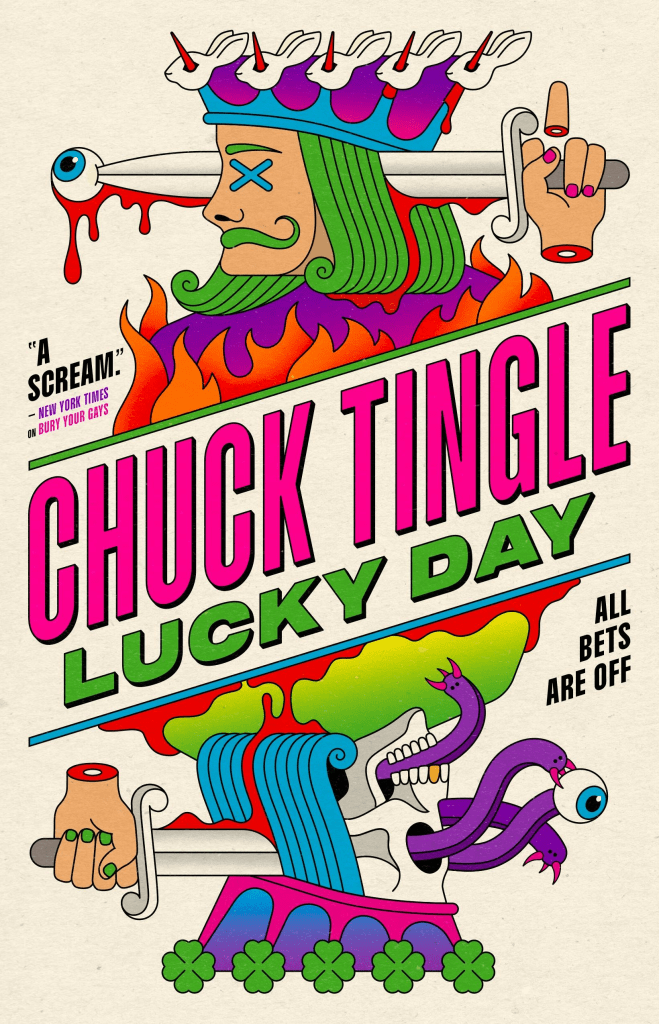
Alright, let’s talk about Lucky Day by Chuck Tingle, a book that treats probability like a loaded die and then gleefully tosses it into a meat grinder. It’s weird, it’s bold, it’s sticky with dread, and it has the audacity to croon Elvis while the world comes apart like a piñata full of knives.
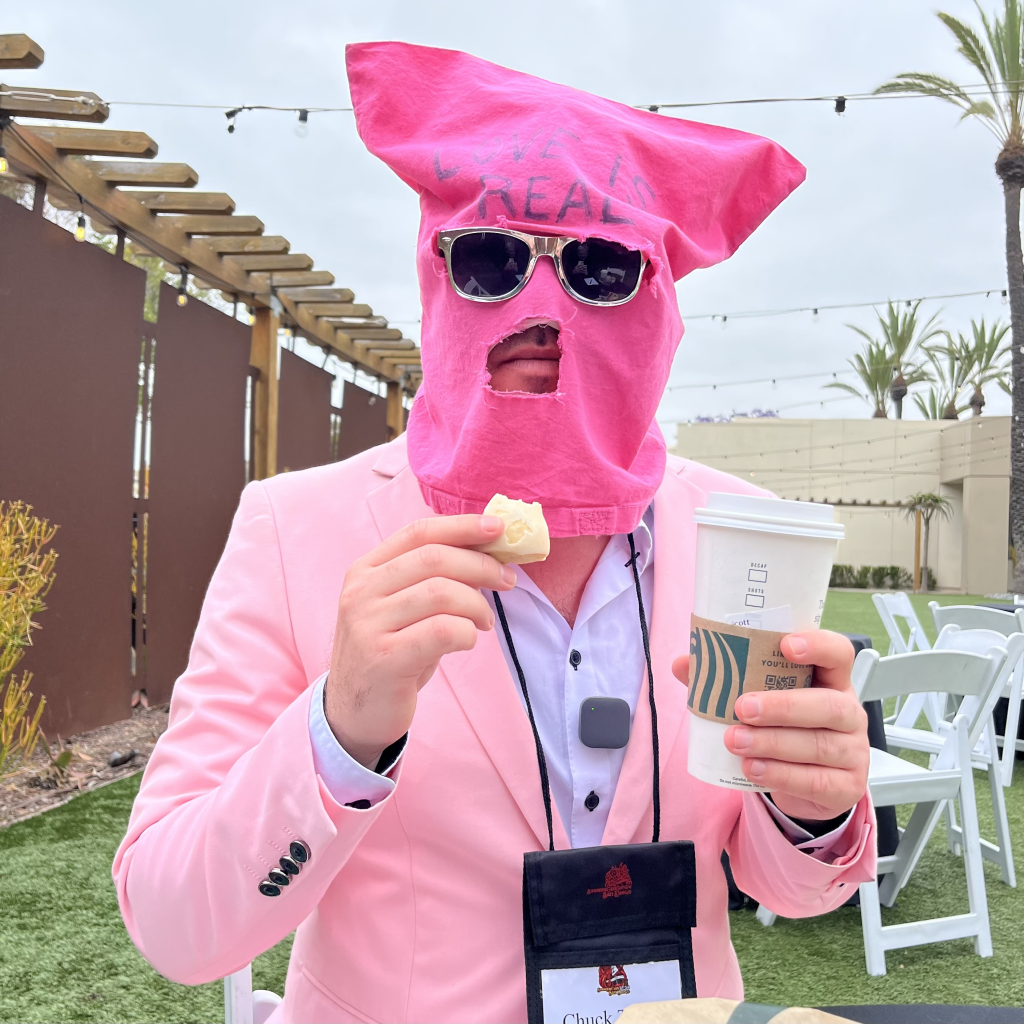
Chuck Tingle is the USA Today bestselling author of Camp Damascus, Bury Your Gays, and Straight, with Bram Stoker and CALIBA Golden Poppy finalist nods. He is famously elusive behind shades and a pink mask, and he writes to “prove love is real,” which sounds adorable until you remember how often his love shows up holding a bloody bouquet. That résumé matters, because Lucky Day mixes his earnest heart with a fired-up blender of cosmic menace.
Vera Norrie, a probability-minded mathematician with a girlfriend named Annie, is walking through Chicago on the morning she plans to face a personal reckoning. Annie finds a heads-up penny and chirps the book’s title into existence. Vera, being Vera, calculates the odds and accidentally steps into destiny’s banana peel. It’s cute for about three seconds, then unnervingly precise. The coin is from Vera’s birth year, and the conversation veers into how odds actually work in the messy real world. This scene isn’t just meet-cute math. It’s the fuse.

Once the coin lands, reality goes off its meds. A citywide broadcast of Elvis’s “Good Luck Charm” pours from every direction like a smiling curse while Chicago detonates into unreality. A Renaissance-tunic-wearing chimp materializes in a diner and turns a typewriter into a blunt-force sonnet on a man’s skull. Numbers hiss from a radio like a number station counting down to something you won’t like. It’s fast, ugly, and very effective.
From there, the book splinters into aftermath and obsession. Chapters like “Charred Babel Library,” “Number Station,” and “Heads and Tails” telegraph that this isn’t a simple disaster novel. It’s an autopsy of luck, chance, love, and the grotesque lottery of survival.
Tingle is wrestling with three big beasts:
- Luck vs. agency. The penny scene is a thesis dressed as flirtation. Vera reframes coincidence as many layered variables. She refuses the word “impossible” but plants us “on impossible’s doorstep.” That phrase becomes the book’s neon sign. You can feel the universe tapping the “Randomize” button while humans scramble to assign meaning.
- The American cult of luck. Elvis is not just a soundtrack. He’s a weaponized superstition, a hypnotic jingle for people who prefer rabbits’ feet to responsibility. When “Good Luck Charm” echoes across glass towers like a patriotic haunting, it’s both funny and vile, which is exactly the tone the novel likes best.
- Love in a rigged casino. Vera and Annie’s tenderness is painted without sap, which makes the book’s violence feel like a rude heckler at a wedding. When the world buckles, the emotional center is not crushed. It gets sharper. Later, when Vera texts an apology into the sunlight years on, it lands like shrapnel softened by warmth. The apocalypse doesn’t cancel intimacy. It makes it louder.
Symbolism. Coins, typewriters, number stations, poker rooms. The imagery is a gambler’s altar. The typewriter as a skull-crusher is nasty gallows humor, but it’s also the novel’s mission statement. Stories make worlds. Stories unmake them. The tool that writes your fate can also bash it in.
Style. The prose is punchy, conversational, and sly. Tingle loves a scene that starts grounded, then swerves hard into surrealism, a trick that works because the ground was never that solid. He writes violence with a hothouse clarity that avoids pornography yet leaves the brain feeling scraped raw. The constant tension between goofy and ghastly is the special sauce.
Lucky Day is an argument with fatalism. It rejects the shruggy comfort of “everything happens for a reason” and replaces it with a messier compassion. We live amid overlapping probabilities. People still choose. Love still counts. If your life is a slot machine, the machine is haunted but you are still the fool who pulled the lever. The book also jabs at algorithmic culture. The Elvis loop and the cold arithmetic of broadcast numbers create a synthetic fate that feels like your favorite app recommending doom. The horror is not just the chimp or the blood or the explosions. It’s the suspicion that you will use someone else’s story about luck to avoid your own decisions. The book sneers at that and then asks you to hold someone’s hand anyway.
Strengths and Critiques
Originality. Extremely high. A math-forward, love-tender apocalyptic novel that weaponizes pop ephemera and probability talk is not your average haunted house. The chimp with a typewriter is a grotesque set piece that should not work, but it does, because it’s emblematic of the book’s thesis about random instruments producing cruel meaning.
Atmosphere. Top-shelf. The Elvis motif and the number station give the city a possessed radio soul. Even quiet sunlight is edged with threat.
Characterization. Vera rules. Her brainy prickliness is balanced by real vulnerability. Annie is not a prop. She’s curious, playful, and stubborn in ways that complicate the math. The best part is how their dynamic lets the book interrogate love without syrup.
Pacing. The opening half roars. It starts with an intimate walk, spikes into carnage, and only then lets you feel the ache of memory. If anything, the mid-book’s kaleidoscope of set pieces and ideas occasionally feels like a slot machine spraying symbols a tad too long. The chapter structure promises propulsion, and it mostly delivers, but a couple thematic loops linger. That said, the aftermath sections add needed gravity, so I’ll grumble and then admit they pay off.
Is it scary? Hell yes. The violence hits hard without getting juvenile. The real terror is the steady hum of orchestrated coincidence. When the whole city serenades you about luck and the odds keep winking, you start to feel hunted by math. The diner massacre and that awful, jaunty soundtrack work together like a smile on a corpse.
Quibbles. A few nudges toward on-the-nose symbolism peek through. A poker room sign appears at just the right moment, and while it’s conceptually tidy, it risks feeling like a neon arrow pointing at the theme. Still, the book is so committed to its casino cosmology that the obviousness reads as intentional camp.
Bold premise, distinctive voice, and atmosphere for days. It’s spiky, inventive, and emotionally sincere. There is occasional thematic over-insistence and a slightly baggy middle, but this thing sings in a key I like.
TL;DR: Math lesbian finds a penny and the universe says bet. Chicago turns into a rigged carnival blasting Elvis while probability and love knife-fight in an alley. Brutal set pieces, sticky atmosphere, and a brainy heart. A little thematically extra in places, but it smacks hard and true.




Recommended for: Readers who like their apocalypse with coins, crooners, and chaos. Degenerates who think a number station is a love language. Anyone who has ever muttered “technically” right before kissing or running for their life.
Not recommended for: People who believe luck is cute and consequences are for other people. Folks who need their horror cozy and their chimps friendly. Anyone allergic to gore, math, or hearing “Good Luck Charm” again, possibly forever.
Published August 12, 2025 by Tor Nightfire.
 The Blog Without a Face
Leave a comment