
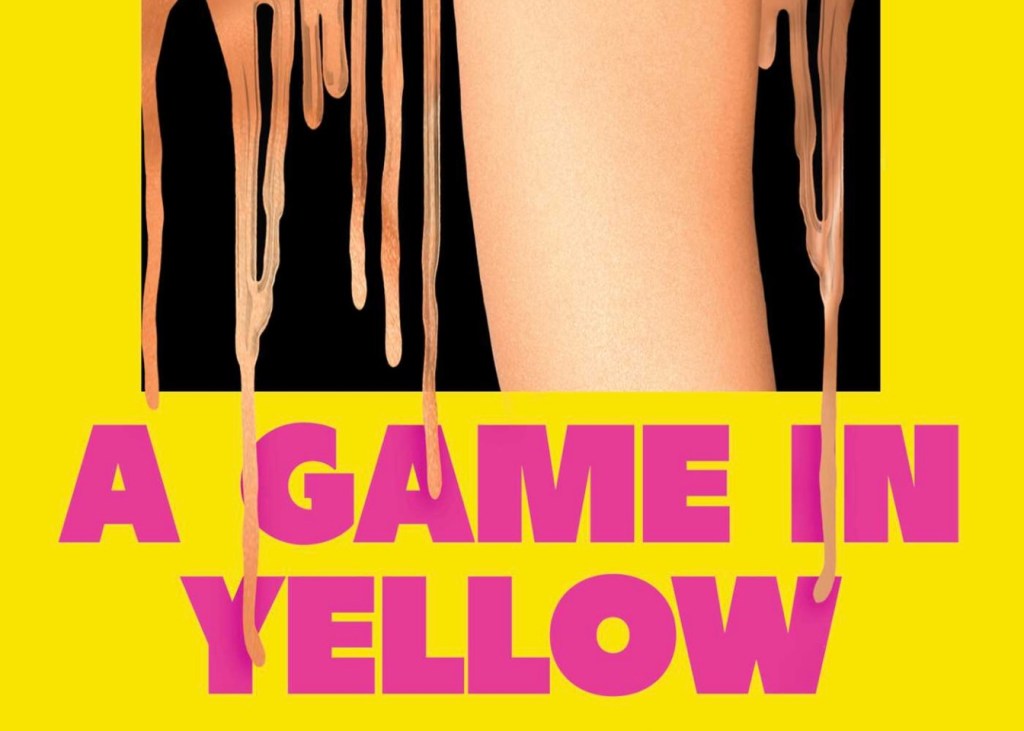

Hailey Piper is one of the most consistently exciting voices in contemporary horror. She won a Bram Stoker Award for Queen of Teeth and has built a rabid following with queer, feral, big-feelings titles like The Worm and His Kings, No Gods for Drowning, and A Light Most Hateful. Piper’s brand is: take a pulp premise, inject it with sincerity and body heat, then crank the emotional and cosmic dials until the speakers blow. A Game in Yellow is that sensibility pressed to the glass until it squeaks.
Carmen and Blanca are a Queens couple whose sex life has sputtered. They’re loving, kinky, careful, and stuck. After a rope-and-solitaire scene fizzles, Blanca drags Carmen to an underground den called Underside, where a performer named Smoke offers the world’s worst idea and best temptation: a battered copy of The King in Yellow (reviewed by BWAF for its 130th anniversary). Reading Act II gives Carmen a survivor’s high so potent it jump-starts desire… and cracks open something bigger, weirder, and meaner. As the pages begin reading her back, Carmen’s dreams fill with masked revelers, twin black suns, and an Hour of Unmasking that doesn’t politely stay in dreamland. Their relationship becomes a gameboard where submission, responsibility, and cosmic intrusion play dirty.

Piper threads three cords and yanks hard: kink, consent, and cosmic dread. On page one Carmen stabs her mousepad with a letter opener by accident, a tiny puncture that foreshadows the book’s bigger perforations between the everyday and the eldritch. The early plastic-bag breathplay scene is handled with safety and aftercare, then immediately interrogated: if near-death is the only way back to lust, what does that hunger actually want? Enter the yellow play, a symbol that functions like rooftop vertigo. You look over the edge. The edge looks back. Your knees get dumb ideas.
The “yellow” here is not fan-service mythos glue. It’s a solvent. It dissolves the membrane between performance and self. The masquerade sequences in Carmen’s dreams read like stage directions dropped into a fever. Masks mean roles, and roles mean safety until the Hour of Unmasking makes “who are you, really?” a threat. The book keeps asking whether submission is freedom through boundaries or abdication dressed up kinky. It refuses easy answers and instead makes desire feel like a summoning circle: protection and peril in the same chalk line.
Stylistically, Piper runs hot. The sentences snap, then spool out in breathy chains when Carmen loses control. Dialogue has the lived-in warmth of a couple who have practiced care and know each other’s edges. Then the narration swerves to script format when the King’s play intrudes, a neat typographic shiver that says the stage has invaded your apartment. The Underside scenes thrum with basement electricity and the sticky democracy of subcultures. You can practically smell the vape cloud and spilled gin.
The smart move is how Piper treats kink not as window dressing but as philosophy. Blanca’s line about being “responsible” rather than “in control” is the book’s ethical spine. Consent is ritual. Aftercare is sacrament. The terror arrives when liturgy is replaced by scripture that bites back. Reading The King in Yellow becomes kink without a safeword, a spiritual scene where the top is an idea. Carmen wants the post-edge euphoria because it makes her feel alive and worthy for Blanca again. The risk is that the euphoria belongs to the King, not to her.
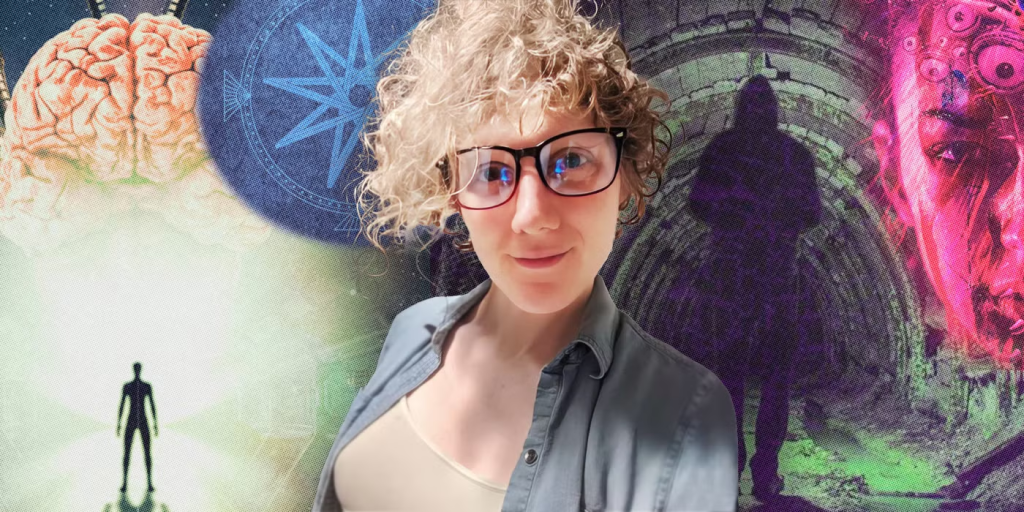
There’s a quieter, tender horror too: the fear of failing your partner. Carmen’s most relatable monster is the sentence “You’ll lose her.” The novel refuses to sneer at that anxiety; it gives it claws. When the golden masquerade oozes into waking life, the book argues that love itself is a mask you try to earn every day. If you wear it long enough, it fuses to the face. If you lie in it, it peels you raw. That’s not cosmic horror as lore dump. That’s cosmic horror as relationship test.
Strengths
- A relationship you believe. Carmen and Blanca feel specific and messy. Their safeword, their rituals, their domestic softness between scenes, it all rings true. When the sex sputters, it hurts because it matters.
- Form that performs. Prose and play pages infect each other. The book literalizes “text as contagion” without ever feeling like a gimmick.
- Queer hunger with a soul. Desire isn’t punished; it’s respected. The horror comes when agency slips, not when women want things.
- Worldbuilding from the grout lines. The Underside is a perfect liminal space: illegal electricity, tarot on washing machines, a smirking gatekeeper named Smoke who trades in experiences. It feels discovered, not explained.
Critiques
- The Carcosa drum can pound a tad on-the-nose. A few dream beats tell you they’re important while you already feel it.
- Smoke flirts with Cool Plot Device. She’s fun and slinky, but at times she functions more as a glidepath to the yellow text than as a fully interrogated person.
- Readers allergic to erotic charge will nope out. The book is frank about sex and kink. If “aftercare” as character development makes you sigh, you’ll be sighing a lot. (That’s a you problem. I said what I said.)
Is it original? How’s the pacing? Are the characters built? Is it scary?
- Originality: High. Plenty of writers riff on Chambers, but very few fuse queer BDSM intimacy with meta-theatrical cosmic infection and make it feel honest instead of edgelordy. Piper does, mostly because she lets the relationship drive the mythos, not the other way around.
- Pacing: Strong middle engine. The pattern of read-descend-erupt could have sagged; instead it escalates cost and consequence. The breathers (couch scenes, subway rides, office drudgery) give the spikes room to hurt.
- Characters: Carmen is painfully human: anxious, funny, horny, guilty, and trying. Blanca is the book’s quiet powerhouse. She’s loving without being a saint, dominant without being a cartoon. Smoke steals every scene with a single exhale.
- Scare factor: It’s more “my stomach just dropped through the floor” than jump-scare. The terror arrives as vertigo, breathlessness, and the creeping sense that an art object has opinions about your body. The masquerade sequences are knife-pretty. The moments where kink shades into compulsion are the ones that made me mutter “oh no” out loud.

A Game in Yellow is ferocious, sexy, and sincerely freaky. It’s about the masks lovers wear for each other and what happens when a bigger mask, the King’s, demands stage time. It understands that boundaries are sacred until a god strolls in and redraws the chalk. If you like your cosmic horror intimate and your intimacy a little cosmic, welcome to the party. Keep your safeword handy.
Bold, atmospheric, thematically hungry, and written with heat. Docked a point for the occasional on-the-nose flourish and for Smoke sometimes being more function than flesh. But this thing sings and slithers. The Blog Without a Face will eat well.
TL;DR: Queer couple with fading spark meets an underground priestess of vibes and a battered copy of The King in Yellow. Reading it is rooftop-edge vertigo that turns desire radioactive. Piper blends kink, consent, and cosmic infection into a tense, sexy, thoughtful gut-punch. Bring aftercare and a flashlight.








Recommended for: Readers who like their Carcosa with cuddles and rope, kinksters who alphabetize their aftercare, couples who whisper “responsible, not in control,” subway goblins who know exactly where the illegal power lines hum.
Not recommended for: Folks who think Chambers should be chaste, anyone who yells “keep politics out of my eldritch smut,” and readers who break out in hives at the word “safeword.” Also, prudes allergic to vape clouds and moral complexity.
Published August 12, 2025 by S&S/Saga Press.
 The Blog Without a Face
Leave a comment