

Daniel Kraus is a New York Times–bestselling novelist and screenwriter. Recent highlights include Whalefall (Alex Award; LA Times Book Prize finalist) and collaborations with Guillermo del Toro (The Shape of Water, Trollhunters) and George A. Romero (The Living Dead, Pay the Piper). He’s a Bram Stoker Award winner whose work spans novels, film, and TV. He lives in Chicago.
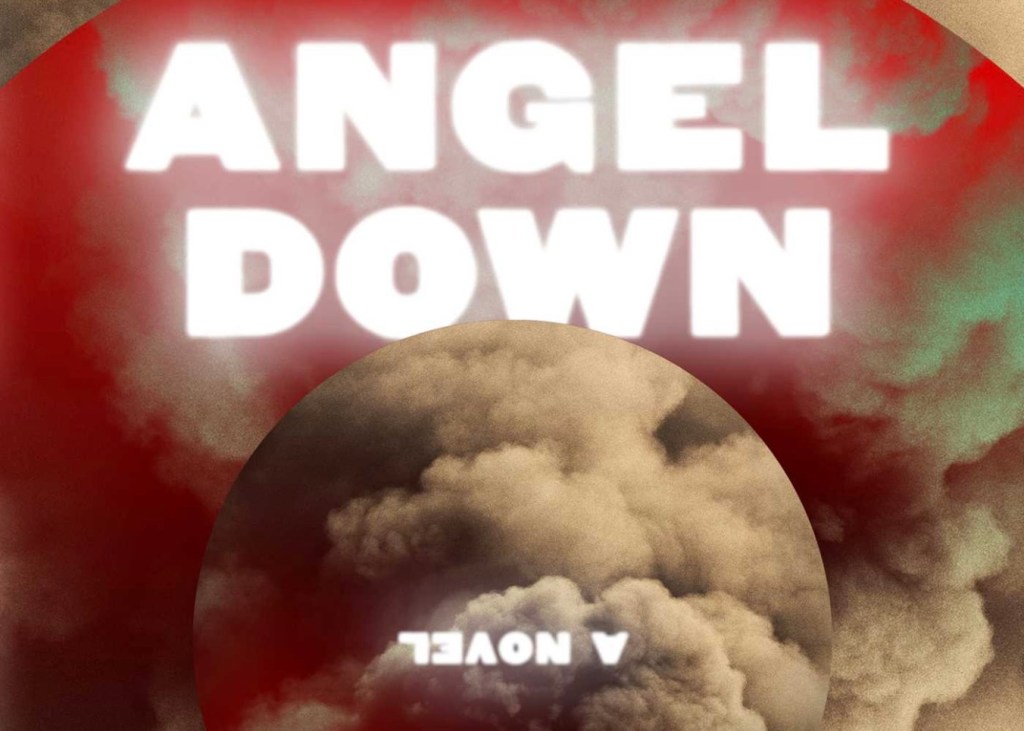
Angel Down shoves you face-first into the Meuse-Argonne, where Private First Class Cyril Bagger (con man, burial-detail virtuoso, human shrug) gets stuck on the wrong side of a marching order. Major General Lyon Reis, a glory-addled martinet with a taste for “élan,” plucks five misfits (Bagger; Lewis Arno, a too-young runner; Ben Veck, a shell-shaken flamethrower; Vincent “the Vulture” Goodspeed; and slab-jawed Popkin) and tells them to do the unthinkable: stay behind and deal with a single, continuous, inhuman shriek coming from No Man’s Land. What follows is part rescue mission, part moral Rube Goldberg machine, and part theological prank, because the novel keeps asking whether the “better angels of our nature” are metaphors, or something more literal and dangerous.

Kraus writes in breathless, lashing sentences that tumble forward like a man trying not to drown. The book lives in polysyndeton; clauses are strung with “and” like razor wire. The effect is a panicked chant, funny in a pitch-black way, then nauseating, then holy. It feels inhabited: a close third riding Bagger’s hustler brain as he sniffs his Bible for the smell of home, counts scams more tenderly than friends, and looks for every exit from duty. He’s an artist of avoidance and a poet of the latrine. The text underscores this with vivid, unignorable occupational detail: the dice, the marked cards, the way he weaponizes other soldiers’ debts to keep himself out of the line of fire and on the burial crew.
Thematically, Angel Down is a knife between cowardice and compassion. Bagger knows the war is a meat grinder, and he wants to keep as much of his meat intact as possible. The order to confront “the shriek” becomes a stress test of the soul, are we obligated to save someone whose suffering is the worst sound you’ve ever heard? Or are we permitted to make it stop. The novel keeps prodding that dilemma with images of ritual and judgment. Even the book’s running Tarzan motif, Bagger reading The Son of Tarzan to illiterate Arno, works like a cracked mirror: pulp heroism projected against industrial slaughter, fantasy rescues leaking into real ones.
There’s also a thorny conversation about hierarchy and myth. Reis is the brass-polished embodiment of America’s romance with sacrifice: the carefully tailored coat, the gap on his chest reserved for a medal he will earn, the rhetoric of visionary valor even as mud eats men. He’s both ridiculous and lethal, a true-believer who turns “élan” into a sacrament.

The book’s dread doesn’t come only from shells and shrapnel; it’s the sound. The scream functions like a moral air-raid siren, a frequency no one can ignore. Horror here is not just gore; it’s the spiritual tinnitus of witnessing. When Kraus toys with Lincoln’s “better angels,” he refuses to let that phrase stay a bumper sticker. What if “be kind to the defenseless” is not an aphorism but an audit. And what if the auditor looks nothing like a Hallmark angel. That question spurs the novel’s most bracing passages about agency, guilt, and the ways men outsource their consciences to chain-of-command fantasies.
Kraus also threads in America’s particular contradictions: a Black flamethrower pressed into service among white soldiers who won’t stand beside him unless forced; a teenage boy rhapsodizing Tarzan while his elders strip corpses for trinkets; a general who prays to the idea of himself. These choices anchor the book in the hypocritical weirdness of 1918 and, frankly, of now.
Strengths
- A voice you can’t shake. The breathless cadence becomes a moral engine; the momentum drags you through mud you’d rather not look at.
- Vivid, unpretty war writing. This thing is viscera-forward. It isn’t tasteful. It shouldn’t be. The battlefield is a symphony of smoke, busted pianos, and rumor-fed bravado; even character sketches double as small indictments, see Goodspeed’s polished buttons and carrion habits.
- Characters who cut. Bagger is a bastard you grow to love against your better judgment. Arno is the fragile heart of the squad. Veck’s tremor-ridden competence with the P3 turns him into a tragic fuse. Reis is the perfect antagonist for a novel about institutionalized self-deception.
- The central conceit. Turning one endless scream into the book’s metronome is gutsy and original. It changes how you read each choice, each step, each breath.
Critiques
- The stylistic high-wire act will lose some readers. The relentless “and…and…and” barrage is deliberate, but it can feel like you’re jog-reading a run-on at mile twelve. If you don’t vibe with the cadence early, you’re not going to develop the taste later.
- Occasional caricature. Goodspeed and Popkin initially read like archetypes (the scavenger, the lummox with a mean streak). Kraus complicates them, but a few beats feel broad on the way there.
- Philosophical bluntness. The “better angels” thread is powerful; at times it risks over-signaling its point, especially when the text edges from ambiguity toward capital-M Metaphor. The novel is best when it lets the scream do the preaching.

Is it scary? What about pacing, originality, characters?
- Scary: Yes—both stomach and soul. The dread is omnipresent; the imagery is physical; the moral stakes are worse. This is not “boo!” horror; it’s the kind you hear even after you close the book.
- Pacing: Strong opening, tense middle, a few patches where the cadence overextends a scene, then a violent, searching back half. The scream keeps the tempo honest.
- Originality: High. War-horror exists, but using a single, unceasing scream as moral centrifuge, filtered through a con-man’s survival logic and a cracked pulp-adventure lens, feels new.
- Characters: Bagger is fully realized and infuriating; Arno is tender, never twee; Veck’s backstory and tremors give him gravity; Reis is memorably awful. Even the squad’s quiet moments (Tarzan talk, reading lessons, the makeshift education of a kid in a death world) do real work.
Angel Down is a mud-slick, prayer-adjacent howl that forces you to measure your humanity by what you’ll do for a stranger you can’t even look at. It’s grisly, ambitious, sometimes too much, and often exactly enough. If your horror sweet spot is where viscera and ethics hold hands, this one sings.
TL;DR: Kraus turns a WWI rescue into a moral meat grinder driven by one eternal scream. The voice is breathless, the imagery visceral, the themes about compassion versus cowardice sneakily spiritual. It stumbles in spots, but it’s original, gripping, and ugly in the right ways. Bring a strong stomach.







Recommended for: Anyone who hears “the better angels of our nature” and says, “Define angel,” trench-core sickos, pulp-adventure nostalgics who want to be punished, readers who like their ethics with shrapnel.
Not recommended for: Folks who think war should be tastefully lit, readers allergic to run-on sentences, and anyone who believes a general shouting “élan” fixes logistics.
Published July 29, 2025 by Atria Books.


 The Blog Without a Face
Leave a comment