


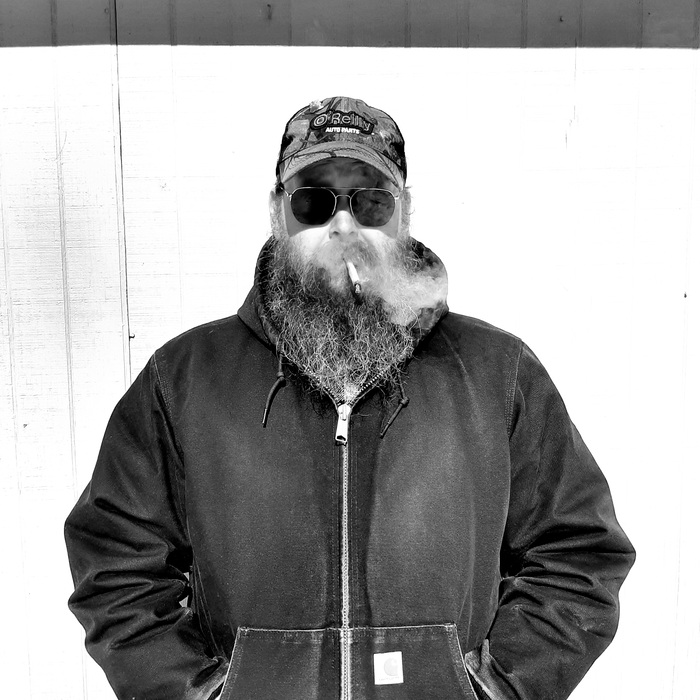
Mitchell writes the sort of rural-weird you only get when you’ve actually huffed dust, bled on gravel, and grown up around men who consider a Stetson a personality. Blurbs from Madison McSweeney, Xavier Garcia, and Edwin Callihan peg him as a storyteller of grime, guts, and wicked humor, and the collection arrives via Filthy Loot Press, an indie home for the beautifully unhinged.
This is a short story collection that keeps its boots in the Ozarks and its teeth in your calf. The opener, “Release the Horse,” follows a narrator who frequents a neighbor’s barn to watch a handmade, maybe unholy horse run, which goes about as well as you’d expect when tweakers treat it like a pony ride. “Muscular Devotion” drops us into a backwoods church that worships brawn, pain, and something named Brother Daniel that looks like a Strongman trophy bred with a boil. “Big Baby” is a fishing tale where the river keeps a very large secret and a jar of stinkbait becomes a survival tool. “Little Man” plays like Ray Bradbury got corn-fed to the point of rot, with two boys finding a dead, many-limbed visitor and one of them being the nastiest kind of curious. “She Catches Birds” starts as a meet-cute with a rescuer who nets a hummingbird in a grocery store and ends with a quiet, awful swerve that makes you rethink who needs saving. The rest of the pieces keep pace: bodies, belief, and folklore squeezed until they squeal.
Mitchell’s big obsessions are right there in the titles. Animals and animality. Bodies as meat, clay, and currency. Faith as a fight gym. The country as a myth engine that prints legends when institutions rot. The horse in the opener is the book’s mission statement: something assembled out of mud, teeth, roots, and dream logic that still runs like hell. The cult in “Muscular Devotion” literalizes American masculinity as a church, then locks it in a cellar until it grows into an eight-foot problem. “Big Baby” turns a cryptid into a neighborhood boundary agreement. “Little Man” asks what makes a person a person, then answers with a stick and a shiver. “She Catches Birds” skewers the performance of care, raising the question of whether salvation is an act or a costume.
The style is pure barn-floor poetry. Dialect that never turns into cartoon. Sentences that swing like a tire iron, then tack on an image so clean it hurts. Mitchell’s narrators talk like they’ve got a Marlboro in their teeth and a story they don’t want to tell but can’t stop telling. The humor is obscene in the best way, a relief valve for the dread. He can do nasty and he can do tender, sometimes in the same paragraph.

Under the gore there is a sustained argument about how communities metabolize violence. Nobody in these stories trusts cops, doctors, or pastors, so the town builds its own answers: handmade horses, amateur militias, folk pacts with monsters, sweat-as-sacrament gyms. Desire and harm keep sharing a bunk. Sex is complicated, sometimes brutal, sometimes weirdly sacred, always honest about what bodies want and what they cost. The collection stacks episodes where people choose complicity because the alternative is admitting their lives are smaller than the myths they inherited. The horror is not only the chomp and crunch. It is the way neighbors choose stories that let the blood keep flowing in the same old ditches.
Originality: High. This is not movie-option bait. The book feels born of place and voice, not algorithm. A mud-built horse with a taste for backflesh, a church of swole worshipers and their idiot-angel, a river cryptid with a palate for stinkbait, a purple glass coffin in the trees. That is not the Funko Pop aisle.
Pacing: Tight. Stories start mid-stumble and finish in a sprint. A couple endings are quick clips instead of landings, sure, but the momentum is delicious. You rarely check the page count; you’re too busy sniffing the air for whatever just cracked that branch.
Characters: They are sketched fast yet vivid. Mitchell is more Flannery O’Connor flash-bang than multi-chapter psychology, but a few pages with his people and you know how they spit, flirt, and lie. The female characters are sometimes framed through male gaze on purpose, but now and then the camera lingers a beat too long.
Scare factor: More unease and gut-turn than jump scare. When it bites, it bites hard. The barn scene in “Release the Horse” is nightmare fuel. The reveal of Brother Daniel in “Muscular Devotion” is capital H Horrid. “She Catches Birds” is the quietest and maybe cruelest.
Strengths
- Voice that feels lived in. You can hear the boots on linoleum.
- Inventive monsters rooted in folklore texture, not CGI vibes.
- Humor that actually lands and doesn’t sand down the teeth.
- Images you will not wash off: spinal manes, halogen-lit crosses, a bird net floating like a ghost volleyball court.
Critiques
- The book sometimes mistakes escalation for revelation. Bigger is not always deeper.
- A couple stories let women function as heat sources or mirrors for male rot rather than as agents with equal weirdness. When the collection gives a woman the wheel, like in “She Catches Birds,” it sings. More of that, please.
- Endings can snap shut a little fast. Let a horror echo. Let it walk the room.
“Release the Horse” is a banger opener that nails tone, place, and the collection’s thesis about handmade myths going feral. “Muscular Devotion” is the showpiece: sweat, faith, guns, and a body-horror reveal that will make your skin contemplate unionizing. “Big Baby” is the perfect campfire moral about local monsters and local justice. “Little Man” is the creepiest because it understands children too well. “She Catches Birds” left me quiet, then mad, then quiet again.
So… is this thing good or just loud? It is both, but mostly good. Mitchell writes with empathy for his dirtbag saints and his doomed rubes. He is not punching down. He’s mapping the same American backroads that birthed urban legends and alt-country, then salting them with cosmic wrongness. The book is bold, atmospheric, and weird in ways that feel personal, not performative. It belongs on the shelf with indie horror that takes risks and bleeds for it.
Weird, daring, and original enough to make us at BWAF grin like a raccoon in a dumpster. Several stories are stick-a-flag-in-it special, and the voice is the real deal.
TL;DR: Filthy, funny, and folkloric, Release the Horse corrals rural myths and toxic devotion into a pen of body horror and bad decisions. The prose kicks, the images bruise, and the best stories are keepers. A few endings skid, and some gender gazes wobble, but the collection rips.









Recommended for: Weird fiction freaks, fans of backwoods dread, and anyone who thinks a horse made of teeth sounds like a party.
Not recommended for: Horse girls who do not want to see the word horse redefined in meat terms.
Published July 1, 2025 by Filthy Loot.
 The Blog Without a Face
Leave a comment