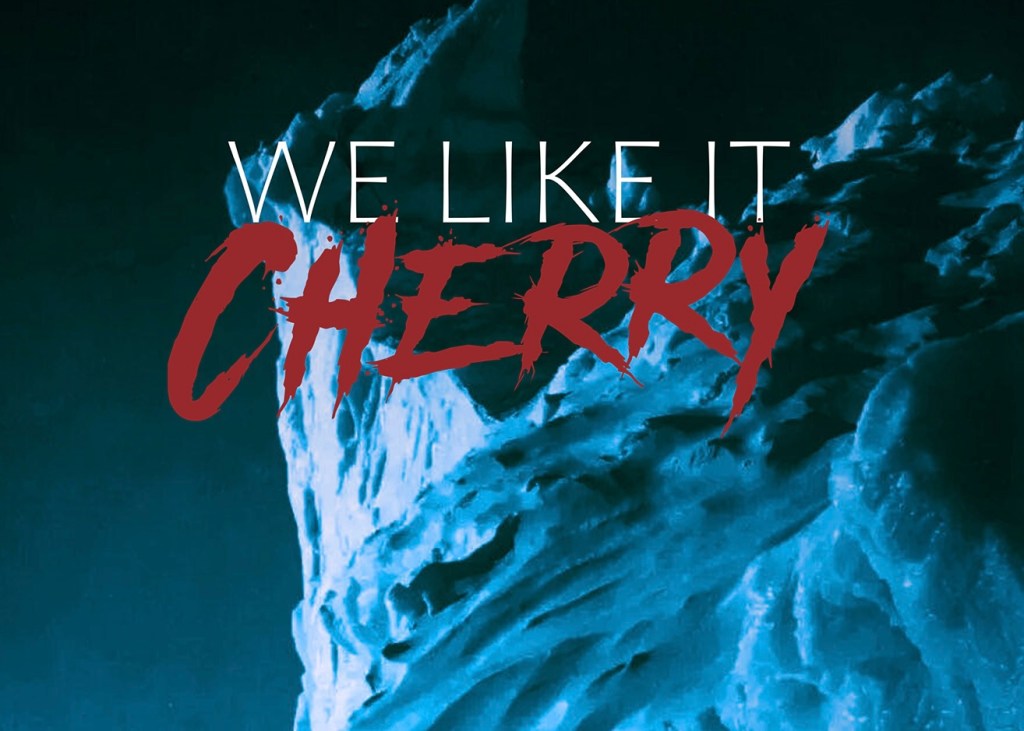

Jacy Morris, a registered member of the Confederated Tribes of Siletz, has been carving out a niche in the horror and dark fiction scene with a punk rock snarl and a horror movie junkie’s heart. Hailing from Portland, Oregon, where he’s been teaching English and social studies since 2005, Morris infuses his work with a raw, outsider’s perspective, often blending visceral horror with cultural commentary. His prior works, like This Rotten World and The Taxidermied Man, lean heavily into gritty, apocalyptic, and grotesque territory. We Like It Cherry marks a bold evolution, diving into Arctic horror with a Native American lens, inspired by a nightmare that Morris credits to his rebellious subconscious. This is his most ambitious work yet, tackling themes of identity, colonialism, and survival with a bloody, frostbitten fist.
Ezra Montbanc, a disillusioned Native American journalist, hosts Indigenous Insider, a low-budget show documenting Indigenous celebrations across North America. Tired of the homogenized powwows and fry bread monotony, Ezra’s cynicism is at an all-time high when he’s invited by Maq, a mysterious Winoquin tribesman, to film a rare festival on Baffin Island’s icy fringes. With his lover and cameraman Stu, producer Scott, and crude soundman Jonesy, Ezra ventures to the remote Winoquin village, a place untouched by modernity, where the sun never sets and the air bites like a pissed-off wolverine. What begins as a routine documentary shoot spirals into a chilling exploration of ancient rituals, survival, and the cost of authenticity. The Winoquin’s traditions, shrouded in secrecy and tied to the land’s brutal history, force Ezra to confront his own identity and the lies he’s told himself to survive in a world that demands conformity.
We Like It Cherry is a devastating meditation on identity, cultural erasure, and the primal urge to survive. Morris uses the Winoquin, a fictional tribe distinct from the Inuit, to explore the tension between authenticity and assimilation. Ezra’s internal conflict, his struggle to reconcile his Native heritage with the performative “Indianness” demanded by his job, mirrors the broader historical trauma of Indigenous peoples stripped of their traditions by colonial forces. The Winoquin’s ritualistic cannibalism, introduced early in a harrowing historical vignette, isn’t just shock value; it’s a symbol of consuming the “other” to preserve one’s own strength, a twisted reflection of how marginalized cultures are forced to devour or adapt to survive. The glacier, dubbed the “land of the dead,” is a potent metaphor for the frozen, unyielding weight of history, where past traumas and spirits linger, refusing to be buried.

The novel also dives into queer identity through Ezra’s relationship with Stu, a love he hides for fear of losing his meager fame. The Winoquin’s fluid, communal approach to love, where gender and sexuality are irrelevant as long as the tribe thrives, contrasts sharply with Ezra’s internalized shame, shaped by a homophobic father and a judgmental society. The spirits’ questioning of Ezra’s need for fame (“What good is being known if the person everyone knows isn’t real?”) cuts like a harpoon, exposing the futility of chasing validation in a world that doesn’t give a shit about your truth.
Symbolism is heavy but not heavy-handed. The “cherry” of the title refers to the red, raw flesh of the consumed, a nod to both vitality and violence. There are metaphors for inevitable destruction of traditions under cultural erosion that also offers liberation, freeing Ezra from his self-imposed cocoon of lies. The cave’s mysterious pool, with its life-giving, viscous liquid, evokes a womb-like rebirth, suggesting that survival demands embracing one’s raw, unfiltered self.
Morris’s prose is a jagged ice pick. It’s sharp, unapologetic, and occasionally messy. He writes with the urgency of a man running from a polar bear, blending visceral descriptions (“blood dripping thick like syrup”) with introspective monologues that channel Anthony Bourdain’s world-weary philosophizing. The dialogue crackles with irreverent humor, especially in Ezra’s banter with Stu and Jonesy’s crude outbursts, grounding the horror in human relatability. The historical opening, with its stark, almost mythic tone, sets a chilling stage.
Morris’s strength lies in his ability to paint the Arctic’s desolation with vivid, sensory detail (the “white ice blinding” the hunted, the “howl of the ocean wind” ruining soundtracks). His use of Ezra’s “mental couch” as a narrative device, where spirits probe his psyche, is a clever way to externalize internal conflict, though it occasionally feels like a crutch when the action slows. The pacing stumbles in the middle, with repetitive descriptions of the crew’s discomfort, but it roars back to life in the final act chock full of heart-pounding intensity.
This book is a fucking revelation for anyone craving horror that’s more than cheap jump scares. Morris’s exploration of Indigenous identity through a horror lens is bold and unflinching, offering a perspective rarely seen in the genre. The Winoquin’s rituals are horrifying yet culturally coherent, avoiding the “savage native” trope by grounding their actions in survival and spirituality. Ezra and Stu’s relationship is a standout, their love a beacon in the icy hellscape, made more poignant by Ezra’s self-loathing. The Arctic setting is incredibly rendered with relentless cold and endless daylight amplifying the sense of isolation and dread. The epilogue is a gut-wrenching reflection on survival’s cost, delivering a rare emotional depth for horror.
The novel has its bumps. The middle sags under repetitive scenes of the crew bitching about the cold, which feels like padding. Jonesy’s crude humor, while initially amusing, wears thin and borders on caricature. The Winoquin’s motivations, while symbolically rich, can feel opaque, leaving some plot threads (like the spirits’ sudden benevolence) unresolved. Morris’s prose, while evocative, occasionally overreaches with philosophical tangents that disrupt the narrative flow. The “mental couch” device, though innovative, risks feeling gimmicky when overused. Finally, the novel’s reliance on Ezra’s perspective limits insight into the Winoquin, making them more mythic than human at times.
We Like It Cherry is an incredible Arctic horror, blending cultural critique with visceral terror. It’s a damn bold swing that lands more often than it misses. In a genre bloated with predictable slashers and haunted house drivel, Morris delivers a story that’s as raw and red as the flesh it describes, earning its place among the best of contemporary horror.
TL;DR: A chilling, introspective plunge into Arctic horror that skewers cultural erasure and personal denial with a bloody harpoon. Not perfect, but damn close to unforgettable.








Recommended for: Horror fans who crave weird, culturally rich narratives and don’t mind their sushi sentient.
Not recommended for: People who think fry bread is the pinnacle of cuisine or who faint at the sight of a seal’s sad eyes.
Published August 5, 2025 by Tenebrous Press
 The Blog Without a Face
Leave a comment