
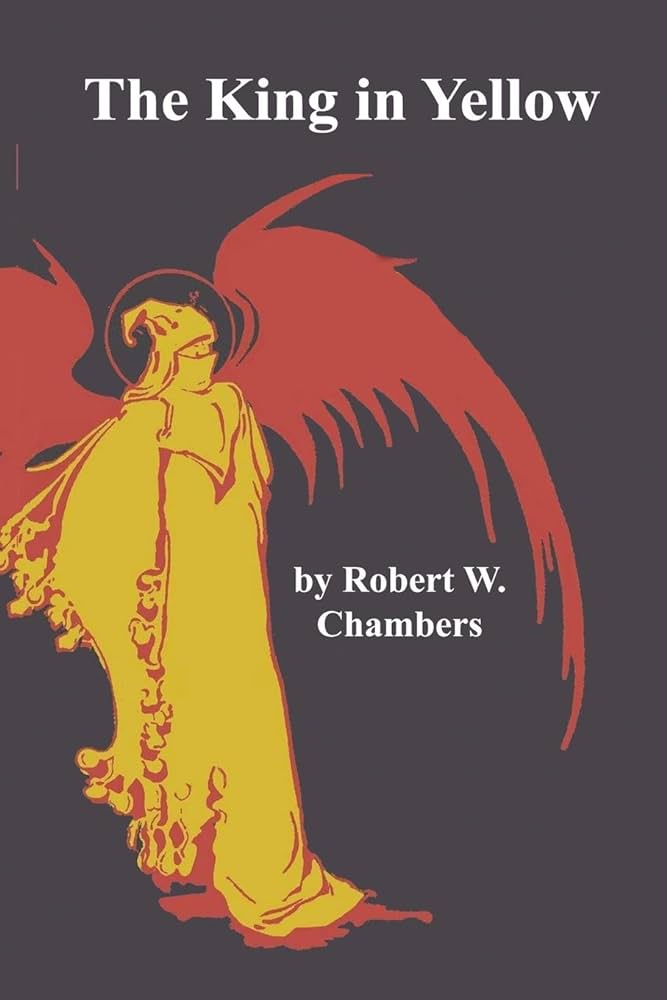
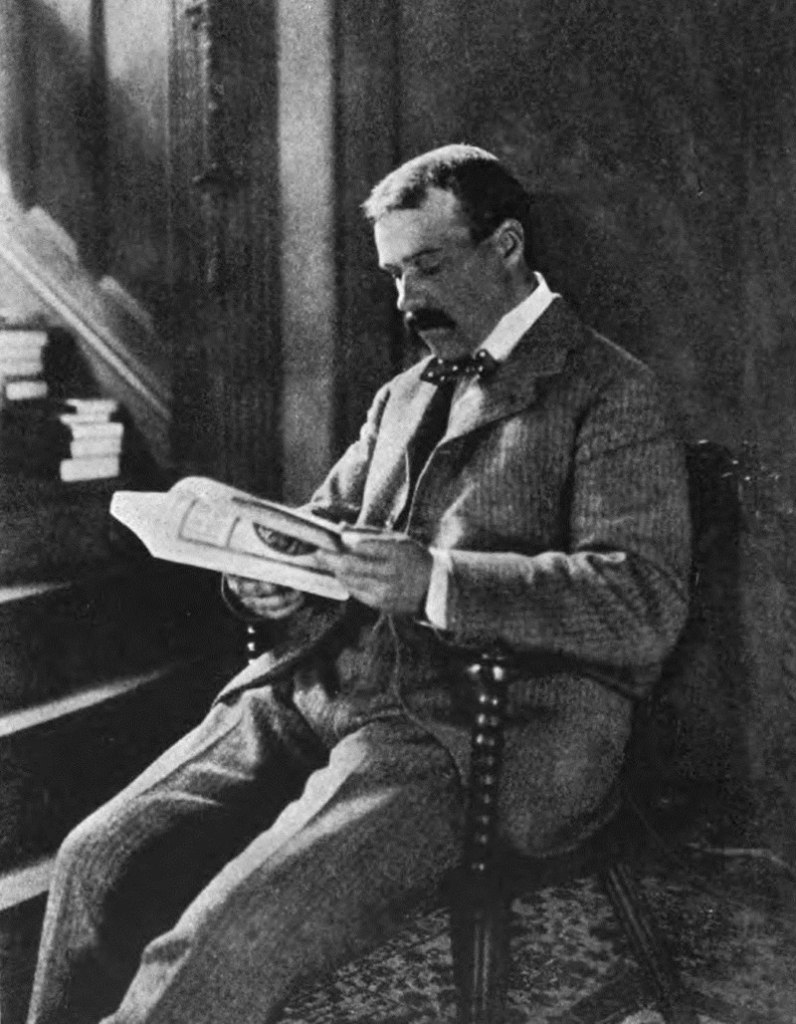
Robert W. Chambers, born in 1865, was a man of two worlds: a Brooklyn-born artist who dabbled in bohemian Parisian life before churning out fiction like a literary slot machine. Known primarily for The King in Yellow (1895), he was a chameleon. His work spans horror, fantasy, sci-fi, romance, and historical fiction, as if he couldn’t decide whether to haunt you or make you swoon. His early years as an artist in Paris’s Latin Quarter, hobnobbing with creatives, seep into the book’s vivid settings and characters, especially in its later, less creepy tales. By the time he wrote The King in Yellow, Chambers was riding the fin-de-siècle wave of decadent weirdness, drawing from the likes of Poe and Bierce, while foreshadowing Lovecraft’s cosmic dread. Yet, unlike Lovecraft, who’d rather die than write a love story, Chambers wasn’t afraid to pivot from eldritch horror to mushy romance, which is both his charm and his Achilles’ heel. This book, his magnum opus, captures a moment when he was young, ambitious, and just unhinged enough to conjure something timelessly strange.
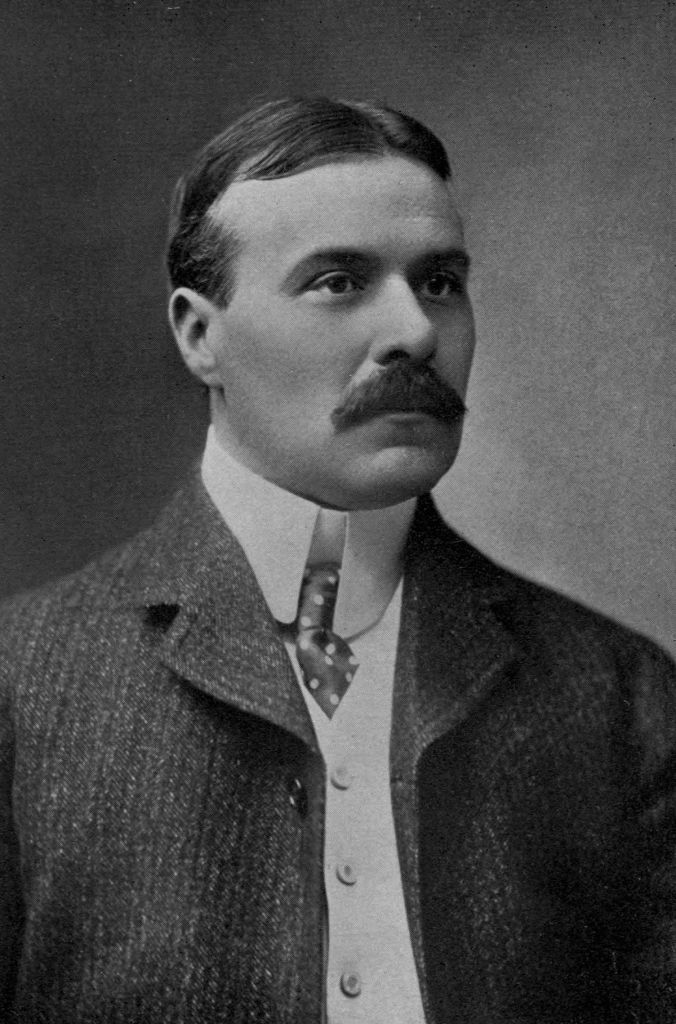
The King in Yellow is a collection of ten short stories, loosely tied by the titular forbidden book—a play so dangerous it drives readers insane. The first half dives into this mythos, set in a dystopian, slightly futuristic America or bohemian Paris, where the play’s influence creeps like a bad trip. “The Repairer of Reputations” follows Hildred Castaigne, a delusional megalomaniac obsessed with the play and his own royal destiny, weaving a tale of paranoia and betrayal in a 1920s America with legalized suicide chambers. “The Mask” and “In the Court of the Dragon” delve deeper into the play’s supernatural pull, blending art, obsession, and cosmic terror. “The Yellow Sign” is the standout, a chilling tale of an artist and his model stalked by a grotesque figure tied to the play’s curse. The second half shifts gears, trading cosmic horror for romantic tales of Parisian artists—think La Bohème but with less tuberculosis and more awkward flirting. Stories like “The Street of the Four Winds” and “Rue Barrée” focus on love, longing, and the bohemian hustle, with only faint echoes of the earlier dread.
At its core, The King in Yellow is about the seductive danger of art and knowledge. The forbidden play is a metaphor for ideas that consume you like Nietzsche’s abyss staring back, but with a crown and a creepy mask. It’s no coincidence that the play’s imagery (Carcosa, the Pallid Mask, the Yellow Sign) reeks of cosmic indifference, a proto-Lovecraftian vibe where human ambition and sanity crumble before incomprehensible forces. The first four stories hammer this home: Hildred’s descent into megalomania, the sculptor’s obsession in “The Mask,” the artist’s doom in “The Yellow Sign”—all are victims of art’s power to unmoor reality. Chambers taps into a fin-de-siècle fear of decadence and unchecked imagination, where beauty and madness are two sides of the same cursed coin.

Symbolically, the Yellow Sign itself is a masterstroke: a glyph that’s never fully described yet feels like a key to some eldritch truth. Carcosa, with its black stars and twin suns, is a place of existential alienation, a warped mirror of our world where meaning unravels. The Pallid Mask, both a character and a concept, embodies the terror of facing something that knows you better than you know yourself. These symbols don’t just haunt the characters, they haunt the reader, leaving you wondering what the hell you’d do if you stumbled across that damn play.
The latter stories, though, ditch this cosmic weight for lighter themes of love and artistic struggle. They’re not bad, but they feel like Chambers got bored of scaring people and decided to play matchmaker instead. The shift dilutes the book’s focus, but it underscores Chambers’ belief that art, whether it drives you mad or makes you fall in love, is a force to be reckoned with.
Chambers’ prose is a mixed bag, like a cocktail made by a genius bartender who’s already three drinks in. When he’s on, he’s on. His descriptions of Carcosa and its alien landscape are hauntingly poetic, blending vivid imagery with a creeping sense of wrongness. Lines like “Strange is the night where black stars rise, And strange moons circle through the skies” stick with you, evoking a world that’s both beautiful and terrifying. His horror stories lean on suggestion, letting the reader’s imagination fill in the gaps, which is why they still pack a punch 130 years later.

But then there’s the romance half, where Chambers’ prose turns florid and overwrought, like he’s trying to channel a Victorian love letter. The dialogue in stories like “Rue Barrée” can feel stilted, with characters spouting earnest declarations that belong in a melodrama. He’s clearly more comfortable painting eerie atmospheres than crafting realistic conversations, and the shift from cosmic dread to lovesick artists feels like whiplash. Still, even in the weaker stories, his knack for vivid settings—Paris’s bustling Latin Quarter, New York’s dystopian streets—keeps you hooked. It’s just a shame he didn’t trust the weirdness to carry the whole book.
Let’s not bullshit here: The King in Yellow is a flawed masterpiece. Its strengths lie in its originality and ambition. Chambers birthed a mythos that influenced Lovecraft, Gaiman, and even True Detective. The concept of a forbidden text that breaks minds is so damn clever it’s practically become a genre unto itself. The first four stories are tight, unsettling, and dripping with atmosphere, with “The Yellow Sign” being a near-perfect blend of psychological and supernatural horror. The prose, when focused, is quotable as hell: “I pray God will curse the writer, as the writer has cursed the world with this beautiful, stupendous creation.” That’s the kind of line you scrawl on your notebook in a fit of existential dread.
But the book’s not perfect. The romance stories, while charming in their own right, feel like they wandered in from another book. They lack the urgency and impact of the horror tales, and their inclusion makes the collection feel schizophrenic. Chambers’ ambition to blend genres is admirable, but it’s like he couldn’t commit to the dark side. The prose can also veer into self-indulgent territory, especially in the romantic bits, where it’s less “poetic” and more “trying too hard to impress a date.” And let’s be real: some of the characters, especially in the later stories, are flatter than a pancake left out in the rain.
The King in Yellow mythos is a stroke of genius, laying the groundwork for cosmic horror. Few books from 1895 can claim that kind of legacy. When it’s good, the prose is sublime; when it’s bad, it’s a florid mess. Chambers’ lyrical highs are undercut by his tendency to overegg the pudding. The first half delivers chills that linger like a bad dream. The rest? Not so much, but the mythos carries enough weight to keep you uneasy. Tackling art, madness, and cosmic dread in one book is ballsy. Chambers doesn’t always stick the landing, but the attempt is worth applauding.
TL;DR: The King in Yellow is a gloriously weird, uneven ride that’s half cosmic nightmare, half sappy romance. Its haunting mythos and poetic prose make it a must-read for horror fans, even if it occasionally trips over its own ambitions.





Recommended for: If you’re a Lovecraft stan who doesn’t mind a side of Parisian puppy love, this book’s your jam.
Not recommended for: If you can’t handle a book that switches from existential dread to “will-they-won’t-they” faster than you can say “Carcosa,” steer clear.
Published 1895

 The Blog Without a Face
Leave a comment