

Ari Aster, the twisted brainchild of Eddington, has been carving his name into cinema’s underbelly since Hereditary (2018) made us question family dinners and Midsommar (2019) turned sunlight into a nightmare. His third outing, Beau Is Afraid (2023), was a three-hour Oedipal acid trip that split fans like a cleaver through bone, some called it genius (I’m personally in this camp), others a self-indulgent mess. Aster, now 39, writes and directs with the precision of a surgeon and the glee of a kid torching ants with a magnifying glass. His scripts are labyrinths, his visuals a punch to the psyche. Eddington marks his pivot from horror to a blackly comic neo-Western, proving he’s not content to stay in one sandbox. With A24’s backing and a knack for making audiences squirm, Aster’s built a reputation as a provocateur who’d rather burn the house down than paint it beige.
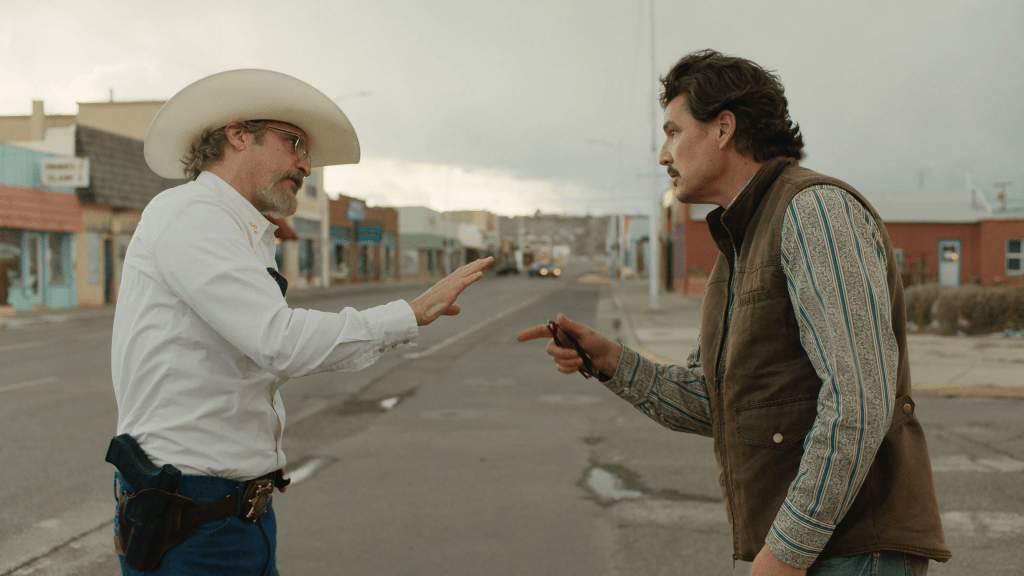
In May 2020, the fictional town of Eddington, New Mexico (pop. 2,634), is a tinderbox of small-town grudges and pandemic paranoia. Sheriff Joe Cross (Joaquin Phoenix), a wheezing, conspiracy-addled sad sack, locks horns with Mayor Ted Garcia (Pedro Pascal), a slick progressive pushing mask mandates and an AI data center nobody wants. As Joe runs for mayor to “free” the town, the murder of George Floyd sparks protests, and a shady influencer (Austin Butler) stirs the pot. What starts as a quirky feud escalates into a chaotic stew of violence, betrayal, and social media-fueled madness. Aster’s Eddington is a satire of a fractured America, blending Western tropes with 2020’s cultural dumpster fire, delivering a wild ride that’s equal parts hilarious and harrowing.

Aster’s Eddington is a warped mirror held up to America’s 2020 breakdown, reflecting a nation unglued by isolation, misinformation, and tribalism. The film doesn’t pick sides, it skewers everyone, from mask zealots to conspiracy nuts, exposing the absurdity of dogmatic posturing. Joe’s asthma and refusal to mask symbolize a desperate grasp for control in a world spiraling into nonsense, while the looming AI data center, framed like Kubrick’s monolith by cinematographer Darius Khondji, stands as a cold omen of tech’s role in amplifying division. Khondji’s sun-scorched vistas and claustrophobic close-ups make Eddington feel both vast and suffocating, a town where ideologies draw blood like six-shooters. The script’s dialogue crackles with biting wit, lurching from Coen-esque absurdity to gut-churning dread, though it sometimes overreaches, juggling too many hot-button issues (COVID, BLM, white privilege) without fully digesting them.

Symbolism runs thick: Joe’s campaign truck, plastered with “your being manipulated” signs, is a middle finger to grammar and reason, embodying the era’s sloppy rage. Social media feeds, rendered with eerie realism, bleed into the frame, a visual nod to how screens became our reality in lockdown. Aster’s writing style leans into tonal whiplash, shifting from satire to crime thriller to surreal horror, reflecting a society that couldn’t decide if it was angry, scared, or just bored. The film’s refusal to offer answers (“why did we lose our minds?”) feels both honest and maddening, a provocation that forces you to wrestle with its bleakness. It’s not about healing; it’s about staring at the wound. This isn’t escapism, it’s a reminder that our collective psyche is still limping, and Aster’s not here to hand out crutches.

Eddington is a fucked up beast, and it is absolutely fresh. Aster doesn’t just tackle 2020; he vivisects it, crafting a neo-Western that feels like No Country for Old Men snorted a line of Twitter-fueled paranoia. The premise, a sheriff’s anti-mask crusade spiraling into murder and mayhem, is unlike anything else, pissing on timid COVID dramas that came before. Joaquin Phoenix’s Joe is a tragic fool, his pathetic arrogance brought to life with a squeaky, unraveling intensity that’s both pitiable and infuriating. Emma Stone’s Louise, a doll-obsessed wreck, and Pedro Pascal’s smarmy mayor add layers to a cast that’s as colorful as a bruise. The horror isn’t visceral like Hereditary but psychological, creeping in as characters’ delusions turn deadly, making you dread the next bad decision.

Pacing is where Eddington wobbles. The first half rambles like a drunk uncle at a barbecue, lingering on small-town squabbles before exploding into a deranged thriller. Despite its 145 minute length, some threads, like Austin Butler’s cult leader, feel like cameos that needed more meat. The script’s ambition to cover every 2020 fault line (masks, protests, conspiracies) can feel like a buffet with too many dishes, leaving some ideas half-baked. Yet, when it clicks, it’s electric: a single-take protest scene and a humiliating fundraiser showdown are Aster at his peak, blending tension and dark humor. Khondji’s cinematography is a knockout, turning dusty streets into a stage for ideological shootouts, and the score by Bobby Krlic and Daniel Pemberton swings from Leone-esque stings to ominous drones, amplifying the chaos.

Character depth is a mixed bag. Joe’s arc is compelling, a man chasing heroism only to drown in his own flaws, but others, like Michael Ward’s Black deputy, feel like tokens for “discourse” rather than people. Still, the film’s refusal to coddle its audience is refreshing. It trusts you to keep up with its manic shifts. The horror lies in its realism: we’ve all seen these fights, these feeds, these breakdowns. It’s not perfect, but it’s fearless, and in a sea of safe remakes, that’s worth a hell of a lot.
TL;DR: Eddington is a wild, cynical neo-Western that skewers America’s 2020 meltdown with dark humor and visual flair. Flawed but fearless, it’s a provocative gut-check that’ll leave you rattled and laughing.








 The Blog Without a Face
Leave a comment