

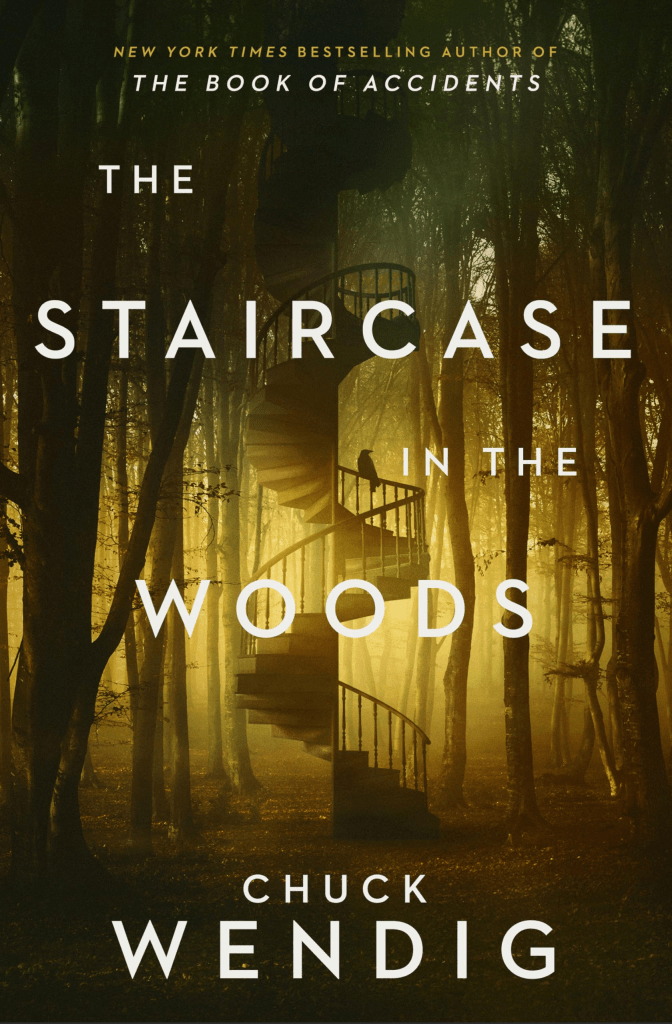
Chuck Wendig, a Bucks County, Pennsylvania resident, is a prolific New York Times bestselling author known for his genre-blending novels like Wanderers, The Book of Accidents, and Wayward. His work spans horror, sci-fi, and young adult fiction, with a knack for gritty, visceral storytelling. A Sundance Screenwriters Lab alum, Wendig’s also penned comics, games, and Star Wars novels (Aftermath trilogy). His blog, terribleminds, is a treasure trove of irreverent writing advice, reflected in books like Damn Fine Story. With a career built on blending pulp energy with sharp social commentary, Wendig’s a mainstay in mainstream speculative fiction. His horror leans accessible, often polished for broad appeal, which has earned him both fans and detractors. The Staircase in the Woods continues his trend of crafting cinematic, crowd-pleasing narratives, but it’s a far cry from his riskier early works like Blackbirds.
In The Staircase in the Woods, five teenagers ventured into the Pennsylvania woods in 1998, but only four returned. Decades later, the survivors, Owen, Lore, Hamish, and Nick, are summoned by Nick’s terminal illness to reunite in New Hampshire. The invitation, invoking their old “Covenant” pact, stirs memories of their lost friend, Matty, and a mysterious staircase they encountered that fateful night. As they confront their past, the group uncovers a malevolent force tied to a house that’s more than it seems. The narrative weaves their fractured friendships, buried guilt, and a creeping supernatural threat, culminating in a battle against a house that feeds on pain. Wendig’s tale is a horror-mystery hybrid, blending urban legend with psychological torment, as the characters grapple with trauma, loyalty, and the cost of survival in a world where the past never stays buried.
The Staircase in the Woods tackles friendship’s fragility, the weight of unresolved trauma, and the seductive pull of nostalgia, wrapped in a supernatural framework. The titular staircase, a real-world phenomenon Wendig stumbled upon in New Hampshire, symbolizes a liminal space—neither here nor there, a threshold between past innocence and present regret. It’s a potent metaphor for the characters’ inability to move forward, their lives stunted by a shared tragedy. The house, a grotesque amalgamation of architectural styles, embodies collective pain, absorbing and regurgitating human suffering like a psychic landfill. Wendig’s exploration of how trauma festers, likened to “dry rot” or “black mold” in friendships, offers a grounded philosophical anchor, questioning whether bonds can be salvaged or if they’re doomed to collapse under the weight of betrayal.

Wendig’s style is conversational, peppered with crude humor and pop-culture quips, which suits the irreverent tone of a group of flawed, aging misfits. Yet, it often feels like a scriptwriter’s prose, prioritizing snappy dialogue over introspective depth. The cultural implications are clear: in an era obsessed with nostalgia, the book critiques our tendency to romanticize the past while ignoring its scars. It’s a commentary on how we cling to old promises, like the group’s “Covenant”, even when they’re hollow. However, the symbolism, while evocative, lacks subtlety, hammering home the house-as-trauma metaphor without trusting readers to connect the dots. The philosophical bent, though present, feels secondary to the plot’s relentless forward motion, as if Wendig’s more interested in setting up a Netflix pitch than plumbing existential depths. This mainstream polish dilutes the horror’s potential to unsettle, leaving a story that’s too safe to linger in the psyche like true dread should.
Wendig’s The Staircase in the Woods has a professional sheen that’s both its strength and its Achilles’ heel. The structure is tight, with chapters alternating between past and present, building a classic horror-mystery hook that grabs you like a bear trap. The pacing is cinematic, each scene meticulously storyboarded for maximum tension. Wendig’s knack for vivid imagery shines: a house with “rotten slats of siding” and “irises like black windows” is creepy. The urban legend of a staircase in the woods, inspired by real phenomena, grounds the horror in a tantalizing what-if that completely hooked me early on. Speaking of… let’s take a detour.

Picture this: you’re trudging through a forest, probably lost, definitely questioning your life choices, when you stumble upon a random staircase plopped in the middle of nowhere, like some cosmic interior designer got drunk and misplaced their latest project. Welcome to the urban legend of the “Staircases to Nowhere,” a creepy tale that exploded onto the scene in the mid-2010s, born in the feverish imagination of Reddit’s /r/nosleep, where people compete to scare the pants off each other with stories they swear are true. Around 2015, a user claiming to be a Search and Rescue officer, probably sipping coffee in their mom’s basement, spun a yarn about finding staircases deep in national parks, miles from any Starbucks or sign of civilization. These were stone, wood, or metal, sometimes pristine, sometimes crumbling, and always radiating serious “don’t climb me” vibes. The kicker? Supposedly, park rangers were told to steer clear and keep their traps shut, because nothing says “government conspiracy” like a rogue staircase.
The legend took off faster than a squirrel on an espresso bender, spreading from Reddit to TikTok, where influencers like Jessii Vee, with her 4.7 million followers, warned everyone in 2021 to avoid these staircases unless they wanted to star in their own personal horror flick. People started claiming they’d seen these steps everywhere, from Brazil’s jungles to Norway’s fjords, each story more unhinged than the last. Some said climbing them made you dizzy, others swore you’d lose time, and a few whispered you might vanish into a demon’s Airbnb. One guy in the Philippines allegedly climbed a jungle staircase, got chased by a dog, and poof, five years of his life were gone, like he hit fast-forward on his existential crisis. Another tale from 1940s Roswell, New Mexico, because of course Roswell, described a wooden staircase that hummed like a UFO and vanished overnight, leaving a scorched circle, probably because aliens hate bad architecture.
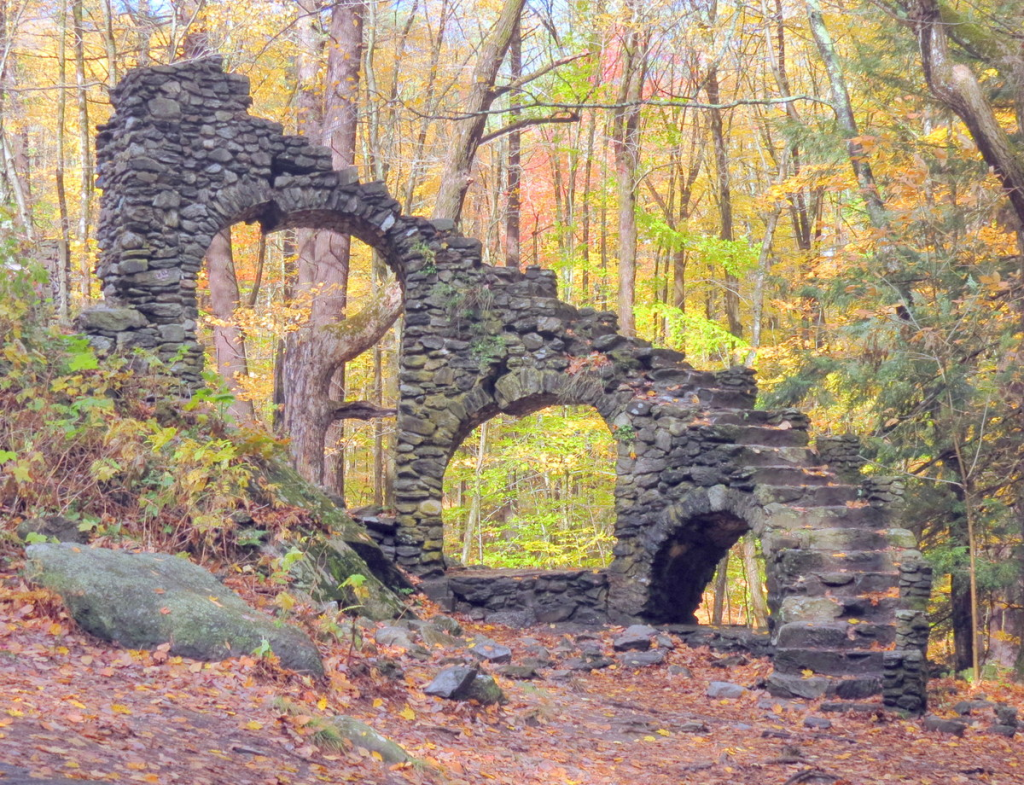
So, what’s the deal? Are these staircases portals to Narnia, satanic IKEA showrooms, or just the remnants of some hunter’s cabin that nature ate for lunch? The boring answer is probably the last one, abandoned structures like Madame Sherri’s 1920s chateau in New Hampshire, which burned down in 1962, leaving a lonely stone staircase that’s basically catnip for legend hunters.
Or take Cambodia’s Phnom Kulen, where a 2,000-foot staircase from an ancient city sits in the jungle, mocking hikers with its “I used to be important” energy. But where’s the fun in logic? The internet prefers the idea that these are gateways to hell or time-warps for people who didn’t sign up for interdimensional travel. Some even tie them to Native American lore, like Cherokee spirit portals, or ancient rituals where Etruscans stared at the sky from stone steps, probably wondering why their gods had such a thing for staircases.
Skeptics, those buzzkills, point out that /r/nosleep is fiction central, and the lack of photos, unless you count blurry Bigfoot-level snaps, screams hoax louder than a toddler in a candy store. Maybe some prankster’s out there building staircases just to mess with hikers, or maybe it’s performance art gone wild. Either way, the legend’s got legs, inspiring this very novel. At its core, this legend thrives because it’s creepy as hell. We love scaring ourselves silly with the idea that the woods are hiding something weirder than a raccoon with a grudge.
…end detour. But here’s where Staircase in the Woods stumbles, and it stumbles hard. The book feels like it was engineered in a lab for a streaming service deal, every beat polished to a glossy, Big 5-safe sheen. It follows the “urban legend becomes real” trajectory we’ve seen a million times, but lacks the originality to stand out. The characters, while distinct, are archetypes: Owen’s the self-loathing nerd, Lore’s the chaotic genius, Hamish the reformed fuckup, Nick the dying wildcard. They’re likable but predictable, their banter more sitcom than soul-baring. Wendig’s dialogue, while sharp, often feels like a crutch, masking shallow character development with quips about Dungeons & Dragons or 90s nostalgia. The horror, too, is frustratingly tame. The house’s automatons and grotesque imagery (piano-key teeth, blood like plastic beads) are unsettling but never push into boundary-breaking dread. It’s all too choreographed, like a haunted house ride where the scares are telegraphed.

The biggest sin? It’s formulaic. Wendig plays it safe, delivering a mainstream horror yarn that checks boxes. We’ve got trauma, friendship, and a spooky house without risking anything bold or experimental. The Covenant, meant to be the emotional core, feels like a plot device rather than a lived-in bond, and the resolution leans on tired exorcism tropes. This feels like a burger from a chain restaurant: satisfying in the moment but forgotten by morning. Wendig’s capable of more. He’s shown it in Wanderers’s apocalyptic sprawl, but here, he’s coasting, delivering a product that’s more marketable than memorable.
The Staircase in the Woods is not a disaster, Wendig’s too seasoned for that, but it’s a letdown for anyone who craves horror that takes risks. The professional structure and cinematic pacing keep it from being a total wash, and the staircase hook is a clever nod to real-world eeriness and urban legends. But it’s bland, a mainstream horror flick in book form, engineered for adaptation rather than innovation. The characters, while fun, lack depth, and the scares are too predictable to haunt. It’s like Wendig took a wild, weird idea and sanded it down to fit a Del Rey mold, leaving a story that’s safe, formulaic, and unlikely to satisfy readers who want their horror to linger like a bad dream. For a guy who’s built a career on bold swings, this feels like a bunt. Horror should unsettle, provoke, or at least surprise. This just delivers a competent shrug.
TL;DR: The Staircase in the Woods is a polished but predictable horror-mystery about friends haunted by a supernatural house. Cinematic pacing and a creepy premise can’t save its formulaic plot and shallow characters. Safe, mainstream horror that’s more Netflix pitch than nightmare fuel.







Recommended for: Nostalgia junkies who think IT needed more quips and fewer clowns.
Not recommended for: Anybody absolutely bored of another “haunted house eats trauma” retread.
Published April 29, 2025 by Del Rey.


 The Blog Without a Face
Leave a comment