

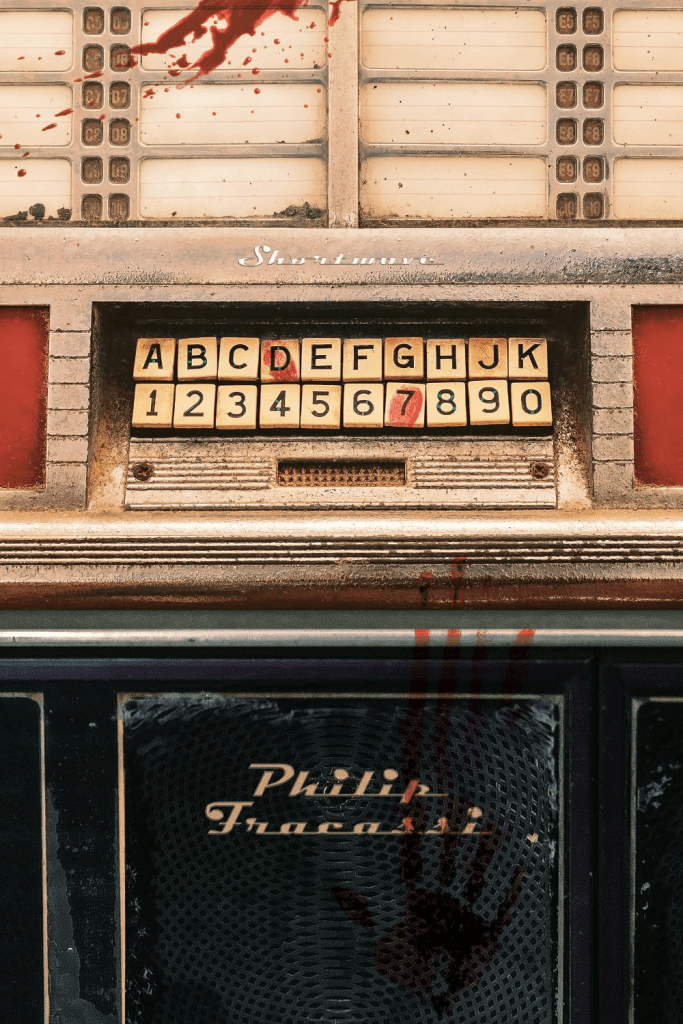
Philip Fracassi, a Los Angeles-based horror maestro, is back again with his knack for blending visceral terror with literary depth. His novels, like A Child Alone with Strangers and Boys in the Valley, have earned praise for their chilling atmospheres and psychological heft. Fracassi’s bibliography spans novels, novellas, and collections like Beneath a Pale Sky and Behold the Void, showcasing his versatility in crafting unsettling, character-driven tales. Fracassi’s stories often lean into cosmic dread and human frailty, avoiding typical trite tropes. Dude’s been busy this year. A few months ago, he took a detour from typical horror with a chilling science-fiction novel The Third Rule of Time Travel (our review here). Later this year, we’re promised a slasher in a retirement home? Ya know, whatever Fracassi writes, I’m fucking here for it.
D7 is Fracassi’s latest, a novelette coming from Shortwave Publishing. It traps readers in a seedy, neon-lit honky-tonk bar in the middle of nowhere, where Paul and Diane, a couple relocating from Los Angeles to Pennsylvania, stumble into a nightmare. After a lackluster diner meal, they seek a nightcap at Happy’s Bar & Grill, only to find themselves locked inside with a motley crew of locals. The bar’s jukebox, pulsing with eerie life, forces everyone to dance to a relentless, otherworldly tune, and the atmosphere grows increasingly sinister. As the night unravels, dark secrets about the bar’s past emerge, hinting at a supernatural force tied to a horrific crime. Fracassi crafts a claustrophobic, dread-soaked tale that blends psychological horror with a touch of the uncanny, keeping readers guessing about the true nature of the bar’s curse. It’s a raw, unsettling descent into guilt, vengeance, and the unknown.

D7 is a masterclass in atmospheric horror, wielding a premise that’s both absurdly simple, a jukebox that won’t let you stop dancing, and profoundly disturbing, tapping into primal fears of loss of control and collective guilt. Thematically, Fracassi explores complicity and retribution, dissecting how ordinary people can become monstrous when fear and self-preservation kick in. The bar’s patrons, trapped by their shared sin, reflect a microcosm of societal cowardice, where silence in the face of evil breeds its own punishment. The jukebox itself is a brilliant symbol, a mechanical deity fueled by rage, its glowing lights and relentless music embodying an unforgiving force that could be supernatural or psychological, or both. This ambiguity is Fracassi’s ace, inviting readers to question whether the horror stems from a vengeful spirit or the collective psyche’s unraveling.
The prose is vivid yet lean, painting the bar’s sweaty, wood-paneled decay with a poet’s eye for detail. Fracassi’s style channels the gritty lyricism of early Stephen King, but with a sharper, more cynical edge, as if Cormac McCarthy decided to write a ghost story in a dive bar. Lines like “the darkness itself eagerly pressing against the car windows, wanting inside” set a tone of oppressive dread, while the dialogue, peppered with Southern twang and raw desperation, grounds the surreal in human messiness. Philosophically, D7 grapples with the consequences of buried truths, suggesting that unacknowledged sins fester into something far worse than guilt. It’s a dark mirror to our own world, where denial fuels cycles of violence and retribution. The jukebox’s control over the dancers also evokes existential questions about free will, hinting at a cosmic indifference that laughs at human attempts to escape fate. Fracassi doesn’t spoon-feed answers, leaving readers to stew in the implications.
Fracassi nails the atmosphere, crafting a suffocating sense of entrapment that makes every page feel like a sweaty, inescapable fever dream. The bar itself is a character with its scuffed oak, flickering chandeliers, and pulsing jukebox. Fracassi creates a tactile, lived-in hell that’s vivid. The horror hits hard, not through gore (though there’s plenty of that), but through the psychological torment of being puppeted by an unseen force. The dancing sequences are particularly harrowing, blending absurdity with dread as bodies move against their will, exhaustion and terror mingling into a grotesque ballet.
Character-wise, Paul and Diane are relatable without being bland, their outsider status amplifying the reader’s own disorientation. The locals, from the guilt-ridden Maggie to the volatile Elroy, add texture, though some feel like archetypes (the gruff bartender, the angry drunk) that Fracassi could’ve pushed further into singularity. The pacing is mostly relentless, with the novelette’s tight 53-page structure ensuring no fat, though Sally’s backstory is unpacked through dialogue that occasionally feels expository. This is a minor quibble, as the tension snaps back with each jukebox-fueled dance, but a touch more subtlety in revealing the bar’s history could’ve elevated the mystery.

The ambiguity of the jukebox’s power (ghost, demon, or collective hallucination?) is a strength, keeping the story grounded in existential terror rather than cheap jump scares. However, the climax, while brutal and chaotic, risks feeling rushed, with the violence erupting so fast it slightly undercuts the emotional weight of the resolution. Fracassi’s refusal to fully explain the jukebox’s nature is bold, but a few more hints at its origins could’ve deepened the cosmic dread without sacrificing mystery.
Ultimately, D7 is an excellent piece of horror, blending a wildly original premise with suffocating atmosphere and prose that cuts like a rusty switchblade. The jukebox-as-antagonist is a stroke of genius, turning a mundane object into a symbol of relentless, unknowable vengeance. The themes of guilt and complicity hit hard, offering enough philosophical meat to chew on without preaching. The lean structure and vivid setting make it a standout, though the slightly expository backstory and rushed climax keep it from perfection. D7 is a damn fine example of what indie horror can do. Fracassi’s taken a dive bar and turned it into a crucible of existential dread. Cheers to that.
TL;DR: D7 traps a couple in a haunted honky-tonk where a malevolent jukebox forces everyone to dance to their doom. Fracassi’s vivid prose and bold premise deliver raw, atmospheric horror, exploring guilt and retribution in a sweaty, neon-lit nightmare. A helluva single sitting read.






Recommended for: Fucked-up fiends who’d sell their soul to a demonic jukebox for a night of existential terror and a cold beer.
Not recommended for: Cowards who’d faint at the thought of dancing in a blood-soaked bar with no exit.
Published May 27, 2025 by Shortwave Media


 The Blog Without a Face
Leave a comment