

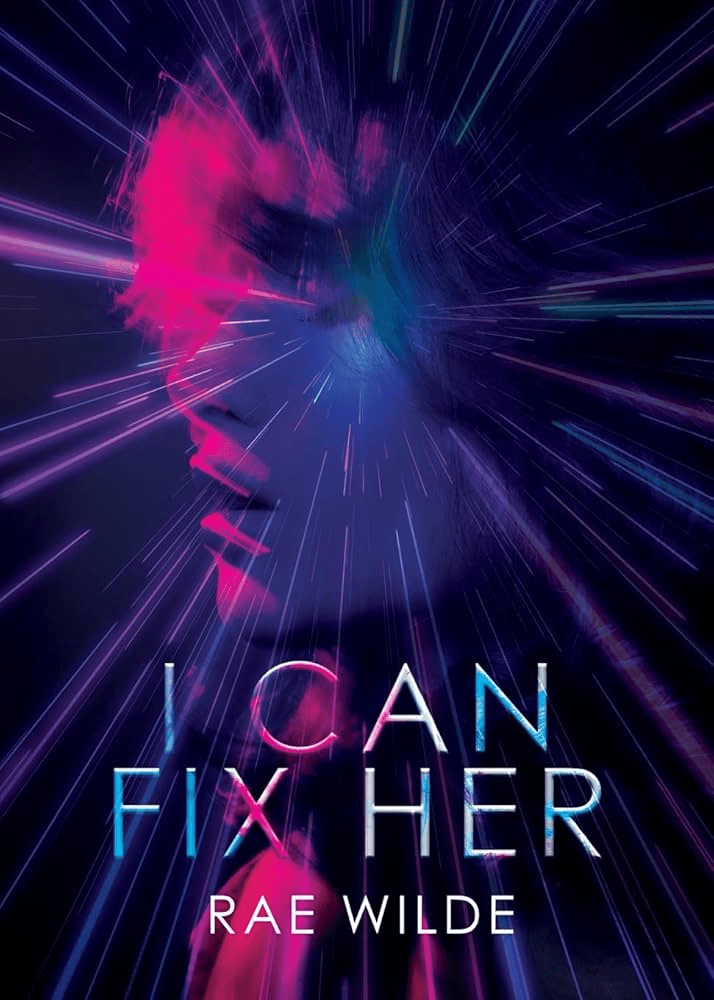
Rae Wilde, also publishing as Rae Knowles, is a queer author carving a jagged path through dark fiction. Her work thrives in the gritty, unpolished corners of indie horror, where she wields prose like a serrated blade. Previous titles like The Stradivarians and Merciless Waters showcase her knack for blending emotional rawness with grotesque imagery, earning her a cult following among readers who savor the unsettling. Her short stories, scattered across anthologies, pulse with visceral dread and queer defiance. Wilde’s output embraces the messy, the perverse, and the profoundly human. Her growing reputation as a voice in experimental horror makes I Can Fix Her a natural evolution of her boundary-pushing craft.
I Can Fix Her is a novella that follows Johnny, a woman spiraling through a surreal, time-looping nightmare as she clings to her enigmatic ex, Alice. Set in a disorienting urban landscape, the story unfolds over a week where reality warps. Dogs morph into eldritch beasts, snow falls in summer, and apartments drown in cosmic floods. Johnny’s obsession with fixing Alice, and their fractured relationship, drives her to increasingly desperate acts. The narrative weaves a tapestry of toxic love, jealousy, and psychological unraveling, with a backdrop of body horror and temporal collapse. As Johnny chases a second chance, the boundaries between self and other blur, pulling her into a feverish dance of desire and destruction. It’s a raw, queer horror tale that doesn’t flinch from the grotesque or the intimate, delivered in lush, disorienting prose.

Wilde’s I Can Fix Her is a screaming, bleeding exploration of toxic love, obsession, and the futility of trying to mold someone into your ideal. The novella’s core theme is the delusion of control. Johnny’s desperate belief that she can “fix” Alice mirrors humanity’s broader obsession with bending reality to fit personal desires. This is queer breakup horror at its most feral, dissecting the agony of loving someone who doesn’t love you back in the same way. The time-loop structure symbolizes the cyclical nature of unhealthy relationships, where hope and pain repeat ad infinitum, each iteration more warped than the last. Lucy, Alice’s dog, morphs into a grotesque, multi-headed creature, a Lovecraftian stand-in for the monstrous distortions love can breed when it festers into possession.
Wilde’s prose is a fever-dream cocktail of poetic and visceral, dripping with sensory overload. Blood, sweat, and cosmic voids mingle with the mundane clatter of coffee tables and takeout bags. The surreal structure, with its fragmented days and shifting realities, challenges linear storytelling, reflecting the chaos of Johnny’s psyche. The novella probes the cost of self-erasure in love, asking whether devotion is worth annihilation. It’s a defiant queer narrative that refuses to sanitize its characters’ flaws or desires, embracing their messy, destructive humanity. The void, a recurring symbol of absence and hunger, swallows both Johnny’s identity and the world around her, a stark metaphor for the emptiness of unreciprocated love. Wilde’s style, both lush and brutal, makes every sentence feel like a cut you didn’t see coming.
Wilde’s novella is a triumph of originality, blending indie-lit’s introspective edge with body horror’s visceral punch. The prose is a standout, incandescent yet precise, it paints Johnny’s unraveling with a mix of poetic beauty and grotesque detail. Lines like “Johnny’s blood is kinetic, nerves sparking with disabling electricity” hit like a shot of adrenaline, grounding the surreal in raw physicality. The characters, particularly Johnny, are achingly real; her obsession is both pitiable and terrifying, a portrait of someone who’d rather destroy herself than let go. Alice, while less fleshed out, serves as a perfect cipher for Johnny’s projections—her aloofness is a canvas for both desire and dread. The horror impact is potent, escalating from psychological unease to cosmic carnage. The scene where Lucy transforms into a multi-necked beast is a masterclass in weird fiction, evoking both awe and nausea.

Pacing is where the novella stumbles slightly. The fragmented, looping narrative, while thematically brilliant, can feel like a fever dream that’s too feverish, occasionally sacrificing clarity for chaos. Conventional readers might balk at the disorientation, but Wilde’s target audience (the freaks reading this) will eat it up like raw meat. The temporal shifts, while disorienting by design, sometimes blur key emotional beats, making it hard to track Johnny’s descent in the middle sections. Additionally, Alice’s underdevelopment, while intentional, leaves her feeling more like a symbol than a person at times, which might frustrate readers craving deeper insight into her motivations. Still, these are minor quibbles in a work that revels in its unapologetic strangeness, delivering a horror experience that’s as emotionally raw as it is bizarrely inventive.
Wilde’s novella is a vicious, gorgeous gut-rip of a story, marrying queer heartbreak with cosmic horror in a way that feels fresh and fearless. The prose is a knockout, and the thematic depth, exploring love as both salvation and destruction, hits hard for anyone who’s ever clung to a doomed relationship. The experimental structure and high weird quotient make it a perfect fit for readers who crave boundary-pushing indie horror, though its fragmentation might alienate those who prefer their scares straightforward. It’s not perfect; the pacing can drag in its middle haze, and Alice’s vagueness slightly dulls the emotional stakes. But for a novella that dares to be this raw, this strange, and this unflinchingly queer, it’s a standout that demands attention. Wilde’s crafted a toxic bonbon that’s as haunting as it is unforgettable.
TL;DR: A surreal, queer horror novella about toxic obsession, I Can Fix Her blends lush prose with body horror and temporal chaos. Johnny’s desperate love for Alice spirals into a cosmic nightmare, delivering raw emotion and grotesque beauty.







Recommended for: Time-looped lesbians who’d rather wrestle a three-headed bulldog than admit their ex is a lost cause.
Not recommended for: Normies who think “horror” is forgetting to mute their Zoom call during a breakup fight.
Published June 3, 2025 by CLASH Books.
 The Blog Without a Face
Leave a comment