
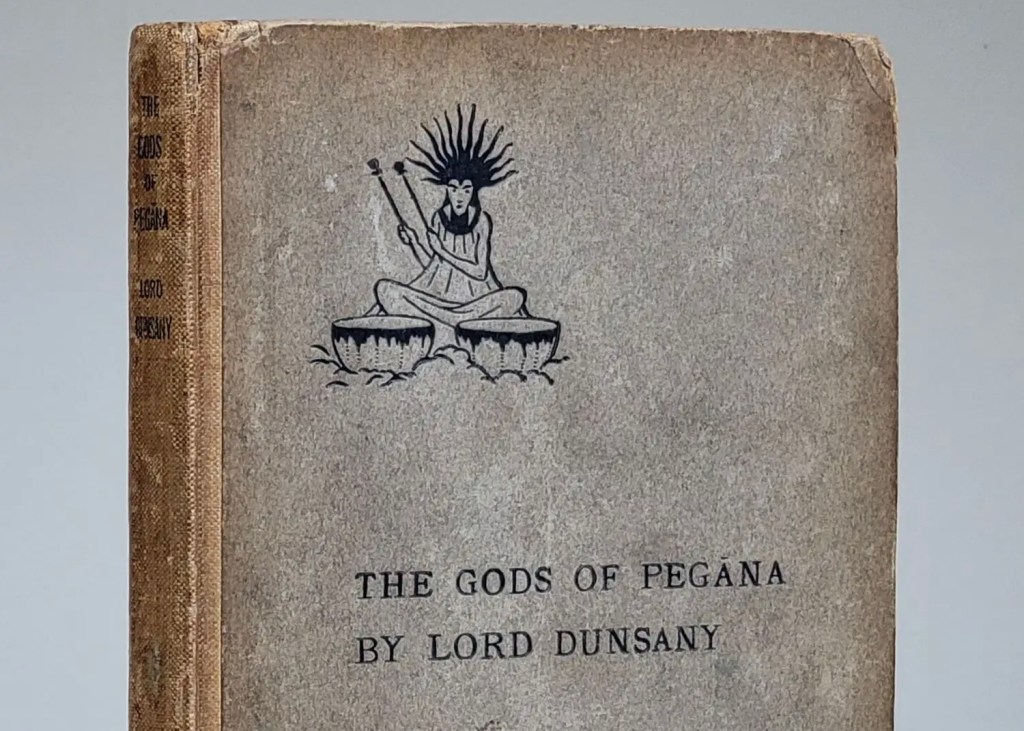
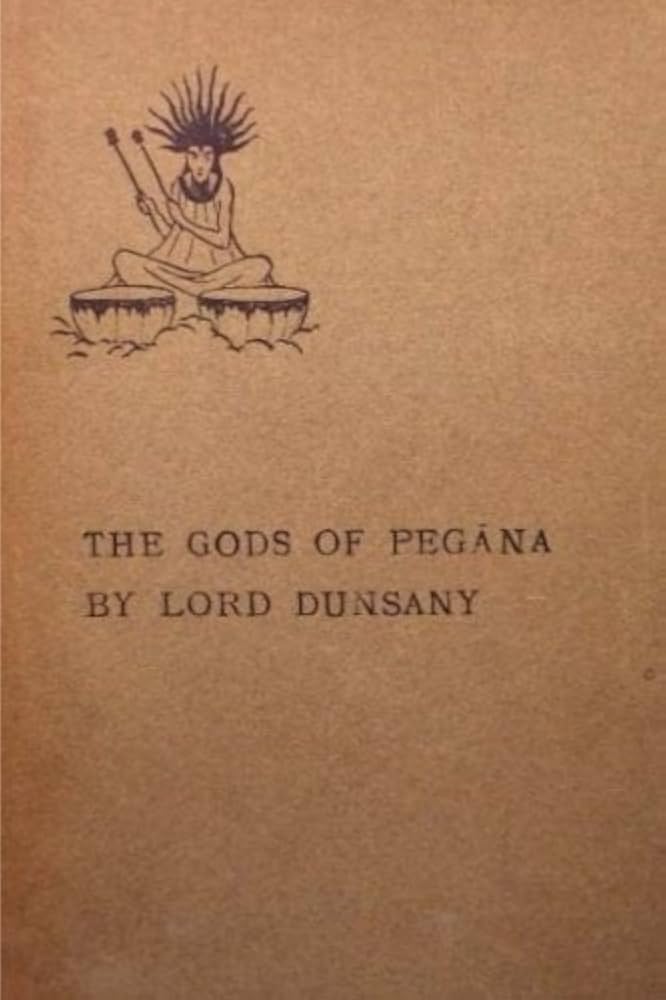
Few books cast as long a shadow over the genre of fantasy and horror as The Gods of Pegāna by Lord Dunsany. First published in 1905, this short but richly imaginative work has reached its 120-year milestone, an occasion that calls for both celebration and analysis. Dunsany’s influence looms over giants like H.P. Lovecraft, J.R.R. Tolkien, and Neil Gaiman, yet his name remains relatively obscure outside of dedicated literary circles.
To read The Gods of Pegāna today is to step into a world of lyrical mythology, one woven from the same dreamstuff that would later shape the mythos of Lovecraft and the high fantasy of Tolkien. But how does it hold up in 2025? Is it still a meaningful work, or has it become an artifact of a bygone literary age?
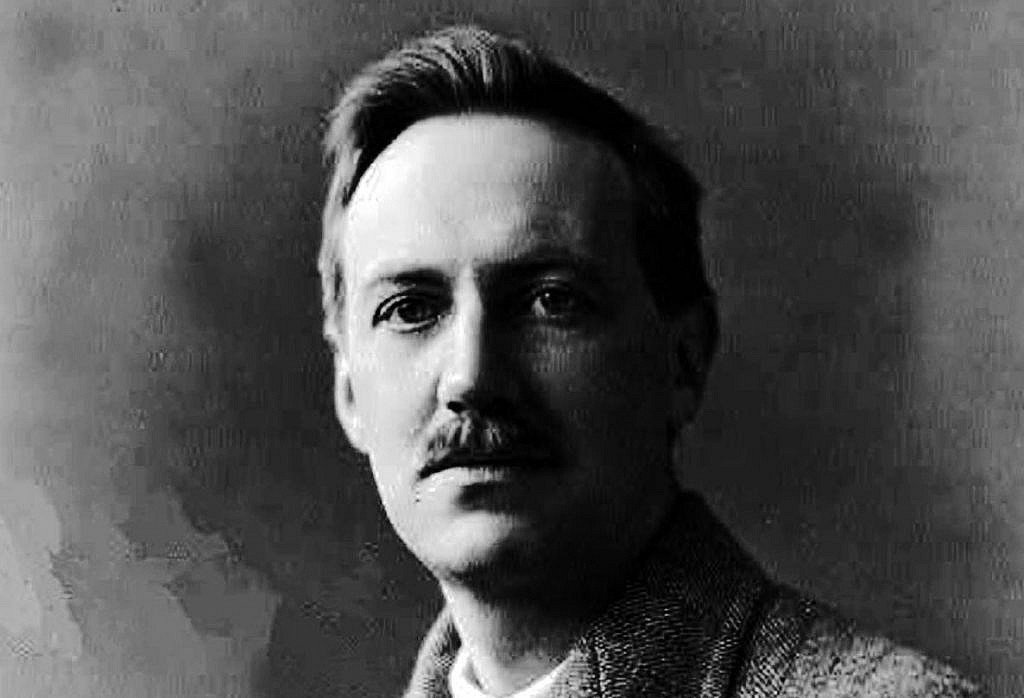
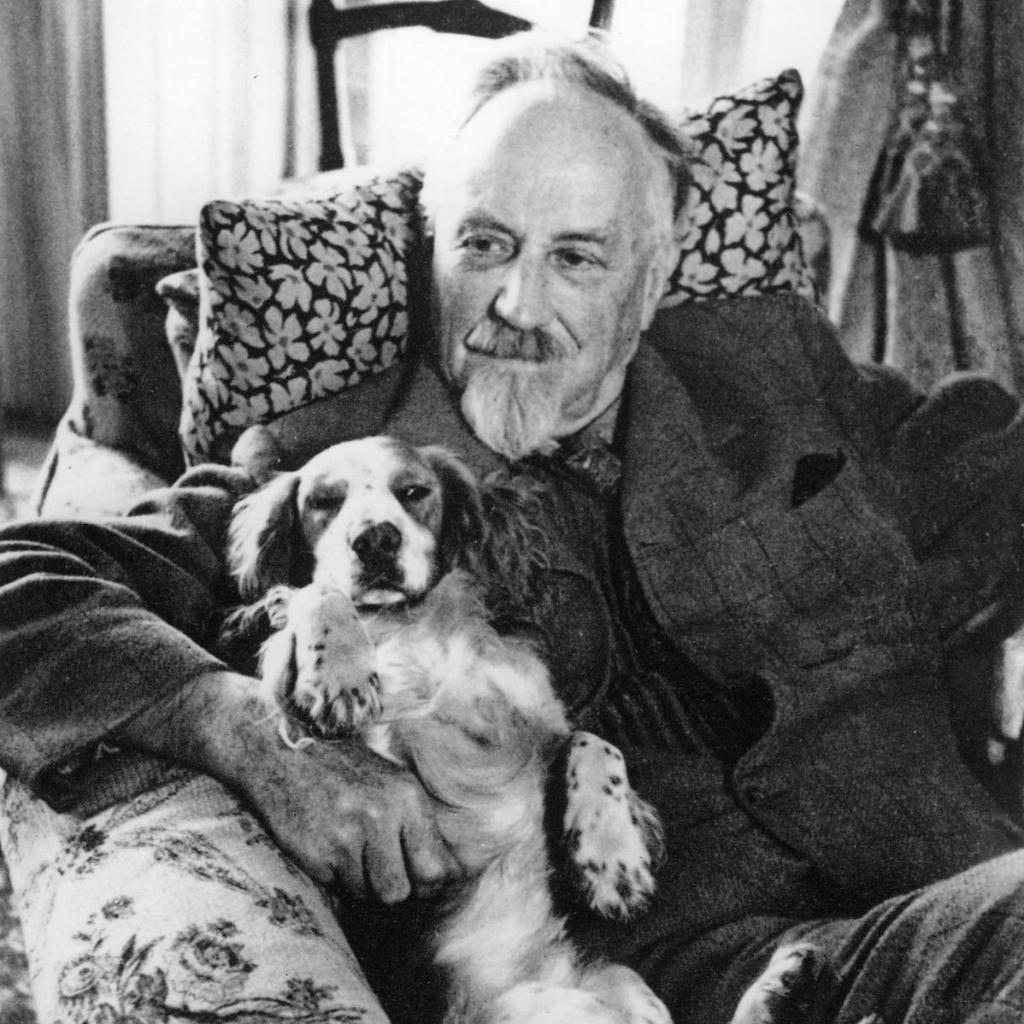
Edward John Moreton Drax Plunkett, the 18th Baron of Dunsany, was an Anglo-Irish writer with a knack for the poetic and the fantastic. A man of leisure and adventure, he was not just a writer but a playwright, a chess champion, a pistol-shooting aficionado, and a world traveler. Dunsany’s influence on fantasy is incalculable—his works were pivotal in shaping the imaginations of later writers who would define the genre. He was a precursor to Lovecraftian horror, the storyteller of eldritch gods before eldritch horror was even a defined concept. The Gods of Pegāna was his first published book, and in it, we see the early flickerings of a new kind of literary mythology.
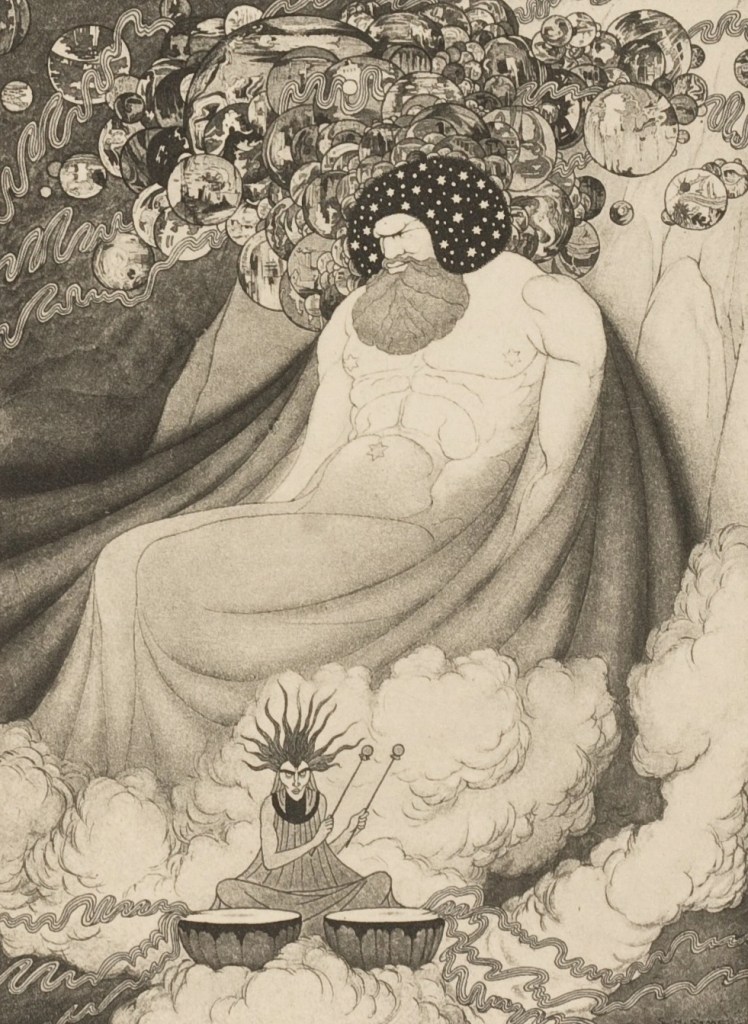
There is no traditional narrative in The Gods of Pegāna. Instead, it functions as a fictional mythological text, presenting a pantheon of deities that exist beyond human comprehension. Chief among them is Mana-Yood-Sushai, the great sleeper, a god who created the smaller gods and then promptly went to sleep, leaving them to manage (or mismanage) existence.
Among these deities are:
- Skarl the Drummer, whose ceaseless drumming keeps Mana-Yood-Sushai asleep, for if he wakes, all creation may unravel.
- Mung, the god of death, whose mere presence seals the fate of mortals.
- Kib, the sender of life, who counterbalances Mung’s work.
- Roon, the god of going, who inspires motion and travel.
- Slid, the god of the sea, whose melancholy cries call to sailors.
This divine pantheon operates in mysterious, often whimsical ways, indifferent to the struggles of humanity. The book’s structure is more akin to a collection of sacred texts or fables rather than a linear story, a choice that enhances its dreamlike quality. Much like Lovecraft would later do with The Call of Cthulhu (1928), Dunsany creates a universe where gods are distant, unfathomable entities. The Gods of Pegāna is less about religious reverence and more about existential musings. There is an undeniable absurdity in these gods, who seem to create worlds out of boredom, play games with the fates of men, and destroy civilizations without reason.
A key theme is the futility of human inquiry. The prophets in Pegāna often seek knowledge of the gods but are met with silence or cryptic responses. The recurring message? Man is not meant to know the ways of the gods. This sentiment echoes through later cosmic horror, where the pursuit of knowledge often leads to madness or destruction. Dunsany also toys with the idea of cyclical time—Skarl’s drumming keeps reality intact, but what happens when he stops? The gods themselves seem trapped in their own routines, playing their divine games until Mana-Yood-Sushai wakes and undoes all things.
If there’s one thing that makes The Gods of Pegāna truly stand out, even today, it is Dunsany’s writing style. His prose is archaic yet fluid, reminiscent of biblical scripture or the epics of old. He employs repetition and cadence masterfully, making the text feel like it was passed down through oral tradition. This style, while beautiful, can also be challenging in modern times where preferences are for more straightforward narratives.
Here’s an example of his signature style:
“Before there stood gods upon Olympus, or ever Allah was Allah, had wrought and rested MANA-YOOD-SUSHAI.”
Dunsany’s language builds grandeur out of simplicity. His gods do not act—they wrought and rest. His sentences roll with a rhythm that makes them feel ancient and weighty, as though they belong to a sacred text.
Strengths:
- Visionary Worldbuilding: Without relying on traditional storytelling, Dunsany creates a fully realized mythological system.
- Influential: It’s impossible to discuss this book without acknowledging how it shaped fantasy and horror.
- Poetic Prose: His writing is lyrical, evocative, and entirely unique.
- Timeless Themes: Cosmic indifference, the futility of knowledge, and the nature of divinity remain as relevant today as in 1905.
Critiques:
- Lack of Narrative Drive: Readers looking for a structured plot may find it meandering.
- Archaic Style: The biblical tone, while beautiful, can be difficult for modern audiences to digest in large doses.
- Abstract Nature: Those who prefer character-driven stories might struggle to connect with a book that lacks traditional protagonists.
Though The Gods of Pegāna is not as widely known today, its influence is everywhere. Lovecraft cited it as a major inspiration for his Cthulhu Mythos. Tolkien, too, absorbed Dunsany’s lessons in myth-making. More recently, Neil Gaiman’s The Sandman and American Gods carry echoes of Pegāna’s dreamlike pantheon. Yet, unlike these later works, Dunsany’s approach was less about storytelling and more about mood and philosophy. Reading The Gods of Pegāna is not about experiencing a journey but about immersing oneself in an atmosphere of cosmic wonder and existential mystery.
Even after 120 years, The Gods of Pegāna remains a mesmerizing read for those who appreciate poetic fantasy and cosmic horror. It is not a book for everyone but for those who delight in myth, mystery, and the unknowable, it is a treasure. In an era where fantasy has often become predictable, The Gods of Pegāna reminds us that the best worlds are those that remain strange, untamed, and utterly beyond our comprehension. Happy 120th anniversary to a work that still whispers to us from the shadows of forgotten gods.




Published 1905



 The Blog Without a Face
Leave a comment