
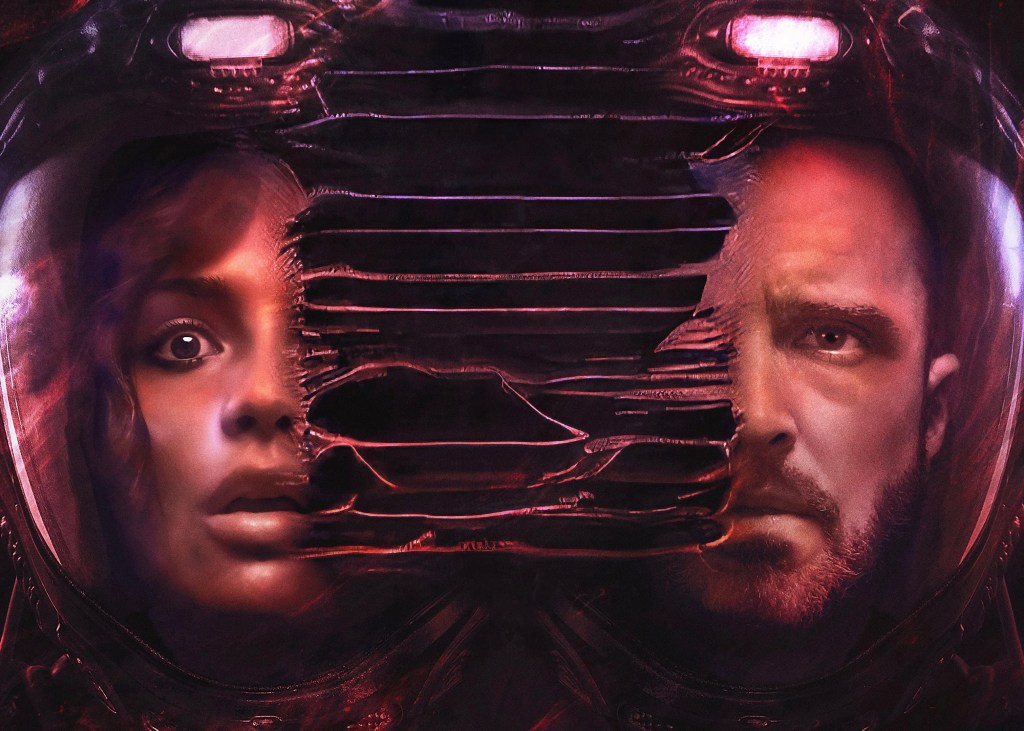
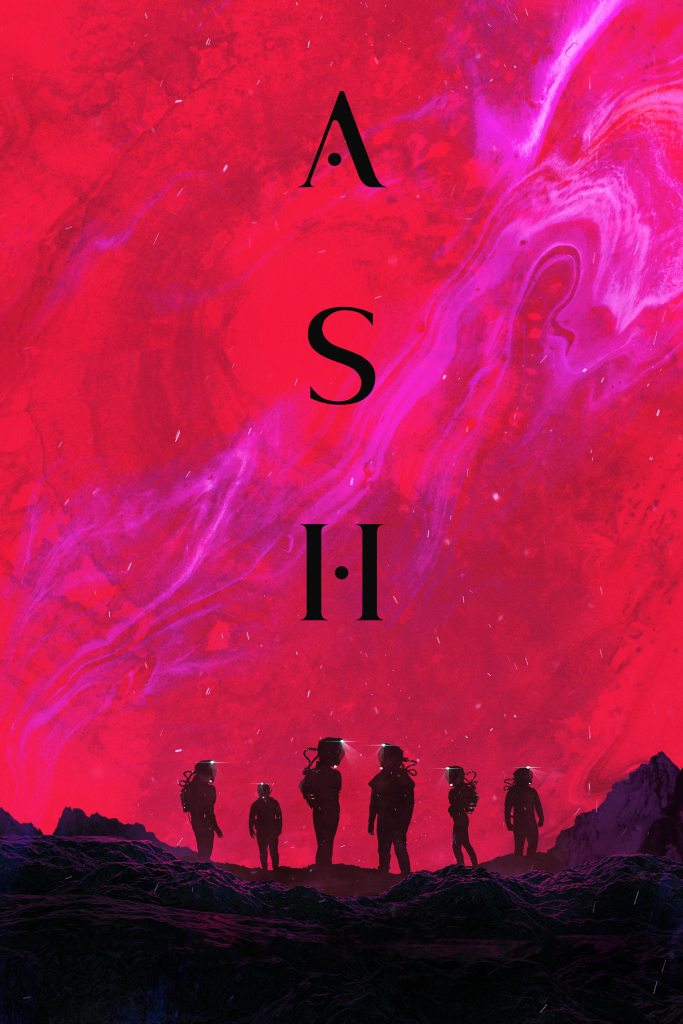
Flying Lotus, aka Steven Ellison, is a Grammy-winning musician and producer whose psychedelic, genre-bending beats have long haunted the fringes of hip-hop and electronic music. His directorial debut, Kuso (2017), was a grotesque, scatological mind-melt that divided audiences but cemented his rep for fearless weirdness. Ash is his second feature, showing a pivot toward (slightly) more mainstream sci-fi horror while retaining his gonzo visual flair. Screenwriter Jonni Remmler is a relative unknown, with Ash being his first major credit. His sparse resume hints at TV work, but little else surfaces, think of him as the guy who handed Lotus a blueprint and said, “Go nuts.” Together, they craft a film that feels like Lotus’ brainchild, with Remmler’s script serving as a shaky scaffolding for the director’s neon-soaked, Carpenter-esque ambitions.
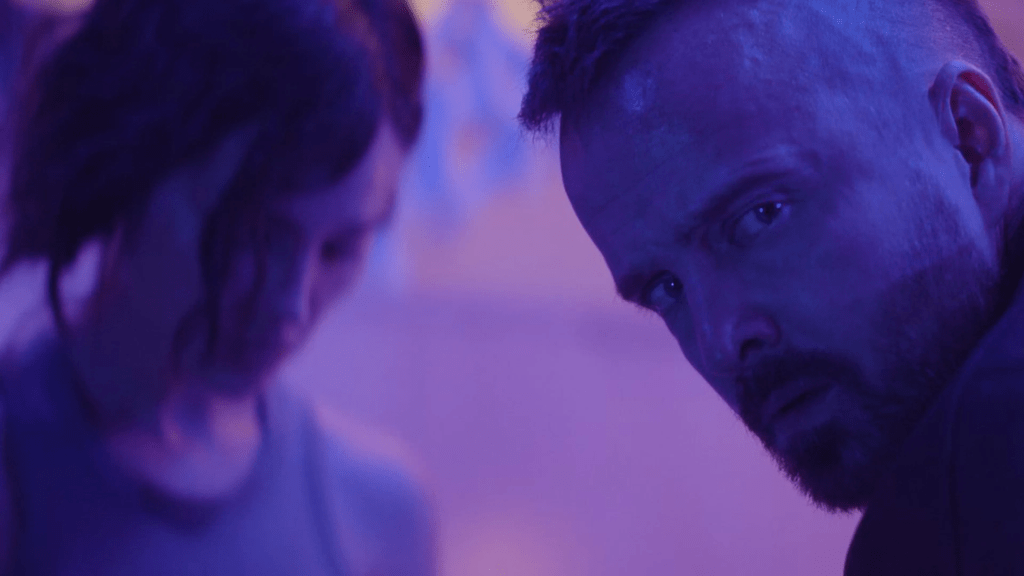
On the desolate planet Ash, astronaut Riya (Eiza González) wakes up bloodied and amnesiac in a trashed space station, her crew slaughtered in gruesome fashion. As klaxons blare and red lights strobe, she stumbles through the wreckage, piecing together fragmented memories of her mission to terraform this alien hellhole. Enter Brion (Aaron Paul), a shifty rescue operative claiming to know her, but Riya’s paranoia screams he’s not what he seems. What unfolds is a chaotic, psychedelic descent into psychological and physical terror, where reality warps, parasites slither, and the planet itself feels alive with malice. Flying Lotus’ Ash is a 95-minute sci-fi horror trip, blending Alien’s claustrophobia with Dead Space’s visceral dread, though it struggles to escape their shadows.
Ash is a grimy love letter to the horror of human hubris, poking at our urge to colonize and conquer even when the universe says, “Fuck off.” The planet Ash, a swirling ash-stormed wasteland, symbolizes nature’s indifference, or active hostility, to humanity’s terraforming fantasies. Riya’s amnesia mirrors our collective denial of the messes we make, her fractured memories a jagged puzzle of guilt and violence. The film’s parasite motif, slimy and invasive, screams bodily autonomy horror, evoking questions about free will: are we ever truly in control, or just meat-puppets for something older, hungrier? Philosophically, it’s a nihilistic shrug, humans are doomed to self-sabotage, and the cosmos doesn’t care.

Cinematographer Richard Bluck’s widescreen visuals are the film’s pulse, bathing corridors in bisexual neon (pink, blue, red) and crafting a lived-in, tactile station that feels like a rusted cousin to Event Horizon. Lotus’ score, all synth stabs and industrial hums, channels Carpenter’s minimalist dread but lacks the iconic hooks. Remmler’s script, however, is a weak link. Its dialogue clunks like a busted spaceship, and the mystery leans on tired “who’s infected?” tropes. The editing, jagged and stroboscopic, amplifies disorientation but sometimes feels like a music video overstaying its welcome. Culturally, Ash taps into our anxiety about overreaching tech and ecological collapse, but it’s too enamored with its own vibes to dig deeper. It’s bold, but not quite profound.
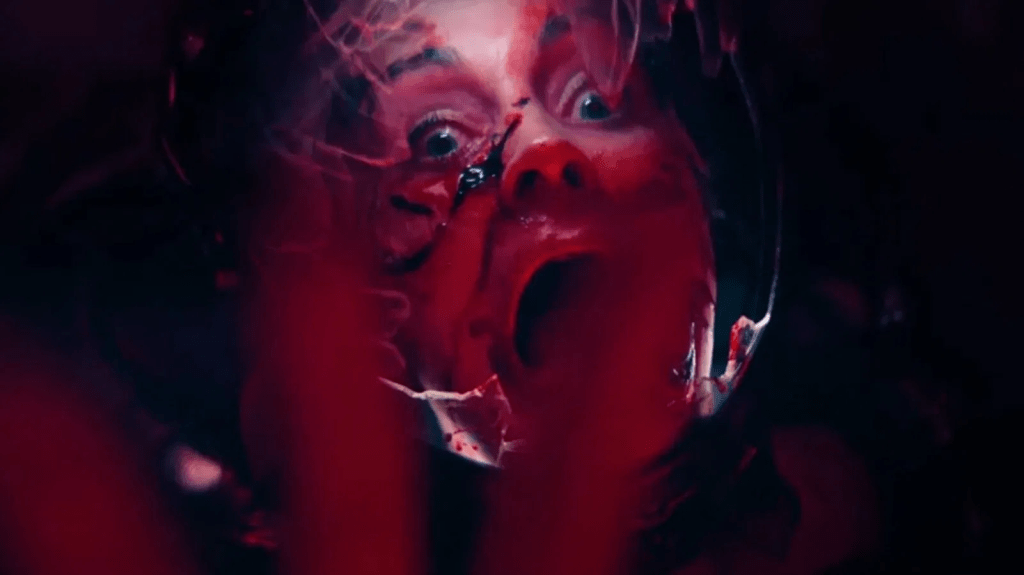
Let’s start with the good shit: Ash looks like a million bucks (or $1.1 million, per box office). Lotus’ visual swagger is undeniable. Every frame drips with psychedelic menace, from ash-flaked landscapes to gore-soaked jump scares that slap like a wet corpse. The horror hits hard when it lands: a skin-ripping scene made me wince, and a first-person flashback brawl with Iko Uwais’ Adhi is a kinetic gut-kick. González owns the screen as Riya, her raw desperation and feral edge carrying the film through its shakier bits. The production design, from gooey creature effects to the station’s retro-futurist grime, screams indie passion, and Lotus’ knack for staging chaos keeps the pulse racing.
But holy hell, the script is a mess. Remmler’s story is a patchwork of Alien, The Thing, and Dead Space, with none of their narrative heft. The parasite plot feels like a sci-fi horror Mad Libs, insert “ancient evil” here, add “unreliable narrator” there. Characters like Aaron Paul’s Brion are flat, his arc a predictable slog, and Uwais is criminally underused, reduced to a two-minute fight and some stoic grunts. The pacing lurches: the first half drags with repetitive “what’s real?” teases, while the final act crams in so many twists it feels like a plot overdose. The horror, while visceral, leans too hard on jump scares and gore over creeping dread, diluting its atmospheric potential. Originality? It’s there in flashes. Lotus’ trippy visuals and the planet’s surreal vibe are captivating, but the story’s derivative bones keep it from soaring. Ash is a frustrating half-step: daring in style, safe in substance.
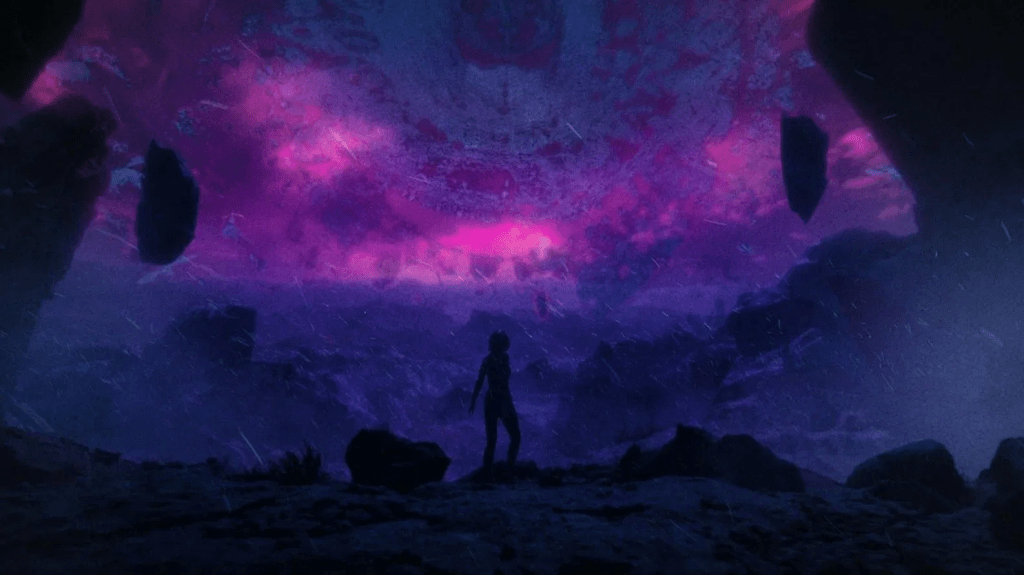
Ash has ballsy visuals and gonzo energy, but it’s docked points for leaning on tired tropes and a script that’s about as fresh as week-old space rations. Lotus’ direction and González’s performance are high points, delivering enough weird, atmospheric horror to satisfy. But the derivative plot and uneven pacing betray its indie heart, making it feel like a cover band riffing on Alien and The Thing without adding new chords. It’s not bland slop, there’s too much style for that, but it’s not the genre-redefining cult sci-fi masterpiece I was secretly hoping for. For fans of psychedelic gore and indie ambition, it’s a solid trip; for those demanding narrative depth or true originality, it’s a near-miss. Lotus has the chops, but he needs a better story to truly blow our mind.
TL;DR: Ash is a visually stunning, psychedelic sci-fi horror flick that delivers gore and vibes but stumbles on a clichéd script and uneven pacing. González shines, but it’s too derivative to soar.






Recommended for: Stoner horror nerds who’d rather vibe with neon gore than think too hard about plot holes, and Dead Space fans jonesing for a cinematic fix.
Not recommended for: Snobby cinephiles who clutch their pearls at jump scares, or anyone expecting Iko Uwais to do more than punch a guy twice before eating alien dirt.
Director: Flying Lotus
Writer: Jonni Remmler
Distributor: RLJE Films / Shudder
Released: March 21, 2025



 The Blog Without a Face
Leave a comment