

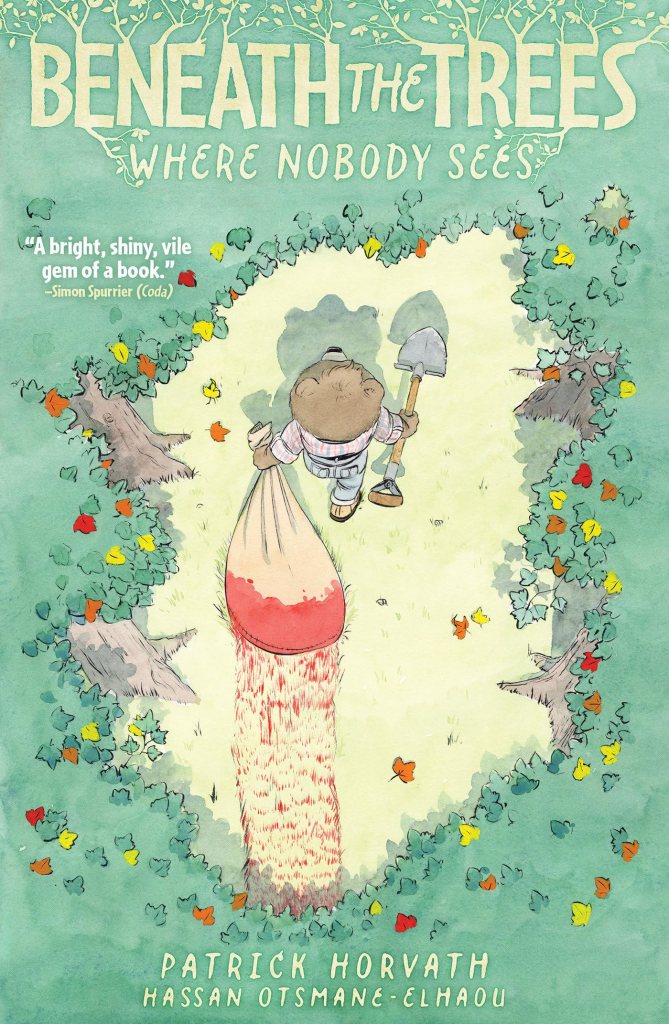
Patrick Horvath, the writer and artist behind Beneath the Trees Where Nobody Sees, is a twisted newcomer to comics with a film background that’s as jagged as his narrative style. Known for producing and directing indie horror flicks like Entrance and part of Southbound, Horvath’s visual storytelling carries the grit of low-budget cinema, now splashed across IDW’s pages in his graphic novel debut. His art, steeped in classic illustration, betrays a lifelong cartoonist’s obsession, honed through years of unpublished sketches. Letterer Hassan Otsmane-Elhaou, a rising star, brings a meticulous edge, with credits on indie darlings like The Blue Flame and Eisner-nominated work that proves he can make dialogue sing or scream. Together, they’re a duo unafraid to carve up expectations, backed by designer Nathan Widick and editor Jamie S. Rich, who’ve shepherded this beast from IDW’s horror stable.
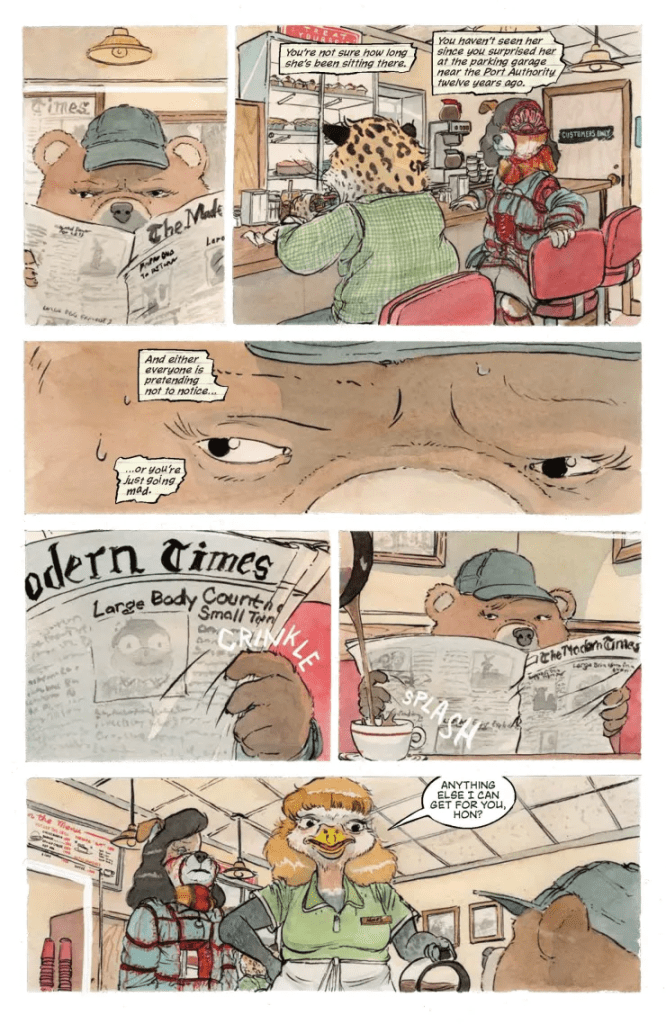
In the idyllic hamlet of Woodbrook, anthropomorphic critters live a saccharine existence, sipping cider and basking in cedar-scented breezes. Enter Samantha Strong, a brown bear who runs the hardware store and moonlights as a serial killer with a strict rule: don’t murder the locals. She ventures to the city for her gruesome hobby, keeping her cozy life pristine. But when a copycat killer starts gutting Woodbrook’s residents, Samantha’s enraged, not just at the threat to her secrecy, but at the audacity of this sloppy amateur. What follows is a darkly comic hunt for the rival psychopath, as Sheriff Patterson’s bumbling investigation risks unraveling Samantha’s carefully curated double life. Horvath’s debut graphic novel, published by IDW, is a perverse blend of children’s book aesthetics and blood-drenched horror.
Beneath the Trees is a vicious satire of small-town hypocrisy, where the veneer of neighborly warmth masks a collective willingness to ignore the monstrous. Samantha’s dual life embodies this duplicity: she’s both the town’s heart and its potential executioner, her murders a warped reflection of the community’s suppressed urges. The title, riffing on “The Teddy Bear’s Picnic,” symbolizes the hidden rot beneath idyllic surfaces, bodies buried where nobody sees, secrets festering in plain sight. Horvath’s artwork, with its watercolor softness and storybook charm, is a deliberate betrayal, lulling readers before slashing them with gore-soaked panels. The contrast isn’t just shock value; it’s a philosophical gut-check, questioning how we reconcile innocence with evil. Otsmane-Elhaou’s lettering amplifies this, with Samantha’s inner monologue in a jagged typeface that feels like a confession scratched into bark. The writing is lean, almost clinical, mirroring Samantha’s detached sadism, yet laced with black humor that skewers cozy clichés. The book taps into our fascination with charismatic killers, but Horvath sidesteps Dexter’s moral code, offering instead a protagonist who’s unapologetically vile, a bold move that challenges readers to root for a monster. This isn’t horror as escapism; it’s a mirror held up to our own complicity in ignoring the grotesque.
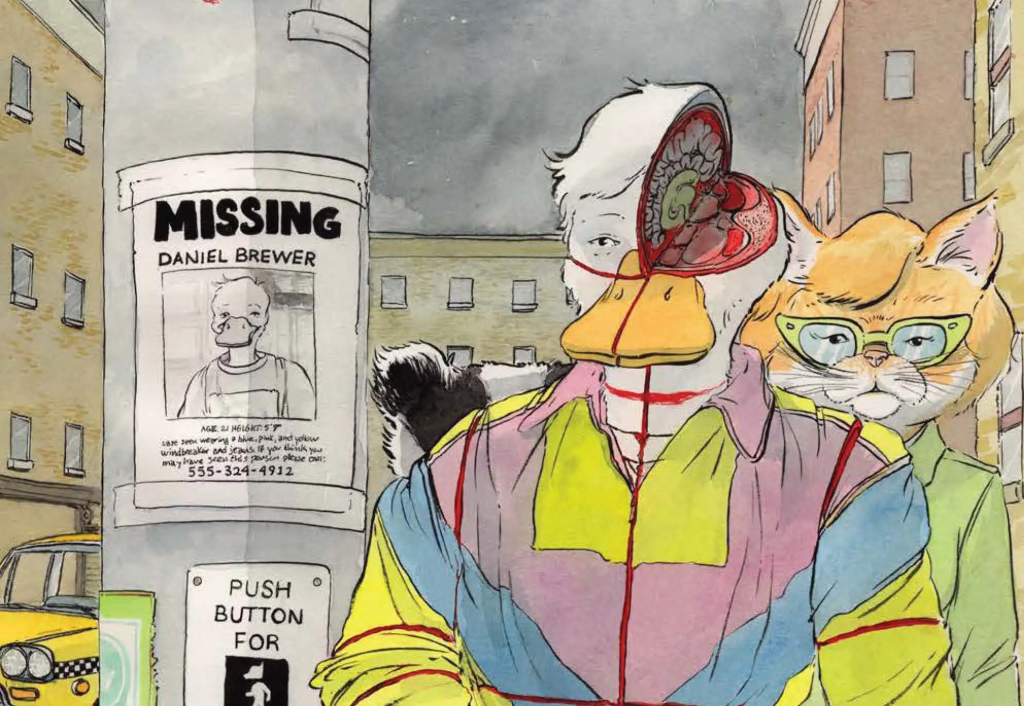
Horvath’s originality is the book’s beating heart. By marrying Richard Scarry’s Busytown to a serial killer thriller, he crafts a premise that’s as audacious as it is unsettling. The juxtaposition of cute critters and graphic violence isn’t a gimmick, but a masterstroke that redefines horror’s boundaries. Samantha is a triumph: a deplorable yet magnetic antihero whose calm brutality fascinates. Her investigation, driven by ego as much as self-preservation, crackles with tension, and the supporting cast (nervous parakeets, smug turtles) adds texture without stealing focus. The pacing is relentless, each of the six issues escalating the stakes with surgical precision. Otsmane-Elhaou’s lettering deserves special praise, giving each character a distinct voice that enhances the claustrophobic atmosphere.
Its brevity, 152 pages, leaves some characters underdeveloped, particularly the rival killer, whose motivations feel rushed in the final act. This robs the climax of some weight, as the mystery resolves too neatly for a story this perverse. The horror, while potent in early kills, wanes slightly as shock becomes familiar; Horvath could’ve leaned harder into psychological dread to sustain the unease. The art, while stunning, occasionally sacrifices clarity for style, with crowded panels muddying action scenes. Still, its refusal to pander, no cozy resolutions, no moralizing, makes it a rare beast.
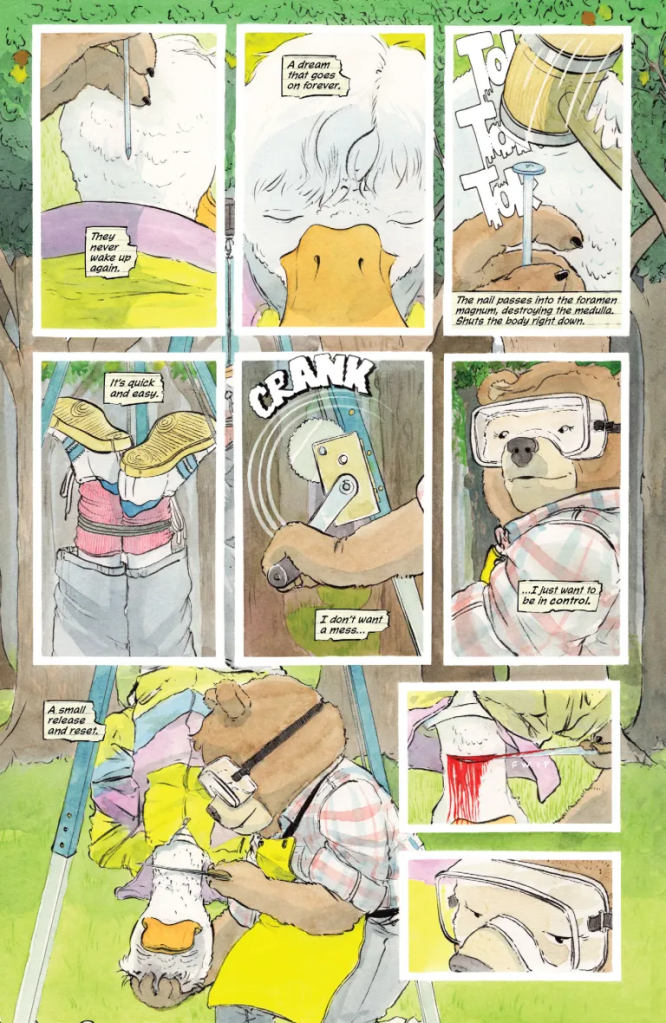
Beneath the Trees Where Nobody Sees has fearless originality and atmospheric savagery. It’s a near-masterpiece that reimagines horror comics with a premise so bold it could’ve crashed and burned in lesser hands. Horvath’s art and writing, paired with Otsmane-Elhaou’s lettering, create a world that’s both enchanting and repulsive, a tightrope walk few could manage. The score docks points for a rushed resolution and occasional loss of horror momentum, but these are quibbles against a work that dares to be this weird and this good. This is catnip for me, a book that doesn’t just push boundaries but sets them on fire.
TL;DR: A serial killer bear hunts a rival in a storybook town of cute critters, blending gore with dark humor in a twisted, original horror graphic novel.








Recommended for: Sickos who’d cackle at Winnie the Pooh dismembering Piglet with a hacksaw.
Not recommended for: Cozy mystery fans who think a dead squirrel is too spicy for their knitting circle.
Writer: Patrick Horvath
Artist: Patrick Horvath
Lettering: Hassan Otsmane-Elhaou
Published September 17, 2024 by IDW Publishing

 The Blog Without a Face
Leave a comment