
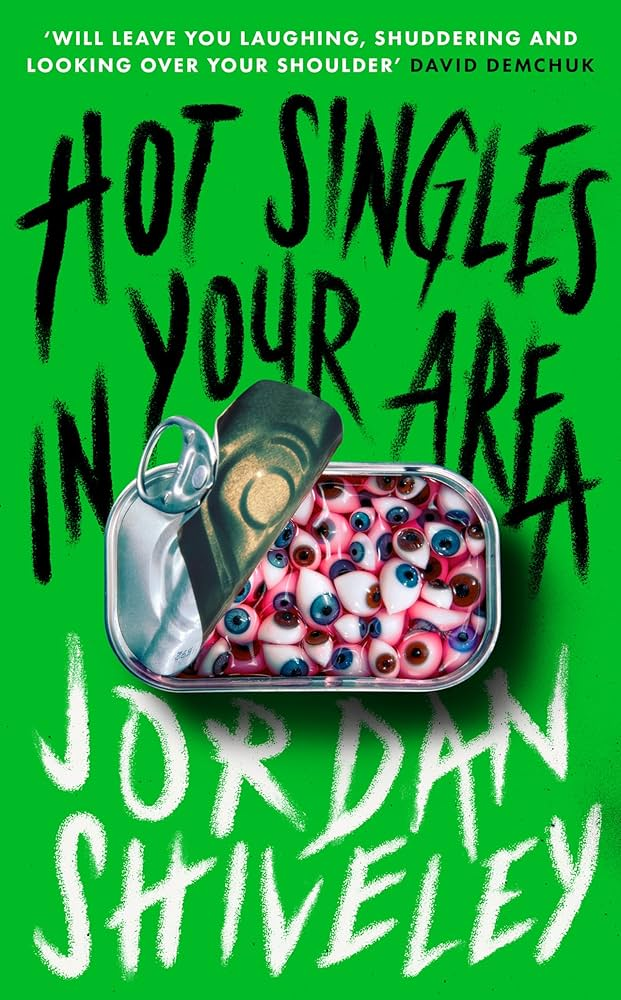
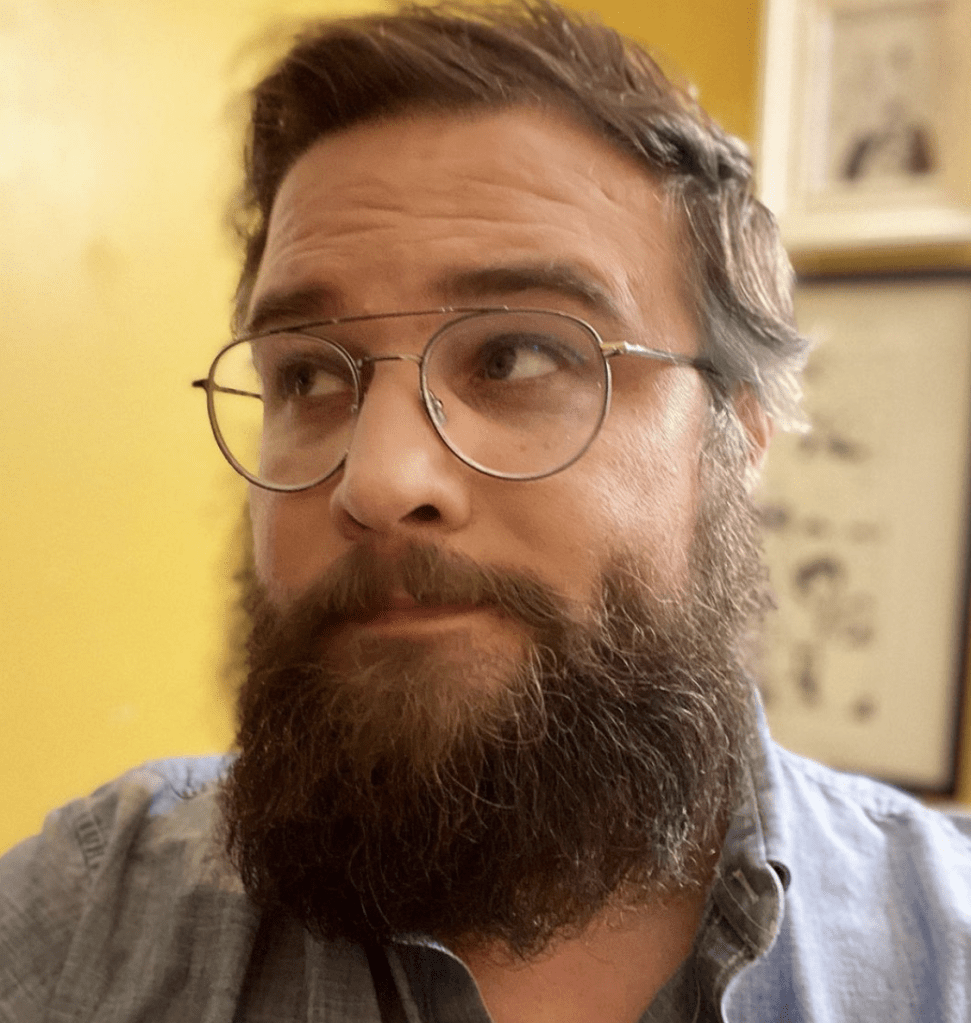
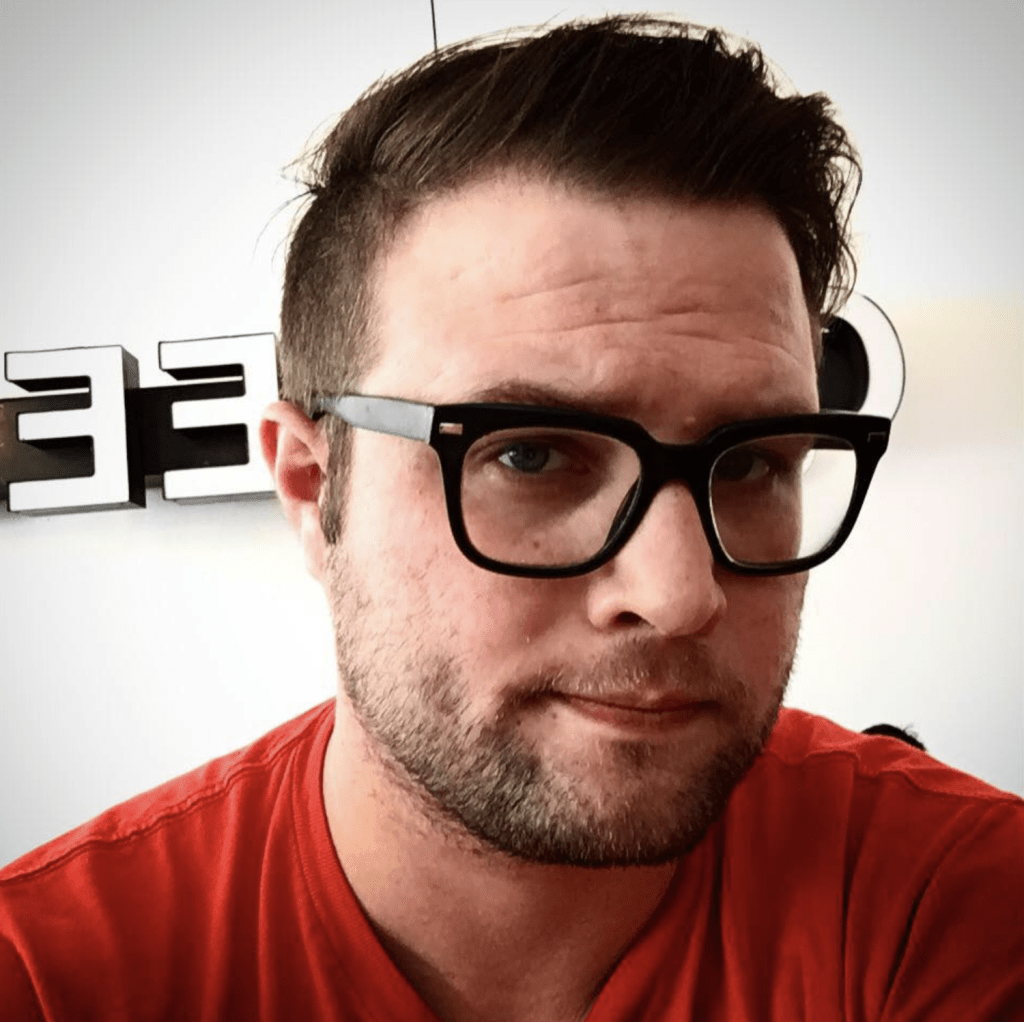
Jordan Shiveley’s been skulking around Twitter as @hottestsingles, slinging micro-horror that’s like stumbling across a cursed Craigslist ad at 3 a.m. His short stories have wormed into The Best Horror of the Year Volume 15, Nightmare Magazine, Voidjunk, and Baffling Magazine, earning him a rep as a pied piper for weird-fiction freaks. Hailing from Minneapolis, he’s also dabbled in tabletop RPGs, spinning worlds where dread’s the only prize. Hot Singles in Your Area, his debut novel from indie press Unbound (fuck them for not paying Shiveley the >$15k owed for the book), is a bloated, twisted spawn of his tweet-sized terrors, a cosmic horror trip that feels like it was scribbled in blood on a diner napkin. Shiveley’s not here to hold your hand, he’s here to shove you into the void, and this book’s his first big swing at it.
Noah Bezden’s a janitor drowning in a swamp of bus station bloodstains and burnt toast, his life a grim slog through strip-mall hell. He snags a job at Printed Matter, a seedy outfit churning out newspaper inserts that read like contracts with the devil. Across a metaphysical gulf, Malachia, a novitiate in the bone-obsessed Congregation of the Hallowed Unspoken, sorts saintly relics in the desolate city of Silence, her hymns a frail barrier against something old and hungry. Their worlds, fluorescent drudgery and gothic decay, start to bleed together, tied by a red orb that’s no star, just a pulsing threat. Svenn, a repairman with a mustache that screams 1980s porn star, glides through the chaos, too chill for the eldritch shitstorm. It’s a bizarre yarn of identity, entrapment, and the terror of being a pawn in a cosmic scam.
Hot Singles is a raw, gnashing exploration of how systems (capitalist, religious, cosmic…) grind you into dust while you’re too busy to notice. Noah’s stuck in a soul-sucking loop, his Printed Matter gig a Kafkaesque trap where ads sell despair, mirroring the relentless churn of late-stage capitalism that chews up workers and spits out husks. Malachia’s bound by the Congregation’s bone rituals, her labor a futile prayer against an indifferent void, echoing the futility of blind devotion in a world that doesn’t care. Both are specks in a universe that sees them as fodder, their agency as brittle as a cracked molar. The red orb, a throbbing symbol of inevitability, looms like a cosmic eye, its crimson pulse a reminder that fate’s always watching, indifferent to your screams. Teeth, scattered, human, monstrous, embody power’s fleeting bite and the vulnerability of being devoured, while the Lament of Tangled Bones weaves a fragile thread of connection, a poetic gasp against oblivion. The Carrion Oak, a lurking presence, represents decay that consumes rather than renews, its roots a stand-in for systems that strangle hope.
Philosophically, the novel probes the absurdity of existence in a world where meaning’s a cruel joke. Shiveley’s anti-capitalist streak hits hard, exposing the predatory nature of labor that promises salvation but delivers only exhaustion—a grim nod to anyone who’s ever felt trapped in a 9-to-5 nightmare. The Congregation’s rituals critique the emptiness of dogma, suggesting faith’s just another cage. The red orb’s cosmic indifference amplifies this, painting a universe where resistance is pointless, yet Noah and Malachia’s small defiances offer a flicker of human stubbornness against the void.
Shiveley’s prose is a jagged mix of punk zine rants and gothic hymns, raw yet rhythmic, with a knack for painting rot in vivid strokes. Noah’s sardonic voice, spiked with ABBA earworms and strip-mall nihilism, grounds the surreal in gritty despair. Malachia’s chapters, heavy with liturgical dread, read like a necromancer’s diary, thick with bone-dust and sorrow. The alternating perspectives build a hypnotic tension, though the climax’s dreamlike haze can feel like wading through molasses. Footnotes, a nod to Shiveley’s Twitter quips, add snarky lore but often clog the flow.
Shiveley’s premise is a wild, unhinged beast, blending a cosmic scam with a bone-worshipping cult in a way that spits on horror’s tired tropes. It’s a strip-mall portal to a Lovecraftian abyss, and its originality is a shot of adrenaline to the genre’s stale veins. The atmosphere’s a knockout, with settings so vivid you can smell the decay. Printed Matter’s Formica purgatory, with its flickering lights and greasy despair, feels like a trap you’ve lived in. Silence’s bone arches and ash-choked fountains evoke a gothic desolation that’s both haunting and tactile. The bus station’s tooth-strewn blood pools are a grotesque masterstroke, grounding the surreal in primal horror.
Noah’s everyman despair, laced with biting humor, makes him a magnetic anchor, his gallows wit and scarred fingers paint a man battered but not broken. Malachia’s quiet rebellion against her cult’s dogma adds depth, her fading tattoos a poignant symbol of eroding self. Svenn, with his cryptic charm and Tom Selleck swagger, is a scene-stealing enigma, his calm a chilling counterpoint to the chaos. The horror hits hardest in its visceral moments: Mrs. Galloway’s grub-face, with writhing pseudopodia, is body horror that’d make Cronenberg nod approvingly, searing itself into your skull. The child-husks, folded like laundry, blend mundane and monstrous in a way that’s pure nightmare fuel. The red orb’s cosmic dread taps into fears of being nothing in an uncaring universe, a philosophical terror that’s as potent as the physical.
But the novel’s not without its stumbles. Pacing is a glaring flaw—the middle third drags like a hungover slug, bogged down by Malachia’s repetitive rituals and Noah’s footnote-stuffed tangents. It’s like Shiveley got so drunk on his world he forgot to move the plot, and a sharper editor could’ve trimmed 50 pages to keep the tension taut. The tone’s another misstep: Shiveley’s snark is a riot, but it often dulls the horror’s edge. Moments like the grub-face reveal or a typewriter-bound Noah should leave you shaking, but they’re played for quirky laughs, robbing them of raw terror. It’s a betrayal of the genre’s promise, like serving whiskey in a sippy cup.
The red orb and teeth motifs are hammered so hard they lose their bite, by the dozenth tooth-strewn scene, you’re yawning instead of flinching. A lighter touch would’ve kept them menacing. The climax’s surreal convergence is ambitious but murky, risking reader confusion; a touch more clarity would’ve made the chaos sing without losing its weirdness. The footnotes, while clever, are a mixed bag. Some deepen the lore, others feel like Shiveley flexing his Twitter muscles, disrupting the flow like a drunk heckler at a funeral. They’re less House of Leaves and more guy who won’t shut up at the bar, and half could’ve been cut without loss.
Hot Singles in Your Area is a bold, unpolished gem that dances on the edge of brilliance but doesn’t quite stick the landing. Its originality is a lifeline in a genre choked with clichés, and the atmosphere’s so thick you could choke on it. Noah, Malachia, and Svenn are vivid guides, and the body horror’s grotesque enough to haunt your dreams. But pacing slumps, tonal wobbles, and motif overuse hold it back from greatness. Shiveley’s got the vision; with tighter execution, he’d be unstoppable. Read this shit – I want to be Shiveley’s friend.
TL;DR: A twisted cosmic horror ride, Hot Singles fuses strip-mall dread with bone-cult weirdness. Vivid, bold, and grotesque, it’s a treat for strange-fiction fans, though pacing and tone hiccups dull its edge. Shiveley’s debut is daring.





Recommended for: Weirdos who’d dig Clerks with more eldritch teeth and despair.
Not recommended for: Normies chasing cozy horror fluff or YA fans needing a prom-night scare.
Published February 4, 2025
 The Blog Without a Face
Leave a comment