
David F. Sandberg, the guy behind the camera, cut his teeth on low-budget horror with Lights Out (2016), a flick that turned a simple shadow into a nightmare with clever visuals and a lean 81-minute runtime. He followed it with Annabelle: Creation (2017), proving he make some Conjuring-verse dreck. His detour into superhero land with Shazam! (2019) showed he’s not afraid to mix humor with stakes, but horror’s clearly his wheelhouse. Screenwriters Gary Dauberman and Blair Butler bring their own baggage. Dauberman’s penned hits like It (2017) and The Nun (2018), showing a knack for mining fear from mythic monsters, though his scripts can lean formulaic. Butler, with The Invitation (2022), has a rep for twisting gothic vibes into modern chills. Together, they’re a major studio machine, tasked with adapting a choice-driven PlayStation game into something cinematic.
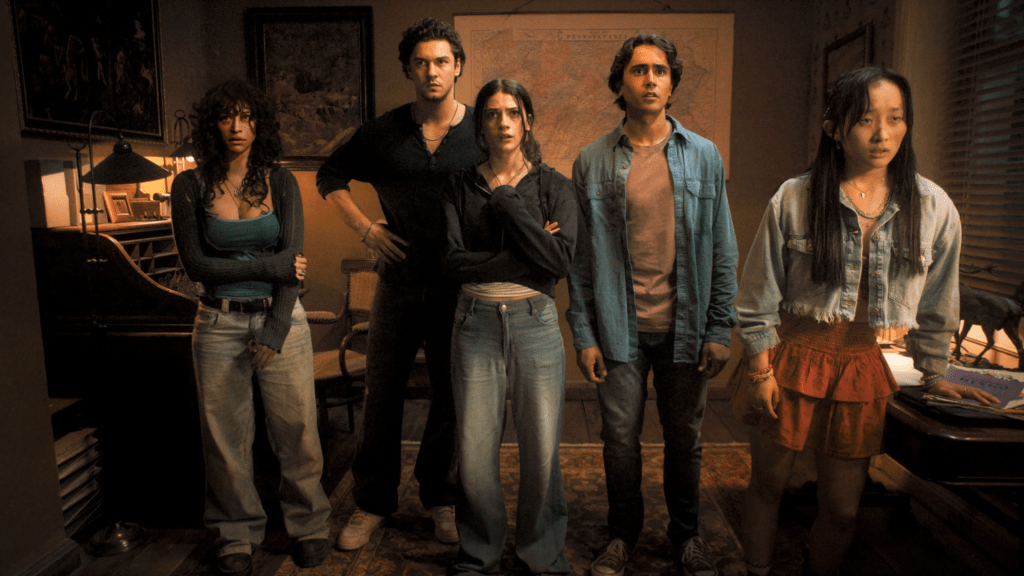
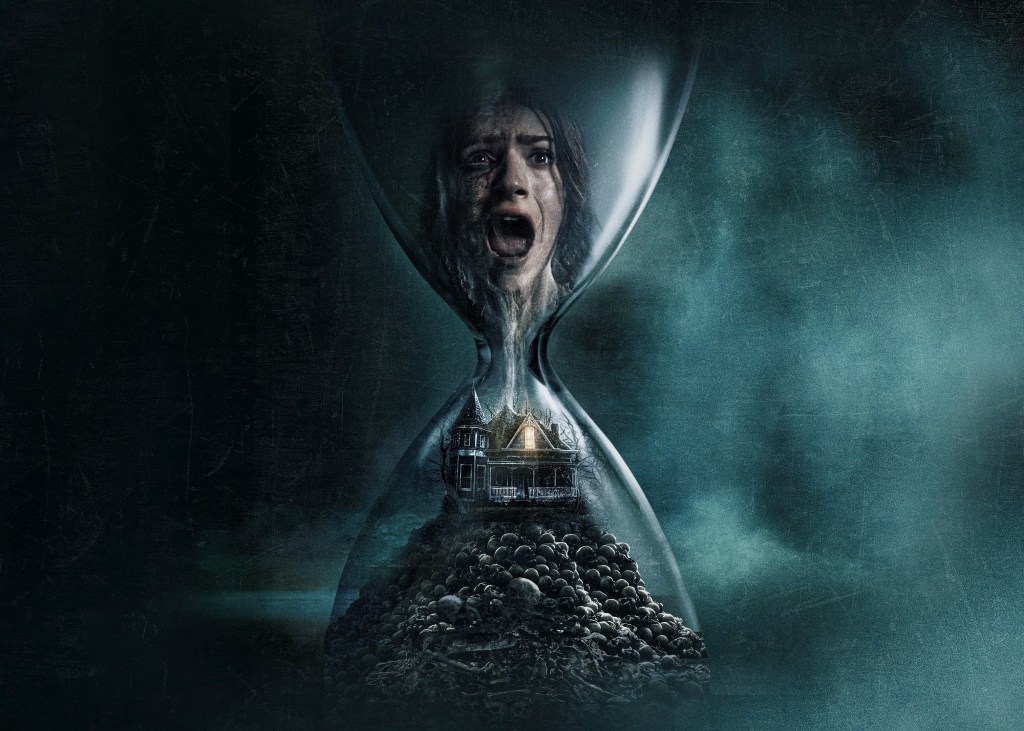
Until Dawn ditches the snowy peaks of its 2015 video game source for a grimy valley where Clover (Ella Rubin) and her bickering pals hunt for answers about her missing sister, Melanie. They stumble into a derelict visitor center, only to get trapped in a time loop where each night brings a new flavor of horror: slashers, supernatural creeps, and worse. Death resets the clock, but each cycle tweaks the terror, forcing the group to outsmart their doom to survive until morning. The film trades the game’s interactive branching paths for a linear tale, blending gore-soaked chaos with a meta nod to horror tropes. It’s a wild, bloody ride that tries to juggle multiple subgenres while keeping its cast, Michael Cimino, Odessa A’zion, Ji-young Yoo, and Peter Stormare, on their toes.
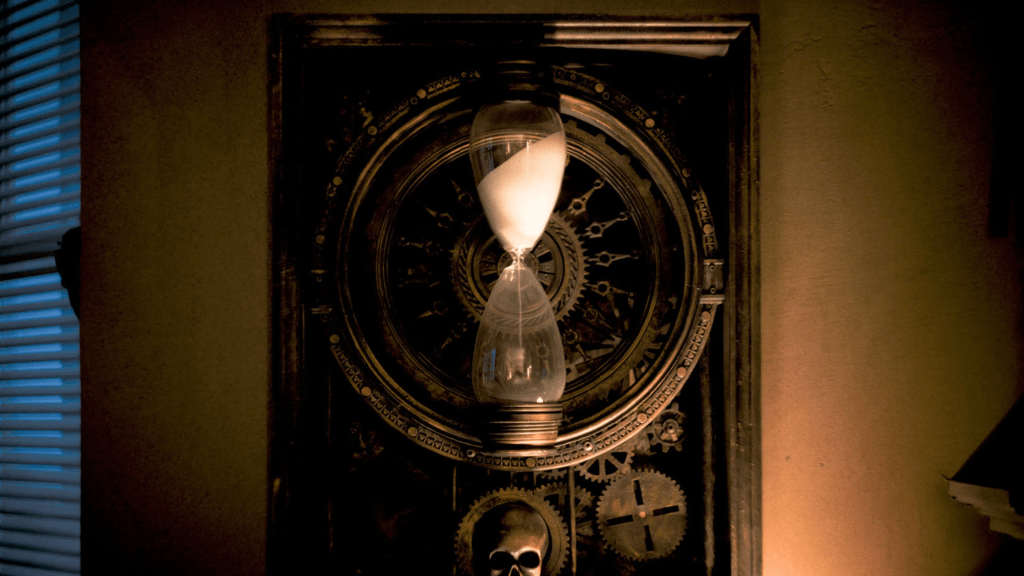
Until Dawn wants to be a philosophical haunted house, but it’s more like a funhouse mirror – warped, occasionally dazzling, but shallow. The time loop screams existential dread: characters relive their worst nights, confronting mortality and the futility of their choices. It’s a nod to the game’s choose-your-own-adventure roots, but the film’s linear structure strips away the agency, leaving a hollow echo of free will. The valley setting, a decayed mining town, symbolizes a world abandoned by progress, where trauma festers. Indigenous mythology, hinted at through the game’s Wendigo lore, is gestured toward but never explored, a cultural tease that feels like a missed chance to ground the horror in something deeper than jump scares.
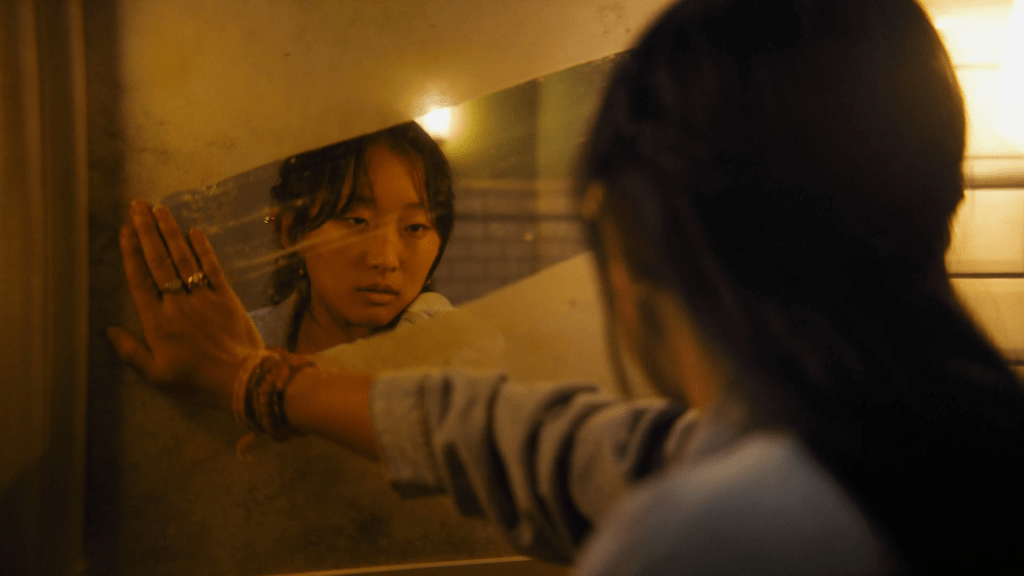
Maxime Alexandre’s cinematography is the film’s sharpest tool. He paints the valley with oppressive grays and sickly greens, making every shadow feel alive. A standout sequence in a blood-drenched bathroom uses stark lighting to turn practical effects into visceral art, though the under-lit wider shots can feel flat, like a game cutscene gone wrong. The script, by Dauberman and Butler, swings between snarky banter and clunky exposition. It name-drops time-loop classics like Groundhog Day without matching their wit, and the dialogue often feels like it’s winking at the audience instead of building dread. Philosophically, the film toys with fear as a psychological experiment. Dr. Alan Hill (Peter Stormare) muses on trauma like a discount Freud, but it never digs into the cultural or personal weight of its ideas, leaving them as set dressing for the gore.
So, I gotta call a spade a spade. Until Dawn is a chaotic mess, but it’s got guts, literally and figuratively. The practical effects are a high point, with surprisingly inventive kills. One scene, where a character’s demise involves a grotesque twist of metal and flesh is absolutely audacious. Sandberg’s knack for staging horror shines in these moments, using tight framing and sudden cuts to keep you flinching. The time-loop gimmick is a bold swing, cycling through slasher, supernatural, and creature-feature vibes to keep the scares varied. It’s not The Cabin in the Woods, but it’s got a similar genre-mashing energy that feels fresh for a major studio release.

Now, the bad news: the characters are flatter than a pancake under a steamroller. Clover and her crew, Max, Megan, Abe, and Nina, are archetypes (the brooder, the jock, the skeptic) with no depth beyond their quips. The game’s cast, flawed as they were, had motivations tied to guilt and survival; here, they’re just meat for the grinder. Pacing is another disaster. The first act rushes into the loop like a kid hyped on sugar, skipping setup for instant mayhem. By the third cycle, the repetition drags, and one night, a slog with minimal action, feels like filler. The horror impact is hit-or-miss: the practical effects deliver, but the scares lean too hard on jump-scare clichés, and the Wendigos, once mythic terrors, are reduced to generic zombies.
Originality is the film’s Achilles’ heel. The time-loop concept, while fun, is a well-trodden path by now. Happy Death Day and The Final Girls did it with more heart. The script’s meta humor feels like it’s trying to apologize for its derivative bits, and the lack of a cohesive narrative thread makes the film feel like a playlist of horror vignettes rather than a story. Sandberg and co. clearly love horror, but they’re too timid to fully embrace weirdness. The game’s snowy immersion and moral weight are gone, replaced by a safer, studio-polished product that prioritizes gore over soul. Still, the cast, especially Rubin and Stormare, commits hard, and the production design nails the eerie vibe of a cursed valley. It’s not a total wash, but it’s not great… or even good?
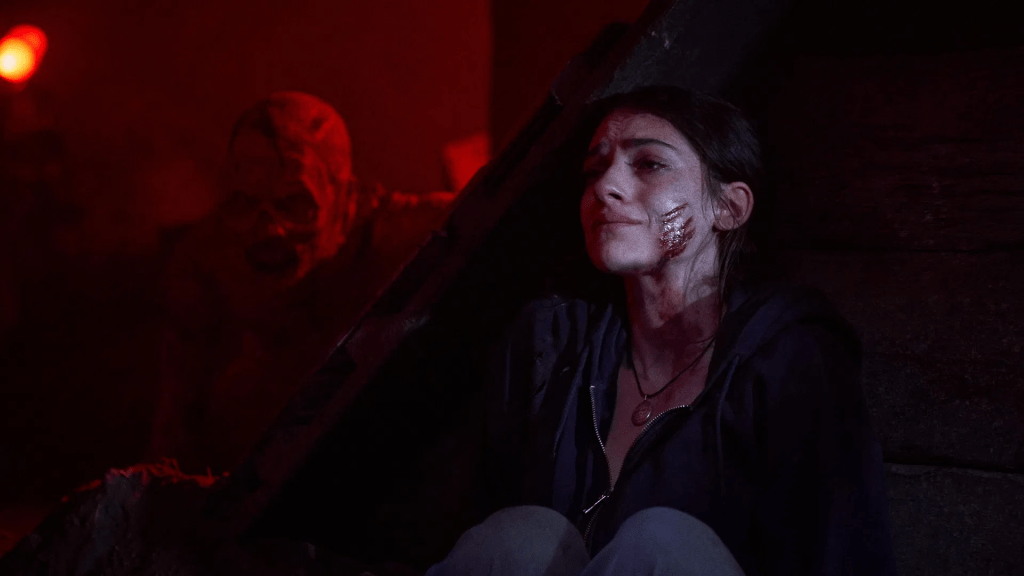
Until Dawn, admittedly, has flashes of brilliance with gory kills, a gutsy time-loop premise, and Alexandre’s moody visuals, but it’s too chickenshit to go full weird. The flat characters and rushed pacing kneecap its potential, and the watered-down Wendigo lore feels like a betrayal of the game’s mythic roots. While I can’t say I had high hopes for this film, this was still letdown, coasting on safe thrills instead of swinging for the fences. Nonetheless, it’s surprisingly watchable, but don’t expect it to haunt your dreams.
TL;DR: Until Dawn is a gory, time-loop horror flick that trades the game’s snowy depth for a chaotic, genre-hopping ride. It’s fun but shallow, with killer practical effects but flat characters and uneven scares.





Recommended for: Teens who think Scream is ancient history and want their horror served with a side of splatter and snark.
Not recommended for: Horror purists who’d rather gargle broken glass than watch another studio flick butcher a game’s soul.
Director: David F. Sandberg
Writer: Blair Butler, Gary Dauberman
Distributor: Screen Gems
Released: April 25, 2025
 The Blog Without a Face
Leave a comment