

Eli Craig, the Colt 45 of horror comedy, returns to the genre he helped rejuvenate with Tucker & Dale vs. Evil (2010) and its spiritual successor Little Evil (2017). Craig has been delivering bloody, subversive, genre-savvy films that dig into audience expectations. Now he’s adapting Clown in a Cornfield from Adam Cesare’s Bram Stoker Award–winning YA novel, teaming with co-writer Carter Blanchard. Cesare’s author cred runs deeper than a cornfield stalk: with horror titles like Video Night and Clown in a Cornfield (2020), he crafts acid-tongued, violent coming‑of‑age tales.
Craig’s background as an outdoorsman and mountaineering guide rarely shows on screen, but his wrestler-like grip on tonal balance and pacing is evident. This is his first time adapting someone else’s work, which he describes as a “sandbox with guardrails,” giving him room to inject his signature brand of absurd humor and self-aware horror. So far, solid pedigree for courageous mid-budget horror.
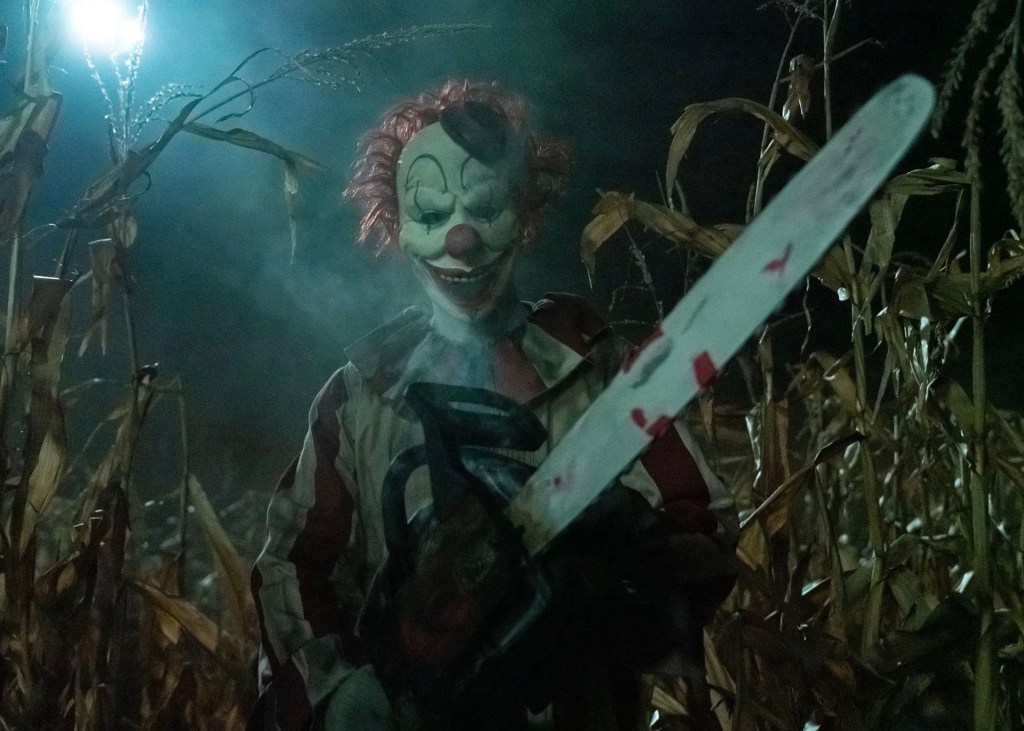
Quinn Maybrook (Katie Douglas), a moody teen reeling from her mom’s death, and her dad relocate to decaying Kettle Springs, Missouri. The town’s heart rotted when their main employer, Baypen Corn Syrup, burned down years ago, fanning embers of generational divide between bitter adults and prankster teens. Quinn falls in with a gang of local misfits led by Cole (Carson MacCormac), whose clown-themed prank videos mock the legendary mascot Frendo. But during the town’s Centennial bash, Frendo materializes in the stalks, bloodthirsty, chainsaw-wielding, and clear on a mission to purge “burdens.” As teens vanish, paranoia mounts, and conspiracies bounce between kitschy supernatural horror and hometown mental illness. Before long, Quinn has to fight, reel through trauma, and figure out whether the clown is real or projection, and whether the town might be worse than the nightmare in its crops.

With Clown in a Cornfield, Craig and Blanchard wield the corn maze as more than a slasher backdrop, it’s a crucible of endemic fear, community rot, and class tension. The dead corn syrup factory isn’t just a historical footnote; it’s a metaphor for the town’s hollowing soul, a toxic legacy literally sweet enough to stick in your veins but rotten like a festering wound. Frendo isn’t just a clown, he’s the physical manifestation of generational decay, a gum-smacking reminder that the past can’t stay buried when it’s dripping toxic waste into present systems.
Visually, cinematographer Brian Pearson traps Quinn in long corridors of golden-yellow cornstalks, claustrophobic and taunting. Night scenes hold all the dread of fudge‑brown-Stanley‑Kubrick shadows, broken by jarring neon from carnival lights and cell phone screens, marrying folk horror with Gen Z tech paranoia. It doesn’t feel like a theatrical spectacle, but an indie fever dream built for subverting expectations, and it mostly works.
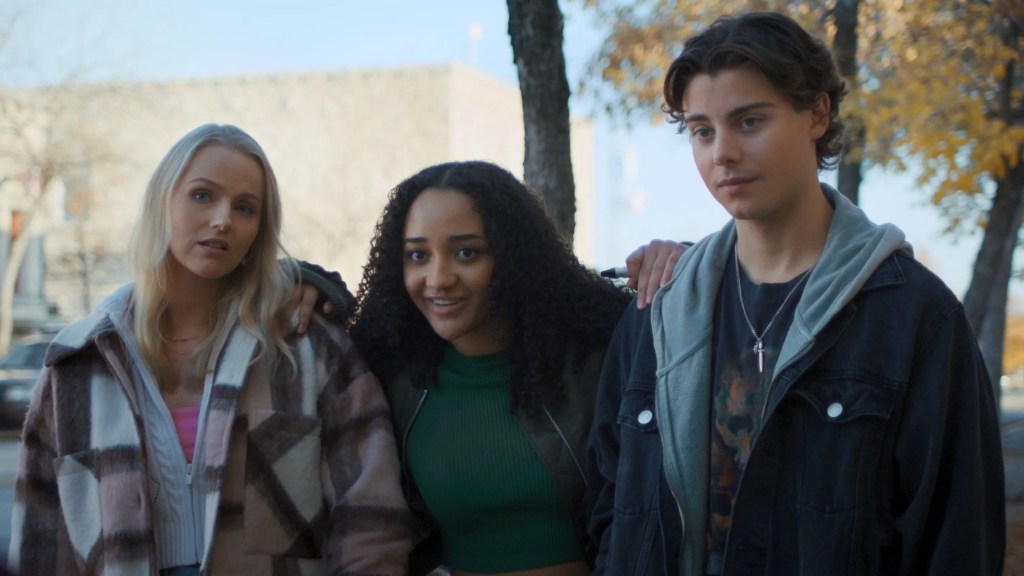
The script dances with meta awareness. Characters name-drop ’80s slashers while deaths replicate them brutally, yet there’s emotional sincerity under the cheekbones. Quinn’s grief over losing her mother gives her stakes beyond dodging machetes. The writers refuse to flatten teen experiences into caricature; the group have arguments about the future of their town, about being blamed for adult failures. That friction speaks to something bigger: Disillusioned youth inheriting environments they didn’t wreck, stepping into patterns they’ve been told to follow, or else.
There’s cultural commentary bubbling under the blood: online performative outrage (watch them post clown videos while the clown may very well be watching them), rural collapse, and the inevitable mystery of rural town folklore where myth doesn’t need to be real if belief is strong enough. Craig’s tone, self-aware, sarcastic, yet oddly earnest, aims for smart subversion of tropes rather than a straight send-up.

The dialogue cracks: a kid complaining about using a rotary phone during a panic makes us laugh and feel the absurdity of nostalgia. The humor doesn’t water down scares, it sharpens them. But it doesn’t lean into the clown’s silent absurdity either, choosing to play Frendo more serious killer than trickster monster. This grounds the horror but occasionally dilutes the iconic potential of a clown in a field.
In writing style, the pacing is lean, no fluff, cuts right to the sizzle and keeps the carnival set pieces short and sharp. There are conversations and silences that speak louder than slash scenes, Craig trusts dread over spectacle. It’s a style that plays like a mash-up of Stranger Things creepiness and Scream’s genre awareness. That approach pushes thematic depth into the horror, letting us wonder: is the killer clown worse than the collapsing, blame‑throwing town?

On paper, killer clown in cornfields sounds like a party trick, but Clown in a Cornfield digs its blades in and pushes the gimmick further than Netflix’s bottom tier. It’s not groundbreaking, but the layering of generational conflict, socioeconomic collapse, and online sensationalism gives it enough grit to toe the line between homage and fresh. The YA origins leave a few tropes intact, the small town full of assholes, the plucky teen, but Craig and Cesare stick emotional landing zones. It’s not bleeding-edge but cleanly crafted and morally muddy enough for cult affection.
Clocking around 96 minutes, the film never overstays its welcome. The script whittles tightly from setup to the killer reveal, sprinkling kills between character beats. There are no yawns; the tonal balance keeps interest high. That said, the climax shifts modes abruptly. One minute it’s satirical, next it’s standard slasher final boss. That tonal whiplash might feel like an unzipping zipper rather than a seamless segue, undercutting atmospheric tension built earlier.
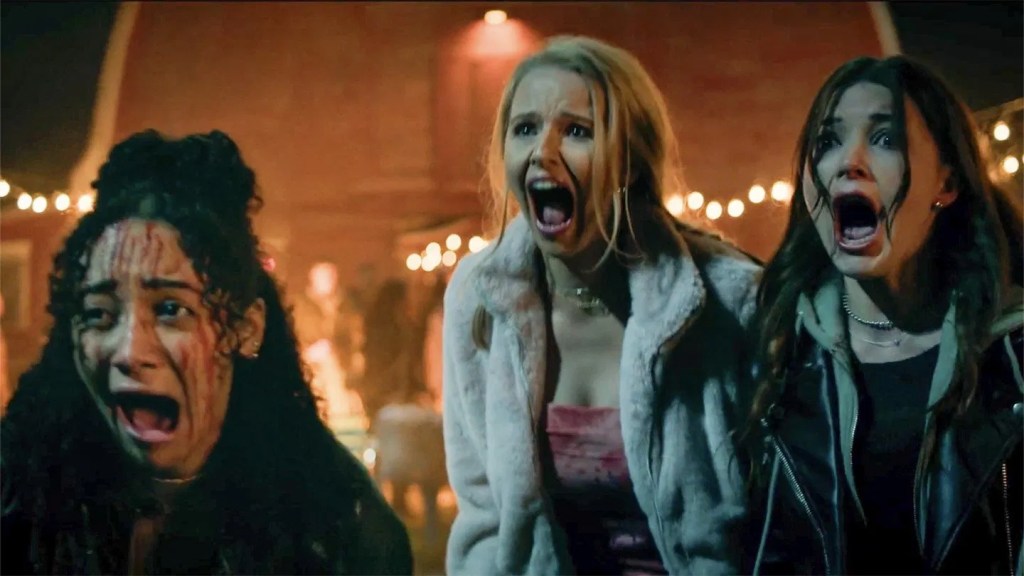
Katie Douglas nails Quinn’s mix of grief and grit. She’s likable without being airbrushed teen stock. The teen sidekick crew (especially Verity Marks as Ronnie) is enjoyable, and their dynamics, blame, pranks, solidarity, ring true. That said, adults are generally flat: either panic-punching incompetents or anger‑yelling authority figures. Their motivations, beyond blaming kids, don’t get the same nuance. You see the parallels to 80s horrors but wish someone had fleshed out the mayor or sheriff with more dirt on their hands.
Cole, played by MacCormac, channels mid‑90s heartthrob energy ala Scream’s Ulrich, bringing sincerity when needed. His arc, stuck between loyalty to hometown and wanting to escape, feels more fleshed than the adults’. The script uses him as a bridge between Quinn’s outsider status and town mythology, which mostly works.
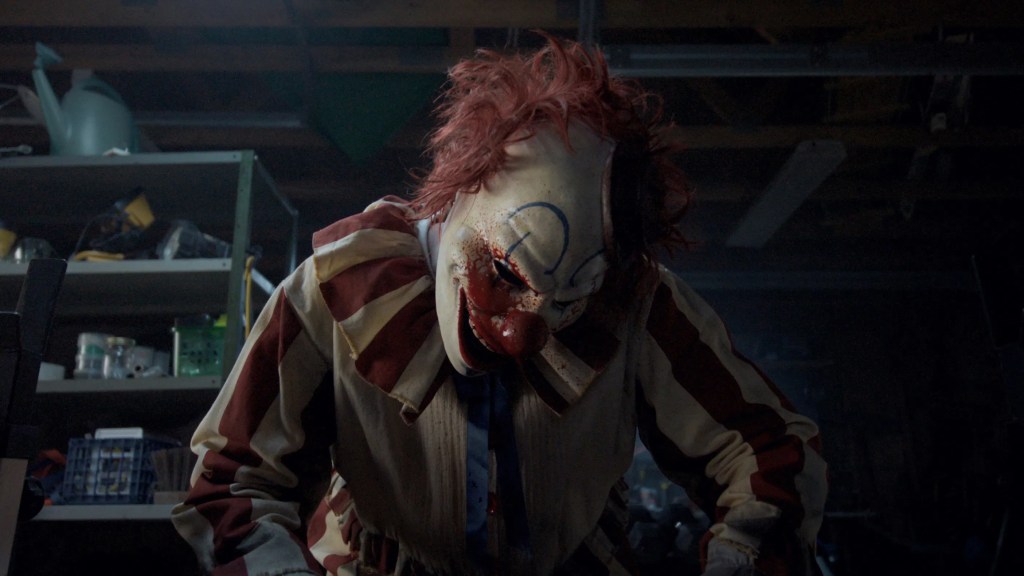
Frendo isn’t Pennywise-level iconic. He isn’t a cartwheeling jester, more a masked executioner. Kills land hard, leaning on practical prosthetics, which is a big plus. The chainsaw-and-crossbow moments carry weight, but never full‑on Terrifier-style unhinged brutality . The film intentionally keeps bloodstreams sharp but controlled, letting the audience’s dread fill gaps. And yes, there are jump scares. I jumped. That’s over two decades of hardened horror-watching. The maze setup amplifies claustrophobia, but occasional lighting missteps (like too much mid-field moonlit blue) undercut atmosphere.
Critiques
- Clown wasted potential: Frendo is stiff; would have loved more circus clown madness, eerie mime gestures, uncontrollable laughter.
- Predictable twists: Once the film rolls into reveal territory, you can see the scaffolding. The self-awareness builds suspense, but the structure behind it is textbook too much of the time .
- Adult characters feel like placeholders: These town folk don’t feel like real humans; they’re bigger-than-life obstacles with lines like, “It’s like we’re in some awful ’80s slasher.” Funny, but not deep.
Strengths
- Emotional tether: Quinn’s grief arcs tie the horror to something real. Her tough-girl front cracks when pressed, and the film gives her corner room to act, think, bleed.
- Meta‑humor without spininess: The script acknowledges tropes but rarely chews them up. That sliver of sincerity sticks.
- Production design: The cornfield, carny decor, hayrides, syrup branding—well-constructed in low-budget terms. It feels lived‑in, not backlot cheap.
- Thematic creep: Beyond blood and laughs, the film probes blame culture: who takes responsibility when towns die and kids get filmed more than heard? The clown’s rampage reads like symbolic revenge, not random slaughter.

This film is solid where it counts, atmosphere, tone, emotional stakes, while sparing us novelty for novelty’s sake. It doesn’t lose clarity, yet it dips deeper into messed-up small‑town psyche than your typical studios dare. The clown trope isn’t reinvigorated enough to become iconic, but Clown in a Cornfield spins it into a vessel for generational hellfire and grief. The pastel blood against the golden stalks is poetic. But jaw-dropping originality? Mostly reserved for whispering debts the film knows it owes.
It falters in script predictability and a too‑pedestrian adult cast. It gives us a killer clown without much clowning, and its final act lacks tonal consistency. Still, born‑again horror fans, especially younger backers starved of substance, will dig its snark, violence, and heart. It won’t stain you forever, but for one intense ride, it’ll toast your guts and tease your brain.
TL;DR: A generational slasher that balances grief, corn field dread, and kitschy humor, Clown in a Cornfield isn’t groundbreaking, but it’s earnest, bloody fun. Not great, but smart enough to earn love from anyone tired of lifeless teen horror.





Director: Eli Craig
Writer: Eli Craig, Carter Blanchard
Distributor: RLJE Films / Shudder
Released: April 18, 2025
Recommended For: Fans of heart‑in’the‑gore slashers who’ve been starving for small‑town mud, snarky teens, and a clown that actually means business.
Not Recommended For: Anyone wanting a clown who moonwalks through the field or redefining horror on a splash budget, this ain’t your avant‑gore terrifier paisley trip.

 The Blog Without a Face
Leave a comment