
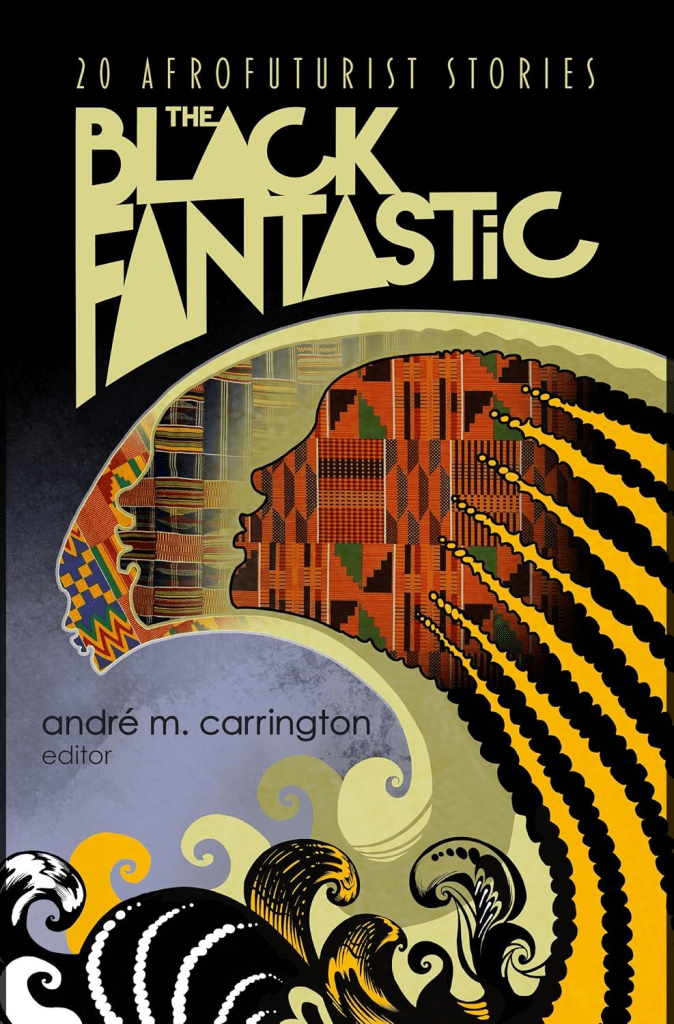
Alright, you freaks, strap in for The Black Fantastic: 20 Afrofuturist Stories, a ballsy anthology curated by André M. Carrington that’s like a cosmic gut-punch to the stale, whitewashed sci-fi and horror canon. This ain’t your grandpa’s Twilight Zone knockoff. It’s a raw, vibrant showcase of Black imagination that swings from mind-blowing to occasionally meh. Carrington, a scholar who cracked open the soul of speculative fiction with his 2016 book Speculative Blackness, has assembled 20 stories that scream Afrofuturism, blending sci-fi, horror, and fantasy with the unapologetic pulse of African diasporic experience. Let’s rip into the hits and misses, because this collection’s got some bangers and a few duds that don’t quite stick the landing.
Carrington’s no lightweight. A UC Riverside professor with a PhD in African American Studies, he wrote Speculative Blackness, a book that tore apart the myth that sci-fi and fantasy are lily-white playgrounds. He dug into comics, Star Trek, and more, showing how Black folks have been crafting alternate realities forever, despite history’s boot on their necks. The Black Fantastic is his victory lap, a curated slap in the face to genre gatekeepers. He’s handpicked 20 stories, mostly from the last decade, to prove Black speculative fiction isn’t just a niche, it’s a goddamn force. Expect tales of aliens, vampires, cosmic cities, and ancestral spirits, all tied together by a fierce commitment to reimagining Black futures.
Standout Stories
Nalo Hopkinson’s “Herbal”
This short, surreal gem is a masterclass in hitting the ground running. An elephant crashes into a woman’s 15th-floor apartment, wrecking her TV and eating her thyme bush before floating off into the sky like a pachyderm balloon. Hopkinson’s prose is lush, dripping with sensory details. You can practically smell the elephant’s musky hide and the dirt from the uprooted plant. It’s a compact fever dream that blends wonder and unease, using the elephant as a metaphor for ancestral memory that refuses to be ignored. Why it’s great: Hopkinson doesn’t explain shit, and that’s the point. She trusts you to feel the weight of the inexplicable, making this a haunting, unforgettable opener that sets the anthology’s tone.
Phenderson Djèli Clark’s “The Secret Lives of the Nine Negro Teeth of George Washington”
Clark, a history professor by day, delivers a compact tour-de-force that’s equal parts horrifying and empowering. The story reimagines the barbaric reality of slavery through a speculative lens, focusing on the teeth of enslaved people used in George Washington’s dentures. Each tooth gets a mythic backstory, blending historical pain with magical reclamation. The prose is sharp, almost surgical, cutting deep into America’s founding sins without preaching. Why it’s great: Clark balances historical weight with speculative flair, creating a story that’s both a middle finger to sanitized narratives and a celebration of Black resilience. It’s tight, poignant, and leaves you wanting more.
N. K. Jemisin’s “The Ones Who Stay and Fight”
Jemisin, a Hugo-winning titan, revisits Ursula K. Le Guin’s “The Ones Who Walk Away from Omelas” to craft a utopian tale with a dark underbelly. Her world is a shimmering ideal of justice, but it’s haunted by questions of complicity and sacrifice. The prose is mythic, measured, and laced with quiet fury, pulling you into a society that’s both aspirational and flawed. Why it’s great: Jemisin doesn’t just tell a story; she forces you to wrestle with moral grayness. It’s a brilliant, politically charged piece that challenges you to think while delivering speculative chills.
Violet Allen’s “The Venus Effect”
This story is a genre-hopping middle finger to the violence of anti-Blackness. Allen flits through narrative styles—sci-fi, fantasy, noir—like a DJ spinning tracks, each one interrupted by the grim reality of police violence. The prose is frenetic, almost manic, but razor-sharp, making every shift feel like a punch to the gut. Why it’s great: Allen’s audacity to break form and confront real-world horrors head-on is electrifying. It’s a story that dares you to look away and knows you can’t.
Weaker Entries
Tara Campbell’s “The Orb”
Campbell’s story about a mysterious, growing orb has eco-horror vibes, hinting at Anthropocene anxieties, but it falls flat. The concept is intriguing, a sensuous, ambiguous entity that might swallow the world, but the execution leans too heavily on vagueness, leaving you with more questions than feels. The prose is poetic but lacks the emotional hook to make you care. Why it’s not so good: It’s all atmosphere, no payoff. You’re left shrugging, wondering what the point was, like ordering a burger and getting just the bun.
Jennifer Marie Brissett’s “A Song for You”
Brissett’s tale of a mourning AI has potential, echoing Anne McCaffrey’s The Ship Who Sang, but it doesn’t quite gel. The idea of a sentient machine grappling with loss is cool, but the story feels underdeveloped, like a sketch that needed more pages to breathe. The prose is earnest but lacks the depth or bite of the anthology’s best. Why it’s not so good: It’s a solid concept that doesn’t dig deep enough, leaving you with a sense of “that’s it?” when the final note fades.
These stories, at their best, are a fucking revelation. They don’t just entertain, they rewrite the rules of speculative fiction, proving Black voices can dominate sci-fi, horror, and fantasy without apologizing. The anthology spans subgenres like sci-fi horror, dystopia, cosmic horror, dark fantasy, gothic, supernatural, and more, all filtered through an Afrofuturist lens that celebrates Black resilience and imagination. Carrington’s curation is a tightrope walk, balancing heavyweights like Jemisin and LaValle with newcomers like Alex Smith, and his introduction is a fiery manifesto that frames these tales as a continuation of a centuries-long tradition of Black speculative storytelling. The weaker stories, while not terrible, feel like they’re coasting on ambition without the emotional or narrative heft to match the anthology’s peaks.
The Black Fantastic is a standout. The best stories hit hard, blending speculative brilliance with raw emotional power. The weaker ones don’t derail the train but slow it down, lacking the punch or polish to match. Nonetheless, it’s a vital, kickass collection that demands a spot on your shelf.
TL;DR: The Black Fantastic is a bold, brilliant anthology that showcases Afrofuturism’s power to reshape sci-fi and horror. With standout stories that hit like a supernova and a few that fizzle, it’s a must-read for anyone who craves daring, unapologetic fiction.












Published February 4, 2025 by Library of America
Recommended for: Weirdos who want their brains scrambled by Black speculative genius, like a cosmic griot spinning tales at a punk rock bonfire.
Not recommended for: Dullards who think horror is just jump scares or sci-fi is only for dudes building lightsabers in their mom’s basement.
 The Blog Without a Face
Leave a comment