


Alright, you horror hounds, buckle up. Bring Her Back, the latest nightmare from Danny and Michael Philippou, is a goddamn sledgehammer to the chest, a visceral scream into the void of grief that’ll have you clutching your drink and questioning your life choices. This isn’t some half-assed jump-scare parade; it’s a masterclass in emotional devastation wrapped in a blood-soaked shroud. The Philippou brothers, those Aussie lunatics who gave us Talk to Me, have returned with a sophomore effort that pushes boundaries, cementing their place in the horror canon as prophets of the grotesque and the heartfelt.
Let’s talk about the Philippou brothers, Danny and Michael, the twin terrors from Adelaide who’ve been marinating in horror since they were kids. These guys cut their teeth on YouTube with RackaRacka, a channel that’s less “content creation” and more like a fever dream of stunts, practical effects, and unhinged creativity. Think less Jackass, more Evil Dead with a budget of pocket lint and Red Bull. Their debut, Talk to Me (2023), was a revelation, a possession flick that tackled viral fame and teen recklessness with a haunted hand and a mean streak. It grossed $143 million on a shoestring, proving they could play in the big leagues without losing their edge. Bring Her Back, co-written by Danny and Bill Hinzman, takes that raw energy and channels it into something darker, more personal, and infinitely more punishing. Hinzman, a relative newcomer, brings a sharp eye for dialogue that cuts like a rusty blade, complementing the Philippous’ knack for visual carnage. Their real-life losses, a cousin’s child and a family friend, infuse the script with a rawness that’s less inspiration and more exorcism. This isn’t film is therapy with a body count.

Bring Her Back follows Andy (Billy Barratt), a 17-year-old kid forced to grow up too fast, and his partially sighted younger sister, Piper (Sora Wong), as they navigate the aftermath of their father’s suicide. Shipped off to a foster home, they land with Laura (Sally Hawkins), a former social worker whose eccentricities mask something far more sinister. The siblings, already fractured by grief, face a new kind of horror as Laura’s occult obsessions and manipulative cruelty unravel their bond. It’s a slow-burn descent into a nightmare where the real terror isn’t just the supernatural, it’s the human cost of loss and the desperate, twisted things we do to claw it back. Expect a story that’s less about cheap scares and more about the kind of dread that sticks to your bones.
If Talk to Me was about chasing ghosts for clout, Bring Her Back is about chasing ghosts to fill a void that’ll never close. The central theme is grief, not the weepy, Hallmark kind, but the primal, all-consuming kind that warps your soul into something unrecognizable. The Philippous weaponize loss, showing how it can turn love into a grotesque parody of itself. Andy and Piper’s sibling bond is the heart of the film, a fragile tether fraying under Laura’s machinations. It’s a gut-wrenching look at how trauma can pit family against family, echoing the raw familial horror of Hereditary but with a grittier, more grounded edge.

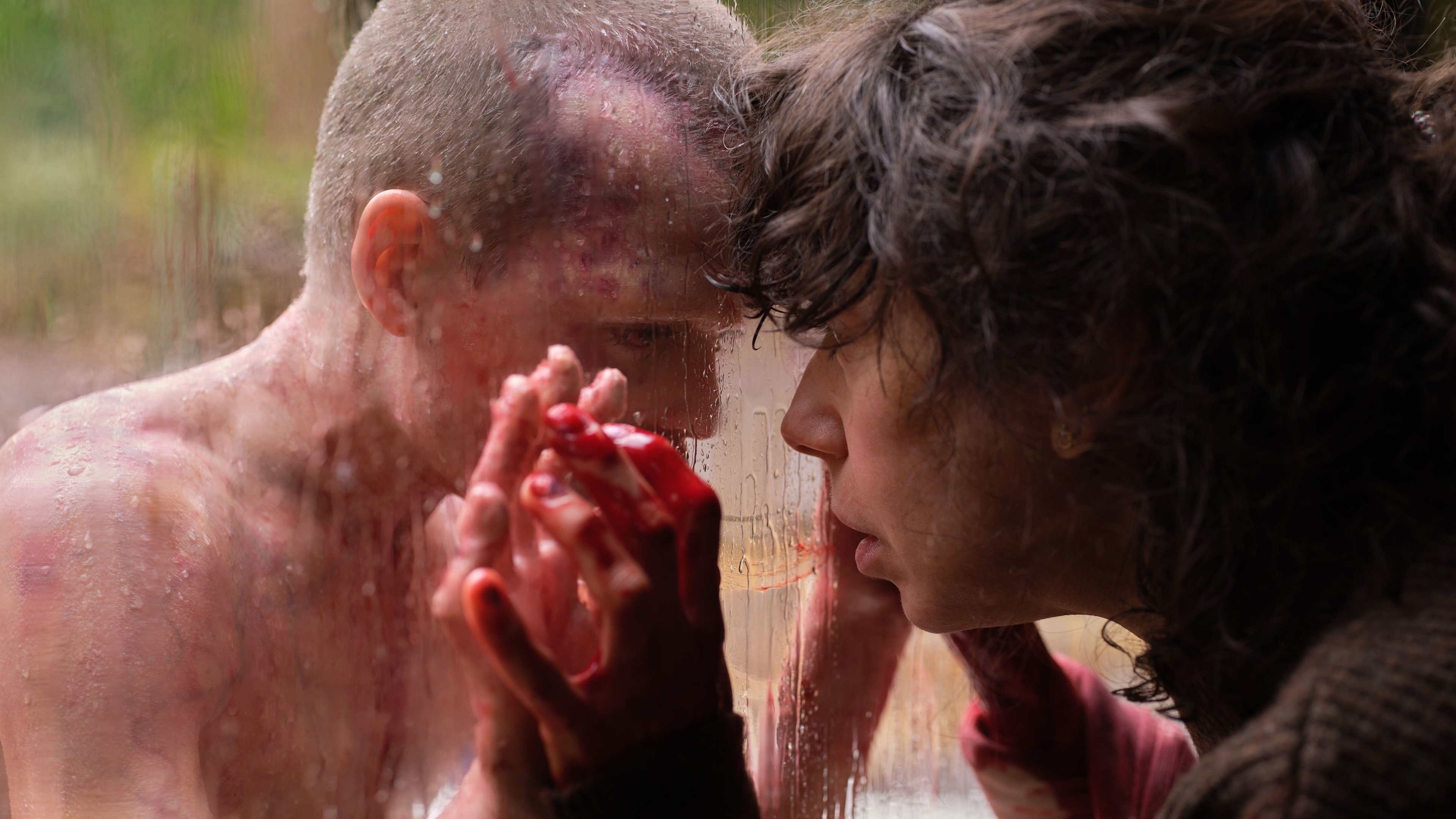
Symbolism is woven into every frame like a noose tightening around your neck. Laura’s occult tapes, grainy and cryptic, aren’t just plot devices, but a metaphor for the stories we tell ourselves to cope, distorted by desperation. The muted color palette mirrors the emotional desolation, a world where hope is a distant memory. Piper’s partial blindness is a brutal symbol of vulnerability and perception, her reliance on Andy both a strength and a liability. And then there’s the body horror—oh, sweet merciful fuck, the body horror. Without spoiling, let’s just say the practical effects (shoutout to the makeup team) turn human flesh into a canvas of despair, each grotesque transformation a reflection of inner decay. The Philippous aren’t subtle, but they’re surgical, using gore to externalize the internal rot of grief.
The film also takes a swing at the foster care system, exposing its failures with a clarity that’s almost documentary-like. Laura’s abuse, cloaked in maternal warmth, is a chilling commentary on how broken systems can enable monsters. It’s not preachy, but it’s pissed off, and it lands like a brick through a window. The cyclical motifs (visual echoes, repeated phrases) reinforce the idea that grief is a loop you can’t escape, only endure. Yet, there’s a glimmer of catharsis, a coda that doesn’t cheapen the pain but offers a faint whisper of solace. It’s not redemption, but it’s enough to keep you from drowning.

Danny Philippou and Bill Hinzman’s screenplay is a tightrope walk between raw emotion and unrelenting dread. The dialogue is sparse but vicious, each line landing like a jab to the ribs. Andy and Piper’s banter feels lived-in, the kind of sibling shorthand that only comes from years of shared trauma. Laura’s lines, delivered with Hawkins’ eerie precision, are a masterclass in manipulation, sickly sweet one moment, venomous the next. The script doesn’t waste a word, building tension through what’s unsaid as much as what’s spoken. It’s not derivative, but it’s in conversation with the likes of The Babadook and Lake Mungo, Australian horror that uses grief as a blade.
The pacing is deliberate, almost cruel, letting you stew in discomfort before unleashing chaos. The first hour is a slow burn, layering dread like a suffocating fog, but when it explodes, it’s a fucking onslaught. The horror elements, occult rituals, possessed children, body horror, are integrated seamlessly, never feeling like gimmicks. The script’s strength is its restraint; it doesn’t overexplain the supernatural, leaving just enough ambiguity to spark post-watch arguments. My only gripe? A few narrative detours in the second act feel like they’re chasing shock over substance, but they’re minor stumbles in an otherwise relentless march.

Bring Her Back is a triumph of performances and craft. Sally Hawkins is a revelation, her Laura a chameleon of empathy and malevolence that’ll haunt your nightmares. She’s channeling something primal, balancing creepy and sympathetic with a finesse that’s Oscar-worthy if the Academy gave a fuck about horror. Billy Barratt and Sora Wong are no slouches either. Barratt’s raw anger and Wong’s quiet resilience make their sibling dynamic the film’s beating heart. Wong, a first-time actor, is a goddamn find, her naturalism a counterpoint to the supernatural chaos. And what about Jonah Wren Phillips‘ Oliver? What a creepy little fucker.
The practical effects are a horror nerd’s wet dream, turning bodies into grotesque art with a realism that makes you flinch. The sound design, courtesy of Emma Bortignon, is a textured nightmare, amplifying every creak and scream into a symphony of dread. Aaron McLisky’s cinematography is claustrophobic yet hauntingly beautiful, framing each shot like a painting you can’t unsee. The Philippous’ direction is confident, blending arthouse sensibilities with mainstream gut-punches, making Bring Her Back a film that works as both a theater experience and a late-night obsession.
If I’m being a prickly fuck, the film’s relentless bleakness might alienate viewers looking for a shred of levity. It’s not a flaw, but it’s a choice that makes this a one-watch wonder for some. Those second-act detours I mentioned? They’re not dealbreakers, but they briefly dilute the focus on Andy and Piper’s relationship. And while the ambiguity is a strength, a touch more clarity on Laura’s occult mechanics might’ve sharpened the stakes. But these are quibbles in a film that’s otherwise a fucking juggernaut.
TL;DR: Bring Her Back is a soul-shredding horror masterpiece that weaponizes grief into something both heartbreaking and terrifying. The Philippou brothers and Sally Hawkins deliver a film that’s destined to be dissected by horror freaks for years. It’s a wound you’ll carry.


Director: Danny Philippou, Michael Philippou
Writer: Danny Philippou, Bill Hinzman
Released: May 30, 2025 by A24
Recommended for: Anyone who thinks horror should rip your heart out and stomp on it while whispering, “You’re welcome.”
Not recommended for: People who cry at ASPCA commercials and think The Conjuring is too scary. Toughen up or stay home.



 The Blog Without a Face
Leave a comment