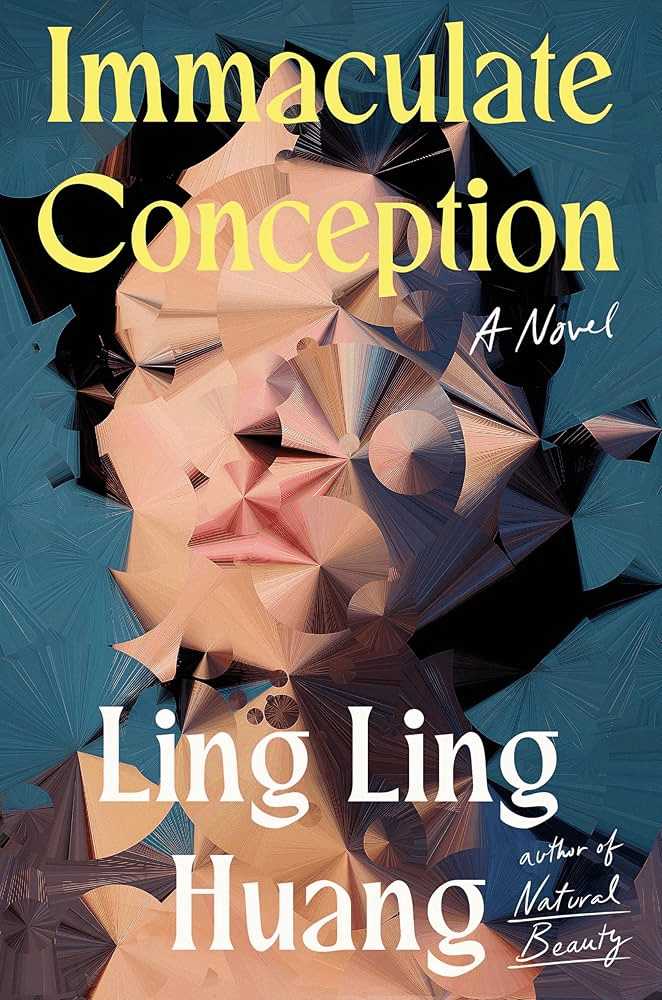
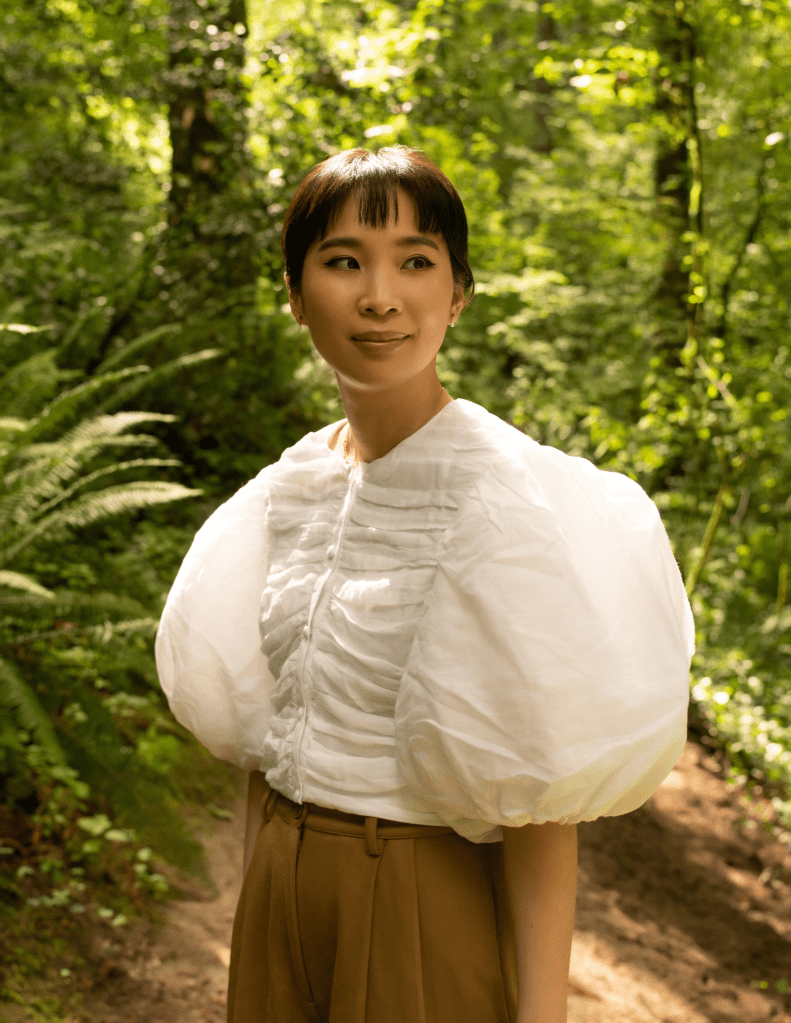
Ling Ling Huang, a writer and Grammy-winning violinist, burst onto the literary scene with her debut Natural Beauty (2023), a biting horror-satire that skewered the beauty industry’s toxic underbelly, earning accolades as a Good Morning America Buzz Pick and a New York Times Editors’ Choice. Her sophomore novel, Immaculate Conception (2025), pivots from cosmetics to the cutthroat art world, doubling down on her knack for blending visceral unease with social critique. Where Natural Beauty flayed consumer culture with a scalpel, Immaculate Conception wields a broader, messier brush, tackling ambition, jealousy, and dystopian divides through a lens of psychological horror. Huang’s background as a musician infuses her prose with a rhythmic intensity, and her shift to speculative fiction here feels like a natural evolution, though not without growing pains.
Immaculate Conception follows Enka Yui-Dahl, a fringe-born artist navigating the elite enclave of the Berkshire College of Art and Design, where she forms a complex, obsessive friendship with the prodigious Mathilde Wojnot-Cho. Set in a dystopian near-future where societal divides are enforced by physical and digital “buffers,” the novel traces Enka’s journey from a scholarship student to a controversial figure in the art world. Mathilde, a grieving genius, becomes Enka’s muse and anchor, but their relationship spirals into ethical quagmires involving a neural device called the SCAFFOLD, which links their minds in unsettling ways. The story unfolds across Enka’s college years and her later life, exploring her ambition, guilt, and the cost of artistic legacy. It’s a slow-burn horror tale that blends body horror, psychological dread, and social satire, culminating in a raw confession that upends Enka’s world.
Immaculate Conception is a vicious little beast of a book, sinking its teeth into themes of jealousy, identity, and the commodification of art. Huang constructs a world where creativity is both a divine gift and a cursed commodity, dissected through the lens of class, privilege, and betrayal. The novel’s central message is a gut-punch: envy, even when cloaked in love, can devour everything it touches. Enka’s desperation to transcend her fringe origins and rival Mathilde’s genius drives the narrative, exposing how ambition can twist admiration into something monstrous.
The class divide—enclave vs. fringe—is a searing allegory for systemic inequality. The “buffers,” sleek sculptures that segregate communities, symbolize the insidious ways power structures gatekeep opportunity. Huang’s dystopia feels like a funhouse mirror of our own world, where algorithms and wealth dictate access to culture and self-expression. The SCAFFOLD device, which allows Enka to inhabit Mathilde’s mind, is a brilliant metaphor for artistic appropriation and the ethics of “borrowing” someone else’s brilliance. It’s body horror with a cerebral twist—less Cronenbergian goo, more a violation of the self that leaves you queasy.
Symbolism abounds. Mathilde’s studio, initially filled with towering logs, reflects her raw, untamed creativity, while its later emptiness mirrors her mental erosion. Enka’s handprint ritual on Mathilde’s window is a haunting motif of connection and intrusion, a smudge that marks both devotion and possession. The novel’s title, Immaculate Conception, is a sardonic nod to the myth of pure creation, mocking the idea that art or identity can ever be untainted by envy or exploitation. Huang’s use of art as a narrative framework—divided into “Early Style,” “Middle Style,” and “Late Style”—parallels the evolution of Enka and Mathilde’s relationship, from naive admiration to parasitic dependence to regretful reckoning.
Huang’s prose is a jagged blade, cutting deep with precision but occasionally drawing too much blood. She writes with a painterly eye, vivid and tactile, as in her description of Mathilde’s paintings: “In certain places, it looks to be velvet, in others a crumbled powder, and still, in the corner, there is a bit of color you’d swear was painted on a swath of silk.” Such passages are goddamn poetry, capturing the sensory allure of art while grounding it in the novel’s emotional stakes.
Yet, the style isn’t flawless. Huang’s reliance on fragmented, introspective narration can feel indulgent, especially in the “Middle Style” section, where Enka’s self-pitying monologues drag like a hungover lecture. The dialogue, while sharp in moments of confrontation, sometimes veers into expository territory, as if Huang doesn’t trust the reader to connect the dots. Still, her ability to weave dread into mundane settings—like a bathroom stall or a cluttered studio—is masterful. The horror isn’t in jump scares but in the slow realization of Enka’s moral decay, rendered with a claustrophobic intensity that makes you want to claw your way out of her head.
The novel’s structure, with its non-linear timeline and art-inspired divisions, is ambitious but occasionally disorienting. The “Retrospective” chapter feels like a late addition, tidying up loose ends with a touch too much sentimentality. Huang’s strength lies in her ability to make you feel the weight of Enka’s choices, but the prose shines brightest when it’s raw and unpolished, not when it’s trying to be profound.
Strengths
- Originality: Huang’s fusion of dystopian sci-fi, body horror, and art-world satire is a bold middle finger to genre conventions. The SCAFFOLD concept is fresh, unsettling, and ripe for philosophical debate, distinguishing the novel from run-of-the-mill horror.
- Thematic Ambition: The exploration of jealousy as a creative and destructive force is nuanced and unflinching. Huang doesn’t shy away from Enka’s ugliness, making her a compellingly flawed protagonist.
- Prose: At its best, Huang’s writing is quotable as hell: “I had placed her high, making myself necessarily low. To me, she was the moon, and I, the tide.” Lines like these hit like a shot of whiskey—smooth, burning, unforgettable.
- Horror Impact: The horror is psychological and existential, rooted in the violation of autonomy and the erosion of self. Mathilde’s nonverbal decline and Enka’s guilt-induced headaches are chilling in their intimacy.
Critiques
- Pacing: The novel sags in the middle, with repetitive introspection that dulls the tension. Huang could’ve trimmed 50 pages without losing impact.
- Dialogue: Some exchanges feel like plot delivery systems, lacking the organic bite of real conversation. The art-world jargon, while immersive, occasionally alienates.
- Sentimental Slip: The final chapters lean too hard into redemption, softening the novel’s edge. Huang’s attempt to give Enka closure feels like a concession to readers who need a neat bow.
- Horror Restraint: While the psychological horror is potent, the body horror elements (e.g., the SCAFFOLD’s physical toll) could’ve been pushed further for visceral impact. It’s creepy, but not skin-crawling.
Immaculate Conception is well above average. Its originality is undeniable, the SCAFFOLD and the buffer-divided world are concepts I haven’t seen before, and Huang’s art-world lens adds a unique flavor. The prose is often stunning, with moments of brilliance that elevate the narrative. The horror, while effective, doesn’t quite reach gut-wrenching heights. The thematic ambition is admirable, tackling big questions about art, identity, and ethics, but the execution stumbles with pacing issues and a slightly soft ending. It’s a damn good book, but it’s not rewriting the horror rulebook.





TL;DR: Immaculate Conception is a sharp, unsettling dive into jealousy and artistic obsession, with a dystopian edge and a neural device that’ll make you rethink your friendships. Huang’s prose sings, but the pacing drags, and the horror could bite harder. A bold, flawed gem for fans of cerebral dread.
Recommended for: Art snobs who secretly hate their talented friends and want to feel bad about it.
Not recommended for: Readers who think horror means chainsaws and jump scares, not existential guilt trips.
Dutton
Published May 13, 2025
 The Blog Without a Face
Leave a comment